Walid

Gender: Masculine
Origin: Arabic
Meaning: “newborn.”
(WAH-leed)

The name is derived the Arabic ولد (walada), “to give birth.”

It is primarily used in honour of Al-Walid I (668 – 715) and Ummayid Caliph who had ruled in the early 700s. He is known for instituting Arabic as the official language across the Islamic World and his conquer of Spain.

As of 2009, Walid was the 163rd most popular male name in France.

Other forms of the name include:

  • Velid (Albanian/Azeri/Bosnian/Bulgarian/Central Asian/Turkish)

Naim

The name could be from the Hebrew נעים‎ meaning, (pleasant) or the Arabic نعیم‎ (tranquil).

As of 2009, Naïm (Maghrebin orthograph) was the 182nd most popular male name in France.

A feminine form is Naima.

Sami

Gender: Masculine
Origin: Arabic سامي
Meaning: “high; elevated; supreme.”
(SAH-mee)

The name is derived from the Arabic meaning, “high; elevated; supreme.”

However, it could also be a Finnish short form of Samuel. In Finland, it has often been used as an independent given name and in recent years is most likely used in reference to the language and ethnic group which is found in Finland, Norway and Russia, perhaps among people of Sami heritage. Sami is also the name of a lake in Finland.

As of 2009, Sami was the 183rd most popular male name in France while in 2010 he came in as the 193rd most popular male name in the Netherlands.

A feminine form of the Arabic is Samia.

Achilles

Gender: Male
Origin: Greek
Meaning “pain.”
Eng (uh-KEELZ); (ah-KEEL-leez); Fre (ah-SHEEL); It (ah-KIL-le)

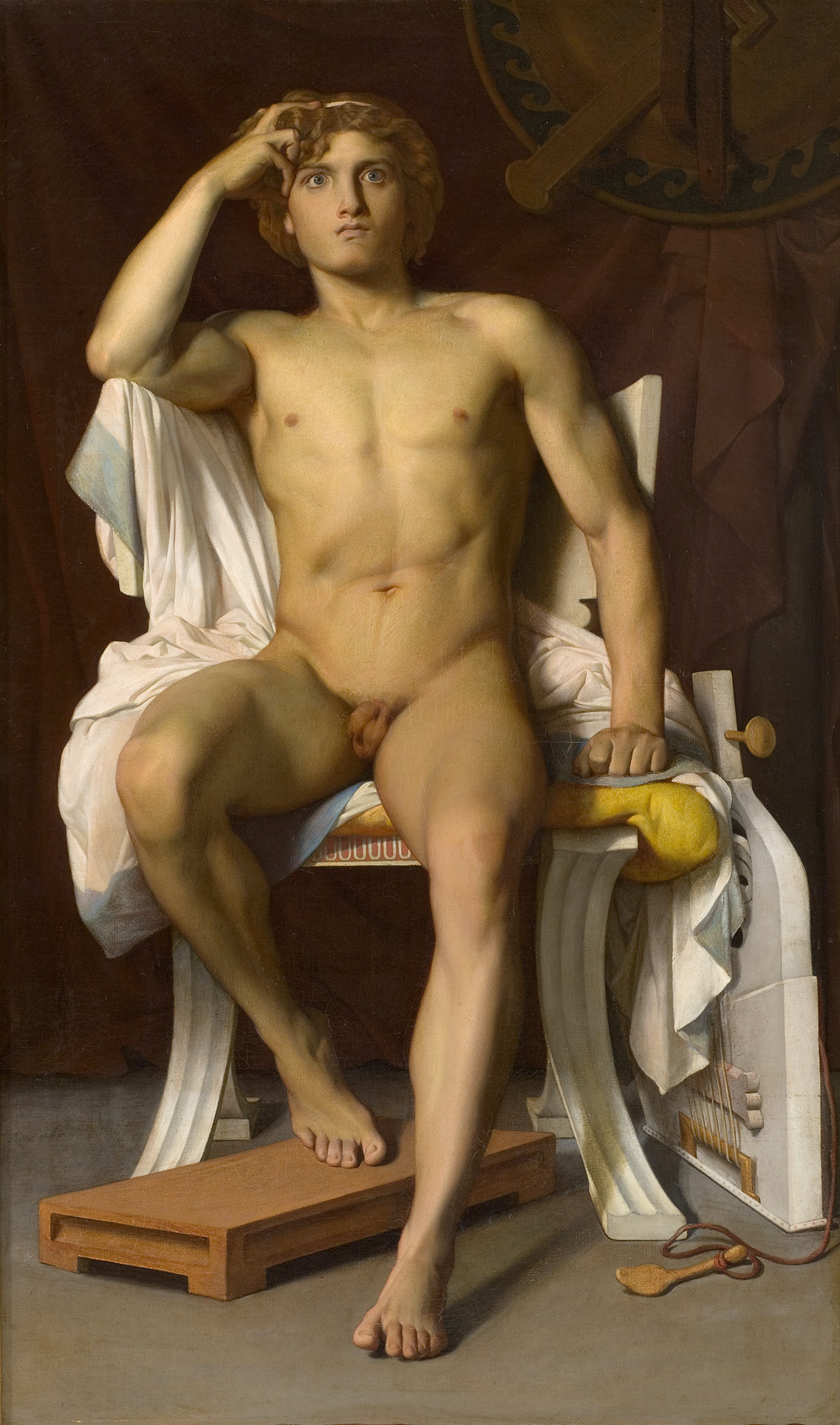
The name of the great Pythian hero of the Trojan war, Achilles was invincible save for the one spot on his heel that was vulnerable to killing him. Achilles was timelessly struck down after a poisoned arrow pierced his heel. Some legends state that his mother, Thetis, had dipped him in the river Styx to render her child immortal. However, since she was holding him by one heel, the waters were unable to pass through her hands onto the area to which she held him.

Achilles’ Heels is a term used to describe a person’s weakness. In anatomy, Achilles Tendon is used to describe a tendon of the posterior leg.

As of 2009, Achille was the 204th most popular male name in France.

Other forms of the name include:

  • Akili (Albanian)
  • Akiles (Basque)
  • Ahilej (Bosnian, Serbo-Croatian)
  • Akilles (Breton)
  • Aquil·les (Catalan)
  • Achilles (Czech/English/Polish)
  • Akhilleus (Finnish/Scandinavian: very obscure)
  • Achille (French/Italian)
  • Achilleus Αχιλλευς (Greek)
  • Akhilleusz (Hungarian: obscure)
  • Ahillejs (Latvian)
  • Achilas (Lithuanian)
  • Akille (Maltese)
  • Akilles (Danish/Norwegian/Swedish)
  • Ahile (Romanian)
  • Achilli (Sicilian)
  • Ahil (Slovene)
  • Aquiles (Spanish/Galician/Portuguese)

Hafsa

Gender: Feminine
Origin: Arabic حفصة
Meaning: “lioness.”

The name is borne by the daughter of Umar and a wife of the Prophet Mohammed. She is considered one of the Mothers of Believers.

It was also borne by Hafsa Hatun Sultan (1479-1534), Ottoman Sultan Selim I’s wife and the mother of Süleyman the Magnificent.

As of 2009, Hafsa was the 431st most popular female name in France, while in 2010, she was the 432nd most popular female name in the Netherlands.

Other forms of the name include:

  • Hafza (Albanian/Bosnian/Turkish)
  • Hafsat (East African)
  • Hafize (Turkish)

Karim

Gender: Masculine
Origin: Arabic  كريم Карим
Meaning: “noble; generous.”
(KAH-REEM)

The name comes directly from the Arabic word for, “noble; generous.” In Islam, Karim is one of the 99 designations of Allah and is used to describe the Qu’ran (Al-Qur’an Al-Karim), literally meaning “the Noble Qu’ran.”

The name is used throughout the Islamic world, but is also used among Middle Eastern Christians.

The name has been occasionally used in Latin America, in Brazil, it seems to be a Portugized spelling for the Scandinavian female name Karin, but in this case it is pronounced (kah-REEN).

The name has numerous famous bearers.

As of 2009, Karim was the 260th most popular male name in France.

Other forms of the name include:

  • Kerim (Azeri/Turkish)
It is sometimes transliterated as Kareem. Feminine forms are Karima, Kerime (Turkish) or Kareema.

Cyprian

Gender: Masculine
Origin: Latin
Meaning: “from Cyprus.”
Eng (SIP-ree-ən)

The name is derived from the Roman family name, Cyprianus, which means, “from Cyprus.”

The name was borne by a 3rd-century Christian theologian, writer, martyr and saint.

As of 2009, its French form of Cyprien was the 272nd most popular male name in France.

Other forms of the name include:

  • Çipriani (Albanian)
  • Cyprian (Albanian/English/German/Polish/Romansch)
  • Sybryan سيبريان (Arabic)
  • Kiprianos Կիպրիանոս (Armenian)
  • Zipriano (Basque)
  • Kiprijan Киприян (Bulgarian)
  • Cebrià (Catalan)
  • Ciprijan (Croatian/Macedonian/Serbian/Slovene)
  • Cyprián (Czech)
  • Cyprianus (Dutch/Latin)
  • Cyprien (French)
  • Ciprian (Fruilian/Romanian)
  • Cibrán (Galician)
  • Kvipriane კვიპრიანე (Georgian)
  • Kyprianόs Κυπριανός (Greek)
  • Cipriano (Italian/Portuguese/Spanish)
  • Kiprijonas (Lithuanian)
  • Kiprián Киприа́н (Russian)
  • Cebrián (Spanish)
  • Kypryan Кипріян (Ukrainian)
Feminine forms include:
  • Cyprienne (French)
  • Cipriana (Italian/Portuguese/Spanish)
  • Cypriana (Latin/Polish)
The name was borne by several other saints, another notable bearer is Polish romantic poet, Cyprian Kamil Norwid (1821-1883).

Adel, Adil

Gender: Masculine
Origin: Arabic عادل
Meaning: “just; fair.”

The name is derived from the Arabic adjective,  عدل  (adala), meaning, “just.”

The name is used throughout the Islamic world, though, the it is also used among Middle Eastern Christians.

As of 2009, Adel was the 285th most popular male name while Adil was the 378th most popular.

Other forms of the name include:

  • Adel پور (Algerian/Arabic/Coptic/Egyptian/Ethiopian/Kurdish/Lebanese/Persian/Sudanese/Syrian/Tunisian/Uyghur)
  • Adil Адиль
  • (Albanian/Azeri/Bangali/Baloch/Bashkir/Bosnian/Bulgarian/Chechen/Circassian/Dagestani/Kazakh/Moroccan/Ossetian/Pakistani/Tatar/Turkish/Turkmen/Uzbek)
  • Jedil/Yedil Эдил (Kyrgyz)

A feminine form is Adila (Arabic) and Adile (Turkish)

Hippolytus, Hippolyte

Gender: Masculine
Origin: Greek ‘Ιππολυτος
Meaning: “freer of horses.”
Eng (hip-PAHL-ih-tus); Eng Fem (HIP-poh-LY-tee; hi-PAHL-i-tah) Fre (EEP-poh-LEET)

The name is derived from the Greek, Hippolytos (‘Ιππολυτος), which is composed of the elements, hippos (‘ιππος), meaning, “horse” and lyo (λυω) meaning, “to loosen.”

The name was borne in Greek mythology by a son of Theseus, and depending on some sources either the Amazon, Hippolyte (hence the name) or Antiope. He rejected the advances of his step-mother, Phaedra, who, when spurned, complained to Theseus that his son had raped her. In anger, Theseus cursed his own son, using of the his three wishes granted by Poseidon, Hippolytus was dragged to death by his horses after being frightened by a sea-monster. The story was retold both by Euripides in his play Hippolytus and by Seneca the Younger in his play, Phaedra.

His possible birth mother of Hippolyte was an Amazonian queen who possessed a magical girdle which denoted her rank. She appears in the legend of Hercules who seeks her girdle for the princess, Admeta. Hippolyte is so impressed with the immortal’s prowess that she gives Hercules her girdle as a gift. William Shakespeare may have based his character of Hippolyta who appears in A Midsummer’s Night Dream off of Hippolyte the Amazon queen.

The male form of Hippolytus appears several more times throughout Greek mythology as the name of minor characters.

It was also borne by some early renowned Christian saints, including Hippolytus of Rome a 3rd-century Christian theologian, writer and martyr.

In English and early Greek, Hippolyte often appears as a feminine form, but in French, it is an epicène name, that is a unisex name, however, it is more often used on males than on females. As of 2009, Hippolyte was the 286th most popular male name in France.

Other forms of the name include:

  • Ipolit Иполит (Bulgarian/Serbian)
  • Hipòlit (Catalan)
  • Hipolit (Croatian/Polish/Romanian/Slovak)
  • Hippolyt (Czech/German)
  • Hippolytus (Dutch/English/Latin)
  • Hippolyte (French)
  • Ipolite იპოლიტე (Georgian)
  • Hippolütosz (Hungarian)
  • Ippolito (Italian)
  • Hipolitas (Lithuanian)
  • Hipólito (Portuguese/Spanish)
  • Ippolit Ипполит (Romansch/Russian/Ukrainian)
  • ‘Ipołito (Venetian)
Feminine forms include:
  • Hipolita Хиполита (Albanian/Bulgarian/Serbian)
  • Ipalita Іпаліта (Belarusian)
  • Hipòlita (Catalan)
  • Hippolyta ‘Ιππολυτη (English/Greek/Latin/Romanian)
  • Hippolyte ‘Ιππολυτη (English/French/Greek)
  • Hippolüté (Hungarian)
  • Ippolita Ипполи́та (Italian/Russian/Ukrainian)
  • Hipolitė (Lithuanian)
  • Hippolita (Polish)
  • Hipólita (Portuguese/Spanish)

Virgil

Gender: Masculine
Origin: Latin
Meaning: unknown
Eng (VUR-jəl); Fre (vare-ZHEEL)

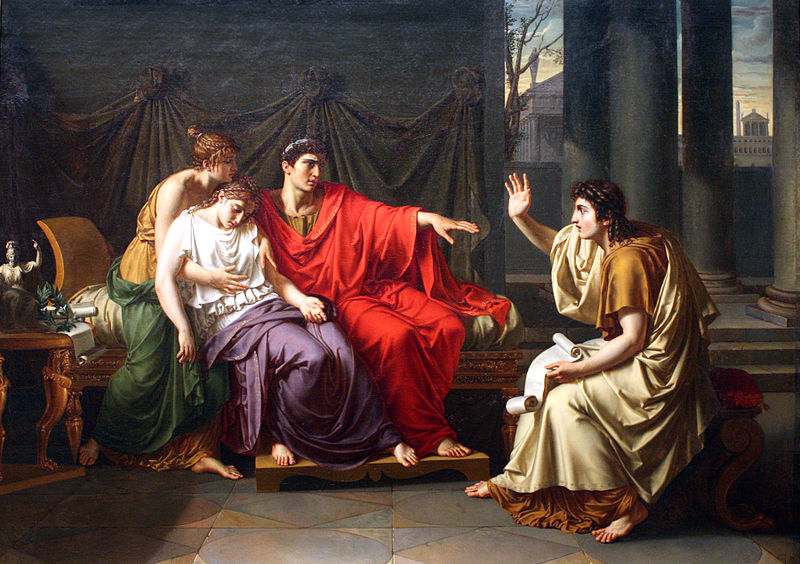
The name was borne by famous Latin poet, Publius Vergilius Maro (70–19 BCE), the author of the Aenead, credited for being one of Rome’s most epic poems.

Dante used Virgil as the guide in his Inferno and part of Purgatorio.

The origins of the name are unclear, Virgil itself is derived from the Latin, Virgilius/Vergilius, a Roman family name of uncertain meaning.

At one time, Virgil was one of the most popular male names in the United States. The highest he ranked was in 1907 coming in as the 93rd most popular male name. As of 2010, Virgil no longer appears in the U.S. top 1000

As of 2009, its French counterpart of Virgile was the 333rd most popular male name in France.

Other forms of the name include:

  • Virgiliu (Albanian/Romanian/Sicilian)
  • Virchilio (Aragonese)
  • Virxiliu (Asturian)
  • Virgili (Catalan/Lombard/Occitanian)
  • Virgilije Вергилиј (Croatian/Macedonian/Serbian/Slovene)
  • Virgilius (Dutch/Latin)
  • Vergil (English/German/Plattdeutsch/Ripoarisch/Scandinavian)
  • Virgil (English/Romanian)
  • Vergíliu (Extramaduran)
  • Virgile (French)
  • Virgjili (Frulian)
  • Feirgil/Veirgil (Gaelic)
  • Virxilio (Galician)
  • Virgill (Icelandic)
  • Virgilio (Italian/Spanish)
  • Vergilius (Latin)
  • Vergīlijs (Latvian)
  • Virgilijus (Lithuanian)
  • Virġilju (Maltese)
  • Bergílio (Mirandese)
  • Wergiliusz (Polish)
  • Virgílio (Portuguese)
  • Vergėlėjos (Samogaitian)
  • Vergílius (Slovak)
  • Fyrsil (Welsh)
The name was also borne by an 8th-century Irish saint and missionary, Virgil of Salzburg.