- Origin: Yoruba
- Meaning: full of wealth
- Gender: unisex
The name is composed of the Yoruba words kìkì (full of) and ọlá (wealth).
A common short form is Kiki.
Sources
The name is composed of the Yoruba words kìkì (full of) and ọlá (wealth).
A common short form is Kiki.
Sources
The name is composed or the Yoruba elements, ọmọ (“child”) + rè (“to give attention to”) + èmi (“me”).
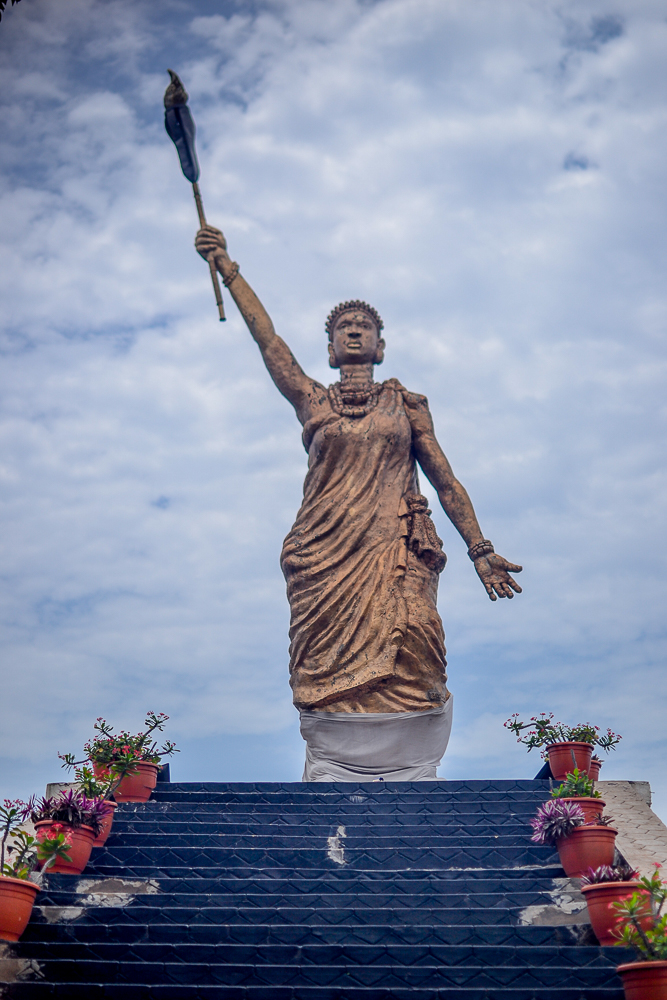
In Yorubaland, the southwestern part of Nigeria, it is the name of a legendary 12th-century Queen, Moremi Ajasoro. Queen Moremi sacrificed her son to the spirit of the Esimirin river in exchange for power to stop the raids and enslavement of her people by the Ugbo, the Yoruba still commemorate this sacrifice during the Edi Festival. Her story has been adapted into a 2018 musical of the same name. In 2017, a statue was commemorated in her honor (pictured above) in Osun State, Nigeria, and is currently the fourth largest structure in Africa.
Sources
The name is composed of the Yoruba elements, temi (mine), ni (is) and ola (wealth). Common short forms are Temi and Lola.
Sources
The name comes directly from a Yoruba phrase meaning, “of God’s will.”
Sources

The name is composed of the Yoruba dá…l’ọ́lá (to make wealthy by God) and mi (me).
Another form is Dánlọlá.
It is borne by Nigerian model and actress, Dámilọ́la Adégbìtẹ́ (b. 1985).
Sources

These are separate names but they have identical pronunciation. The former is from the Yoruba phrase ará-olúwa (the Lord’s kin), while the latter is derived from àrà-olúwa, meaning, (the Lord’s wonder).
A common short form is Ara.
Sources

Dárasími is from the Yoruba phrase, dára-sí-mi (good to me), there is also Ọlúwadárasími, which means “the Lord is good to me.”
Sources

This lyrical gem looks like a cross between Tammy & Lora, but is actually a Yoruba feminine name. It comes from the Yoruba phrase, ta mí lọ́rẹ, literally, “give me a gift.” It would make a lovely and unique option for a child born around the holidays.
Possible nicknames include, Tami, Tammie, Tammy, Lore or Lori.
Source

The name is a Yoruba unisex name which is usually given to a child where the parents were having a hard time having children or a child who was in a high risk pregnancy. It is from the Yoruba phrase, à-jà-ní (the one we fought for, or the one whom we fought to have).
Sources

The name is composed of the Yoruba words ẹbùn (gift) and olúwa (the Lord).
Other forms are Ẹ̀bùn & Ẹ̀bùnolú.
Sources