Snieguolė

Gender: Feminine
Origin: Lithuanian
Meaning: “snowdrop.” literally “little snow”
(snye-GWOH-lay)

The name is derived from the Lithuanian sniegas meaning “snow”/the suffix of uolė is a common Lithuanian feminine suffix denoting smallness.

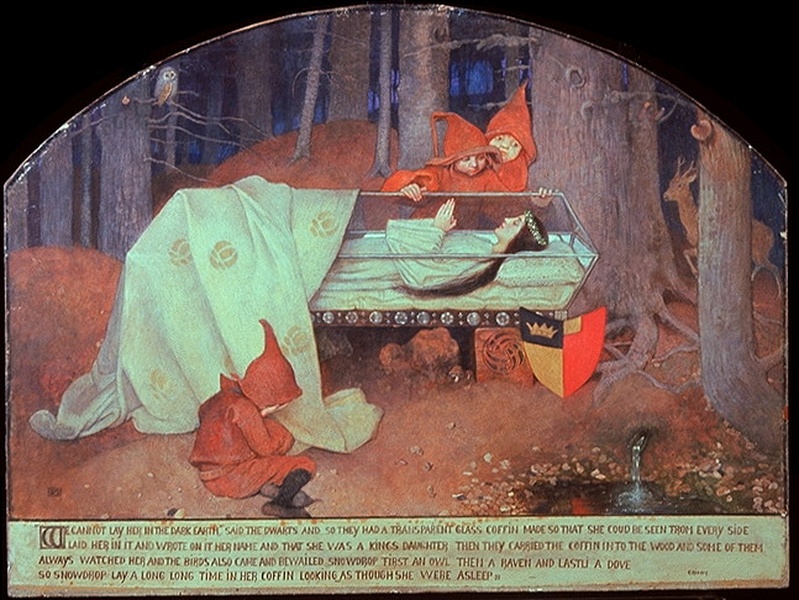
In Lithuanian, this is also the name for Snow White and it is the name for the snowdrop flower.

Its designated name-day is January 15.

Gabija

Gender: Feminine
Origin: Lithuanian
Meaning: “to cover; to console; to bend.”
(gah-BIH-yah)

Borne in Lithuanian mythology by the goddess of fire or hearth, the name can either be traced to the Lithuanian element gaubti, which could either mean “to cover; to protect; to bend” or “to console.”

Other sources suggest that Gabija is a newly designated name for the goddess, whose true name has been lost to history. Some sources have suggested that the goddess was given a new name by the Polish historian, Jan Łasicki in 1615, being a corruption of the Russian Gafiya, which is an archaic form of Agatha.

According to Łasicki, the sacred fire of the household was thought to be an incarnation of Gabija herself, it was essential for devotees to keep the fire alive and to feed it bread and salt. The women of the household were required to put the fire to bed, by stoking it to sleep, so that the fire wouldn’t wonder off to places where it was not allowed to be.

If Gabija was ever angered, she would take revenge by burning your house down.

Gabeta and Gabieta are other forms.

A male form is Gabijus.

In 2005, she was the most popular female name in Lithuania and in 2008, she was overthrown by Ona, and became the 2nd most popular female name in Lithuania.

The designated name-day is January 9.
Kantvilas, Kantvilė

Origin: Lithuanian
Meaning: “patient hope.”
(kahnt-VIHL-as; kahnt-VIL-ay)

The names are composed of the Lithuanian elements -kant (kantus, kantrus) meaning “patient” and vil-(viltis) meaning “hope.” Kantvilas is masculine and Kantvilė feminine. Their designated name-day is December 28.

Vaidilutė

Gender: Feminine
Origin: Lithuanian
Meaning: “priestess.”
(VY-dih-LOO-tay)

The name comes directly from the Lithuanian word for priestess.

In ancient Lithuanian religion, a vaidilutė was a type of priestess who kept watch over the sacred fire, somewhat the equivalent of a Vestal Virgin.

Its designated name-day is December 28.

Aistis, Aistė

Origin: Lithuanian
Meaning: “Aistian.”
(I-stis); (I-stay)

Both names are derived from an old Baltic source, the name of an ancient Baltic tribe, known as the Aistians, and mentioned by Tacitus in Germania. Aistis is the male form, while Aistė is the feminine version. Aistis’ name-day is December 11, and Aistė is reserved for April 19.

Aistė appeared in Lithuania’s Top 20 Most Popular Female Names between 1999-2004, peaking as the 12th most popular female name in 2001.

A known bearer of this name is the Lithuanian singer Aistė Smilgevičiūtė (b. 1977).

Other feminine forms include

  • Aista (Polish) – rare
  • Aistėja (ice-TAY-ah)
  • Aiste (ICE-teh)
  • Aistutė (ice-TOO-tey)

Another masculine form:

  • Aistijus (ICE-too-oos)

Translations:

This name has no equivalents in other languages other than the unusual Polish form of Aista. However, here are some potential hypothetical equivalents in a few choice languages:

FEMALE

  • Aïstée, Aïstoutée (French)
  • Aista (Latin)
  • Aistē (Latvian)
  • Aistea (Danish, Dutch, German, Norwegian, Swedish)
  • Ista (I-stah) (English).

MALE

  • Aisteus, Aistius (Danish, Dutch, English, German, Latin)
  • Aïsté (French)
  • Aisteusz (Polish)

SOURCES

UPDATED ON 03/22/2023

Audinga

Gender: Feminine
Origin: Lithuanian
Meaning: “no imagination.”
(ow-DIN-gah)

The name comes from an old Prussian source, composed of the elements au– (free; away from) and ding (dingoti) meaning “thought; imagination.” The designated name-day is December 3rd and its masculine counterpart is Audingas.

Another Lithuanian feminine form is Audingė. A short form is Auda.

A feminine form in Polish would be Audynga while the masculine would be Audyngasz.

A possible French equivalent could be Audingue, which would make it a prénom épicène.

Sources

post updated on 03/22/2023