Clelia

Gender: Feminine
Origin: Latin
Meaning: “to have renown; fame.”
(KLEEL-yah; KLAY-lee-ah)

The name is derived from the Latin verb, cluere, meaning, “to have renown; fame.”

Clelia is a modern form of the Latin Cloelia, which is a feminine form of Cloelius.

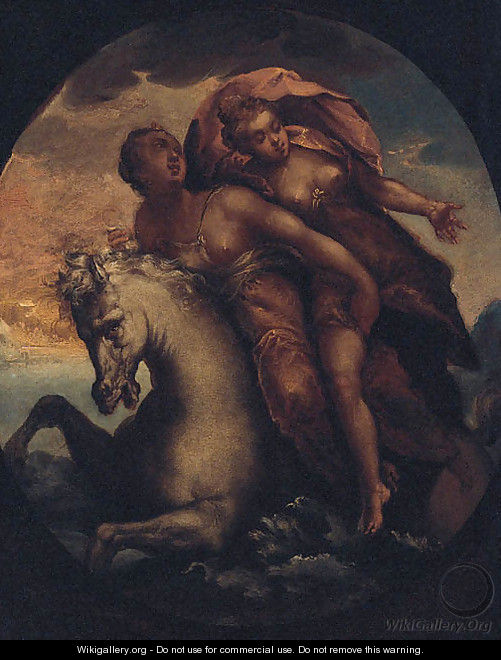
The name was borne by a semi-legendary Roman heroine. Cloelia was taken hostage by the Etruscan king, Lars Porsena, she managed to escape by crossing the Tiber on her horse. She agreed to be returned to the Etruscans as a hostage on the condition that they set free all the young Roman men they had taken hostage so that they may continue the war.

She is the only woman in Roman history ever to have had an equestrian statue erected in her honour.

Her story was the subject of an 18th-century Italian opera.

The name appears in the 1839 novel, The Charterhouse of Parma by Stendhal.

The name has been borne by several other remarkable women. Including:

  • Clelia Durazzo Grimaldi (1730-1830) an Italian botanist and marchesa of Genoa, Italy.
  • Clelia Rachel Barbieri (1847-1870) an Italian saint who is credited as being the youngest person ever to have found a religious order, she was the foundress of the Order of the Sisters Minims of Our Lady of Sorrows.
  • Clelia Duel Mosher (1863-1940) a women’s health advocate of the Victorian era.

As of 2010, Clélia was the 258th most popular female name in France.

Other forms of the name include:

  • Clelia (English/German/Italian)
  • Clélia (French/Spanish)
  • Clélie (French)
  • Cloelia (Latin)
  • Klelia (Polish)

Masculine forms are Cloelius and Clelio (Italian).

Clay might make an interesting nickname option.
Perrine

Gender: Feminine
Origin: French
(peh-HREEN)

The name is a Medieval French feminine form of Pierre. It was borne by a French Christian martyr of Angou who was decapitated during the French Revolution.

As of 2010, Perrine was the 260th most popular female name in France.

Other forms of the name include:

  • Périne (French)
  • Périnne (French: pey-HRIN)
  • Pierrette (French)
  • Pierina (Italian)
This may make a nice full option for Perry.

Soline

Gender: Feminine
Origin: French
Meaning: debated
(soh-LEEN)

She is a regional gem with a deep history, Soline is borne by an early Christian martyr of the Poitou-Charente region. Several theories exist as to the origins of the name, the two most common suggestions are that:

  • She is a form of the French, Solène, which is from the Latin meaning, “solemn.” Or;
  • She is derived from the Old French word, solive, meaning, “wood beam.”

More modern theories have connected it with the Latin, sol, meaning, “sun”, but this is unlikely.

As of 2010, she was the 268th most popular female name in France.

Coincidentally, Soline is also the name of a city in Croatia. In addition, there is a small town  named Sainte-Soline in the Poitou region of France, it gets its name from the Church where it is traditionally believed the saint was martyred.

Berenice, Bernice

Gender: Feminine
Origin: Greek Βερενικη
Meaning: “bringer of victory.”
Eng (ber-ə-NIE-see; ber-NEES); Fre (beh-hreh-NEES); It (bey-rey-NEE-cheh)

The name is an ancient Macedonian form of the Attic Greek, Pherenikë (Φερενίκη), which is composed of the Greek elements, phero (φέρω), “to bear” and nike (νίκη), “victory.” The earliest attestation of the name is a 3rd-century priestess of Demeter.

The name has often been associated with Veronica, but there is still debate as to whether these two names are actually related.

Berenice was a common one among the Ptolomy dynasty of Egypt, being borne by at least 9 Ptolomaic women. It also seems to have been common among the late Judaean Kingdom royalty, being born by 3 Jewish princesses, one of whom appears briefly in the New Testament as the name King Herod’s sister.

It was later borne by an early Christian Greek martyr, making the name remain common after the debut of Christianity.

In the English-speaking world, she has appeared interchangeably as Berenice and Bernice. In the United States, Bernice seems to have been the more common form, the highest she ever ranked was in 1921, coming in as the 39th most popular female name.

As of 2011, neither Berenice or Bernice appear in the U.S. top 1000, but Bérénice was the 279th most popular female name in France, (2010).

Other forms of the name include:

  • Bjeranika Бераніка (Belarusian)
  • Berenice (Catalan/Dutch/English/Italian/Portuguese/Spanish)
  • Berenika Береника (Czech/Polish/Russian/Slovak)
  • Bernice (English)
  • Bérénice (French)
  • Berenike (German)
  • Bereníkē Βερενίκη (Greek: modern)
  • Bereniké (Hungarian)

Gabin

Gender: Masculine
Origin: Latin
Meaning: “from Gabium.”
(gah-BAHn)

The name is derived from the Latin male name, Gabinus, meaning, “from Gabium” a city which existed in the Lazio region of Italy.

The name was borne by several early saints, including St. Gabino of Sardinia.

As of 2010, Gabin was the 27th most popular male name in France.

Other forms of the name include:

  • Gabí (Catalan)
  • Gabino (Italian/Spanish)
  • Gabinus (Latin)
  • Gabinu (Sardinian)
  • Gavino (Spanish)

An obscure French feminine form is Gabine.

Alexis, Alexa, Alexia, Alessia

Gender: Masculine
Origin: Greek
Meaning: “defender; helper.”
(uh-LEK-sis)

The name is derived from the Greek male name, Αλεξις (Alexis), which is derived from the Greek element, αλεξω (alexo), meaning, “defender; helper.”

The name was borne by a 3rd-century Greek comic and poet, and by several male saints and five Byzantine emperors.

In its Russian incarnation of Aleksei, it was fairly common among Russian royalty. It was borne by two Russian tsars and by the last Russian crown-prince, Aleksei Romanov.

Currently, in the United States, Alexis ranks in as the 242nd most popular male name, despite this, the name is far more common for females, (even though Alexis is not a legitimate feminine name and should not be considered as such), in fact, it is currently the 26th most popular female name, (2011). In the United States, its usage as a female given name can be traced all the way to the 1940s, when it first entered the U.S. top 1000. Its usage among females is most likely attributed to Canadian actress, Alexis Smith (1921-1993) who was born as Gladys. Its popularity on females, however, might mostly be influenced by the 1980 drama series, Dynasty, in which one of the female leads, played by Joan Collins, was named Alexis.

In other countries, Alexis as a male name is ranked as follows:

  • # 28 (France, 2010)
  • # 38 (Alejo, Argentina, 2009)
  • # 83 (Belgium, 2008)
  • # 90 (Aleix, Spain, 2010)

Other forms of the name include:

  • Ales (Basque)
  • Aleksei/Alexei Алексей (Bulgarian/Russian)
  • Aleix (Catalan)
  • Alesiu (Corsican)
  • Aleksej/Alexej (Czech/Slovak)
  • Alexis (Danish/English/German/French/Norwegian/Spanish/Swedish)
  • Aleksi (Finnish)
  • Aleksis (Finnish)
  • Aleixo (Galician/Portuguese)
  • Alexei (German)
  • Alexios Αλεξιος (Greek)
  • Elek (Hungarian)
  • Alessi (Italian: obscure)
  • Alessio (Italian)
  • Alexius (Latin/German)
  • Aleksas (Lithuanian)
  • Aleksy (Polish)
  • Alexie (Romanian)
  • Alexi (Romansch)
  • Aliesch (Romansch)
  • Alessiu (Sicilian)
  • Lezziu (Sicilian)
  • Alejo (Spanish)
  • Aleksej (Slovene)
  • Aleš (Slovene)
  • Oleksiy Олексій (Ukrainian)

Alyosha and Lyosha are common Russian diminutive forms.

Its feminine forms of Alexa and Alexia are also rising in popularity, Alexia is currently the 275th most popular feminine name in the United States, (2011), while Alexa comes in as the 55th most popular female name. I shall go into more details in another post. In the meantime, here are other feminine forms

  • Alexa (English/Hungarian)
  • Alexia (English/German/Greek/French)
  • Alessa (Italian)
  • Alessia (Italian)
  • Alessina (Italian)
  • Aleksja (Polish)
  • Aléxia (Portuguese)
  • Alexina/Alexine (Scottish)

Common short forms are Alex, Lex and Lexie.

Designated name-days are: February 17 (France), March 17 (Greece), July 17 (Germany) and December 12 (Sweden).

Sources

  1. http://www.behindthename.com/name/alexis
  2. http://www.askoxford.com/firstnames/alexis?view=uk
  3. http://www.askoxford.com/firstnames/alexa?view=uk
  4. http://www.askoxford.com/firstnames/alexia?view=uk
  5. Bengt af Klintberg: Namnen i almanackan, 2001
  6. Yáñez Solana, Manuel (1995). El gran libro de los Nombres. M. E. Editores, Madrid
  7. Montes Vicente, José María (2001). El libro de los Santos. Alianza, Madrid
  8. Kustaa Vilkuna: Etunimet, 3. painos 2001, s. 30,

Safiyya

Gender: Feminine
Origin: Arabic صفيّة
Meaning: “pure.”
(sah-FEE-yah)

The name is derived from the Arabic word, saf صاف (pure).

The name was borne by Safiyya Bint Huyayy, a Jewish-Bedouin woman who converted to Islam and became one of the Prophet Mohammed’s wives. It was also borne by Safiyya bint ‘Abd al-Muttalib, a Sahaba of Mohammed.

As of 2010, its Maghrebin form of Safia was the 293rd most popular female name in France. Her variant forms appear throughout the French top 500; their rankings are as follows:

  • # 297 (Safa)
  • # 466 (Safiya)
Safiyyah was the 10th most popular female name in Malaysia (2011)

Other forms of Safiya include:

  • Safija Сафия (Albanian/Bosnian/Bulgarian/Central Asian)
  • Safia (Algerian/Berber/Moroccan/Tunisian)
  • Safa (Arabic)
  • Saffiya (Arabic)
  • Safiye (Azeri/Kurdish/Turkish)
  • Shafiyah (Indonesian)
  • Safiyyah (Malaysian)
  • Safiya صفیه (Persian)

Cyrielle

Gender: Feminine
Origin: French
(see-hree-YEL)

Danielle and Michelle are both hopelessly dated, Brielle is becoming too trendy, so why not this fresh and breezy French gem?

Cyrielle is a feminine form of the obscure French masculine name, Cyriel, a form of Cyril.

As of 2010, Cyrielle was the 295th most popular female name in France. She has risen 25 spots since 2009, so she is growing in her homeland.

Roman

Gender: Masculine
Origin: Latin
Meaning “Roman.”
Eng Masc. (ROH-men) Eng Fem. (roh-MANE); Fre Masc. (hroh-MAHn); Fre Fem. (hroh-MEHN); Pol (ROH-mahn)

The name’s meaning is clear from its very first utterance, most renowned in the State’s through Polish director and film maker, Roman Polanski, it was the name of a Christian martyr who died under Diocletian.

In recent years, the name has had a peak in popularity, it currently ranks in as the 157th most popular male name in the United States (2011), and seems to be rising.

His rankings in other countries are as follows:

  • # 36 (Romain, Belgium, 2008)
  • # 39 (Romain, France, 2010)
  • # 228 (Roman, France, 2010)
  • # 494 (Netherlands, 2011)

Its designated name-days are: February 23 (Slovakia); February 28/29 (Poland), May 28 (Estonia), August 9 (Czech Republic/Poland), October 6/23 (Poland), November 18 (Poland).

Roman is used in Czech, Estonian, German, Polish, Slovakian and Slovenian.

Other forms of the name are:

  • Roman Роман (Croatian/English/German/Norwegian/Polish/Romansch/Russian/Slovak/Slovene/Swedish/Ukrainian)
  • Romain (French)
  • Romanos (Greek)
  • Román (Hungarian/Spanish)
  • Romano (Italian)
  • Romanello/Romanino (Italian: obscure)
  • Romanus (Latin)
  • Romanas (Lithuanian)
  • Reman (Poitvin)
  • Romans (Poitvin)
  • Rouman (Poivin)

In Polish, Romek is the diminutive form.

Feminine forms are:

  • Romana (Croatian/Czech/Italian/Lithuanian/Polish/Slovak/Slovene)
  • Romaine (English/French)
  • Romane (French)
  • Romána (Hungarian)
  • Romanella (Italian)
  • Romanina (Italian)
  • Romanita (Italian/Spanish)
  • Romina (Italian/Spanish)
  • Romanela (Polish: very obscure)