Rareș

220px-043a_-_Petru_Rares


  • Gender: Masculine
  • Origin: Romanian
  • (RAH-resh)

Of uncertain origin or meaning, this was the byname of the Moldovan ruler, Petru Rareș (1483-1546). Rareș was the illegitimate child of Stephen the Great & Maria Răreșoaia of Hârlău, who was married to a fish merchant nicknamed Rareș. Some believe the name stems from the Romanian element rar (rare-haired; sparse hair).

It is currently the 492nd Most Popular Male Name in England & Wales, (2018).

Sources


Igor, Ingvar

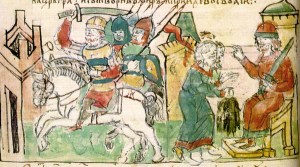
Radzivill_Igor-945


Ingvar is the modern Scandinavian form of the Old Norse, Yngvarr, meaning “Ing’s warrior.” It was introduced into Russia in the 10th-century by the Varangians, which gave the world the Igor form. The latter was borne by 2 Grand Princes of Kiev and has been a favorite in several Slavic countries since.

Currently, Igor is the 19th Most Popular Male Name in Poland (2018) and the 48th Most Popular in Moscow, Russia (2018), while in England he currently ranks quite low at #497 (2018).

Igor is used in Bulgarian, Czech-Slovak, Dutch, Estonian, German, Hungarian, Italian, Macedonian, Portuguese, Romanian, Serbo-Croatian, all modern Scandinavian languages, Slovene, & Spanish

Other forms of the name include:

  • Ihar Ігар (Belarusian)
  • Ingvar (Danish, Estonian, Finnish, Icelandic, Norwegian, Swedish)
  • Iku (Finnish)
  • Ingwar, Ingwer (German)
  • Ingvaari (Greelandic)
  • Ingvâre (Greenlandic)
  • Ígor (Icelandic)
  • Inguarus (Late Latin)
  • Ingvars, Igors (Latvian)
  • Igoris (Lithuanian)
  • Ignar (Nowegian)
  • Yngvar (Norwegian)
  • Yngvarr (Old Norse)
  • Ingwar (Polish)
  • Inguar (Portuguese)
  • Ingor (Swedish)
  • Ihor Ігор  (Ukrainian)

Sources

Eshaal

The name is a traditional unisex Arabic name derived from the Arabic root, SH-AIN-L, meaning “to kindle, to enflame, to excite.”

Eshaal is currently the 484th Most Popular Female Name in England & Wales (2018).

Maghrebi forms are Ichale & Ichelle.

Sources

Indiana

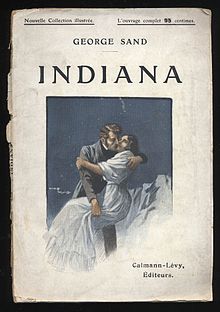
220px-Indiana,_George_Sand_(Calmann-Lévy)


The name is said to be from the name of the Midwest American State meaning, “Indian land.” In reality, it was more likely a blend of the term Indian with the feminine Latin suffix – ana on the end. The place that is now known as Indiana got its name in 1800 and was named in honour of several indigenous American tribes who were native to the area.

Indiana has had long enough use as a female given-name in England and the United States, its earliest use can probably be traced to the 1796 Frances Burney novel, Camilla, in which it is the name of the eponymous heroin’s cousin. That same year there are several baptismal records for Indianas across England, but there are even earlier records from 1788, a baptismal record for an Indiana Jane White borne in Essex, England. The name may have been used by families who had colonist ties to India or the U.S.

It was also the name of titular heroine of the 1836 George Sand Novel, Indiana, and it appears as the name of a minor character in Edith Wharton’s 1913 novel, The Custom of the Country.

Indiana sporadically appeared in the U.S. Top 1000 Most Poplar Female Names between 1880 and 1893. It peaked at #580 in 1880.

Its usage as a male name is extremely recent, in fact, it can only be traced to the George Lucas’ Indiana Jones franchise. Supposedly, Lucas named the character after his dog and was also trying to pay homage to a 1966 hero from a Western named Nevada Smith.

Currently, Indiana has experienced popularity in Australia. As of 2018, Indiana was the 78th Most Popular Female Name in Australia, New South Wales. In England & Wales, she ranks much lower at #484.

As for it being a male name, though you may have the idea of Indiana Jones stuck in your head, think about this, traditionally -ana is a Latin suffix mostly used for feminine names and nouns. A logical male form would be Indiano, and there are records for Indiano being used in the 1800s. I even found a record for an Indiano Jones born in 1840 Virginia.

Notable bearers are Australian actress, Indiana Evans (b. 1900) (she is likely the trigger behind the name’s popularity in Australia); Australian actress and singer, Indiana Massara (b. 2002), British singer, Indiana (borne Lauren Henson); and Nicaraguan model, Indiana Sánchez (b.1987).

Sources

30 Sophia Alternatives

canstockphoto4147756


Sophia is currently the 5th Most Popular Female Name in the United States. In 1997, this Greek classic first entered the U.S. Top 100 and peaked at #1 between 2011-2013. Its alternative spelling of Sofia is also in the Top 100. Sofia currently reigns in the #17 spot, while its French form of Sophie currently comes in at #98.

If you already have a Sophia but want a more unusual sister-name that goes well or you like the sound of Sophia but not the popularity, below are 30 names with a similar style and feel as Sophia


  • Agafia: a Russian variant transliteration form of Agafya, the latter is the Russian form of Agatha.
  • Alifa: from the Arabic meaning, “kind & compassionate.”
  • Annasofia, Annasophia: a European double name used in Northern Germanic Europe, this would make an unusual yet recognizable alternative to Anna or Sophia, or even Anastasia.
  • Bethia: a Scottish & English form of the Gaelic Beathag or the Biblical Hebrew, Bithiah, either way, this rare gem that was once common in the 18th-century is due for a comeback.
  • Christoffia, Christophia: an obscure Nordic feminine form of Christopher, this would be the perfect alternative to Sophia or even Christina.
  • Dolfia, Dolphia: a contracted form of Rudolphia.
  • Delphia: the name first came into use in the 17th-century when it was used in the 1647 Fletch & Messinger play, The Prophetess.
  • Eleftheria: this Greek gem means “freedom.”
  • Eulalia: meaning “well-spoken,” this Greek lovely was more common at the turn of the 20th-century, nicknames include Lalie, Lali, Lia and even Euli/Yulie.
  • Euphemia: found in Greek mythology and also the name of a saint, this unusual elaborate Greek monikor was more common, (albeit never popular), at the turn of the 20th-century. It spawned Effie & Eppie, which were also commonly used as independent names around the same time.
  • Hestia: literally meaning “hearth” in Greek, this was the name of the Greek goddess of home & domesticity. She has an elegant sound and a cozy significance.
  • Ilithyia: pronounced i-LIE-thee-ah in English, this was the name of a Greek goddess of midwifery.
  • Josefia, Josephia: an elaborate feminine form of Joseph.
  • Lethia: a contracted form of Alethea or a variation of the Greek, Lethe which is the name of a river in the Greek underworld.
  • Ligeia: pronounced lie-GHEE-ah or lie-GAY-ah in English, this was the name of a siren in Greek legend as well as the eponymous character in Edgar Allen Poe’s 1838 poem.
  • Lutfia, Lutfiya: pronounced lut-FEE-ah, this charming Arabic name means “compassionate.”
  • Olafia: an Icelandic feminine form of Olaf.
  • Raphea: an elaborated truncated form of Rafaela or a variant transcription of the Arabic, Rafia, meaning “kind, compassionate.”
  • Romea: a Romansch feminine form of Romeo.
  • Rudolfia, Rudolphia: an obscure Nordic feminine form of Rudolph.
  • Safina: an obscure Nordic form of Sophia or Sapphira.
  • Sapphira: pronounced saf-FIE-ruh in English, this gorgeous Biblical name might make the perfect yet unusual alternative to Sophia.
  • Seraphia: the name of a Syrian Christian martyr, she can be pronounced SAIR-ah-FEE-ah or seh-RAF-ee-ah. There is also the lyrical alternative form of Serapia and the French Séraphie or you can anglicize it to Seraphie (SAIR-e-FEE).
  • Sophronia: from the Greek meaning “self-controlled, sensible,” this name has been borne by saints and is also the scientific name for the cattleya orchid. It was more common in the 19th-century and spawned offshoots such as Frona & Fronie.
  • Sophonisba: this unusual appellation was borne by an alleged Carthaginian princess, her name is believed to be a Latin mistranslation of Safanba’al meaning “sheltered by Ba’al.” Sophonisba later became the subject of numerous 15th-century Italian plays and was borne by Italian artist, Sofonisba Anguissola (1535-1624).
  • Theodora: you can shorten her to the boyish Teddy or the more girly Dora, she is regal, majestic and has the same byzantine flare as Sophia.
  • Theodosia: another byzantinesque nomen, she also has a plethora of wonderful nicknames to chose from.
  • Xanthe: The Greek answer to Flavia, she is exotic yet familiar.
  • Zenobia: the Greek form of Zaynab, this was the name of a beautiful Carthaginian queen.
  • Zelpha, Zilphia: a Biblical favorite of the Puritans meaning “frailty,” this was the name of one of the concubines of Abraham, the handmaid of Leah.
  • Zosia: a Polish diminutive form of Zofia, (ZOH-shah), this name was brought to the American public’s attention by Girls star, Zosia Mamet.

What do you think?

Would you use any of these?

Have any of these inspired you?


30 Emma Alternatives

emma


Do you love Emma but hate the popularity? Emma currently ranks in as the most popular female name in the United States. This Germanic M-heavy monikor was a hit 100 years ago and was considered too old fashioned until it became chic in the late 90s. Here are some other Germanic oldies you might want to consider as an alternative or perhaps a nice sibling match for an Emma.

I guarantee these names are not in the current U.S. Top 1000.

  • Alva: a current favorite among Swedish parents, this Old Norse name meaning “elf” has not been seen in the U.S. Top 1000 since 1958!
  • Auda: a feminine form of Otto, this sweet gem has a sonorous similarity to Autumn, yet has the same sweet old fashioned vibe of Audrey.
  • Berta, Bertha: This once beloved 2-syllable Germanic name was one of the most popular female names at the end of the 19th-century, then went so out of style that it hasn’t been seen in the Top 1000 since 1985. If Bertha is 2-heavy for you, you might prefer the less lispy Berta.
  • Ebba: a feminine form of Everett
  • Edda: another Old Norse name meaning “grand-mother” and also referring to the Nordic literary works, a great name for any parent who loves literature.
  • Elarda: a Frisian feminine form of Eilhard.
  • Emmilotte: this 19th-century German smush-name would make the perfect alternative to Emma & Charlotte.
  • Erna: is a lovely Old Norse name meaning “hale,”pronounced AIR-nah, it is even lovelier. Who knows, maybe we can start a trend for the phonetic Airna.
  • Gebba: a Frisian short form of Gebharda.
  • Gerta: this rearrangement of Greta is a short form of Gertrude.
  • Gesa: pronounced, GHES-sah, this a Low-German short form of Gertrude.
  • Gusta: a short form of Augusta that became an independent name in its own right, this was in the U.S. Top 1000 between 1881-1905.
  • Hedda: another Scandinavian favorite, this diminutive form of Hedwig surprisingly never appeared in the U.S. Top 1000 since 1880.
  • Herta: based on a mislanstation of the Norse fertility goddess by Nerthus, this 2-syllable Germanic female was once among the top 10 Most Popular Female Name in Germany.
  • Hilda: Hilda is strong and feminine, so why not Hilda for the 21st-Century? She is currently in the Swedish Top 100 and Hilda is being reconsidered by modern German parents. She has reappeared in the German Top 500 this past year.
  • Ida: a long-time favorite in Scandinavia, this has consistently been in the Swedish & Norwegian Top 100 since 1976.
  • Karda: an old diminutive form of Rikarda. 
  • Lemma: no one is quite sure where she came from, but she was in the U.S. Top 1000 between 1880-1891, and then just like that, she completely disappeared. Perhaps she was used in reference to the term in botany or the mathematical concept, however way you look at it, it is quite a fresh and unusual alternative to America’s #1 name.
  • Minna: Pronounced MIN-nah & not MEEN-nah, this lovely apellation is from the Old Germanic word (and modern Yiddish word!) for love (as in romantic love).
  • Nanna: name of a Norse goddess
  • Norma: Marilyn Monroe’s real name, who could go wrong.
  • Oda: feminine form of Udo.
  • Poldi: this adorable diminutive form of Leopoldina would make an unexpected yet chic modern choice
  • Seffa: an old German diminutive form of Josepha.
  • Selma: a short form of Anselma, Selma Hayek carries this name well, why not your newborn?
  • Silka: an Old German short form of Cecilia.
  • Tetta: a Friesian short form of Diederike
  • Trudy: this stand-alone  form of Gertrude would make an adorable independent name for a child of the 2020s
  • Ulla: why not Ulla? It is an Old Germanic name that fits many 2-syllable trendy name such as Emma, Ella & Stella.
  • Wanda: this Polish lovely was one Polish name that became widespread across the English-speaking world, if you want a more Germanic flavor, there is also Vanda.

What do you think?

Would you use any of these name?

Did you find inspiration in this list? If so, please share

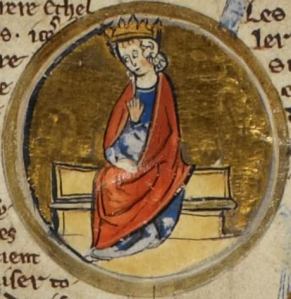
Alfred, Alfreda

alfred


The name is derived from the Anglo-Saxon, Ælfræd, which is composed of the Anglo-Saxon elements, ælf  “elf” and ræd “counsel. A notable bearer was the 9th-century Anglo-Saxon King, Alfred the Great.

This is one of the few Anglo-Saxon male names to survive popular usage after the Norman Conquest and slowly waned in use by the end of the Middle Ages, but was revived in the 18th-century.

Though quite uncommon in the United States in this day and age, it has never completely fallen outside the U.S. Top 1000, and once reigned in the U.S. Top 100 between 1880 and 1951. Alfred peaked at # 32 in 1886.

Alfred reigns supreme in the Scandinavian charts, he is currently the 8th Most Popular Male Name in Denmark (2018), the 12th Most Popular in Sweden (2018) and the 42nd Most Popular in Norway (2018).

He ranks much lower in the U.K., coming in at #106 and even lower in France, ranking in as the 491st Most Popular Male Name (2018).

Alfie, a diminutive form which has become a much loved independent given-name in the U.K, is currently in England & Wales’ Top 100 Baby Names, ranking in at #15 (2018).

Alfred is used in Danish, Dutch, German, Polish, Norwegian & Swedish

Other forms of the name include:

  • Ælfræd (Anglo-Saxon)
  • Alfredo (Aragonese, Galician, Italian, Portuguese, Spanish)
  • Alfredu (Asturian)
  • Alperda (Basque)
  • Aofred (Breton)
  • Alfréd (Czech, Hungarian, Slovak)
  • Alfie (English)
  • Alfre (Finnish, Greenlandic)
  • Alfreeti, Alfreetti (Finnish)
  • Alfrédos Αλφρέδος (Greek)
  • Alfreð (Icelandic)
  • Alfredino (Italian)
  • Alfredus (Late Latin)
  • Alfrēds (Latvian)
  • Alfredas (Lithuanian)
  • Al’fred Альфред (Russian)
  • Alfrid, Allfrid (Scandinavian)
  • Arfredu (Sicilian)

Its feminine form of Alfreda also has an Anglo-Saxon counterpart in the form of Ælfthryth. It was borne by a 9th-century English saint.

Alfreda is used in Croatian, Czech, Danish, Dutch, English, Finnish, German, Hungarian, Italian, Latvian, Lithuanian, Norwegian, Polish, Portuguese, Spanish & Swedish.

Other forms of the female form include:

  • Alfrede (Danish)
  • Elfrida (Croatian, Italian, Spanish)
  • Alfriede, Alfrieda (German, Scandinavian)
  • Elfriede (German)
  • Alfrède (French)
  • Alfrédie (French)
  • Alfride (French)
  • Alfreðsína (Icelandic)
  • Afreda (Italian)
  • Alfredina (Italian)
  • Alfrida (Scandinavian)

Sources

Nora, Nour

1024px-Dawn._Buryatia,_Russia


This multicultural name has recently experienced a revival. In European countries, the name stems from any name ending in the -nora element, such as Honora & Eleanora. In Arabic, Nora is a variant transliteration of Nurah, which is a strictly feminine version of the unisex Arabic name, Nur (light). Nur is used as one of the 99 attributes of Allah, al-Nur (the light).

The name was used by Henrik Ibsen for his main character in his play, A Doll’s House (1878).

Outside of East Asia, there isn’t a counry where Nora is unhead of or is not in use. Nora has been in out of the U.S. Top 100 since 1880! She currently ranks in as the 30th Most Popular Female Name in the United States. Her rankings in other countries are as follows:

  • #2 (Norway, 2018)
  • #10 (Netherlands, 2018)
  • #11 (Hungary, 2018)
  • #14 (Switzerland, 2018)
  • #15 (Denmark, 2018)
  • #20 (Belgium, 2018)
  • #23 (Austria, 2018)
  • #26 (Catalonia, Spain, 2018)
  • #28 (Sweden, 2018)
  • #38 (Canada, BC, 2018)
  • #47 (Spain, 2018)
  • #64 (Norah, Netherlands, 2018)
  • #79 (Bosnia & Herzegovina, 2018)
  • #84 (Norah, Canada, BC, 2018)
  • #85 (Italy, 2018)
  • #119 (France, 2018)
  • #140 (Norah, United States, 2018)
  • #184 (Norah, France, 2018)
  • #197 (England & Wales, 2018)
  • #283 (Norah, England & Wales, 2018)

Its Dutch version of Noor also ranks high in several popularity charts. This name is also used by Muslim families as a variation of Nur. Her rankings in other countries are as follows:

  • #10 (Netherlands, 2018)
  • #25 (Belgium, 2018)
  • #279 (England & Wales, 2018)
  • #311 (France, 2018)

Noortje is another Dutch version which currently ranks in as the 203rd Most Popular Female Name in the Netherlands.

Other forms of its European version include:

  • Nora Нора Νόρα (Bulgarian, Greek)
  • Noera (Dutch)
  • Noor (Dutch)
  • Noortje (Dutch)
  • Norah (Dutch, English, French)
  • Nonie (English)
  • Noreen (English, Irish)
  • Noora (Estonian, Finnish)
  • Nóra Но́ра (Faroese, Hungarian, Irish, Russian)
  • Nuura (Finnish, Scandinavian)
  • Nóirín (Gaelic)
  • Norina (Italian, Provençal, Romansch)
  • Norá (Sami)
  • Norea (Scandinavian)
  • Norena (Scandinavian)
  • Noria (Scandinavian)
  • Norita (Spanish, Scandinavian)

The Arabic Nur is traditionally a unisex name which is popularly used in many Islamic countries. Its Maghrebi form of Nour currently ranks in the following popularity charts for girls:

  • #40 (Belgium, 2018)
  • #48 (Catalonia, Spain, 2018)
  • #48 (France, 2018)
  • #76 (Spain, 2018)
  • #137 (Italy, 2018)
  • #197 (Netherlands, 2018)

Nur is currently the 87th Most Popular Female Name in Bosnia & Herzegovina (2018).

Other forms of the Arabic version include:

  • Noora, Nura (Arabic, strictly feminine)
  • Noura (Maghrebi Arabic, strictly feminine)
  • Núria (Catalan)
  • Nor (Malay, unisex)
  • Nuru (Swahili, strictly feminine)

Sources

Frida

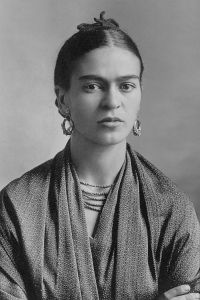
Frida_Kahlo,_by_Guillermo_Kahlo


The name is either derived from the Old Norse fríðr (beautiful; loved) or the German fried (peace, joy), (which is also the same case in Yiddish). In modern Swedish, Danish & Norwegian, the name may also be associated with the word frid, which also means peace.

The name has been imported into several cultures. It is not only used in Northern Europe, but has experienced usage in Anglophone, Francophone & Hispanophone countries. A notable bearer from the latter was Mexican artist, Frida Kahlo (1907-1954).

It is currently the 7th Most Popular Female Name in Norway & the 19th Most Popular in Denmark (2018).

In the United States, it currently comes in as the 693rd Most Popular Female Name.

The Frida form is used in the following languages: Danish, Dutch, Czech/Slovak, Estonian, Faroese, Finnish, Hungarian, German, Italian, Latvian, Lithuanian, Norwegian, Portuguese, Slovenian, Spanish, Swedish, Yiddish

Other forms include:

  • Fritha (Anglo-Saxon)
  • Fryd (Danish, Norwegian, Swedish)
  • Freda (English, German, Spanish)
  • Frieda (Estonian, German)
  • Friida (Finnish)
  • Riitu (Finnish)
  • Friede (German)
  • Friedel, Friedl (German, Yiddish)
  • Fríða FREE-thah (Icelandic, Old Norse)
  • Fríður FREE-thoor (Icelandic)
  • Frid (Norwegian, Swedish)
  • Fryda (Polish, Norwegian, Swedish)
  • Freyda, Frejda (Yiddish)

Sources