Hari

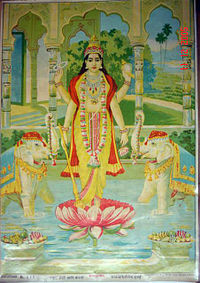
200px-Kamalakara_Vishnu,


The name is derived from the Sanskrit हरि (hari), which means “brown; yellow; green; fawn-coloured.” The word itself is derived from a proto-Indo-European root word, *ǵʰel- meaning, “to shine; yellow; green.” It is linked with the Persian word zar (gold), the Greek khlores (green), Slavic zelen (green) & zolto (gold); and even shares the same root with the modern English word yellow.

In Hinduism, Hari is used interchangeably with Vishnu and sometimes Krishna.

Hari is used to refere to God or the Supreme Being in many other Southeast Asian religions, such as in Sikhism, Buddhism & Jainism.

Hari in many Indian languages is also used as a euphemism for any brown fauna, such as lions, monkeys and horses. The feminine form of Harí is the name of a mythological matriarch of the monkey species, mentioned in Sanskrit epics.

Currently, Hari is the 440th Most Popular Male Name in England & Wales, (2018).

Sources

Honey

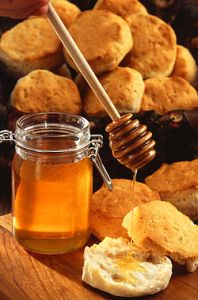
250px-Runny_hunny


The name started off as a diminutive form of Honorata, Honora, Honour & Honesty in the 18th-century and spun-off as an independent given-name by the early 1900s, particularly in England. Its modern use is used, no doubt in reference to the sweet substance produced by bees.

The name has been in the British Top 500 since 2003 and peaked at #152 in 2005. Currently, it is the 465th Most Popular Female Name in England & Wales (2018).

Sources

Hashim

The name is most likely derived from the Arabic root H26-SH-M  meaning “breaker or pulverizer.” This was a sobriquet for Hāshim ibn ‘Abd Manāf (circ. 5th-century C.E.) who was the great-grandfather of the Prophet Muhammad and found of the Banu Hashim tribe. Borne ‘Amr al-‘Ulā, ot is said he took this name because he used to break up his bread to share in a broth among pilgrims to Mecca and he is also said to have saved the poeple of Mecca from a famine by breaking up his bread into tiny crumbs.

Another transliteration is Hasheem

Currently, Hashim is the 436th Most Popular Male Name in England & Wales (2018).

Other forms include:

  • HIashim ХӀашим (Chechen)
  • Haysim (Indonesian)
  • Hashem هاشم (Persian)
  • Haşim (Turkish)

Sources

30 Isabella Alternatives

220px-Isabel_I_of_Castile


Isabella is the 4th most popular female name in the United States; this Italian monikor didn’t even crack the Top 1000 between 1949 and 1980. In 1990, it re-entered the U.S. Top 1000 at a lowly #894, by 1998, it cracked the top 100 and peaked at its highest at #1 in 2009 & 2010. She currently ranks high at # 4. Her popularity was most likely enabled by a few celebrities who chose this name for their children in the 1990s, most notably, Tom Cruise & Nicole Kidman.

If you love the style of Isabella but just don’t want your child to be one of many in a classroom, then these similar alternatives may be just right up your alley.

  • Diletta: with a beautiful and delectable sound, this name has been in the Italian top 100 since 2010. She currently ranks at #52 in Italy, but doesn’t even make an appearance in the U.S. Top 1000. She derives from the Latin dilectus meaning, “beloved.”
    Donatella: this fashion forward lovely is borne by Donatella Versace and was the subject of an eponymous 2013 Lady Gaga pop song, but she is currently not in the U.S. Top 1000.
    Elisabetta: a more elaborate Italian form of Elizabeth, like Diletta, she also appears in the Italian Top 100, but doesn’t appear in the U.S. Top 1000, a 2-for-1 deal, this would make a recognizable yet unusual alternative for Elizabeth or Isabella.
    Fiammetta: this is a Medieval Italian favorite which appears in the work of Boccacio & Dante Aligheri. It means “little flame.”
    Fiordelise: another Medieval Italian gem, this means “fleur-de-lis” or “cornflower.”
    Inasiata: I couldn’t find any information on this mysterious beauty, other than it being recorded as a female name in 14th-century Northern Italy.
    Isabeau: this is an older French variation of Isabelle and has the gender-bending nickname option of Beau.
    Isaltina: an Italian elaborate form of Isolde, it is occasionally still used in Brazil & Mozambique.
    Isaura, Izora: a Greek place-name that has been in use for centuries due to a saint, there is also the Cajun form of Izora which was in the U.S. Top 1000 between 1880 & 1904.
    Izetta: pronounced i-ZET-tah or ee-ZET-tah, it is uncertain where the name stems from but was fairly common in the Appalachian area between the 18th-century & 19th-century.
    Isabetta: a beautiful Medieval Italian form of Isabella.
  • Isabelline: a Medieval French diminutive form of Isabelle, it is used to describe an off-white colour and is the name of several different species of birds as well as the name of a type of architecural style found in Spain that was popularized under the reign of Isabel I of Castile.
    Isatis: a French nature name, it is from the French word for the artic fox and also the name of a type of flower.
    Iselota, Iselotte: an Anglo-Norman diminutive form of Isolde, these Medieval OGs are definitely due for a comeback.
    Iseppa: this is a Medieval Venetian form of Giuseppa.
  • Isolde: a romantic literary Medieval name, she never quite caught on in the United States.
    Isoline/Iseline: French and Norwegian variation of Isolde, there is also the lyrical Italian version of Isolina and the more subdued Norwegian form of Iselin.
    Isotta: the Italian form of Isolde, it is a besotted jewel that is dying to be used.
  • Jacobella: this is a Medieval Italian feminine form of Jacob. It is frilly and over-the-top, but so was Isabella once upon a time, before everyone got used to it, so why not this other -bella name?
    Lisabetta: a 15th-century Florentine form of Isabella & Elizabeth.
    Lucietta: an Italian diminutive form of Lucia, pronounced loo-CHYET-tah
    Orabella: a Ladino name meaning “gold” & “beautiful.”
    Solbella: a Ladino name meaning “beautiful sun.”
    Viridiana: from the Latin viridis, meaning “green,” it was borne by a few saints and is occasionally used in Italy, Spanish-speaking countries & Portuguese-speaking countries.
    Ysé, Ysée: of uncertain meaning, it seems to have first been used by French poet & dramatist, Paul Claudel for his play, Partage de Midi (1906).
    Ysbetta: a Medieval Italian variation of Isabella or Elizabeth.
    Mehetabel: an unusual Biblical name that experienced some use in the 18th-century among Puritans, it means “God is my pleasure.”
    Mirabelle, Mirabella: a Medieval name, this was derived from the Latin mirabelis “wonderful.” It is also the name of a type of plum.
    Christabel, Christabella: a Medieval elaborate form of Christine.
    Amabilia: a Late Latin form of Annabelle.

What do you think?

Would you use any of these names?

Have any of these names inspired you? Please share

Haidar

  • Gender: Masculine
  • Origin: Arabic
  • Meaning: Lion
  • Pronunciation: (HIE-dar; HAY-der)

From the Arabic حيدر‎; (lion), this was a nickname for the cousin and son-in-law of the Prophet Muhammed, Ali.

Currently, Haider is the 475th Most Popular Male Name in England & Wales (2018).

Variant transcriptions include: Hayder & Hyder.

Other forms include:

  • Hajdar (Albanian/Bosnian)
  • Heydər (Azeri)
  • Heydarحیدر (Persian)
  • Haydar (Turkish)

Sources

Raheem, Rahim

From the Arabic root R-H-M meaning “kind; merciful; compassionate.” The name is used in reference to الرحيم (al-Rahim), which is one of the 99 Names in Islam used to refer to Allah.

Another transcription is Roheem.

Raheem is currently the 465th Most Popular Male Name in England & Wales.

Rəhim is the Azeri form.

Sources

Sapphire, Safira, Sapir,

220px-Point-19_carat_diamond_cut_blue_Yogo_sapphireCROP


From the name of the blue precious gem, many etymologists believe Sapphire is derived from the Greek σαπφειρος sappheiros meaning “sapphire” or “lapis lazuli,” which is ultimately derived from the Hebrew סַפִּיר (sappir), which is connected to an older Semitic word for “beauty.” Others believe it is derived from the Sanskrit Shanipriya (favoured by Saturn), as the sapphire is believed in Vedic astrology to be protective against the ill-affects of the planet Saturn.

As a female given-name, there is enough evidence to show that this name can trace its origins to ancient Israel. In the Bible, Shiphrah, which shares the same root with סַפִּיר (sappir), is the name of one of the midwifes who refused to kill Hebrew baby boys. Shiphrah also spawned the common Ashkanazi surnames of Shifrin & Shapiro.

Among Hellenized Jews, the form Sapphira would have been in use. It is the name of a woman in the Acts, in the New Testament, who is struck down by God for lying about money to the Holy Spirit.

The Ancient Greek Sappho has also been linked with the Sapphira, but the etymological connection to the former is highly disputed.

Safira, Zaffira and its masculine form of Zaffiro, experienced sporadic use in Medieval Northern Italy.

Sapphire, Sephare appear in use as a female name in Anglo-Norman England, albeit rare.

Sapphira experienced a minor revival among the Puritans in the 18th-century due to its Biblical connotations; the Puritans didn’t seem to care about the character of some Biblical figures when choosing a baby name.

In Portugal, Safira is currently the 100th Most Popular Female Name (2018).

Sapphire is currently the 361st Most Popular Female Name in England & Wales (2018).

Other forms include:

  • Sappheire Σαπφειρη (Biblical Greek)
  • Safir (Catalan)
  • Safira (Dutch/Polish/Portuguese/Scandinavian/Spanish)
  • Saphire (French)
  • Sephirine (French)
  • Saphira (German/Scandinavian)
  • Zafira (Hungarian/Spanish)
  • Saffira (Italian/Latin)
  • Sapfeira Σαπφείρα (Modern Greek)
  • Sapirit (Modern Hebrew, literally meaning “little saphire)
  • Zaffira (Medieval Italian)
  • Sapfíra Сапфи́ра (Russian)
  • Safina (Scandinavian)
  • Zefira (Polish)
  • Zefiryna (Polish)

Masculine forms include, Saffiro (Italian), Zaffiro (Italian) & Zafiro (Spanish).

Other associations include:

  • Saphira is the name of a species of white grapes.
  • Saphira is the name of the dragon in the series of fantasy books known as The Inheritance Cycle, by Christopher Paolini
  • Opel Zafira is the name of a make of car produced by General Motors and introduced in 2011
  • American poet Sapphire, (born Ramona Lofton in 1950)
  • Sapphire is the name of a fictional superheroine in the DC Comics Universe
  • Sapphire is the name of a character on the British web series, Corner Shop Show
  • Sapphire is the name of the main character on the British sci-fi series, Sapphire & Steele
  • Princess Sapphire is the main character in the manga series, Princess Knight
  • Sapphire, a 1959 British film recounting the murder of an eponymous mixed-race girl from the West Indies in London

The name is also borne by Dutch model, Safira de Wit (b.1989).

Sources