Sephora, Zipporah

Zipporah


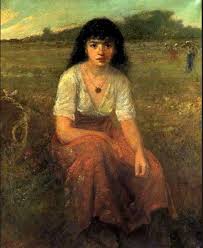
Zipporah is derived from the Hebrew צִפוֹרָה, Tsippōrāh, “bird.” It is the name of the wife of Moses in the Book of Exodus. The name was often transliterated from the Greek as Sephora.

Pronounced ZIP-pe-ruh in English (kind of rhymes with Deborah), it was first used by Protestant non-Jews in the English speaking world in the 16th-century. Both Zipporah but more often Sephora were occasionally used in 16th-century England and Colonial America.

Zipporah has always been a popular name in the Jewish diaspora, which has spun-off some colourful offshoots. A favorite among Ashkenazi Jews since Medieval Times, it is the inspiration of the Yiddish name, Faigel, which is from the Yiddish פֿויגל (foigl) meaning “bird.” Pre-Yiddish Knaanic Jews of Slavic lands, particularly in Poland used Sójka (blue jay) as a vernacular form. Due to its similar sound, European-Jews also used Cypriana as a form of Zipporah though the names have no etymological relation.

The name of the cosmetic store was named in reference to Moses’ wife.

Other forms include:

  • Safura, Safrawah صفورا (Arabic)
  • Səfurə (Azeri)
  • Zipora (Breton, German)
  • Sèfora (Catalan)
  • Sipóra (Czech)
  • Sippora (Dutch, Finnish, Scandinavian)
  • Séphora, Zéphora (French)
  • Zippora (German)
  • Sepphora Σεπφώρα (Biblical Greek)
  • Tziporah, Tziporrah צִפּוֹרָה (Modern Hebrew)
  • Cipora, Cippóra (Hungarian)
  • Sefora (Italian)
  • Chipora (Judeo Anglo-Norman)
  • Cipiora, Çapora (Ladino)
  • Seffora (Latin)
  • Ṣaffūrah (Malay)
  • Cippora, Cyppora, Sefora (Polish)
  • Séfora (Portuguese, Spanish)
  • Zípora (Portuguese)
  • Sepfora Сепфора επφώρα (Russian, Modern Greek)
  • Zipóra (Spanish)
  • Cypojra, Cypra (Polish-Yiddish)
  • Bayerle (Medieval Judeo-German)
  • Beverlin, Beverle, Böverle, Böverlin (Medieval Judeo-German)
  • Paye, Payerlayn, Payerl, Payerle, Payerlin (Medieval Judeo-German)
  • Pura, Pure, Purlin (Yiddish)
  • Tsipere, Tsipoyre, Tsipure, Tsipor, Tsipur (Yiddish)
  • Tsiporlin (Yiddish)

Popular diminutive forms are Zippy and Tsipi

Sources

Cassius

Cassius


The name is of uncertain origin or meaning, it has been linked with the Latin cassus, meaning “hollow, empty, vain,” and the Latin cassis (metal helmet). It has also been suggested to be of Etruscan origins. It was the name of a Roman gens, which produced such Roman notables as Gaius Cassius Longinus (died 42 C.E.) who was one of the assassins of Julius Caesar; and Roman historian Cassius Dio (died 235 C.E). The Via Cassia is a namesake of the same clan.

The name was subsequently borne by several early saints, including Cassius of Clermont (3rd-Century C.E.) and Cassius of Narni (d. 558 C.E.). Its feminine forms of Cassia & Cassiana are also borne by several female saints.

A more recent notable bearer is Cassius Clay (1942-2016), which was the birth name of the American Boxer, Muhammed Ali, who was in turn named for his father who was named after the American abolitionist and politician Cassius Marcellus Clay, Sr (1810-1903).

Cassius has been in and out of the U.S. Top 1000 since 1880, between 1880-1895, it was among the Top 1000 and peaked at #425 in 1880. Between 1896-1964, the name did not appear in the U.S. Top 1000. He made a brief appearance in 1964 coming in as the 859th most popular male name. His sudden appearance in 1964 may be due to Muhammed Ali winning the world heavyweight championship of the same year. Between 1964-2008, Cassius was once again expelled from the top 1000. As of 2018, Cassius was 595th Most Popular Male Name in the United States. In England & Wales, he ranks in at #333.

Traditionally pronounced CASH-es in English, it is often shortened to Cash. Another form is Cassian (KASH-en).

Other forms include:

  • Kasi (Basque)
  • Kasian (Breton)
  • Cassi, Cássius (Catalan)
  • Kasije (Croatian, Serbian)
  • Kasián (Czech)
  • Cassianus (Dutch, Latin)
  • Cassius, Kassius (Dutch, German)
  • Cassian (German, Occitanian)
  • Kassian (German)
  • Cassie, Cassien (French)
  • Cassiano, Cassio (Italian)
  • Casiano, Casio (Spanish)
  • Kasiani (Kiswahili)
  • Kasijus (Lithuanian)
  • Kasjusz, Kasjan (Polish)
  • Cássiano, Cássio (Portuguese)
  • Kassij Кассий, Кассій (Russian, Ukrainian)

Feminine forms include:

  • Cássia, Cássiana (Catalan, Portuguese)
  • Kasija (Croatian, Lithuanian, Serbian)
  • Cassia, Cassiana (English CASH-uh, Italian, Occitanian)
  • Cassiane, Cassienne, Cassie (French)
  • Kasja, Kasjana (Polish)
  • Kassija (Russian, Ukrainian)
  • Casia, Casiana (Spanish)

Sources

Ciarán, Kieran, Ciar


Ciaran


  • Origin: Gaelic
  • Meaning: “black”
  • Gender: masculine
  • Pronunciation: KEER-an; KYAIR-en, KEER

Ciarán is a diminutive form of Ciar, which comes directly from the Gaelic word for black.

In Irish legend, Ciar mac Fergus was the son of Fergus mac Róich. He was legendary progenitor of the Ciarraid people who gave their name to County Kerry in Ireland.

The name is borne by two Irish saints who are considered 2 of the 12 Apostles of Ireland, Ciarán the Elder & Ciarán the Younger (5th-century C.E.).

St. Ciarán the Elder was believed to be a contemporary of St. Patrick and he is often lauded as the first native born Irish saint. According to legend, his mother Liadán swallowed a star while pregnant with him and was told by the Druid priests that it meant her child would grow up to be an important man. Scholars debated whether he preceded Patrick in converting to Christianity or even met him or if he was converted by St. Patrick himself and was considered one of his helpers; the latter hypothesis seems to be the most popular.

St. Ciarán the Younger was the founder of the monastery in Clonmacnoise, one of the most important Christian centres in Medieval Ireland.

Other forms include:

  • Kenerin (Breton)
  • Kerne (Breton)
  • Kerrier (Breton)
  • Kyran (Breton)
  • Piran (Cornish)
  • Queranus (Dutch, Latin, German)
  • Keiran (English)
  • Kieran (English, French, Scots)
  • Kieron (English)
  • Queran (English, French, German)
  • Chiarain (French)
  • Kiéran (French)
  • Cirán (Galician)
  • Kiaran (German, Polish)
  • Ciarano (Italian, chyah-RAH-no, Spanish, syah-RAH-no, thyah-RAH-no)
  • Chierano (Italian, kyeh-RAH-no)
  • Ciaranus, Kyaranus (Late Latin)
  • Cieran (Welsh)

In the British Isles, Ciarán was quite popular in the early 2000s. In Northern Ireland, he peaked at #28 in 2000, #58 in 2004 in Scotland and #127 in England & Wales in 1997. In Ireland, it was the same case, peaking at #28 in 2002 and fell off the charts in 2017. Its anglicized form of Kieran currently ranks in the following countries:

  • #380 (England & Wales, 2018)
  • #496 (USA, 2018)

Its feminine form is Ciara

Sources

Bear

Bear Lenormand


Though Bear is a relatively recent name, it has ancestors that can be traced to Medieval Europe to the point that Bear just seems like a naturally modern and legitimate alternative.

Bero & Pero are the Old Saxon progenitors that can be traced to 9th-century Austria. There is the Anglo-Saxon Beorn, German Bern, Dutch Beren, Norse Björn and the Yiddish Ber.

Ber was used by European-Jews for centuries. Ber spun off the Hebrew name of Dov (bear) and Ber-Dov was a popular compound name found among Eastern-European Jews up until the mid 20th-century. It spawned diminutive offshoots such as Berl (not to be confused with Beryl) and Berek, borne by Berek Joselowicz, a Polish general of Jewish extraction who participated in the Kociuszko Uprising and was the first commander of a Jewish regiment in modern military history (1764-1809).

There are numerous Germanic names that have the element of Bern, the most notable being Bernhard or Bernard. The Swiss city of Bern is of the same etymology, and while folk etymology does link Berlin with bär (bear), it is actually related to a Slavic source meaning “swamp.”

The root of the word bear itself and its other Germanic cousins, all relate back to a Proto-Indo European euphemism meaning, “the brown one,” which relates back to the name Bruno. It is suspected that the ancient Germanic peoples feared the bear so much that they had to use a euphemisim to describe it in fear of conjuring its power if the animal’s true name was evoqued. The bear was a sacred animal among the early Germanic tribes that they also used its euphemistic name on their children.

As a given-name, Bear has recently entered the Top 500 Most Popular Male Names in England & Wales, currently ranking in at #384 (2018).

A notable bearer is Bear Grylls, borne Edward Michael Grylls (b.1974).

Feminine forms are Bera & Berna.

Sources

Aizah, Aiza

Aizah


This is another cross-cultural name that stems from across the globe. It is pronounced (I-zah) in all of its incarnations.

Its recent appearance in the U.K. Top 500 is most likely due to its use among the Pakistani community, in which case it derives from the Arabic Aydhah meaning, “replacement; substitute.” Others have suggested it derives from the Arabic عزّ (‘izz) meaning “glory, honour, majesty, power.” Aiza is also used as a Central Asian form of Aydhah. Another transliteration is Aizah.

Aiza is a Basque name and is recorded as a female name as early as the 12th-century in Navarre, it is the feminine form of Aizo which is of uncertain meaning. It has been suggested to be from aits (rock, stone). Although, there was a Basque king who had the feminine form as his byname, it is sometimes hispanified as Arista, which in his case may have been a corruption of the Basque Aritza (oak). As a result, Aiza appears as a surname throughout the Spanish-speaking world. Aiza has also been suggested to mean”cliff, rock” or “abyss.” Another Basque feminine form is Aizeti.

Aiza has also been very rarely used as feminine given-name in Latvia, its inspiration may be the Latvian word for river or gorge or it may be a contraction of another unknown name. The database of Latvian name statistics indicates the name has been used at least 6 times.

Finally, Aiza can be Japanese, from the Kanji characters 愛 (ai) meaning “love, affection” and 座 (za) meaning “seat; pin; cushion.”

Currently, Aiza is the 314th Most Popular Female Name in England & Wales (2018).

Sources

Zuva

Nieslysz_SunSet

  • Origin: Shona
  • Meaning: “sun, sunlight, daytime, date, time.”
  • Gender: Female
  • Pronunciation: ZOO-vah

The name comes directly from the Shona word for day, sunlight, sun or time and date.

It is used as a feminine given-name among Shona-speakers in Zimbabwe but also appears as a surname as in the case of South African socialite, Amanda Zuva Habane (b. 1988).

Zuva is also the name of a petroleum company in Zimbabwe.

As a given-name in the English-speaking world, I have been able to find records of a few Zuvas in the U.S. & England going back to the 1880s, but all of them were of European ancestry according to their census records. Perhaps it was used by families who had Zimbabwen colonist ties or perhaps they were using a name that sounds the same but has a different etymology. If anyone has any information as to why this name may have been used in the late 19th-century among white Anglos, please do share.

It is also a term of endearment used in Kashmiri, literally meaning, “my life,” but it is not used as a given-name.

Sources

Adhan, Azaan

429px-Jean-Léon_Gérôme_010


The name is derived from the Arabic root ʾadhina أَذِنَ meaning “to listen, to hear, be informed about,” or ʾudhun (أُذُن), meaning “ear.” The Adhan, sometimes romanized as Azaan, is the name of the Islamic call to prayer, which is rung 5 time a day.

Currently, Azaan is the 406th Most Popular Male Name in England & Wales, (2018). Other transliterated forms include: Adaan, Adan, Adhaan, Athan, Edan & Edhaan.

Other forms include:

  • Ezani (Albanian)
  • Ezan Езан (Albanian, Bosnian, Bulgarian, Kurdish, Turkish)
  • Azan Азан (Azeri, Kazakh, Kyrgyz, Malay, Tatar)
  • Azán Аза́н (Chechen)
  • Adan (Javanese)
  • Aadaan (Somali)
  • Azon Азон (Tajik)
  • Ezane (Zazaki)

Sources

Etta

Etta_Palm

Etta Palm d’Aelders (1743-1799).


The name is usually a short form of any name that ends in the -etta element; in Swedish, it derives from Estrid (a form of Astrid).

An early documented use is borne by the Dutch feminist, Etta Palm d’Aelders (1743-1799).

It became a fairly popular independent given-name in Continental Europe and the United States by the mid 19th-century. The name appeared among the U.S. Top 100 Most Popular Female Names between 1880 & 1894, peaking at #72 in 1880. Etta fell out of the U.S. Top 1000 in 1966 and reappeared in 2017. She currently ranks in at #951 (2018), meanwhile, in England & Wales, she ranks in as the 298th Most Popular Female Name (2018).

It has been in use in German-speaking countries, the Netherlands, Italy & Scandinavia.

A notable American bearer was Etta James (borne Jamesetta 1938-2012).

Other forms include:

  • Ætta (Old Norwegian)
  • Ätta (Swedish)
  • Ette (Scandinavian)
  • Ettie/Etti (Scandinavian)
  • Ettan (Swedish)

Sources

Dollie, Dolly

220px-Dolley_Madison


The name is a diminutive form of Dorothy but has been used as an independent given-name since the 18th-century. A notable example was American First Lady, Dolley Madison (1768-1849), whose birth name was just Dolley.

The common English noun for the plaything, doll, actually derives from the name. Doll was a common short form of Dorothy the same way Moll was for Mary starting in the 16th-century. By the early 1600s, doll came to refer to a mistress or paramour and by the 1640s, it became synonymous with a slattern. Around 1700, the term doll came to be specifically associated with a child’s plaything and lost any association with slattern or mistress. Today, doll is sometimes used as a term of endearment, especially in the American South.

Dolly appeared in the U.S. Top 1000 between 1880-1971, she peaked at #277 in 1881, while Dollie peaked even higher at #151 the same year.

Currently, Dolly is the 303rd Most Popular Female Name in England & Wales, (2018).

Another notable bearer is country music singer and actress, Dolly Parton (b. 1948).

Since the late 19th-century, Dolly/Dollie has also experienced some usage in German-speaking countries, French-speaking countries, and Scandinavia.

It has also been used as a diminutive form of Dolores.

Other forms include:

  • Doll (English, Scandinavian)
  • Dolley (English)
  • Dolli (Finnish/Scandinvian)
  • Dollý (Icelandic)

Sources

Verity, Veritas

220px-CanadaStatueTruth_crop


The name is derived from the word for truth and first came into popular use in 16th-century England, most likely being introduced by the Puritans. However, Veritas was the name of a Roman goddess (a Roman counterpart of the Greek Aleithea), so latinate counterparts may have been used for far longer on the Continent, however, I could not find any sources indicating such.

Currently, Verity is the 349th Most Popular Female Name in England & Wales, (2018).

Sources