Sławomir

images (1)


  • Origin: Polish
  • Meaning: “glorious peace; glorious world.”
  • Gender: masculine
  • (SWAH-vo-MEER)

The name is composed of the Old Polish elements, sławo (glory, fame, prestige) and mir (peace, serenity, world). It is the reverse form of Mirosław.


Its Germanic form of Sclaomir was borne by the brother of Drasco, an Obrodite prince who acted as a vassal for the Franks in the 9th-century.

Its Czech form of Slavomír was borne by a 9th-century Moravian duke who was known for leading a revolt against the Franks.


Designated name-days in Poland are May 17th, November 5th and December 23rd.


A common short form is Sławek.

The feminine form is Sławomira, with the diminutives Sława and Sławka.

Medieval Polish feminine forms found in 14th-century records are Sławna, Sławnica, Sławomirz, Sławomirza and Sławocha.

Other masculine forms include:

  • Slavamir Славамір (Belarusian)
  • Slavomir Славомир (Bosnian, Croatian, Russian, Serbian, Slovenian)
  • Slavomír (Czech/Slovak)
  • Sclaomir (German, archaic)
  • Sławòmir (Kashubian)
  • Sławomiar (Polish)
  • Eslavomir (Spanish)
  • Slavomyr Славомир (Ukrainian)

Feminine forms in other languages are Slavomíra (Czech & Slovak) and Slavomira (Bosnian, Croatian, Russian, Serbian, Slovenian)


Sources
Shair, Shaira

220px-Iqbal_and_son_Javid_in_1930

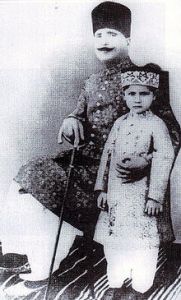
Allama Iqbal & Son (1930)


Shair (pronounced SHAH-eer) is a masculine name from the Arabic شاعر؛ meaning, “poet.”

It is the name of the oldest Urdu-language literary magazine (circ. 1930).

Among Pakistani families, both its feminine and masculine form may be used in honour of Shair-e-Mashriq (nee Muhammed Iqbal (1877-1938), known as Allama Iqbal, a British Indian poet who was known to have inspired the Pakistani Movement.


Its feminine form of Shaira (pronounced SHY-rah) also exists and has become widespread in Latin America and the Philippines since the 1980s. It is borne by Filipina photographer, Shaira Luna (b. 1986) and Filipina actress Shaira Diaz (b. 1995).


Sources


Sawda

Sawdah

By Omaislam – Own work, CC BY-SA 4.0, https://commons.wikimedia.org/w/index.php?curid=41784804


  • Origin: Arabic سودة
  • Meaning: uncertain
  • Gender: feminine
  • (SOW-dah)

The name is of uncertain meaning but is believed to be from the Arabic root S-W-D which can mean “blackness” or “large number of palm trees.”

The name was borne by one of the wives of the Prophet Muhammed known as Sawda bint Zama, considered one of the Mothers of Believers. Sawda bint Zama was a widow who married Prophet Muhammed at around the age of 50 to help care for his children.


Other transliterations are Sauda & Saudah.

Other forms include:

  • Seuda (Albanian)
  • Säüdä, Säüzä, Savda Сәүҙә (Bashkir)
  • Sevda (Bosnian)
  • Sawda Савда (Avar)
  • Sawdat Савдат (Chechen)
  • Saudah (Indonesian, Malaysian)
  • Sauda Сауда (Kazakh)
  • Sevde (Turkish)

Sources

Soner

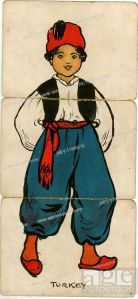
MEV-11989216 - © - Mary Evans Picture Library


  • Origin: Turkish
  • Meaning: “the end; the last.”
  • Gender: masculine
  • (SOH-ner)

The name is derived from the Turkish element son (the end, the last), it was originally used in reference to a last born child. The name was quite popular in Turkey between 1980 & 1996, appearing in the Turkish most popular male names, it peaked at #59 in 1983.

Another form is Sonalp.


Sources

Ritika

ritika


  • Origin: Sanskrit
  • Meaning: “brass, bell-metal” or “stream.”
  • Gender: feminine
  • (REE-tee-kah)

The name is most likely from the Sanskrit word रीतिका (ritika) meaning “brass; bell metal,” but may also be linked to the Sanskrit रीति (riti) meaning “stream.”

A notable bearer is Indian actress, Ritika Singh (b. 1993).


Sources

Sarayu

Raja_Ravi_Varma,_Sree_Rama_Crossing_Sarayu_river

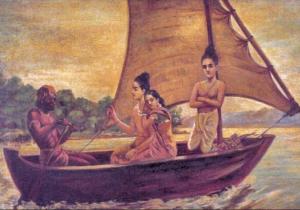
Rama along with Sita and Lakshmana crossing river Sarayu by Raja Ravi Varma.


  • Origin: Sanskrit
  • Meaning: “wind; air.”
  • Gender: feminine
  • (SAH-rah-yoo)

The name is ultimately derived from the Sanskrit सरयु meaning “wind, air.” It is also the name of a sacred river that runs along the banks of the Indian city of Ayodhya. During Rama Navani, the Hindu spring festival that celebrates the birth of Lord Rama, many people in Ayodhya will swim in the river as it is mentioned in some versions of the Ramayana that Rama took a swim in the river.

The Sarayu river is also mentioned in the Rigveda.

In popular culture, Sarayu is the name of the Holy Spirit in William P. Young’s The Shack (2007).

The name is borne by the Indian actress, Sarayu (b. 1988).