 Gender: Masculine
Origin: Turkish
Meaning: “high; lofty.”
The name comes from the Turkish meaning, “high; lofty.” The name is also used in Bosnia. It is currently the 468th most popular male name, (2011).
Gender: Masculine
Origin: Turkish
Meaning: “high; lofty.”
The name comes from the Turkish meaning, “high; lofty.” The name is also used in Bosnia. It is currently the 468th most popular male name, (2011).
 Gender: Masculine
Origin: Persian
Meaning: “free.”
The name comes directly from the Persian word for “free,” and has been in usage since Pre-Islamic times. It was borne by Azad Shah Afghan (1750-1781) the founder of the Azad dynasty which had ruled most of Central Asia for the later half of the 18th-century. It was also borne by an early Christian saint and martyr who was martyred along with his companions under the Sassanid Empire of the 4th-century. In the Western calendar of Saints, his name is usally latinized as Asatus.
It is currently borne by a German rapper of Kurdish descent, known simply as Azad (b.1974)
Azad is currently the 465th most popular male name in Germany, (2011).
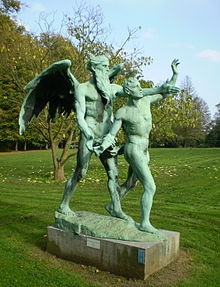
Time's mortal aspect is personified in this bronze statue by Charles van der Stappen
Gender: Masculine
Origin: Turkish
Meaning: “time; fate.”
The name is from the Turkish meaning “time; fate.”
It is currently the 483rd most popular male name in Germany, (2011)
 Gender: Masculine
Origin: Turkish
Meaning: “pretty; cute.”
The name is from the Turkish meaning, “pretty, cute.” It is currently the 488th most popular male name in Germany, (2011). Its feminine form, also used in Bosnia, is Meliha.
 Gender: Masculine
Origin: Albanian
Meaning: “of the Ardiaei.”
(ARE-dee-an)
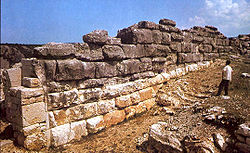
The name is derived from the name of an ancient Illyrian tribe known as the Ardiaei. Their homeland was believed to be located along the Naretva river in present day Bosnia & Herzogivina.
Traditionally, the Albanians pride themselves as being the direct descendant of the Illyrians, and this is one of their many patriotic names. Its feminine form is Ardiana.
Currently, Ardian is the 464th most popular male name in Germany, (2011). Other forms are Ardjan and Ardijan.
 Gender: Masculine
Origin: Frisian
Meaning: “thanks.”
(TAHM-me)
The name is a contracted form of any name that has the thanc element (thanks), Tamme is most likely a contraction of Dankmar, which is composed of the Germanic elements, dank (thanks) and mar (fame).
Tamme is currently the 450th most popular male name in Germany, (2011).
Other forms of the name include:
 Gender: Feminine
Origin: English
(vuh-NES-sah)
The name is popularly believed to be invented by Jonathan Swift, he is said to have created the name out of his tutoree’s first and last name, Esther Vanhomrigh. The name was used for a character in his 1726 poem, Cadenus & Vanessa. It has also been suggested that Swift may have been inspired by the Greek mystical name, Phanes or that he elaborated an Anglo-Norman cognate of Veronica, Venisse.
The name has often been erroneously listed as being a name of Greek origin with the meaning of butterfly. This is false. It is, however, the name of a genus of butterfly which was possibly named for the Jonathan Swift character.
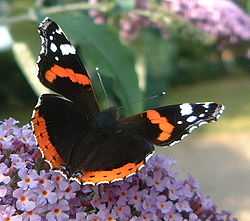
The name did not catch on in usage until the 20th-century, it was internationally popularized by British actress, Vanessa Redgrave (b.1937).
Currently, Vanessa is the 32nd most popular female name in Austria, (2010). Her rankings in other countries are as follows:
Other forms of the name include:
 Eng (LEE-nuh; LAY-nuh); Germ (LEH-nah)
The name is currently very popular in German-speaking countries and the most popular consensus is that it is a contraction of Magdalena or Helena.
It also happens to be the name of a river in Siberia, of which, Lenin took his name. Lena’s usage in Russia may be in reference to the river, but I have been unable to confirm if this is so.
In Poland, its usage as an independent given name is recorded as early as 1418, though the name did not become popular in Poland until the last 10 years.
It was also very in vogue at the turn of the 20th-century in the United States.
It is currently the 3rd most popular female name in Austria, (2010) and her rankings in other countries are as follows:
Other forms of the name include:
 Gender: Feminine
Origin: Swedish
Eng/Swe: (AHN-nik-kah)
The name is believed to be derived from a low German diminutive form of Anna and was popularized in Sweden via a character in Astrid Lingren’s Pippi Longstockings.
The name has experienced usage in surrounding Northern European countries, such as Estonia, Norway and Finland, and has become very popular in German-speaking countries. It is currently the 49th most popular female name in Austria, (2010). Her rankings in other countries are as follows:
Other forms of the name include:
 Gender: Feminine
Origin: German
Eng (mar-LEEN); Germ (mahr-LEH-neh)
The name is a blend of Maria and Magdalena, originally, it was usually bestowed in honour of St. Mary Magdalen by German-Catholic parents.
The name experienced a surge in popularity in Germany during WWII due to a popular song, Lili Marleen.
In the United States, the name was introduced by German actress, Marlene Dietrich (1901-1992), who was born Maria Magdalena von Losch.
Currently, in German-speaking countries, the name is experiencing a revival, it is the 29th most popular female name in Austria, (2010) and the 41st most popular in Germany. In the United States, she stands at # 902, (2010)
Other forms of the name include: