.jpg "Sun & Moon") Gender: Feminine
Gender: Feminine
Origin: Turkish
Meaning: “moon sun.”
(I-geun)
The name is composed of the Turkish elements, ay (moon) and gün (moon).
It is the 4th most popular name among the general female population in Azerbaijan, (2010).
Gender: Feminine
Origin: Turkish
Meaning: “moon sun.”
(I-geun)
The name is composed of the Turkish elements, ay (moon) and gün (moon).
It is the 4th most popular name among the general female population in Azerbaijan, (2010).
 Gender: Feminine
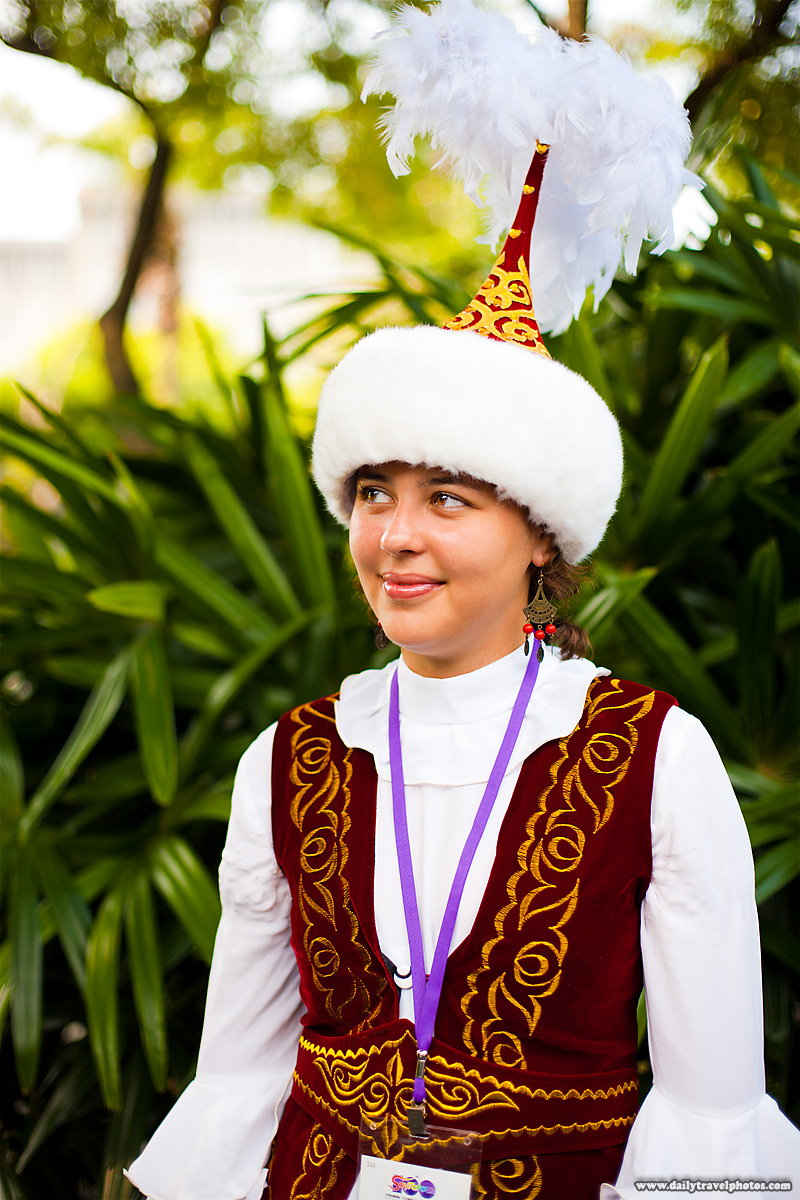
Origin: Kazakh Аружан
Meaning: “beautiful soul.”
(AH-roo-ZHAHN)
The name is composed of the Kazakh elements, aru (beautiful) and zhan (soul).
As of 2010, it was the most popular female name in Kazakhstan.
Gender: Feminine
Origin: Kazakh
Meaning: “my darling.”
Tar (I-yall-LIH)
The name comes directly from the Kazakh term of endearment.
It is currently the 3rd most popular female name in Kazakhstan, (2010).
It is also used in other central Asian countries including the Tatars of Russia.
 Gender: Masculine
Origin: Armenian Տիգրան
Meaning: uncertain
(TEE-grahn)
The name is an ancient Armenian name of uncertain etymology, but is possibly of Persian origins.
It was borne by several Armenian kings, the most famous being Tigran the Great (140-55 BCE).
Currently, Tigran is the 8th most popular male name in Armenian, (2010).
Another form is Dikran.
 Gender: Masculine
Origin: Persian Арман Արման
(AHR-mahn)
The name is most likely derived from an Old Persian male name meaning “ideal, wish; aspiration” or “destination.”
It has entered several Central Asian languages and in Kazakh it refers to “dream; hope” and is used as a male given name.
In Armenia, it is the 5th most popular male name and it is often argued to be derived from the ancient Armenian root ar (sun) or (Armenian man), however, it is most likely a borrowing from the Persian.
It is currently the 29th most popular male name in Bosnia & Herzegovina.
 Gender: Masculine
Origin: Armenian Գոր
Meaning: “proud.”
The name comes directly from the Armenian word for proud.
It is currently the 3rd most popular male name in Armenia, (2010).
A diminutive form is Gorik.
 Gender: Masculine
Origin: Welsh
(EV-en)
The name is an anglicized form of the Welsh male name Iefan, which is the Welsh form of John.
Evan can also be a Breton form of John.
It is one of the most popular male names in the Anglophone world and elsewhere as well. It is currently the 14th most popular male name in French-speaking, Switzerland (2010). His rankings in other countries are as follows:
 Gender: Masculine
Origin: Breton
(loh-EEK)
The name is of somewhat debated origin. One is that it is a Breton form of Louis, however, in the Breton language, ïc usually denotes a diminutive form and thus it would not make sense that it is a form of Louis, and there is no other full Breton name which would fit the mold of Loïc. It has been suggested that it is instead an old Provençal form of Louis which was later borrowed by the Bretons.
Others have listed it as a franconized form of Laoig, a Breton diminutive form of William and it has also been connected with Lucas, being a Provençal form of such.
Currently, Loïc is the 34th most popular male name in French-speaking, Switzerland, (2010). His rankings in other countries are as follows:
 Gender: Feminine
Origin: Azeri/Turkish
Meaning: “day; sun”
(GEU-nel)
The name is derived from the Turkic gün meaning, (day, sun).
Turkish forms are Günel and Güneli.
Gunel is currently the 2nd most popular female name among the general population of Azerbaijan, (2011).
 Gender: Feminine
Origin: Azeri/Turkish
Meaning: “joy.”
(SEH-VINCH)
The name comes directly from the Turkic meaning “joy.”
It is currently the most popular female name among the general female population of Azerbaijan, (2010).