Hilla

Gender: Feminine
Origin: Finnish
Meaning: “cloudberry.”
(HEEL-lah)

The name was initially used as a form of Hilda or Hilja, but became even more popular in Finland due to the fact that it translates as, “cloudberry.”

As of 2011, Hilla was the 42nd most popular female name in Finland.

Other forms of the name include:

  • Hilkka (Finnish)
  • Hillá (Sami)

Sólja, Sóley

Gender: Feminine
Origin: Faroese/Icelandic
Meaning: “buttercup.”
(SOLE-yah); (SOO-lay).

Both names are derived from the Norse word sol meaning “sun.” In modern vernacular both names are used to refer to the buttercup flower in their own respective languages. Sólja is the Faroese form and Sóley the Icelandic. Though Sóley is used as a given name in the Faroe Islands as well.

As of 2010 Sólja was the 8th most popular female name in the Faroe Islands.

Bjørt

Gender: Feminine
Origin: Old Norse
Meaning: “bright; light.”
(BYERT)

The name is derived from an Old Norse word, meaning, (bright; light). In modern Faroese, bjørt is the word for bright or light and björt is its Icelandic cognate, also used as a given name.

The name is borne in Norse Mythology by a handmaiden of Freya.

As of 2010, Bjørt was the 5th most popular female name in the Faroe Islands.

Storm

Gender: Masculine
Origin: Old Norse
Meaning: “storm.”

The name is derived from the Old Norse, stormr, literally meaning, “storm.” During the Viking Period, it was most likely used as a nickname for somebody with a blustery personality.

The word has been borrowed over into English, Dutch and the Scandinavian languages, all of which use it as a male given name.

As of 2010, Storm was the 43rd most popular male name in Denmark. His rankings in other countries are as follows:

  • # 94 (Norway, 2010)
  • # 220 (Netherlands, 2010)

An obscure feminine Danish form is Storma, while an English female form is Stormy.

Iva

Gender: Feminine
Origin: Slavic Ива
Meaning: “goat willow; pussy willow.”
Eng (I-vuh); Slav (EE-vah).

The name can have a few different etymologies. It could be a short form of Ivana, or a feminine form of Ivo; or it could be derived from the general Slavic word for the pussy willow.

It is also the name of a genus of plant in the Asteraceae family and its the name of a type of tree.

In the English-speaking world, this name was fairly common at the beginning of the 20th-century. The highest it ranked in U.S. naming history was in 1890, coming in as the 113th most popular female name.

As of 2009, Iva was the 10th most popular female name in Croatia. Her rankings in other countries are as follows:

  • # 58 (Slovenia, 2010)
  • # 64 (Bosnia & Herzegovina, 2010)

The name also appears in Polynesian Mythology as the name of the underworld, and is a fairly common female name in Maori culture.

Anthea

Gender: Feminine
Origin: Greek Ανθεια
Meaning: “flower; blossom.”
Eng (an-THEE-uh); Croat (ahn-TEY-ah)

The name is derived from the Greek Ανθεια (Antheia), which is derived from ανθος (anthos), meaning, “flower; blossom.”

In Greek Mythology, this was an epithet for the goddess Hera.

As of 2009, Antea was the 42nd most popular female name in Croatia.

Una

Gender: Feminine
(OO-nah)

The name could be of a few different origins, it could be a Gaelic name, Úna, derived from the Gaelic word, uan (lamb).

It could be a derivative of the Old Norse verb, una, meaning “to enjoy.”

It could also be from the Latin meaning, “one.”

As of 2010, its Finnish form of Oona was the 15th most popular female name, while Una ranked in as the 92nd most popular female name, (2009).

Other forms of the name include:

  • Oona (English/Finnish)
  • Oonagh (Engliah)
  • Úna (Irish)
  • Ùna (Scottish)

Lore

The name could either be from a German diminutive form of Eleonore or it could be from the Basque meaning, “flower.”
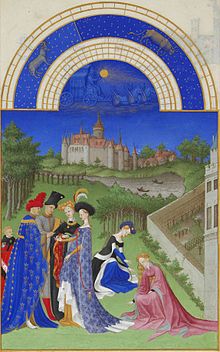
As of 2008, Lore was the 11th most popular female name in Belgium.

Its Italian and Spanish form of Lora was the 98th most popular female name in Croatia, (2009).

In either case the name is pronounced (LOH-reh).

Another Basque form is Lorea.

Abril

Gender: Feminine
Origin: Catalan/Spanish
Meaning: “April.”
(ah-BREEL)

The name comes directly from the Spanish and Catalan word for April and is currently very popular across the Spanish-speaking world. It is the 11th most popular female name in Catalonia. Spain, (2021) and her rankings in other region and countries are as follows:

  • #28 (Spain, 2021)
  • # 41 (Galicia, Spain 2021)
  • # 68 (Mexico, 2021)

The name last appeared in the U.S. Top 1000 in 2017, ranking in at #895.