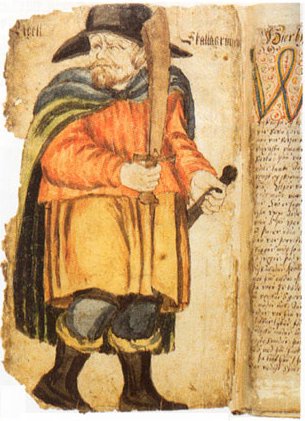
Väinö

Gender: Masculine
Origin: Finnish/Estonian
Meaning: “wide”

The name is most likely a contraction of Väinämöinen, which is most likely derived from the name of a river, which in itself is derived from a Finnic element, väinä, meaning, “wide”.

In Finnish and Estonian mythology, Väinämöinen, (or Vanemuine in Estonian), was a god-like figure who possessed a magical voice and loved to play on his Finnish harp.

He plays a central and integral part in the Kalevala and in the Estonian epic, the Kalevipoeg.

In both Finland and Estonia, Väinämöinen and Vanemuine are rarely used as given names, but its abbreviated forms are fairly common .

As of 2011, Väinö was the 23rd most popular male name in Finland.

Another Finnish form is Väinämö, its diminutive forms are: Väiski, Väiskä, Vänni, Vänski, Väntti/Väntty, Vänttä, Vänä and Väpä.

Other forms include:

  • Väino (Estonian)
  • Väinu (Estonian)
  • Veaidnu (Sami)
  • Vejne (Swedish)

The designated name-day in both Finland and Estonia is February 17.

Sources

  1. http://www.behindthename.com/name/va12ina12mo12inen
  2. http://www.nordicnames.de/wiki/Väinämöinen
  3. Turunen, Aimo (1981). Kalevalan sanat ja niiden taustat. Karjalaisen kulttuurin edistämissäätiö
  4. Toim. Maarti Kaimio, Paavo Castren, Jorma Kaimio: Antiikin myytit ja uskonnot (2007)
  5. Martti Haavio: Väinämöinen (1950)

Eino

Gender: Masculine
Origin: Finnish
(AY-noh)

The name is a contracted from of any name beginning with, ein.

As of 2011, this was the 12th most popular male name in Finland.

Other forms of the name include:

  • Eeno (Finnish)
  • Eitsu (Finnish)
  • Ejno (Finnish)
  • Eine (Norwegian/Swedish)
  • Eidno (Sami)

Feminine forms include Eini and Einikki.

Gertrude

James C. Christensen

Gender: Feminine
Origin: German
Meaning: “spear strength.”
Eng (GER-trood); Ger (ger-TROO-də)

She has adorable nickname options; Trudy, among others. She has a similar feel to other current vintage trend-setters such as Matilda and Eleanor, yet Gertrude, for the most part remains unloved. Like Hildegard and Brynhild, this is one of those names where I often ask myself: why not?

She is strong, vintagy and no-frills, as mentioned before, she has tons of adorable nickname options. Is she really anymore grandmotherly or old sounding than Emma, Eleanor, Matilda or even Abigail? We have gotten used to hearing these names but I remember a time when the above names were considered “too old” until it took one famous person to use them and voila, they are automatically endearing and trendy.

Ok, I’ll get off my high horse and get onto the what the name is really all about.

Portrait of Gurtruydt van Leyden.
by James C. Christensen via http://www.greenwichworkshop.com/saintsandangels/17.htm

Gertrude is composed of the Germanic roots, ger (spear) and þruþ (strength).

The name was borne by several illustrious medieval women, two of whom are saints. Gertrude of Nivelles (626-659) is revered as the patron saint of cats! I am not quite sure how she came to be known as a feline patron, but she was the daughter of Pepin I and was supposed to be married off at the age of ten, but steadfastly refused, insisting that she would only marry Christ. After the death of her father, her wealthy mother constructed Gertrude her very own convent, making her the abbess. She is also invoked against mice and rat infestations.

Another Gertrude is Gertrude the Great (1256-1302) a German nun, mystic and great theologian of her time.

The name has been borne by German and Dutch royalty alike.

Gertrude is pretty well-known in the English-speaking world, but actually never experienced much usage. It was introduced into England in the 15th-century by Dutch settlers, where it was ocassionally used. It appears in Shakespeare’s Hamlet (1600) as the name of the hero’s mother.  It was used sparingly in the United States at the beginning of the 20th-century, possibly being introduced by German immigrants. The highest it ever ranked was in 1898 coming in as the 573rd most popular female name.

In the United States, its most famous bearer is Gertrude Stein (1874-1946), famous writer and poet.

As of 2011, her Finnish form of Kerttu was the 20th most popular female name in Finland and Geertruida came in as the 491st most popular female name in the Netherlands, (2010). Meanwhile, its Dutch diminutive offshoot of Geertje is the 368th most popular female name in the Netherlands, (2010).

Other forms of the name include:

  • Gartred (Cornish)
  • Gertruda (Croatian/Czech/Lithuanian/Polish/Romansch/Slovene)
  • Geerdina (Dutch)
  • Geertje (Dutch)
  • Ge(e)rtruida (Dutch)
  • Geertrui (Dutch)
  • Gertrude (Dutch/English/French/German/Italian/Platdeutch)
  • Trudy (Dutch/English/German)
  • Truus (Dutch)
  • Kelli (Estonian)
  • Kertu (Estonian)
  • Kärt (Estonian)
  • Ge(i)rtrúð (Faroese)
  • Gortra (Faroese)
  • Jertru (Finnish)
  • Jerttu (Finnish)
  • Järtty (Finnish)
  • Kerttu (Finnish)
  • Kerttuli (Finnish)
  • Gesa (Frisian)
  • Gesche (Frisian/Platdeutsch)
  • Geesche (Frisian)
  • Gesina (Frisian)
  • Gerta (German)
  • Gertraud (German)
  • Gertrud (German/Scandinavian/Romansch)
  • Gertrúd (Hungarian)
  • Jerta (Hungarian)
  • Geirþrúður (Icelandic)
  • Jarþrúður (Icelandic)
  • Geltrude (Italian)
  • Gertrūda (Latvian)
  • Gjertrud (Norwegian)
  • Jartrud (Norwegian)
  • Geretrudis (Old High German)
  • Geirþrúðr (Old Norse)
  • Jarþrúðr (Old Norse)
  • Gertrudes (Portuguese)
  • Gearte (Sami)
  • Kearte (Sami)
  • Gertrúda (Slovak)
  • Trudla (Sorbian)
  • Gertrudis (Spanish)
  • Gardrud (Swedish)
  • Gertru(n) (Swedish)
  • Hjertrud (Swedish)

Common German and English short forms are Gertie and Trudi/Trudy.

Artwork

Vera

Gender: Feminine
Origin: Slavic Вера
Meaning: “faith.”
Eng (VARE-uh; VEER-uh); Rus (VYEH-rah)

The name is most likely a borrowing from the Russian female name, Vera, which comes directly from the Slavic meaning, “faith.” Initially, it was a Russian-Orthodox cognate of the Greek female name, Pistis (Faith), the name of an early Christian saint and martyr.

The name has been used outside of Eastern Europe since at least the 19th-century. It is unclear how the name caught on in the English-speaking world, but by the time of its popularity the name was usually associated with the Latin, verus, (true), verses, the Slavic, (hope).

Its usage in Albania may also be connected with the Albanian word, verë, (Summer).

The name is borne by several famous Russian women, including silent film actress, Vera Kholodnaya (1893-1919) and theatre actress, Vera Komissarzhevskaya (1864-1910); Chemist, Vera Popova (1867-1896).

Other notable bearers include: English writer and feminist, Vera Brittain (1893-1970); Ukrainian-American actress, Vera Farmiga (b.1973); American actress, Vera Miles (b.1929); American fashion designer, Vera Neumann (b.1907) and American fashion designer, Vera Wang (b.1949).

The highest the name ranked in the United States was in 1919 when she came in as the 65th most popular female name; its popularity may have had something to do with Vera Kholodnaya who died the same year, but this is only my personal conjecture.

As of 2010, Vera is the 675th most popular female name in the United States. Her rankings in other countries are as follows:

  • # 13 (Veera, Finland, 2011)
  • # 39 (Sweden, 2010)
  • # 45 (the Netherlands)

Other forms of the name include:

  • Vera Вера (Albanian/Bulgarian/Croatian/Dutch/English/Faroese/German/Hungarian/Icelandic/Italian/Latvian/Lithuanian/Macedonian/Portuguese/Russian/Scandinavian/Serbian/Slovene)
  • Věra (Czech)
  • Veera (Estonian/Finnish)
  • Véra (French)
  • Verina (Italian)
  • Verutė (Lithuanian)
  • Wiara (Polish)
  • Wiera (Polish)
  • Verá (Sami)
  • Viera (Slovak)
  • Wera (Swedish)
  • Vira Віра (Ukrainian)

Diminutive forms include:

  • Verica (Czech/Serbian)
  • Verika (Czech)
  • Verochka (Russian)
  • Verunka (Czech)
  • Verusha (Russian)
  • Vierunka (Czech)
  • Vieruška (Czech)
  • Věrka (Czech)
  • Věruna (Czech)
An obscure Latin masculine form is Verus.

Aino

Gender: Feminine
Origin: Finnish/Estonian
Meaning: “only; the one.”
(I-no)

The name is found in the national Finnish epic, the Kalevala, as the name of the “only sister” of Joukahainen.

Joukahainen promised his sister’s hand marriage to the very old Väinämöinen, after losing a singing contest.

When Aino finds out she must marry the old man, she drowns herself, and returns as a sort of water spirit, appearing in the form of a salmon to haunt the grieving Väinämöinen.

It is believed by many Finnish linguist that Aino was not actually her name because in the Kalevala she is referred to as ainoa tytär, (only daughter), and it is believed that this designation was confused for her actual name.

At the end of the 19th-century, the name was introduced by Fennoman activists.

The first to bear the name was Aino Järnefelt Sibelius (1871-1969), the first wife of famous Finnish composer, Jean Sibelius. It was also borne by Aino Krohn Kallas (1878-1956), and Estonian-Finnish author.

As of 2011, Aino was the 5th most popular female name in Finland.

Other forms of the name include:

  • Aija (Finnish)
  • Aina (Finnish/Scandinavian)
  • Ainamo (Finnish)
  • Aini (Finnish)
  • Ainikki (Finnish)
  • Áidná (Sami)
  • Áidnu (Sami)

The designated name-days are:

May 10 (Estonia/Finland) and June 13 (Sweden).

Sources

  1. http://www.behindthename.com/namedays/lists/fin.php
  2. http://www.nordicnames.de/wiki/Finnish_Name_Days#May
  3. http://en.wiktionary.org/wiki/Aino

Venla

Gender: Feminine
Origin: Finnish
(VEN-lah)

The name is a Finnish form of the Swedish female name, Vendela, which is a feminine form of Wendel, meaning, “Vandal”, the name of an ancient Slavo-Germanic tribe.

As of 2011, Venla was the 2nd most popular female name in Finland.

Other forms of the name include:

  • Vendla (Finnish/Norwegian/Swedish)
  • Ventla (Finnish)
  • Ventta (Finnish)
  • Venlá (Sami)
  • Wendla (Swedish)


Eivind

Gender: Masculine
Origin: Old Norse
Meaning: “happy victor; gift victor.”
Nor (I-vind)

A few weeks ago I was browsing through some Norwegian birth announcements and noted several unusual names that appeared over and over again. Eivind was one of them. Apparently, Eivind is the Norwegian form of the proto Norse auja “happy, lucky or gift” and windur meaning “victor, winner.” In Norwegian and Scandinavian history, the name was borne by a 9th-century viking by the name of Eyvind Lambi, he figures in the famous Egil’s Saga. Another popular form in Norway is Øyvind and in Sweden it appears as Ejvind.

Currently, the name is the seventy fouth most popular male name in Norway, while its slashed counterpart (see above) comes in much higher at # 27. The name is not as popular in Sweden as it is in Norway.

Its designated name-day was exactly one week ago, August 26th.

Update: Eivind and Øyvind no longer appear in the Norwegian top 100, but as of 2010, its Faroese form of Eivindur was the 8th most popular male name in the Faroe Islands.

Other forms of the name include:

  • Eivin (Danish/Norwegian)
  • Ejvin/Eyvin (Danish)
  • Ejvind (Danish/Faroese/Swedish)
  • Even (Danish/Faroese/Swedish)
  • Oyvind (Danish)
  • Øivind/Øjvind (Danish/Norwegian)
  • Evind (Faroese/Scandinavian)
  • Eivindur (Faroese)
  • Oyvindur (Faroese)
  • Öjvind (Faroese/Swedish)
  • Eyvindur (Icelandic)
  • Eivinn (Norwegian)
  • Ovind (Norwegian)
  • Øivin(n) (Norwegian)
  • Øven (Norwegian)
  • Eyvindr (Old Norse)
  • Eiven (Sami)
  • Eivind/Eyvind (Scandinavian)
  • Evin (Scandinavian)
  • Önder (Swedish)
  • Önnert (Swedish)
  • Öyvind (Swedish)
Feminine forms include:
  • Evena (Norwegian)
  • Evina/Evine (Norwegian)
  • Evinda (Norwegian)
  • Øivine/Øyvine (Norwegian)

Birger

Gender: Masculine
Origin: Old Norse
Meaning: “to help; to rescue.”

The name is derived from the Old Norse verb, bjarga, meaning “to help; to rescue.”

As of 2010, Birgir was the 8th most popular male name in the Faroe Islands.

Other forms of the name include:

  • Bille (Danish/Norwegian/Swedish)
  • Byrge (Danish/Norwegian)
  • Børge (Danish/Norwegian)
  • Birgar (Faroese)
  • Birgir (Faroese/Icelandic/Old Norse)
  • Piri (Finnish)
  • Pirje (Finnish)
  • Pirjeri (Finnish)
  • Pirkeri (Finnish)
  • Pirkka (Finnish)
  • Berge (Norwegian/Swedish)
  • Berger (Norwegian/Swedish)
  • Birge (Norwegian)
  • Bjørger (Norwegian)
  • Borge (Norwegian)
  • Borger (Norwegian)
  • Byrger (Norwegian)
  • Bør/Børe (Norwegian)
  • Børger (Norwegian)
  • Børje/Børjer (Norwegian)
  • Børre (Norwegian)
  • Birki (Sami)
  • Birger (Scandinavian/Sami)
  • Bergerus (Swedish)
  • Beriel (Swedish)
  • Birgel (Swedish)
  • Bigge (Swedish)
  • Birre (Swedish)
  • Börel (Swedish)
  • Börge (Swedish)
  • Böril (Swedish)
  • Börje (Swedish)

A few obscure feminine forms include the Norwegian Birga and Børrea.

The designated name-days are: June 9 (Sweden), June 17 (Finland) and October 21 (Norway).

Sources

  1. http://www.nordicnames.de/wiki/Birger
  2. http://www.behindthename.com/name/birger

Aura

The name could be of a few different etymologies.

In Greek, it is derived from the word for “breeze”, and is borne by several characters in Greek myth. One was a Titan goddess who was the personification of the fresh breezes and the cool air that accompanies early mornings.

According to one legend, Aura was so proud of her virginity that she mocked the virgin goddess Artemis, claiming that Artemis was not as pure as she, since Artemis was too “womanly.” In revenge, Artemis had Dionysus rape Aura. As a result, the Titaness went mad, becoming a slayer of men. When her twin sons were born, Aura ate one twin, while Artemis rescued the other. Zeus eventually transformed her into a breeze. Other legends state that she was transformed into a stream.

The aurai (the breezes) were a type of nymph, fathered by the sea god Oceanus.

Aura appears in the English lexicon describing a glow or metaphysical halo that is given off by a person’s or object’s energy.

The name has also experienced usage in Scandinavia. Its earliest attestation is in Sweden in 1818. In this case, the name may be a borrowing from the Greek, or it could be a contracted form of Aurora or AureliaHowever, it has been popularly attributed as being derived from a Norse element, aurr, meaning, “clay.”

In Finland, the name is a somewhat of a patriotic name as this was given as a name to the Maiden of Finland, the personification of Finland. In this case, her name is taken from the name of a river. The river name is believed to be related to an archaic Swedish word, aathra, meaning, (waterway), but in Finnish could be translated as meaning, “plow.”

As of 2010, Aura was the 8th most popular female name in the Faroe Islands.

Other forms of the name include:

  • Aura (English/Faroese/Finnish/Latin/Portuguese/Scandinavian/Spanish)
  • Ára (Faroese)
  • Aure (French)
  • Avra (Greek)
  • Aula (Italian)
  • Ávrá (Sami)

Bjørg

Poulina Joanesardottir in Faroese Costume via Nordic Fashion Biennale

Gender: Feminine
Origin: Old Norse
Meaning: “salvation; help.”
(BYERG)

The name comes directly from the Old Norse meaning, “salvation; help.”

As of 2010, Bjørg was the 4th most popular female name in the Faroe Islands.

Other forms of the name include:

  • Bjørg (Faroese/Norwegian)
  • Björg (Icelandic/Swedish)
  • Bjørga/Bjørge (Norwegian)
  • Borgine (Norwegian)
  • Biergá (Sami)