Mara

The name could be of several different origins and meanings depending on the bearer of the name. Generally, the name is mostly used in reference to its Biblical origins, when Naomi takes the name of Mara(h) (Ruth 1:20), (which in Hebrew means “bitter”) as a way to express her grief over losing her husband and sons. The same name also appears in the Exodus as the name of one of the locations which the Torah identifies as having been travelled through by the Israelites.

It could also be from Latvian mythology, spelled Māra, being the name of the supreme goddess who was associated with all feminine aspects of life. She is sometimes believed to be one and the same as Laima.

The name also appears in Slavic mythology as another name of the goddess Marzanna, the goddess of death and winter. Interestingly, it is also the name of the goddess of death in Hinduism. The two deities may have a distant connection.

In German the name is ultimately derived from a proto-Indo European source meaning “to harm” or “to rub away.” In folklore, mara were wraiths who pressed on the chests of sleeping victims, this is where the word nightmare is believed to have derived.

It is interesting to note that the name appears in the top 100 most popular female names in Germany, where it is currently the 55th most popular female name, (2011). It is doubtful, however, that the name is used in reference to its Germanic folklore origins, but is more likely used in reference to its Biblical connections.

The name could also be from the Syriac and modern Maltese meaning, “woman.”

In Hungarian and Croatian, it is used as a form of Marija.

Her rankings in other countries are as follows:

  • #79 (Croatia, 2010)
  • # 93 (Spain, 2010)
  • # 128 (Netherlands, 2010)
  • # 869 (United States, 2010)


Alina

The name could be of several different origins and meaning depending on the bearer of the name.

In Romanian, it is derived from the verb meaning “to sooth”. It even boasts its own masculine version: Alin.

It could also be a German and Dutch contraction of Adelina.

Other sources have popularly attributed it to be a form of the Arabic, Alia (lofty; sublime). In this case, the name appears in One Thousand and One Nights as the name of a beautiful princess.

In Belarusian, it is a name of pre-Christian origins, being derived from the old Slavic word алы (aly) meaning “scarlet.” In Russian, it has been linked with the names Albina, Aleksandra and Akulina, considered contracted forms. While in Bulgarian, it is considered a contracted form of Angelina.

In Italy, it is viewed as a contracted form of Rosalina or Pasqualina, the name can be typically found in Northern and Central Italy.

In Polish and Lithuanian, it has been suggested that the name may be derived from Alna, the Lithuanian name of a river which runs through northern Poland and Kaliningrad, (known in Polish as Łyna). Alna is from a medieval Baltic word meaning, “doe; female deer”, (compare modern Lithuanian elnias). Famed Polish playwright, Juliusz Słowacki seems to have popularized the name via his 1839 play, Balladyna.  Alina is murdered by her jealous sister Balladyna as they are picking raspberries.

It has also been suggested to be related to Halina, a Polish form of Galina.

Currently, Alina is the 4th most popular female name in German-speaking Switzerland, (2010). Her rankings in other countries are as follows:

  • # 4 (Liechtenstein, 2010)
  • # 17 (Russia, 2011)
  • # 28 (Germany, 2011)
  • # 30 (Austria, 2010)
  • # 38 (Slovenia, 2010)
  • # 39 (Romania, 2009)
  • # 78 (Bosnia & Herzegovina, 2010)
  • # 264 (United States, 2010)
  • # 323 (Netherlands, 2010)

Other forms of the name include:

  • Alina Аліна الينا (Arabic/Belarusian/Bosnian/Bulgarian/Czech/Dutch/Finnish/German/Hungarian/Italian/Latvian/Lithuanian/Polish/Romanian/Russian/Scandinavian/Serbian/Slovak/Slovene/Ukrainian)
  • Aliina (Finnish)
  • Aline (French)

Torben

Gender: Masculine
Origin: Danish/German
Meaning: “Thor’s bear.”

The name is derived from the Old Norse, Þórbjörn, which is composed of the elements, Þór (Thor) and björn (bear).

Currently, Torben is the 177th most popular male name in Germany, (2011).

Other forms of the name include:

  • Tarben (Danish)
  • Thorben (Danish/German)
  • Torbjørn (Danish/Norwegian)
  • Þórbjörn (Faroese/Icelandic/Old Norse)
  • Thorbjøn (Norwegian)
  • T(h)orbjörn (Swedish)


Elli

Gender: Feminine
Origin: Old Norse
Meaning: “old age.”
(EL-lee)

I love this, while it is not a name I’d ever use myself, it is one of those names that you would never suspect had such a long and symbolic history.

The name is often listed as a Germanic diminutive form of Elisabeth, which may be in part, true, but its usage as a given name actually pre-dates Elisabeth’s introduction to the Germanic world.

In Old Norse, elli is the word for old age, and she is personified in the Prose Edda. Her story is recounted in the Book of Gylfaginning, in which she defeats Thor in a wrestling match.

In pre-Christian Norse culture, old age often symbolized wisdom.

Elli has been a popular name throughout Scandinavia and Germany. It experienced a vogue in the 19th-century and seems to be experiencing a revival. It is currently the 172nd most popular female name in Germany, (2011). Another German spelling is Elly.

Elli is also used in Estonia and Finland.

Dana

The name is of a few different etymology depending on the source of the bearer. In Slavic-speaking countries, the name is a short form of any name containing the element dan meaning, “gift.” It could also be used as a diminutive form of Danijela or Daniela.

The name is also a modern form of the ancient Celtic theonym, Dânu, an early Irish mother goddess of the Tuatha Dé Danann. Her name has been traced to early Indo-European roots and is believed to have some connection to water. This element appears in several river names across Europe, such as the Dnieper, Danube and Don. This form is borne by Irish singer, Dana Scallon (b.1951).

Its usage in the English-speaking world may actually derived from a Danish surname, usually pronounced (DAY-nah) in English, the former are both pronounced (DAH-nah).

Currently, Dana is the 146th most popular female name in Germany, (2011). Her rankings in other countries are as follows:

  • # 248 (Netherlands, 2010)
  • # 463 (United States, 2010)


Marla

The name has a few different etymologies depending on its source. In Germany, it is a contracted form of Marlene, now used as an independent given name.

In Russia, it is the name of an indigineous nature based pre-Christian religion practiced by the Mari in the Republic of Mari El. The name is sometimes used among the Mari much in the same way Christians use the names Christian and Christine and Muslims use Islam.

The Marla religion is one of the last traditional beliefs to have survived Christianization and has co-existed with Russian Orthodoxy for centuries. The name has also been used by non-Mari Russians as well.

Currently, Marla is the 141st most popular female name in Germany, (2011). In Russian, it is spelled as Марла.

In the United States, the name is often associated with Socialite, Marla Maples (b.1963).

Tore

Gender: Masculine
Origin: Old Norse
Meaning: “warrior of Thor.”
Germ/Nor/Swe (TOR-reh)

The name is believed to be a contracted form of the Old Norse, Þórir, which is composed of the elements, Þór (Thor) and verr (warrior; man). It has also been suggested that the latter element may actually be from *wihar (priest), hence it may actually mean “priest of Thor.”

The name can be traced all the way back to a 10th-century Rune of Uppland, Sweden. Inscribed is the following epithet to a man named Tore:

“Ingrid and Ingegerd erected this stone in memory of Tore, their father.” (Uppland, 996 CE).

Currently, Tore is the 252nd most popular male name in Germany, (2011). Another spelling is Thore.

Fenja

Gender: Feminine
Origin: Old Norse
Meaning: unknown
(FEN-yah)

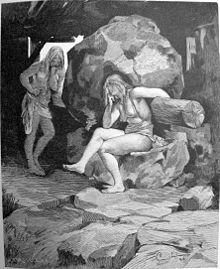
The name is found in the Old Norse poem, the Song of Grótti (Grottasöngr) and in Snorri Sturlesson’s Prose Edda as the name of one of two sister giantesses, Fenja and Menja.

According to the Song of Grótti, both sisters are enslaved to the Danish king Frodi, forced to grind out wealth from a magical stone and to sing for the king. They sing of the king’s benevolence and wealth, but as they become overworked, the king refuses to hear their pleas until they start to sing a warning that the king shall soon be destroyed by an army, which they eventually create from the magical grindstone.

Fenja is of Old Norse origins, but its etymology has been lost. Both sisters supposedly inspired the names of the Danish Islands, Fanø and Mandø.

Currently, Fenja is the 181st most popular female name in Germany, (2011).

It is also borne by German actress, Fenja Rühl (b.1963)

Leonidas

Gender: Masculine
Origin: Greek Λεωνιδας
Meaning: “lion.”
Eng (lee-o-NYE-dus)

The name is derived from the Greek λεων (leon) meaning “lion.”

The name was borne by several famous leaders in Classical Greek history, one being King Leonidas I of Sparta, known for his heroic defense of the Thermopylae Pass from the Persians in the 5th-century B.C.E. His life has been the inspiration of Frank Miller’s 1988 comic 300, later adapted into a movie of the same name. He came to be deified in Sparta as a hero god. A Belgian Chocolate company is also named in his honour and he is the inspiration for their logo.

The name was also borne a teacher of Alexander the Great and by the father of Origen, St. Leonidas (3rd-century CE).

Leonidas seems to have enjoyed some popularity in 18th and 19th-century America and England. This may have been due to the epic eponymous poem based on the Spartan hero, written by Richard Glover (1737).

In more recent history, it was borne by Confederate general, Leonidas Polk (1806-1864) and the first modern Greek Olympic gold medalist, Leonidas Pyrgos (*1871).

Currently, Leonidas is the 282nd most popular male name in Germany, (2011) and the 922nd most popular in the United States, (2010).

Other forms of the name include:

  • Leonit (Albanian)
  • Ljeanid Леанід (Belarusian)
  • Leònides (Catalan)
  • Leonida (Croatian/Italian/Serbian)
  • Leónidás (Czech)
  • Leonidas Λεωνιδας (English/German/Greek/Lithuanian/Romanian)
  • Léonide (French)
  • Leonidasi ლეონიდასი (Georgian)
  • Leoneidas (German)
  • Leonides (German)
  • Leónidasz (Hungarian)
  • Leonīds (Latvian)
  • Leonid Леонид (Macedonian/Polish/Russian/Ukrainian)
  • Leónidas (Portuguese-European)
  • Leônidas (Portuguese-Brazilian)
  • Leónidas (Spanish)
A feminine form is Leonida, occassionally used in Spanish-speaking countries, Greece and Poland.

Delia

Gender: Feminine
Origin: Greek
Meaning: “from Delos.”
Eng (DEE-lee-ah)

The name comes from an epithet for the goddess Artemis as she was believed to have been born on the island of Delos.

It has also been used as a contracted form of Cordelia.

In the English-speaking world, the name came into usage during the 18th-century.

Currently, it is the 276th most popular female name in Germany, (2011).

Other forms of the name include:

  • Delia (Czech/English/German/Greek/Italian/Romanian/Slovak/Spanish)
  • Délia (French/Hungarian/Portuguese)
  • Délie (French)
It is also the name of a womens’ apparel store.