Svetlana

Gender: Feminine
Origin: Russian
Meaning: “light.”
Светлана
(svet-LAH-nah).

The name is derived from the Slavic element, svetlo, meaning “light.”

It was used as a vernacular form of the Greek, Photine, (see Photine), in honour of St. Photine, the Samaritan woman.

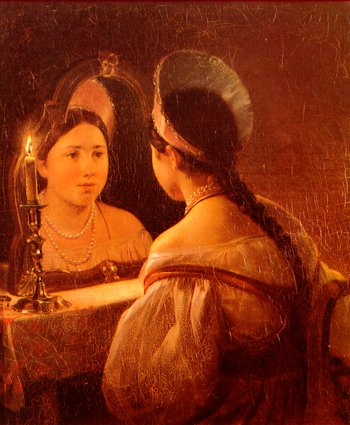
Its usage was further popularized in 1813 via Alexander Vostokov, a Russian philologist and poet. Another Russian poet of the same period, Vasily Zhukovsky, also used the name for his ballade, Svetlana.

Other forms of the name include:

  • Svjatlana Святлана (Belarusian)
  • Svetla (Bulgarian)
  • Svjetlana (Croatian)
  • Světlana (Czech)
  • Swetlana (German)
  • Szvetlána (Hungarian)
  • Świetlana (Polish: shvyet-LAH-nah)
  • Swietłana (Polish: svyet-WAH-nah)
  • Sveta Света (Russian)
  • Svitlana Світлана (Ukrainian)

The name is also used in Bulgarian, Latvian, Macedonian, Serbian, Slovene and Slovakian.

A South Slavic masculine form is Svetlan.

The designated name-days are: February 6 (Bulgaria), February 26 (Russia), March 15 (Slovakia), March 20 (Czech Republic), April 2 (Russia) and September 28 (Latvia).

The name is borne by Svetlana Alliluyeva aka Lana Peters, the youngest daughter of Joseph Stalin, (b.1926) and the current first lady of Russia, Svetlana Medvedeva

Sveta, Sveti, Svetlanka and Lana are used as short forms in Russian.

Zoe, Zoë

Gender: Feminine
Origin: Greek
Meaning: “life.”
Ζωη
(ZO-wee)

The name comes directly from the Greek word for life. It has always been a common name among Greeks and among Greek Jews, it was often used as vernacular form of Eve.

In the Greek Orthodox Church, (and in the Catholic) it is borne by two early Christian martyrs. It was also borne by an 11th-century Byzantine Empress.

In Western Europe, the name did not come into usage till the 18th-century, when there was a widespread revival of the classics.

In modern Catholic Church history, it was borne by a 19th-century French nun, mystic and saint Catherine Labouré (née Zoé Labouré), who introduced the usage of the Miraculous Medal.

Currently, the name is the 58th most popular female name in the United States, (2008), her rankings in other countries are as follows:

  • # 17 (Australia, 2008)
  • # 25 (Belgium, 2006)
  • # 50 (Canada, B.C., 2008)
  • # 83 (England/Wales, 2008)
  • # 44 (Hungary, 2008)
  • # 25 (the Netherlands, 2009)
  • # 36 (Scotland, 2009)

Other forms of the name include:

  • Zoya Зоя (Aragonese/Macedonian/Russian/Serbian/Ukrainian)
  • Zoë (Dutch/English/German/Scandinavian)
  • Zoe (Catalan/Croatian/Czech/English/Italian/Polish/Spanish)
  • Zoi Ζωη (Greek: Modern)
  • Zoé (French/Hungarian/Portuguese)
  • Zója (Hungarian)
  • Zoja (Polish/Slovak/Slovene)

The designated name-days are: Feburary 26 (Russia), April 13 (Greece), May 2 (France) and October 27 (Czech Republic).

The name is borne by Zoe Saldana (b. 1978) and Zooey Deschanel (b.1980)/

Biruta, Birutė

Gender: Feminine
Origin: Lithuanian
Meaning: unknown
Lith (bih-ROO-tey); Pol (bee-ROO-tah).

Birutė is a classic Lithuanian name. It’s meaning and origin is debated.

It may be a diminutive form of any Lithuanian name beginning in the Birė element.

Other sources suggest it is derived from the Lithuanian verb birti meaning “to scatter; strew” or “pour out.”

It has also been linked with the Lithuanian verb byrėti meaning “to crumble or to fall apart,” which is associated with the Lithuanian word, byrančiu, meaning, “falling snow.”

In Lithuanian history, the name was borne by the wife of Grand Duke Kęstutis of Lithuania and the mother of Vytautas the Great (d. 1382)

In Lithuania, Birutė is considered a sort of folk heroine, a lot of legends have been attributed to her, one being that Birutė was a vaidilutė or priestess of the gods who guarded the sacred fire. It is believed that Kęstutis kidnapped and married her against her will. After her death, she was made into a sort of pagan folk saint. In 1989, archeological evidence suggested that she had a sanctuary dedicated to her on a hill in Palanga, now named Birutė Hill, it is considered the highest dune in Palanga.

The form of Biruta was also ocassionally used in Poland and Latvia.

A Lithuanian masculine form is Birutis.

The designated name-days are February 5 (Lithuanian) and November 24 (Poland).

Possible translations in other languages could be

  • Biruta (Germanic and most Latin langauages)
  • Biroute (French)

Sources

Benjamin

Gender: Masculine
Origin: Hebrew
Meaning: “son of the south; son of the right hand.”
Eng (BEN-juh-min)

The name is borne in the Old Testament by the youngest son of Jacob and Rachel. According to Rabbinical scholars, Benjamin was initially named Benoni, an illusion to Rachel dying after childbirth, meaning, “son of my pain.” Jacob had changed his name to Benjamin, a name which is somewhat debated.

According to most sources, Benjamin is composed of the Hebrew elements ben meaning, “son of” and jamin, which can either be interepreted as meaning, “the right side” or “the south” since in ancient Hebrew, there was no grammatical difference between “right” and “south.” This may be in reference to the idea that Benjamin was born in Canaan. However, the meaning of “the right side” can also be in reference to strength and virtue.

In the Samaritan Penteteuch, the name is rendered as Benjamim, which literally means “son of days” which may be a reference to Jacob’s old age when Benjamin was born.

The name was always common among Jews, but did not become common among western Christians until after the Protestant Reformation, among Eastern Orthodox, the name was in usage since the Middle Ages, since it was also borne by an early Eastern Christian martyr.

Currently, Benjamin ranked in as the 25th most popular male name in the United States, in other countries, his rankings are as follows:

  • # 10 (Australia, 2008)
  • # 62 (Belgium, 2006)
  • # 7 (Canada, B.C., 2008)
  • # 1 (Chile, 2006)
  • # 18 (England/Wales, 2008)
  • # 53 (Hungary, 2008)
  • # 65 (the Netherlands, 2009)
  • # 17  (Norway, 2009)]
  • # 60 (Scotland, 2009)
  • # 47 (Slovenia, 2005)
  • # 36 (Sweden, 2009)

In French, benjamin is also a slang term for a young child, roughly translating to “kid.”

Other forms of the name include:

  • Binyamin בִּנְיָמִין بنيامين (Arabic/Hebrew)
  • Benxamín (Asturian/Galician)
  • Benkamin (Basque)
  • Benjamí (Catalan)
  • Benghjaminu (Corsican)
  • Benjamin Бењамин (Croatian/Danish/Dutch/English/Finnish/French/German/Serbian)
  • Benjamín (Czech/Icelandic/Slovak/Spanish)
  • Beniamín Βενιαμίν (Greek)
  • Peni (Hawaiian)
  • Benjámin (Hungarian)
  • Beniamino (Italian)
  • Bendžamins (Latvian)
  • Benjaminas (Lithuanian)
  • Beniamin (Polish/Romanian)
  • Benjamim (Portuguese)
  • Veniamin Вениамин (Russian)
  • Bünyamin (Turkish)

Common Dutch, German and English short forms are: Ben, Benny and Benji.

French short forms are Ben and Jamin.

Hungarian diminutives are Benke, Benkő, Benő and Béni.

Obscure but legitimate feminine forms are: Benjamine (French), Benjámina (Hungarian), Beniamina (Italian).

Famous bearers include:

Current Prime Minister of Israel, Benjamin Netanyahu (b.1949), Jewish Khazar ruler, Benjamin (9th-century C.E.), St. Benjamin of Persia (5th-century C.E.), Pope Benjamin II of Alexandria (1327-1339), Benjamin Franklin (1706-1790) Benjamin Disraeli (1804-1881) and Ben Affleck (b.1972).

Designated name-days are: January 3 (Hungary), March 31 (France/Slovakia), December 20 (Finland) and December 28 (Sweden).

Agatha

Gender: Feminine
Origin: Greek
Meaning: “good.”
Eng (AG-uh-thuh)

The name is derived from the Greek, αγαθος (agathos), meaning, “good.”

The name was borne by an early Christian martyr, St. Agatha of Sicily, who, according to legend, refused the advances of a suitor and was renounced as a Christian. Before being beheaded, she was tortured by having her breasts tinctured off. Due to this she has been considered the patron saint against breast cancer and other breast diseases. Her feast day and the designated name-day is February 5.

The name was popular in Medieval England but fell out of usage after the Protestant Reformation. It was revived in the 19th century, one famous modern bearer being English mystery writer, Agatha Christie (1890-1976).

Currently, the name does not appear in the U.S. top 1000, the last time she was seen was in 1945, coming in as the 917th most popular female name.

She remains a staple in other countries, particularly in Poland and France.

Other forms of the name include:

  • Agate (Basque)
  • Àgueda/Àgata (Catalan)
  • Agata Агата (Croatian/Icelandic/Italian/Latin/Norwegian/Polish/Romanian/Russian/Serbian/Slovene/Swedish)
  • Agáta (Czech/Hungarian/Slovak)
  • Agate/Agathe (Danish/German/Latvian/Norwegian: ah-GAH-te)
  • Agatha (Dutch/English/German)
  • Aet (Estonian)
  • Agaate (Estonian)
  • Ita/Iti (Estonian)
  • Akaata (Finnish)
  • Agathe (French: ah-GAHT)
  • Ádega (Galician)
  • Agathê/Agathi ἀγαθή (Greek: Modern)
  • Ágota (Hungarian)
  • Agra (Latvian: this one has a completely different etymology, but has also been traditionally used as a form of Agatha).
  • Agota (Lithuanian)
  • Ågot (Norwegian)
  • Aita (Romansch/Estonian)
  • Agafia Агафья (Russian)
  • Gaèa (Serbian)
  • Àita (Sicilian)
  • Agatija (Slovene)
  • Gadea (Spanish: archaic)
  • Águeda (Spanish/Portuguese)
  • Agda (Swedish)
  • Ahafiya (Ukrainian)

An English short form is Aggie.

Croatian diminutives are: Agica, Jaga and Jagica.

A Czech pet form is Hota.

Polish short forms are: Aga, Agatka and Agusia.

Russian diminutives are: Agasha, Gafiya, Ganya, Gasha and Gashka.

A Hungarian short form is Ági.

A male Greek form is Agathon Αγαθων.

Agate is also the name of a precious stone.

Jarmila

Gender: Feminine
Origin: Czech/Slovak
Meaning: “fierce, strong, gracious, dear.”
(yahr-MEE-lah).

The name is a feminine form of the old Czech male name, Jarmil, which is composed of the Slavic element, jary, meaning, “fierce, strong” and mil, meaning, “gracious, dear.”

The designated name-day is February 4th.

Common diminutive forms include: Jara, Jarina, Jarka, Jarmilka, Jaromilka, Jarulinka, Jaruna, Jarunka, Mila and Mili.

The masculine form is, of course, Jarmil.

Variations of both the masculine and the feminine are: Jaromil (m) and Jaromila (f).

Obscure Polish forms are: Jarmił and Jarmiła. A Polish feminine diminutive is Jarcza.

Veronica, Berenice, Bernice

Gender: Feminine
Origin: Greek
Meaning: “true image; bringer of victory.”
Eng (veh-RON-ik-uh); Eng (bare-eh-NIE-see); Eng (ber-NEES)

Veronica and Berenice have a very long history of usage.

In the ancient world, Berenice was a Greek royal name, possibly derived from the Greek elements, φερω (phero), meaning, “to bring” and νικη (nike), meaning “victory.” However, other sources contend that Veronica is a completely different name of a different etymology, being composed of the Latin phrase, vera icon, meaning, “true image.” This meaning is most likely in reference to the legend of St.Veronica, who in Catholic and Orthodox tradition was a lady who wiped Christ’s face with her veil. According to the legend, Christ’s face miraculously imprinted itself on her veil.

Berenice also appears in the New Testament, but seems to have been a common female name in the ancient Greek world. It was borne by several Greek and Macedonian royal princesses.

Veronica was occasionally used in Medieval England, but went out of usage, even before the Protestant Reformation. It remained common on the Continent.

Veronica became prevalent in 2oth-century America due to the sudden influx Catholic European immigrants. Currently, Veronica is the 216th most popular female name in the United States, (2008). She experienced a short surge of popularity between the 1970s and 80s, the highest she ranked was at # 68.

Berenice/Bernice were introduced into the English speaking world during the Protestant Reformation. Currently, Berenice does not appear in the U.S. top 1000, the last time she was seen was in 2003, coming in as the 855th most popular female name. However, in 1921, Bernice was the 39th most popular female name in the United States. Bernice fell out of the top 1000 in 1985.

Other forms of Veronica include:

  • Veronika Вероника (Croatian/Czech/German/Hungarian/Latvian/Lithuanian/Norwegian/Russian/Serbian/Slovak/Slovene/Swedish)
  • Veronica (Danish/English/Finnish/Italian/Romanian)
  • Véronique (French)
  • Weronika (Polish)
  • Weronikia (Polish: obscure)
  • Verônica (Portuguese)
  • Feruna (Slovene: obscure)
  • Verónica (Spanish)

An Italian masculine form is Veronico.

Russian diminutives include: Veronichka, Vera, Verona, Ronya, Ronyusha, Verunya, Verusha, Vicky, Nick, Nikasha, and Nikusha.

Slovene diminutives include: Nika, Roni, Ronja, Ronka, Verona, Veroni, Veronica, Veronka and Veruša.

Common English short forms are: Nicki, Ronnie and Vera.

Other Berenice forms include:

  • Vernika (Czech)
  • Berenika (Czech/Polish/Slovene)
  • Berenice (English/Italian: be-reh-NEE-che)
  • Bernice (English)
  • Berenike Βερενικη (Greek)
  • Bernike Βερνικη (Greek)
  • Pherenike Φερενικη (Greek: ancient Attic Greek)
  • Bereniké (Hungarian)
  • Verenika (Russian)

In English, Bunny is used as a pet form of Bernice.

The designated name-day is February 4.

Christian

Gender: Masculine
Origin: Latin
Meaning: “anointed one; Christian.”

Christian is derived from the Latin, Christianus, which literally means, “anointed one” but in actuality was used to describe one of the Christian faith.

In the English speaking world, the name has been in usage since the Middle Ages, but has been consistently popular in the Germanic countries, most probably due to a few Danish kings who bore the name.

It was also the second name of Danish children’s author, Hans Christian Anderson (1805-1875).

Originally, in English, Christian was occasionally used as an anglicized feminine form of the Latin name, Christiana. Christian fell out of usage as a female name and resurged as a masculine English name around the 17th-century.

As of 2008, Christian stood as the 23rd most popular male name in the United States. His rankings in other countries are as follows:

  • # 45 (Australia, 2008)
  • # 5 (Bulgaria, 2008)
  • # 100 (Canada, B.C., 2008)
  • # 93 (Chile, 2006)
  • # 44 (Czech Republic, 2009)
  • # 15 (Denmark, 2009)
  • # 4 (Faroe Islands, 2008)
  • # 5 (Estonia, 2007)
  • # 89 (Germany, 2009)
  • # 29 (Hungary, 2008)
  • # 9 (Iceland, 2004-2007)
  • # 88 (Ireland, 2008)
  • # 196 (the Netherlands, 2008)
  • # 49 (Norway, 2009)

Other forms of the name include:

  • Christiaan (Afrikaans/Dutch)
  • Kristian (Albanian/Danish/Estonian/Norwegian/Swedish)
  • Kristo (Albanian)
  • Christo (Bulgarian)
  • Kristijan Кристијан (Croatian/Serbian)
  • Kristián (Czech/Slovak)
  • Carsten/Karsten/Kerstan/Kersten (Danish/Dutch/Frisian/Norwegian)
  • Christian (Danish/Dutch/English/French/German/Norwegian/Swedish)
  • Kresten (Danish)
  • Kristen (Danish/Norwegian/Swedish)
  • Kristjan (Danish)
  • Chrétien (French: archaic form)
  • Coerst (Frisian)
  • Críosdaidh (Gaelic)
  • Chrístos Χρίστος (Greek: modern)
  • Keresztély (Hungarian)
  • Keresztes (Hungarian)
  • Krisztián (Hungarian)
  • Kristján (Icelandic)
  • Cristiano (Italian/Portuguese)
  • Christianus (Latin)
  • Krišjānis (Latvian)
  • Chriet (Limburgish)
  • Kristijonas/Krizas/Krišcius (Lithuanian)
  • Creestee (Manx)
  • Crestian (Occitanian)
  • Krystian/Chrystian (Polish)
  • Krystyn (Polish: obscure)
  • Crétin (Provençal)
  • Cristian (Romanian/Italian/Galician)
  • Kristjan (Slovene)
  • Cristián (Spanish)
  • Christer/Krister (Swedish)

Swiss German diminutive forms are: Chrigel, Hitsch, Chrigi and Chrigu.

Bavarian diminutives are: Chris, Chrissi and Chrischan.

A Romanian diminutive is Cristi.

Christina and Christine are usually the default feminine forms.

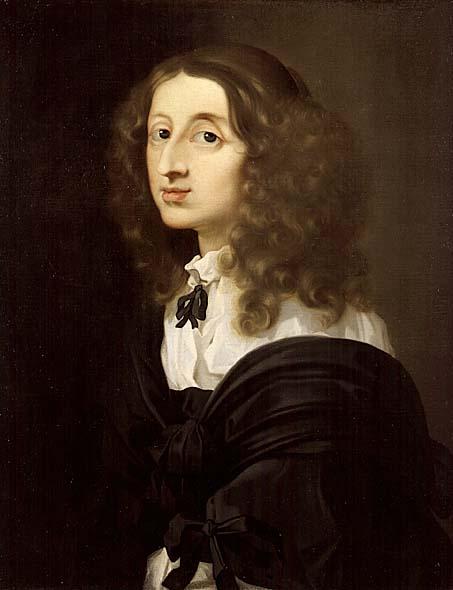
Christina and Christine have been in usage on the continent since at least the Middle Ages. Their popularity may be due to an early Christian saint and martyr of Syria. However, one of its most notable bearers was Queen Christina of Sweden.

Currently, Christina stands as the 20oth most popular female name in the United States, (2008). The highest she has ranked was in 1985, coming in as the 12th most popular female name. Its French counterpart of Christine, currently comes in as the 589th most popular female name, (2008), but at one time stood as the 14th most popular female name between 1967 and 1970.

Her popularity in other countries are as follows:

  • 9 (Czech Republic, 2009)
  • # 127 (Germany, 2009)
  • # 50 (Hungary, 2008)

Her Scandinavian forms of Kristin and Kirsten have been prevalent in the United States since the 1980s. Currently, Kirsten stood as the 567th most popular female name, (2008), while Kristin came in as the 883rd most popular female name, (2008), but once came in as the 31st most popular female name, back in 1981.

Other feminine forms include:

  • Kristina Кристина (Arabic/Bulgarian/Croatian/Czech/German/Lithuanian/Russian/Scandinavian/Serbian/Slovene
  • Crestina (Aragonese)
  • Kistiñe (Basque)
  • Christel (Bavarian: initially a diminutive form, but now used as an independent given name)
  • Hristina Христина (Bulgarian)
  • Cristina (Catalan/Corsican/Galician/Italian/Portuguese/Romanian/Spanish)
  • Kristýna (Czech)
  • Christa (Danish/English/German)
  • Kirstine (Danish)
  • Stina (Danish/Norwegian/Swedish)
  • Stine (Danish/Norwegian)
  • Tine (Danish/Norwegian)
  • Tineke (Dutch)
  • Stien (Dutch/Limburgish)
  • Christiana (English/Latin)
  • Tina (English/German/Italian/Scandinavian)
  • Kristiina (Estonian/Finnish)
  • Kirsi (Finnish)
  • Kirsti (Finnish)
  • Stiina (Finnish)
  • Tiina (Finnish)
  • Christelle (French)
  • Chrétienne (French: archaic)
  • Christiane (French/German)
  • Christine (French)
  • Christin/Kristin (German/Scandinavian)
  • Krista (German/Swedish)
  • Christína Χριστίνα (Greek)
  • Kilikina (Hawaiian)
  • Kriszta (Hungarian)
  • Krisztiána (Hungarian)
  • Krisztina (Hungarian)
  • Kristín (Icelandic)
  • Kristjana (Icelandic)
  • Cristiana (Italian/Portuguese)
  • Kristiana (Latvian)
  • Krystiana (Polish)
  • Krystyna (Polish)
  • Kjerstin (Norwegian)
  • Kjersti (Norwegian)
  • Cristìna (Sardinian)
  • Cairistìona (Scottish)
  • Kirsteen (Scottish)
  • Kirstie (Scottish)
  • Kirstin (Scottish)
  • Kristína (Slovak)
  • Kerstin (Swedish)
  • Crystin (Welsh)

English and German diminutives are: Chris, Christy, Chrissy and Tina.

French diminutives are: Chris, Chrisette and Titine.

A common Italian and Spanish compound form is Maria Cristina.

Designated name-days are: July 24 (Greece), November 12 (France), December 25 (Greece).

Żegota

Gender: Masculine
Origin: Polish
Meaning: “burn”
(zheh-GOH-tah)

The name is derived from the Old Slavonic, zec, meaning “to burn.”

In modern day Poland, the name is extremely rare, but appeared in records as early as 1212, it is believed to have occasionally been used as a vernacular cognate of the name Ignatius, (which some sources connect to the Latin meaning, “fire”), even though its usage in Poland pre-dates Ignatius by 100 years.

In modern Polish history, it was used as a codename for the Polish Council to Aid Jews, which was an underground resistance movement in German-occupied Poland (1942-1945).

Its designated name-day is February 1.

Bridget

Gender: Feminine
Origin: Celtic
Meaning: debated
(BRID-jet)

Bridget is an anglicization of the Irish Gaelic Brighid, which is of somewhat debated meaning. One theory is that it is derived from the Gaelic brígh, meaning, “power, strength, vigor, virtue.”

Another theory put out by Gods and Fighting Men (1904), translated by Lady Augusta Gregory, is that it is from the Gaelic breo-saighit meaning, “fiery arrow.”

Other sources have suggested it to mean “exalted one.”

In Celtic mythology, this was the name of an extremely important and powerful goddess.

According to the medieval Irish anthology, Lebor Gabála Érenn, Bridget was a goddess of poetry and was the daughter of Dagda. She was also associated with fire, wisdom and anything with an elevated status, whether it be a high mountain top, or someone of high social status.

The name was also borne by an early Irish saint, whose story and legend often melds with that of the ancient goddess. St. Bridget of Kildare was believed to have been a nun and one of the first converts under St. Patrick.
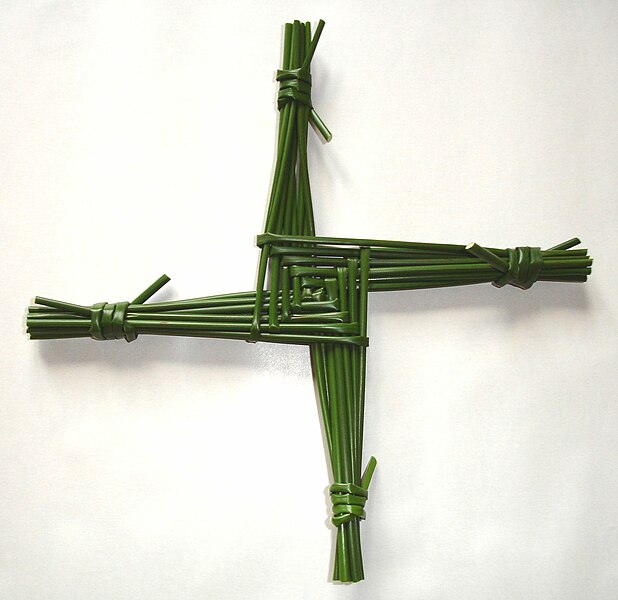
The St. Bridget’s Cross is often attributed to her, according to legend, she came upon a dying non- Christian man, in an effort to convert him to the new religion, she made a cross from the reeds that were beside him. That is all that is known of the origins of the St. Bridget’s Cross, but traditionally, a new one is made each year, on the feast of St. Bridget, (Feb. 1) while the old one is burned.

The feast of St. Bridget, which in some calenders falls on the 1st or 2nd of February,was originally one of the major festivals of the Celtic calender, known as Imbolc, it marked the first days of spring.

The name Bridget spread outside the Celtic world to the Germanic countries, it was popularized in Scandinavia by St. Bridget of Sweden, a Swedish noblewoman, mystic and founder of the Bridgettine order of nuns. She was also the mother of St. Katherine of Vadstena.

Between the 18th and 19th-centuries, when Irish immigrants first settled in the United States, the name was so common among the Irish, that Bridget or its diminutive form of Biddy became a slang term for any Irish woman.

Currently, Bridget 394th most popular female name in the United States, 2008. Its cognate of Brigitta is currently the 88th most popular female name in Hungary, (2008).

Other forms of the name include:

  • Brigit (Asturian/Scottish)
  • Birkide/Birxita (Basque: beer-KEE-de, beer-SHEE-tah)
  • Brec’hed (Breton: modern)
  • Brigantis (Breton: ancient)
  • Brigita Бригита (Bulgarian/Croatian/Czech/Latvian/Lithuanian/Romanian/Slovak/Slovene)
  • Brígida (Catalan/Portuguese/Spanish)
  • Brigantia (Celtic)
  • Berit (Danish/Norwegian: BEH-reet)
  • Birgit (Danish/Norwegian/Swedish: BEER-geet)
  • Birgitta (Danish/Dutch/Estonian/Finnish/German/Icelandic/Lithuanian: beer-GEET-tah)
  • Birgitte (Danish/German: beer-GEET-te)
  • Birte/Birthe (Danish/Norwegian: BEER-te)
  • Gitte (Danish: originally a diminutive form, used as an independent given name: GEET-te)
  • Bridget (English/German)
  • Pirjo (Finnish: PEER-yo)
  • Pirkko (Finnish” PEERK-ko)
  • Piritta (Finnish: PEE-reet-tah)
  • Priitta (Finnish: PREET-tah)
  • Brigitte (French: bree-ZHEET)
  • Bríxida (Galician: BREE-shee-dah)
  • Berecyntia (Gaulic)
  • Brigindo/Brigandu (Gaulic)
  • Birgid (German: BEER-geet)
  • Brida (German: obscure)
  • Brigida (German/Sardinian: bree-GEE-dah)
  • Brigitta (German/Hungarian)
  • Bríd (Irish-Gaelic: BREED)
  • Brídín (Irish-Gaelic: brid-EEN)
  • Brighid/Brigid (Irish-Gaelic)
  • Bedelia (Irish)
  • Bride (Irish: BRIDE or BREED)
  • Brigidine (Irish)
  • Brigida (Italian: BREEJ-ee-dah)
  • Brigidina (Italian: obscure)
  • Briej (Limburgish)
  • Brede (Manx)
  • Breesha (Manx)
  • Breeshey (Manx)
  • Breda (Norwegian: BREH-dah)
  • Brita/Britta/Brit/Britt (Norwegian/Swedish: BREE-tah, BRIT-tah, BRITT)
  • Bryda (Polish)
  • Brygida (Polish: brih-GEE-dah)
  • Braida/Brida (Romansch)
  • Brìghde/Brìde (Scots-Gaelic)
  • Gittan (Swedish: originally a diminutive form, used as an independent given name: GEET-tahn)
  • Ffraid (Welsh: FRAID)

A Swiss German diminutive form is Brigittli. German short forms are: Biggi, Briggi, Gitte, Gitti and Gittl.

Irish and English diminutives are: Biddy, Bride, Bree, Brie, Bridie and Bridge.