Ronja

Gender: Feminine
Origin: Swedish
Swe/Germ (RONE-yah); Eng (RAHN-yah)

The name can either be a transliteration of the Russian diminutive form of Veronica or it could be from the Hebrew רוֹן (ron) meaning “happiness; joy.”

The name was recently popularized in Northern Europe via the the 1981 Astrid Lindgren childrens’ novel Ronja Rövardotter, known in English as Ronia the Robber’s Daughter. The novel recounts the adventures of a Sami-like Medieval heroine who lives in the forest. Lindgren based the novel on Sami folktales and got many of the names by looking at a map of Lapland. For the name Ronja, she was supposedly inspired by Lake Jaronjaraure.

Currently, its Faroese form of Ranja is the 4th most popular female name on the Faroe Islands, (2010). Her rankings in other countries are as follows:

  • # 25 (Finland, 2010)
  • # 44 (German-speaking, Switzerland, 2010)
  • # 62 (Norway, 2010)
  • # 77 (Germany, 2011)
  • # 78 (Sweden, 2010)
  • # 246 (Netherlands, 2010)

Other forms include the English Ronia and the Faroese, Ranja.
Jana

The name could be of several different origins and meanings.
It is a German short form of Johanna, now commonly used as an independent given name. It is the Czech and Slovak feminine form of Jan (John) and a South Slavic form of Anne. It is also a Catalan contraction of Joana.

In Roman mythology, it was used as another name for the goddess, Diana. In this case, the actual origins are uncertain, but may have been a pre-Italic, Etruscan appellation.

The name could also be from the Arabic meaning, “paradise” or “garden” and sometimes transliterated as Jannah/Janna.

Currently, Jana is the 13th most popular female name in German-speaking, Switzerland (2010). Her rankings in other countries are as follows:

  • # 14 (Catalonia, 2010)
  • # 20 (Austria, 2010)
  • # 33 (Germany, 2011)
  • # 49 (Croatia, 2010)
  • # 68 (Belgium, 2009)
  • # 85 (Spain, 2010)
  • # 97 (Slovenia, 2010)
  • # 400 (Netherlands, 2010)


Lina

The name is of several different origins and meanings. It could be a German and Swedish short form of any name ending in –lina.

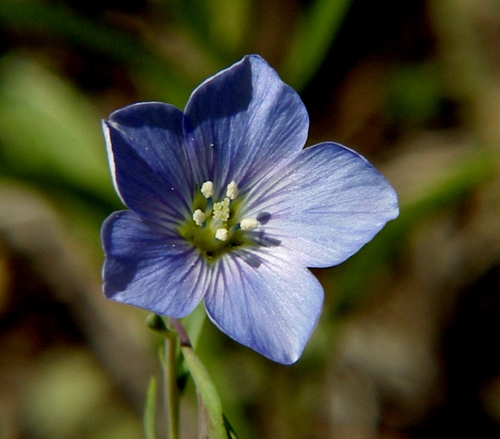
In Lithuanian, it is the feminine form of Linas, meaning, “flax.” It is also the Estonian and Finnish word for flax, and is used as a given name in both countries.

It could also be from the Arabic لينا meaning “palm tree” or “tender.”

In Sanskrit लीना it means “absorbed; united.”

The name is also used in Chinese, being a composition of the words 丽 (Li) meaning “pretty” and 娜 (Na), meaning “elegant.”

Currently, Lina is the 7th most popular female name in Germany, (2011). Her rankings in other countries are as follows:

  • # 15 (German-speaking, Switzerland, 2010)
  • # 19 (France, 2009)
  • # 20 (Slovenia, 2010)
  • # 25 (Belgium, 2009)
  • # 36 (Austria, 2010)
  • # 61 (Netherlands, 2010)
  • # 84 (Norway, 2010)
  • # 91 (Sweden, 2010)
  • # 848 (United States, 2010)

Elina

Gender: Feminine
Origin: Belarussian/Finnish
Finn (EH-lee-nah); Germ/Swe/Nor (eh-LEE-nah)

The name is possibly a Finnish and Belorussian form of Helen. It is also a common name in Central Asia, particularly in Chechnya and Uzbekistan, but in this case, the name is of uncertain meaning.

The name may have been popularized in Finland via the 15th-century ballad The Death of Elina (Elina Surma), published by Elias Lönnrot in the Kanteletar (1840). The ballad recounts the murder of Elina by her husband after he finds her with a lover.

It is also the name of a genus of butterfly.

Currently, it is the 35th most popular female name in German-speaking Switerland, (2010). Her rankings in other countries are as follows:

  • # 87 (Sweden, 2010)
  • # 114 (France, 2009)
  • # 115 (Germany, 2011)
  • # 317 (Netherlands, 2010)
Other forms of the name include:
  • Elina (Belarussian/Chechen/Danish/Dutch/Estonian/Finnish/French/German/Icelandic/Kazakh/Kyrgyz/Norwegian/Romanian/Swedish/Tatar/Turkmen/Uzbek)
  • Eliina (Finnish)
  • Elīna (Latvian)

Mia

The name could be of several different meanings and origins, but its most popular usage is from the Northern Germanic diminutive form of Maria.

In the English-speaking world, the name was introduced via actress, Mia Farrow (b.1945) whose full name is Maria de Lourdes. The name did not even appear in the U.S. top 1000 the year Mia Farrow was born, but started to rise in popularity in the late 1990s. Currently, Mia is the 10th most popular female name in the United States, (2010) and her rankings in other countries are as follows:

  • # 1 (Germany, 2011)
  • # 2 (German-speaking, Switzerland, 2010)
  • # 2 (Romansch-speaking, Switzerland, 2010)
  • # 3 (Faroe Islands, 2010)
  • # 4 (Isle of Man, 2009)
  • # 4 (Liechtenstein, 2010)
  • # 5 (Luxembourg, 2010)
  • # 6 (Australia, 2010)
  • # 7 (Croatia, 2010)
  • # 13 (England/Wales, 2010)
  • # 15 (Northern Ireland, 2010)
  • # 15 (Norway, 2010)
  • # 16 (New Zealand, 2010)
  • # 17 (Austria, 2010)
  • # 18 (Scotland, 2010)
  • # 20 (Ireland, 2010)
  • # 25 (Slovenia, 2010)
  • # 27 (Canada, B.C., 2010)
  • # 37 (Chile, 2010)
  • # 38 (Bosnia & Herzegovina, 2010)
  • # 49 (Denmark, 2010)
  • # 40 (French-speaking, Switzerland, 2010)
  • # 40 (Italian-speaking, Switzerland, 2010)
  • # 206 (France, 2009)
  • # 221 (Netherlands, 2010)

In the case of its usage in Southern Slavic countries, it is most likely derived from a diminutive form of any Slavic name containing the mio element, meaning “dear.”

In English-speaking countries, it was often used as a diminutive form of Amelia, Emilia and Hermione.

In Romansch, it was originally used as a diminutive form of Anna Maria.

Coincidentally, mia is also the feminine Italian and Spanish pronoun meaning “mine”, but the name was originally never used in reference to the pronoun.


Justus

Gender: Masculine
Origin: Latin
Meaning: “just.”
Eng (JUST-us); Germ (YUWS-tuws)

The name is derived from the Latin word for “just.” It was borne by at least 8 saints, one of whom was a Roman bishop sent to England to convert the Anglo-Saxons in the 7th-century.

The name was also borne by a son of the Roman Jewish Historian, Josephus, whose full name was Titus Flavius Justus (b.76 B.C.E). It was actually a common name among the early Roman/Italian Jewish community.

Another notable bearer was the 15th-century Dutch painter, known as Joos van Gent.

Currently, Justus is the 92nd most popular male name in Germany, (2011). His rankings in other countries are as follows:

  • # 68 (Jošt, Slovenia, 2010)
  • # 130 (Joost, Netherlands, 2010)
  • #848 (United States, 2010)

Other forms of the name include:

  • Joos (Dutch)
  • Joost (Dutch)
  • Justus (Dutch/English/Finnish/German/Latin/Romansch/Scandivanian)
  • Juste (French)
  • Jusztusz (Hungarian)
  • Giusto (Italian)
  • Just (Polish)
  • Güst (Romansch)
  • Jüst (Romansch)
  • Justo (Spanish)
Feminine forms include:
  • Justa (Dutch/German/Latin/Polish/Spanish)
  • Giusta (Italian)


Lasse

Gender: Masculine
Origin: Scandinavian
(LAHS-seh)

The name is from a Swedish and Norwegian diminutive form of Lars, now commonly used as an independent given name throughout Scandinavia, Finland and Germany.

It is currently the 86th most popular male name in Germany, (2011).

Another form is the Finnish, Lassi.

Benedict, Benedikt

Gender: Masculine
Origin: Latin
Meaning: “blessed.”

The name comes directly from the Late Latin name Benedictus meaning “blessed.” The name was borne by a 6th-centuy Italian monk and saint who credited for being the founder of the Order of the Benedictines.

The name was very common throughout Medieval Europe, being borne by 16 popes, it was fairly popular in England, in the form of Bennett.

The name was also commonly used among German-Jews, being used as a cognate of the Hebrew male name Baruch בָּרוּךְ (blessed).

In the United States, the name became taboo to use due to its associations with Benedict Arnold (1741-1801) a famous American deserter and traitor to the British.

The name recently skyrocketed in Germany after the succession of the German born Pope Benedict XVI. It is currently the 93rd most popular male name in Germany, (2011). It is especially popular in Bavaria.

His rankings in other countries are as follows:

  • # 1 (Bence, Hungary, 2010)
  • # 32 (Benedek, Hungary, 2010)
  • # 294 (Benoît, France, 2009)

Other forms of the name include:

  • Benedikti (Albanian)
  • Benedet (Aragonese)
  • Benedictu (Asturian)
  • Benedita (Basque)
  • Beñat (Basque)
  • Benead (Breton)
  • Benet (Catalan)
  • Benedettu (Corsican/Maltese/Sardinian)
  • Benedikt Венедикт (Croatian/Czech/German/Icelandic/Norwegian/Russian/Serbian/Scandinavian/Ukrainian)
  • Ben(d)t (Danish/Norwegian)
  • Benedictus (Dutch/Late Latin)
  • Benedict (English/German/Romanian/Scandinavian)
  • Bennett (English)
  • Pentti (Finnish)
  • Bénédict (French)
  • Benoît (French)
  • Beinidict (Gaelic)
  • Bieito (Galician)
  • Benedikhti ბენედიქტე (Georgian)
  • Bendix (German/Norwegian)
  • Bennet (German)
  • Benz (German)
  • Venediktos Βενέδικτος (Greek)
  • Bence (Hungarian)
  • Benedek (Hungarian)
  • Benett (Hungarian)
  • Benedetto (Italian)
  • Benito (Italian/Spanish)
  • Bettino (Italian)
  • Bendiks (Latvian)
  • Benediktas (Lithuanian)
  • Bendik (Norwegian)
  • Benedix (Plattdeutsch)
  • Benedykt (Polish)
  • Benedito (Portuguese)
  • Bento (Portuguese)
  • Benezet (Provençal)
  • Banadet (Romansch)
  • Banadegt (Romansch)
  • Bandet (Romansch)
  • Benedegt (Romansch)
  • Binidittu (Sicilian)
  • Beňadik (Slovak)
  • Bengt (Swedish)
  • Bened (Welsh)
  • Benesh (Yiddish)

Feminine forms include:

  • Benedetta (Corsican/Maltese/Italian/Sardinian)
  • Benedikta (Czech/German)
  • Benedikte (Danish/Norwegian)
  • Bénédicte (French)
  • Benoîte (French)
  • Benita (Italian/Spanish)
  • Bettina (Italian)
  • Benedicta (Latin/Romansch)
  • Benedykta (Polish)
  • Benedita (Portuguese)
  • Bengta (Swedish)

Leni

Gender: Feminine
Origin: German
(LEY-nee)

The name is derived from a German diminutive form of Magdalena and Helene.

It has been used as an independent given name since at least the early part of the 20th-century.

Its recent popularity in Germany may be due to Heidi Klum, who named her daughter Leni in 2004.

Leni is currently the 23rd most popular female name in Germany, (2011).

The name is also occasionally used in Norway and Sweden.

Katharina

Gender: Feminine
Origin: German
(kah-tah-HREE-nah)

The name is a German and Scandinavian form of Catherine

It has been one of the most consistently popular female names in Germany for the last 100 years.

She is currently the 11th most popular female name in Austria (2010) and the 51st most popular in Germany, (2011).

In German history, the name was borne by several famous women, one of the most notable being Katharina von Bora (1499-1552) a Catholic nun who left the Catholic Church and became one of the earliest converts to Lutheranism, later becoming the wife of German reformer, Martin Luther. In the American Lutheran Church, she appears in the Calendar of Saints.

Another notable and more contemporary bearer was Katharina Staritz (1903-1953) a German theologian who was one of the first women to be ordained a minister. She is known for her help and aid to many Jews during the Second World War.

The name is also borne by German Olympic Gold Medal Figure Skater, Katarina Witt (b.1965)