Oriana

Gender: Feminine
Origin: Latin
Meaning: debated
(oh-ree-AH-nah)

The name’s origin and etymology seems to be a mystery, it appears in the medieval Spanish epic romance, Amadís of Gaul and Oriana is the name of the queen of England and the lady love of Amadís.

The name appeared in Medieval Spain and Portugal in the forms of Oroana, and Ouroana. However, the name seems to have been more common in Italy, especially in Tuscany. It is currently the 45th most popular female name in Argentina, (2009) which hosts one of the larger Italian immigrant communities.

Oriana possibly derived from the Latin, aurum, meaning “gold.” It has also been linked with a Latin source meaning “east” or “sunrise.”

In Renaissance England, the name was used by Magrigals as an epithet for Queen Elizabeth I.

It is also the subject of a 19th-century play by James Albery.

Other forms of the name include:

Oriane/Orianne (French)
Oriette (French)
Oriána (Hungarian)
Oriana/Orianna (Italian/Polish)
Ouroana (Portuguese: archaic)
Oroana (Spanish: archaic)

Obscure masculine forms include:

Orian (French)
Oriando(Italian)
Oriano/Orianno (Italian)
Orio(Italian)

The name was borne by Italian journalist, author and former partisan during WWII, Oriana Fallaci (1929-2006).

The designated name-day in France is October 4, in Italy, it is June 25.

Source

  1. http://www.behindthename.com/name/oriana

Macarena

Gender: Feminine
Origin: Spanish
(mah-kah-RAY-nah)

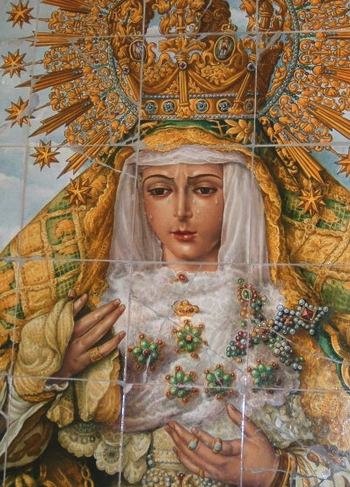
The name is used in reference to an epithet of the Virgin Mary, María Santísima de la Esperanza Macarena is a shrine in the barrio of Macarena, Seville. It is believed that the barrio got its name from a temple named for a person named Macarius.

The name has been a fairly common female given name in Spain and was brought to attention via the 1990s song of the same name, which is actually singing about a girl named Macarena.

Currently, Macarena 50th most popular female name in Argentina, (2009).

Aria

Gender: Feminine
Origin: Italian
Meaning: “air.”
It (AHR-ee-ə)

The name comes from the Italian word for air and has been used as a feminine given name in Italy since Medieval times. Its usage as a given name in the United States may have caught on due to its musical associations, an aria is an elaborate vocal solo.

The name was borne by an early Roman Christian martyr.

Currently, Aria is the 356th most popular female name in the United States, (2010).

Source

  1. http://www.behindthename.com/name/aria

Lorena

Gender: Feminine
Origin: English
(loh-RAY-nah)

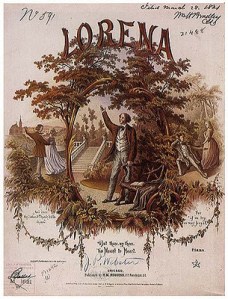
Though it has a latinate sound, Lorena seems to be a very early American invention. It first appears out of nowhere as the subject of a 1856 song, written by a Rev. H.D.L Webster. It is almost for certain that Webster invented the name himself. The song is about a broken relationship Webster had with a girl named Ella Blocksom. He is said to have been inspired by Edgar Allen Poe’s ladylove, Lenore of the Raven, by rearranging the letters, he came up with the sonorous Lorena.

The song was such a hit during the American Civil war that it was often sung by both Confederate and Union soldiers, usually while remembering their far off wives or ladies they courted. No doubt, this caused the name to become a standard and over the past 150 years, it has reached other shores. It is now used across Europe including the former Yugoslavia. In fact, it is currently the 13th most popular female name in Croatia (2009) and the 86th most popular in Bosia and Herzegovnia (2010). Its ranking in other countries, including the United States, are as follows:

#82 (Spain, 2010)
# 238 (the Netherlands, 2010)
#357 (France, 2009)
#964 (United States, 2010)

The name also appears in Margaret Mitchell’s Gone with the Wind as Scarlett O’Hara’s second daughter by Frank Kennedy, Ella Lorena Kennedy.

It is also the name of a municipality of São Paolo, Brazil, a city in Texas and is used as an alternate name for the Ghost Town of Masonic, California.

Source

  1. http://www.behindthename.com/name/lorena-2
  2. http://www.behindthename.com/name/lorena-1

Gunnar

Gender: Masculine
Origin: Old Norse
Meaning: “war warrior.”
Eng (GUN-ner); Swe (GOON-nahr)

The name is composed of the Old Norse elements, gunnr (war) and arr (warrior).

The name was borne a legendary 5th-century Burgundish king. His exploits appear in the ancient Germanic poetic text Nibelungelied and the Medieval poem Walthurius.

In the Nibelungelied he is mentioned as the King of Worms, the husband of Brunhild and the brother of Kriemhild, whom Siegfried comes to woo.

In some tales, he was betrayed by Attila the hun and murdered by him.

The same character later appears in JRR Tolkien’s epic poem based on Norse legend, The Legend of Sigurd and Gudrun.

Gunnar did not appear in the U.S. top 1000 till 1991 coming in as the 705th most popular male names, as of 2009, he was the 551st most popular male name.

Other forms of the name include:

  • Gūðhere (Anglo-Saxon)
  • Gondicari (Catalan)
  • Vintíř (Czech)
  • Gunder (Danish/Norwegian/Swedish)
  • Gunnar (Danish/English/Estonian/Norwegian/Swedish)
  • Gunner (English/Norwegian/Swedish)
  • Gundur (Faroese)
  • Kunkku (Finnish)
  • Kunnari (Finnish)
  • Kunto (Finnish)
  • Gondicaire (French)
  • Gundohar (Frisian/Dutch)
  • Gundahar (German: archaic)
  • Günter/Günther (German/Hungarian)
  • Gunther (German)
  • Gunter (German/Polish/Spanish)
  • Gundicaro (Italian)
  • Gundaharius (Late Latin)
  • Gunnarr (Old Norse)
  • Gunnár (Sami)
  • Gundo (Swedish)
  • Gunnerius (Swedish: archaic)

The name was also borne by a medieval Czech saint.

The designated name-days are January 8 (Estonia); January 9 (Sweden) and October 9 (Germany).

Sources

  1. http://www.behindthename.com/name/gunnar
  2. http://www.nordicnames.de/wiki/Gunnarr

Thaïs

Gender: Feminine
Origin: Greek
Meaning: debated
Θαΐς
(tye-EES)

The name is of uncertain derivation, though it has been suggested to be from a Greek source meaning “bondage.”

In history, the name was borne by a hetaera (concubine) of Alexander the Great. She is credited by historians for pursuading Alexander to burn down his palace.

Thaïs the concubine is credited more for her fictional roles. In Terence’s Eunuchus, the female protoganist of the same name is loosely based off of her.

In Dante’s Divine Comedy, she is depicted in Hell in the circle of the flatterers (Inferno, XVIII,133-136).

The name was also borne by an early Greek Christian saint. In 1890, Anatole France wrote a novel based on her life, a novel which was later adapted by Jules Massenet into a famous opera of the same name.

Other forms of the name include:

  • Taís (Catalan)
  • Thaïs (English/Greek/French)
  • Thais (German/Spanish)
  • Taide (Italian)
  • Taida (Polish)
  • Taisa/Taisiya Таисия (Russian)
  • Taja (Slovene)
  • Tajda (Slovene)
  • Tajka (Slovene)
  • Tajša (Slovene)

In France, the designated name-day is October 8.

Source

  1. http://www.behindthename.com/name/thais

Gilda

Gender: Feminine
Origin: Italian
Meaning: “sacrifice; value.”
Eng (GIL-duh); It (JEEL-dah)

The name is derived from the Germanic element, gild, meaning “sacrifice; value.”

The name appears in Verdi’s 1851 opera, Rigoletto.

It was the name of a title character in a 1946 film starring Rita Hayworth.

The name was also notably borne by American comedienne, Gilda Radner (b.1946), one of the original cast members of Saturday Night Live. She died at the age of 42 from ovarian cancer, and since has become an icon for ovarian cancer awareness.

In Argentina, it is borne by Gilda, a pop singer (b.1961); and is also borne by an Italian singer, known simply as Gilda (b.1950).

The designated name-days are: January 29 (Poland); October 5 (Lithuania).

Source

  1. http://www.behindthename.com/php/find.php?name=gilda

Melody

Gender: Feminine
Origin: Greek/English
(MEL-o-dee); MEL-e-dee)

The name has often been thought to be taken directly from the English word, but is actually derived from an ancient Greek female name, Melodia μελῳδία, of the same meaning.

French forms are Mélodie and Mélodine. The name is still in usage in Modern Greece, in the form of Melodia.

Its English form of Melody also seems to have had some usage in the Netherlands.

The designated name-day in France is October 1.

Source

  1. http://www.behindthename.com/php/find.php?name=melody

Norma

Gender: Feminine
Origin: Uncertain
Meaning: Uncertain

The name is of uncertain origin or derivation, although some theories suggest that it is from the Latin word norma meaning “patterns; rule” or that it is a feminine form of the English surname turned given name, Norman.

It first gained recognition from the 1831 opera by Vincenzo Bellini and Felice Romani.

The name has experienced widespread usage across Europe and the Anglo-phone world since. Between 1931-32, Norma was the 22nd most popular female name, today, she does not appear in the U.S. top 1000.

In pop culture, it was borne by Norma Jeane Mortensen Baker (also known as Marilyn Monroe).

The designated name-day in Latvia is August 2.

Source

Susan, Susannah

Gender: Feminine
Origin: Hebrew
Meaning: “lily; rose.”

Susannah is the anglicized form of the Biblical Greek Sousanna (Σουσαννα) which in turn, is a translation of the Biblical Hebrew שׁוֹשַׁנָּה (Shoshannah). Shoshannah is derived from the Hebrew word ששון (shoshan) which means “lily” in ancient Hebrew, but in modern Hebrew has evolved to mean “rose.”

The Hebrew word of shoshan has been traced to the ancient Egyptian element, sšn meaning “lotus” and is also believed to be linked with the Hebrew word ששון (sasson) meaning, “joy”.

It is also interesting to note that in modern Farsi, the word for lily is sausan compare to shoshan.

The ancient place name of Susa is also believed to be related to the Semitic botanical word, due to the so-called abundance of lilies that used to thrive in the area.

In the Old Testament (or Apocrypha) the name is borne by a woman falsely accused of adultery. She is rescued by the prophet Daniel who tricks her accusers and reverses the accusations against them.

It is also borne in the New Testament by a companion of Mary and a disciple of Christ. She is revered as a saint in the Catholic and Eastern Orthodox Churches.

Susan is a Middle English knock off, most likely influenced by the French Suzanne, which might have been introduced by the Norman conquerors in the 11th-century.

Currently, Susannah does not appear in the U.S. top 1000, (2008), but she has become especially trendy in many Central and Eastern European countries (in her various vernacular forms of course).

Her rankings in other countries are as follows:

  • # 22 Zuzana (Czech Republic, 2009)
  • # 96 Zsuzsanna (Hungary, 2009)
  • # 8 Suzana (Macedonia, 2006)
  • # 3 Zuzanna (Poland, 2008)
  • # 3 Zuzana (Slovakia, 2004)

In the English-speaking world, Susan was especially popular after World War II. In the United States, it is often considered dated and is usually associated with someone in their early 60s to late 50s. In fact, she remained a staple among the Baby-Boom Generation all the way to the early beginnings of the Generation Xers. She remained strong in the top 10 for over 20 years. The highest she peaked was between 1957 and 1960, coming in as the second most popular female name. Currently, she stands at a meagre #711.

Other forms of the name include:

  • Sawsan (Arabic)
  • Shushan (Armenian)
  • Sjusanna (Bulgarian)
  • Zulisja (Bulgarian)
  • Susanna (Catalan/Estonian/Finnish/German/Italian/Romansch/Swedish/Ukrainian)
  • Suzana (Croatian/Macedonian/Romanian/Serbian/Slovene)
  • Zuzana (Czech/Slovak/Lithuanian)
  • Sanna/Sanne (Danish/Dutch/Finnish/Norwegian/Swedish)
  • Susanne (Dutch/German/Norwegian/Swedish)
  • Susan (English)
  • Soosan سوسـن (Farsi)
  • Suzanne (French)
  • Suzette (French: originally a diminutive, but long regarded as an independent given name)
  • Šušanik შუშანიკ (Georgian)
  • Sousanna Σουσαννα (Greek)
  • Susann (German/Scandinavian)
  • Shoshana שושנה (Hebrew: Modern)
  • Zsuzsanna (Hungarian: ZHOO-zhawn-naw)
  • Zane (Latvian)
  • Zuzanna (Latvian/Polish: zoo-ZAHN-nah; zoo-ZAHN-ne-nah)
  • Sosamma (Malayalam)
  • Huhana (Maori)
  • Żużanna (Polish: archaic, possibly based off the Hungarian form. zhoo-ZHAHN-ne-nah)
  • Susana (Portuguese/Spanish)
  • Sana (Romansch)
  • Susauna (Romansch)
  • Sjusanna Сюзанна (Russian)
  • Suzan (Turkish)

Bulgarian diminutives include: Susa, Suzanka and Susak
Czech/Slovak short for is Zuza
English short forms are: Sue, Suzie and occasionally, Sukie/Sookie.
French affectionate forms include: Suzelle/Suzel, Suzette, Suzie and Suzon
Hungarian short forms are: Zsazsa, Zsuzsa and Zsuzsi.
Lithuanian diminutives are: Zune and Zuze
Polish diminutives include: Zanna, Żanna, Zanka, Zańka, Zuchna, Zula, Zuzia and Zużka
Spanish diminutives are: Susanita & Susi

The designated name-day is August 11 in (Estonia, Finland and Sweden).

Sources