 Gender: Feminine
Origin: German/Spanish
(LOH-lah)
Lola is a diminutive name that is now well established as an independent given name. Traditionally, in Spanish, it was a pet form of Dolores, and occasionally, Lourdes, and in German it was a pet form of Aloisia.
The name caught on as an independent given name in the late 19th-century, mostly, in part, due to the fame and popularity of Irish born stage actress Lola Montez (1818-1861), née Marie Dolores Gilbert.
Lola Montez was both popular and infamous in her time, she was scandalously associated as the mistress of Ludwig I of Bavaria. Later in her life, she was known for her humanitarian work with American prostitutes. Montez may have been responsible for Lola’s sultry image.
Currently, Lola is rising in popularity in many European countries, she is the 47th most popular female name in England/Wales, (2008) and her rankings in other countries are as follows:
- # 20 (Belgium, 2006)
- # 7 (France, 2009)
- # 448 (Germany, 2009)
- # 119 (the Netherlands, 2009)
- # 59 (Spain, 2008)
- # 246 (the United States, 2008)
Another form, Lolita, also has a history as an independent given name and fell out of popularity in the English-speaking world due to its associations with the Vladimir Nabakov novel of the same name, (1955). Since the publication of the novel, the term lolita has been used to describe a sexually promiscuous adolescent girl.
Lola also coincides with the Uzbek and Tajik word for tulip, and is used as feminine name in both languages.
The name is borne by Uzbek pianist, Lola Astanova and Lola Karimova-Tillyaeva,an Uzbek UNESCO representive and daughter of Uzbek president, Islam Karimov.
It is also borne by Spanish actress, Lola Dueñas (b.1971); Romani-Spanish dancer, Lola Flores (1923-1995, née María Dolores) and Puerto Rican poet Lola Rodríguez de Tió, (1843-1924, née Dolores).
The name has recently been bestowed on a few celebrity children, most notably, the daughter of actors Charlie Sheen and Denise Richards, and Madonna uses Lola as a diminutive for her daughter Lourdes.
Lolita is borne by Serbian-Canadian actress, Lolita Davidovich (b. 1961)
In Latvia, the designated name-day for Lolita is May 30.
Lolita is also occasionally used in Polish, Norwegian and the former Yugloslav Republic. In Slovene, it boasts its own nicknames of Lota and Lotica.
Sources
- http://www.askoxford.com/firstnames/lola?view=uk
- http://www.behindthename.com/php/find.php?name=lola
- http://www.prenoms.com/chroniques/prenoms/top-des-prenoms-2010-quelles-sont-les-nouvelles-tendances-le-palmares-2009-o11811.html
- http://www.beliebte-vornamen.de/2009/top500-2009
- http://www.ine.es/en/daco/daco42/nombyapel/nombyapel_en.htm
- http://uzbek.firespeaker.org/
- http://dictionary.cambridge.org/define.asp?dict=CALD&key=46999&ph=on
- http://www.askoxford.com/concise_oed/lolita?view=uk
- http://news.bbc.co.uk/2/hi/uk_news/magazine/7242623.stm
- http://pl.wikipedia.org/wiki/Lolita_(imię)
- http://www.stat.si/imena_baza_imena.asp?ime=lolita&priimek=&spol=Z
- http://www.linternaute.com/femmes/prenoms/
- Keber, Janez, Leksikon imen
 Gender: Feminine
 Its sudden rise in popularity is still somewhat a mystery, as it was already in the top 10 by 1966, several years before Love Story was even written. It was already in the top 1000 by 1938, and Jennifer Jones did not go by her stage name until 1943, however, the actress may have been somewhat responsible for the name to rise several places in 1943, but the name did not become excessively popular until a good decade later.
 Gender: Masculine
 Gender: Masculine
 Gender: Masculine
 Gender: Feminine
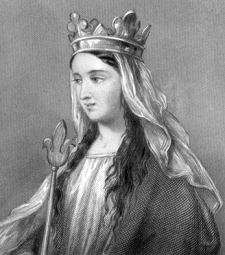 It was later borne by the wife of William I the Conquer, Matilda of Flanders, also known as Maud Le-Vieux, (1031-1083).
 Gender: Masculine
 Gender: Masculine
 Gender: Feminine
 Its English diminutive offshoot, Dolly, was also occasionally used as an independent given name, as is the case with American First Lady, Dolley Madison, (née Dolley Payne Todd Madison), 1768-1849. In fact, the modern English word for doll is supposedly derived from the female given name.