Drake

Gender: Masculine
Origin: Anglo-Saxon/Latin
Meaning: “dragon.”
(DRAKE)

The name comes from the Anglo-Saxon personal name Draca meaning “dragon”, it may have been an Anglo-Saxon form of the Latin male name Draco. The name went out of usage after the Norman Conquest and was only recently revived.

It is currently the 199th most popular male name in the United States, (2010).

Source

  1. http://www.behindthename.com/name/drake

Griffin

Gender: Masculine
Origin: Welsh
Meaning: uncertain
(GRIF-fin)

The name is an anglicized form of the Welsh male name Gruffudd, the later part which carries the Welsh element of udd meaning “lord” but the first part of the name has an uncertain meaning.

In Medieval times, this was a popular name in Wales and was borne by an 11th-century Welsh king.

In recent years, the name has been used in reference to the legendary creature that has the head of an eagle and the body of a lion. In this case it is derived from the Greek γρυψ (gryps) meaning “hooked, curved”.

Currently, Griffin is the 231st most popular male name in the United States, (2010).

Other forms of the name include:

  • Griffith (English/Welsh)
  • Gruffudd (Welsh)
  • Gryffudd (Welsh)

A common Welsh diminutive is Guto.

Sources

  1. http://www.behindthename.com/name/gruffudd
  2. http://en.wikipedia.org/wiki/Griffith_(name)

Brendan

Gender: Masculine
Origin: Irish
Meaning: “prince.”
(BREN-den)

The name is derived from the Latin Brendanus which is a late Latinzation of the Gaelic male name Bréanainn which is inturn derived from an Old Welsh word breenhín meaning “prince.”

The name was borne by a St. Brendan the Voyager who is considered one of the Twelve Apostles of Ireland and is known for his legendary explorations of exotic lands one of the being the St. Brendan’s Island popularly speculated to be North America.

Currently, Brendan is the 229th most popular male name in the United States, (2010).

Other forms of the name include:

  • Brendan Брендан (Breton/English/German/Faroese/French/Icelandic/Polish/Russian/Scandinavian/Slovene/Ukrainian)
  • Brévalaire (Breton)
  • Brandà (Catalan)
  • Brandan (Catalan/Spanish)
  • Brandaan (Dutch)
  • Brennan (English)
  • Breandán (Gaelic)
  • Bréanainn (Gaelic. BREN-nen)
  • Brendano (Italian)
  • Brendanus (Late Latin)
  • Brendanas (Lithuanian)
  • Brandão (Portuguese)
  • Brendanu (Sicilian)
Source

Dante

Gender: Masculine
Origin: Italian
Meaning: “enduring.”
(DAHN-te)

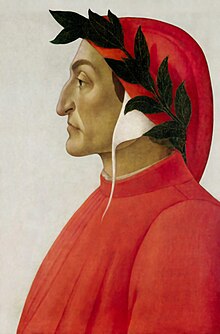
The name is an Italian short form of the now archaic Italian male name Durante meaning “enduring.” It was popularized as an independent given name by the 13th-century Italian poet Dante Alighieri.

Currently, Dante is the 255th most popular male name in the United States, (2010) and the  420th most popular in the Netherlands (2010).

Among Italian-Americans, the name was often anglicized as Danny.

Other forms of the name include:

  • Duran (English)
  • Durando (Italian)
  • Durante (Italian)
  • Durantino (Italian)
  • Durans (Late Latin)

Source

  1. http://www.behindthename.com/name/dante

Esmeralda

Gender: Feminine
Meaning: “emerald.”

The base name is the Greek Smaragda which is a feminine form of Smaragdos Σμάραγδος meaning, “emerald.” Its masculine and feminine forms were most likely used in the Pre-Christian Hellene world but were later popularized across Christian Europe in the vernacular forms we know today as Emerald, Esmeralda & Smeralda due to the cult of a 3rd-century Greek martyr and saint of the same name, as well as it’s associations with St. John the Apostle.

Contrary to popular belief, gemstone names have been in use as traditional female given name since at least the 12th-century. The old French form of Esmeraude is recorded in 13th-century France. Though unusual these days in French-speaking countries, Émeraude is a legitimate French feminine given name which has been in out of use since Medieval times.

Esméralda is currently borne by Princess Marie-Esméralda of Belgium (b. 1956).

It’s Spanish and Portuguese form of Esmeralda was used by Victor Hugo as the name of one of the key characters in The Hunchback of Notre Dame (1831), which inspired several Ballets of the same name.

The gemstone itself is the birthstone of May. It is also the name of a genus of orchid.

Currently, Esmeralda is the 379th most popular female name in the United States, (2019), it peaked in popularity in 1998 when it was the 133rd most popular female name in the United States.

Emerald recently entered the U.S. Top 1000 in 2019, coming in at #968. It has been in and out of the U.S. Top 1000 since 1991.

It’s Turkish form of Zümra is currently the 19th most popular female name in Turkey.

Other forms of the name include:

  • Zümrüd (Azeri)
  • Smaragda (Belarusian/Bosnian/Bulgarian/Croatian/Greek/Lithuanian/Macedonian/Serbian/Slovene)
  • Maragda (Catalan)
  • Esmeralda (Czech/English/Icelandic/Ladino/Latvian/Polish/Swedish)
  • Smeraldina (Czech)
  • Émeraude (French)
  • Esmeralde (Old French)
  • Esmeraude (Old French)
  • Eszmeralda (Hungarian)
  • Smeralda (Italian)
  • Emerauda (Late Latin)
  • Smaralda (Romanian)
  • Zümrüt (Turkish)

Diminutives include:

  • Esminka (Czech)
  • Mera (Czech)
  • Esme (English)
  • Essie (English)

Masculine forms include:

  • Smaragdos Σμάραγδος (Greek)
  • Esmeraldo (Italian)
  • Smeraldo (Italian)
  • Smaragdus (Latin)
  • Smaragds (Latvian)
  • Smaragdas (Lithuanian)
  • Szmaragd (Polish)
Sources

Hope

Gender: Feminine
Origin: English

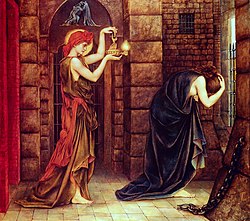
The name comes directly from the English word and has been in usage since the Middle Ages due to the popularity of a cult of sister saints, Hope, Faith and Charity.

Its popularity was in enhanced in the 17th-century due to its usage among the Puritans.

Currently, Hope is 245th most popular female name in the United States, (2010). Its Spanish cognate of Esperanza is currently the 75th most popular female name in Chile and the 948th most popular in the United States, (2010).

Other forms of the name include:

  • Nadzieja Надзе́я (Belarusian/Polish. nod-JAY-yah)
  • Nada (Bosnian/Croatian/Serbian/Slovene)
  • Esperañs (Breton)
  • Esperança (Catalan/Portuguese)
  • Naděžda (Czech)
  • Spes (German/Latin)
  • Elpida Ελπίδα (Greek)
  • Elpis (Greek/Coptic)
  • Hopeful (English: a popular female name among Puritans)
  • Hopestill (English: a popular female name among Puritans)
  • Hopewell (English: a popular female name among Puritans)
  • Espérance (French)
  • Speranza (Italian)
  • Speranță (Romanian)
  • Nadezhda наде́жд (Russian)
  • Spiranza (Sicilian)
  • Esperanza (Spanish)
Source

Theodore

Gender: Masculine
Origin: Greek
Meaning: “god’s gift.”

The name is derived from the Greek Theodoros (Θεοδωρος) which is composed of the elements θεος (theos) meaning “god” and δωρον (doron) “gift.” The name was borne by several early saints, two popes and three tsars of Russia.

In recent American history the name was borne by President Theodore Roosevelt (1858-1919) of whom the Teddy Bear was named for.

It is currently the 263rd most popular male name in the United States, (2010).

An interesting fact: Dorothy is derived from the same Greek roots but in reverse order.

Other forms of the name include:

  • Tewodros ተውዶሮስ (Amharic)
  • Tadros تادرس (Arabic: used among Arab Christians)
  • Todos ܛܘܕܘܫ (Aramaic: used among Assyrian and Chaldean Christians)
  • Hvejdar Хведар (Belarusian)
  • Teodor Теодор (Bulgarian/Catalan/Croatian/Czech/Danish/Estonian/Finnish/Hungarian/Polish/Romanian/Scandinavian/Slovakian/Slovene/Ukrainian)
  • Todor (Bulgarian/Serbiab/Northern Greek)
  • Theirn (Cajun)
  • Theodoor (Dutch)
  • Theodorus (Dutch/Latin)
  • Theodore თევდორე (English/Georgian)
  • Tuudor (Estonian)
  • Teuvo (Finnish)
  • Théodore (French)
  • Theodor (German)
  • Theodoros Θεόδωρος (Greek)
  • Thodoros Θόδωρος (Greek)
  • Fedor (Hungarian)
  • Tivadar (Hungarian)
  • Tódor (Hungarian)
  • Téodóir (Irish)
  • Teodoro (Italian/Portuguese/Spanish)
  • Todaro (Italian)
  • Teodors (Latvian)
  • Thei (Limburgish)
  • Teodoras (Lithuanian)
  • Toše Тоше (Macedonian)
  • Tiodore (Occitanian)
  • Toader (Romanian)
  • Tudor (Romanian/Welsh)
  • Fedor Федор (Russian/Slovene)
  • Fjodor Фёдор (Russian)
  • Teodoru (Sicilian)
  • Fedja (Slovene)
  • Todor (Slovene)
  • Fedir Федір (Ukrainian)
  • Tewdwr/Tudur (Welsh)
Common diminutives include:
  • Tosho Тошо (Bulgarian)
  • Toshko Тошко(Bulgarian)
  • Ted/Teddy (English)
  • Tedo თედო (Georgian)
  • Fedja Федя (Russian)

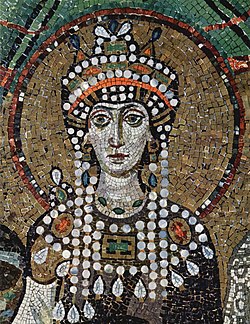
Its feminine form of Theodora was very popular in Byzantium, it was borne by at least five Byzantine Empresses including Empress Theodora who is also revered as a saint.
Other feminine forms include:

  • Teodora Теодора თეოდორა (Bulgarian/Catalan/Crotian/Georgian/Italian/Macedonian/Polish/Portuguese/Romanian/Serbian/Slovene/Spanish/Swedish)
  • Todorka Тодорка (Bulgarian/Macedonian)
  • Theodora Θεοδώρα (Czech/English/German/Greek)
  • Theda (English/German)
  • Théodora (French)
  • Teodóra (Hungarian)
  • Fedora Федора (Russian/Slovene)
  • Feodora Феодора (Russian)

Walter

Gender: Masculine
Origin: German
Meaning: “ruler of an army.”

The name is composed of the Old High German elements, wald (ruler) and hari (army). The name was used in England pre-Norman invasion in the Anglo-Saxon form of Wealdhere but was soon replaced with the Normanized Walter. It was borne by a legendary Visigothic king who appears in several Medieval poems and epics.

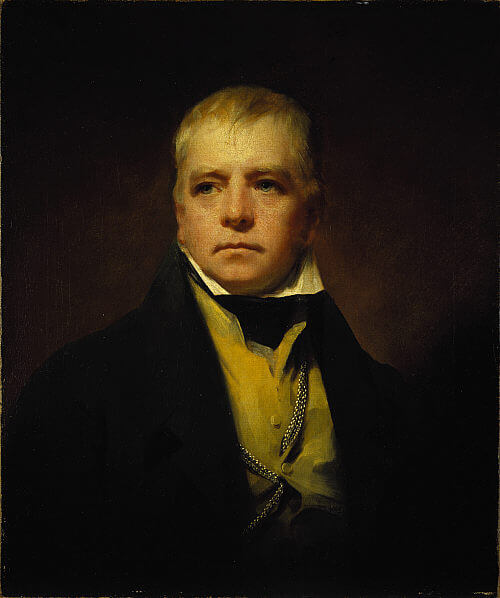
There have been several other notable bearers throughout history, one of the most famous being Sir Walter Scott (1771-1832).

Currently it is the 332nd most popular male name in the United States, (2010).

Other forms include:

  • Wealdhere (Anglo-Saxon)
  • Valter (Czech/Finnish/Italian/Hungarian/Norwegian/Russian/Slovak/Slovene/Swedish)
  • Valder (Danish/Norwegian)
  • Wouter (Dutch)
  • Walter (English/German/Italian/Polish/Scandinavian)
  • Valterri (Finnish)
  • Gauthier/Gautier (French)
  • Wolter (Frisian)
  • Waldhar (German: archaic)
  • Walther (German)
  • Valtier (Hungarian)
  • Gaulterio (Italian)
  • Gaultero (Italian)
  • Gaultiero (Italian)
  • Gaulterius (Late Latin)
  • Valters (Latvian)
  • Valtare (Norwegian)
  • Walthari (Old High German)
  • Wöltje (Plattdeutsch)
  • Guálter (Portuguese)
  • Gualtério (Portuguese)
  • Bhaltair (Scottish)
  • Bhàtair (Scottish)
  • Volter (Swedish)
  • Gwallter (Welsh)

Diminutives include:

  • Woidda (Bavarian)
  • Valte (Danish)
  • Wout (Dutch)
  • Wally (English/German)
  • Walt (English)
  • Wat (English)
  • Wate (Frisian)
  • Watse (Frisian)
  • Valkó (Hungarian)
  • Valtika (Hungarian)
  • Valle (Swedish)
  • Wale/Wali/Walo (Swiss-German)
  • Walti (Swiss-German)
  • Wädi/Wädu (Swiss-German)

Feminine forms include:

  • Woutera (Dutch)
  • Wouterina (Dutch)
  • Waltera (German)
  • Gaultiera (Italian)
  • Gaultierina (Italian)
  • Valterina (Italian)

Source

  1. http://www.behindthename.com/name/walter

Reginald, Ronald

Gender: Masculine
Origin: Old Norse
Meaning: “advice ruler.”

The name is derived from the Old Norse Ragnvaldr which is composed of the elements ragn (advice, council) and valdr (ruler). The name was introduced into Scotland and England via Viking settlers.

In recent history it was borne by former American President and actor Ronald Reagan (1911-2004).

Currently, Ronald is the 342nd most popular male name in the United States, (2010).

Other forms of the name include:

  • Reinout (Dutch)
  • Reginald (English)
  • Ronald (English/Scottish)
  • Reino (Finnish)
  • Renaud/Reynaud (French)
  • Réginald (French)
  • Raghnall (Gaelic)
  • Reinald (German: archaic)
  • Reinhald (German)
  • Rajnald (Hungarian)
  • Rinaldo (Italian)
  • Reinaldo (Portuguese/Spanish)
  • Reynaldo (Portuguese/Spanish)
  • Ronaldo (Portuguese)
  • Ragnvald (Scandinavian: archaic)
  • Ranald (Scottish)
  • Rheinallt (Welsh)

Common English nicknames are Reg, Reggie, Ron and Ronnie.

Feminine forms include:

  • Rinalda (Italian)
  • Rinaldina (Italian)
  • Ronalda (Portuguese/Scottish)
Source

Aria

Gender: Feminine
Origin: Italian
Meaning: “air.”
It (AHR-ee-ə)

The name comes from the Italian word for air and has been used as a feminine given name in Italy since Medieval times. Its usage as a given name in the United States may have caught on due to its musical associations, an aria is an elaborate vocal solo.

The name was borne by an early Roman Christian martyr.

Currently, Aria is the 356th most popular female name in the United States, (2010).

Source

  1. http://www.behindthename.com/name/aria