Cem

Gender: Masculine
Origin: Turkish
Meaning: “ruler.”
(Jem)

The name comes from an old Turkish source meaning “ruler.” It was borne by a 15th-century pretender to the Ottoman Empire, Prince Cem , also known in Western Europe as Jem, (1459-1495).

It currently the 331st most popular male name in Germany, (2011).

Rico

Gender: Masculine
Origin: Italian/Romansch/Spanish
(REE-koh)

The name comes from a Latinate diminutive form of either Enrico or Ricardo. It is now used as an independent given name in Italy, Spanish-speaking countries and in the Romansch-speaking regions of Switzerland.

Coincidentally, rico is also the Spanish word for “rich” and is used as a term of endearment for small children. It would roughly be the equivalent of “precious.”

Currently, Rico is the 314th most popular male name in Germany, (2011).


Janek

Gender: Masculine
Origin: Czech/Polish
Pol/Germ/Est: (YAH-nek)

The name is from the Polish and Czech diminutive form of Jan, which is a cognate for John. The name is strictly used as a diminutive form in Poland and the Czech Republic, but has become a common independent given name in German-speaking countries, (especially in East Germany) and in Estonia.

Currently, Janek is the 346th most popular male name in Germany, (2011).

Another German rendition is Jannek.


Keanu

Gender: Masculine
Origin: Hawaiian
Meaning: “cool breeze; the coolness”
(kay-AH-noo)

The name is composed of the Hawaiian words ke meaning (the) and anu (cool).

The name should be pronounced (kay-AH-noo) vs (KEE-ah-NOO). The name first caught the world’s attention through actor, Keanu Reeves (b. 1964).

Currently, Keanu is the 325th most popular male name in Germany, (2011).

Gina

Gender: Feminine
Origin: Italian
Eng/It (JEE-nah); Germ (GHEE-nah); Grk (YEE-nah)

The name was originally a short form of Regina, Georgina or Luigina, but has been used as an independent given name in Italy, Greece, the English and German-speaking world.

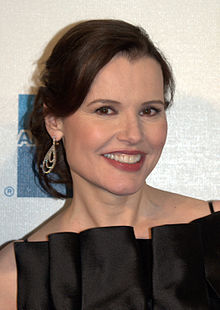
It has been borne by several actresses, including Gina Lollobrigida (b.1927) and Geena Davis (b.1956).

Currently, Gina is the 327th most popular female name in Germany, (2011).

A masculine form is Gino.

Inga

Gender: Feminine
Origin: Old Norse/Germanic
(IN-ga)

The name is a feminine form of Inge or Ing, which is an Old Germanic name of uncertain meaning. It was the name of an ancient Germanic god of which very little is known.

In addition to Scandinavia, Inga has experienced prevalent usage in other countries, such as Germany, the Netherlands and Russia.

Currently, Inga is the 341st most popular female name in Germany, (2011).

Other forms of the name include:

  • Inga Инга (Belarusian/Bosnian/Croatian/Dutch/Estonian/Faroese/Georgian/German/Icelandic/Latvian/Lithuanian/Polish/Russian/Scandinavian/Serbian/Slovene)
  • Inge (Danish/Dutch)
  • Inia (Danish)
  • Inka (Finnish)
  • Inken (Frisian)
  • Iηgá (Sami)
  • Ingara (Norwegian: archaic)

Inge is rarely ever used as a masculine form and is occasionally used as a female form in Scandinavia, pronounced (IN-ge).

Common male forms are Ingi and Ingo.

In Sweden, Inga’s designated name-day is October 25. In Norway it is December 17 and in the Swedo-Finnish calendar it is June 20.

Inga is also the name of a genus of tropical trees and shrubs.

The name was and is borne by Swedish stage actress and opera singer, Inga Åberg (1773-1837); Swedish actress Inga Tidblad (1901-1975); Swedish actress Inga Landgré (b.1927); American actress Inga Swenson (b. 1932); American femininist author Inga Muscio (b.1966); Russian Olympic Speed-Skater Inga Artamonova (1936-1966); Bosnian-Australian politician Inga  nee Dosen Peulich (b.1964); Australian anthropologist, author and historian Inga Clendinnen (b.1934) and Danish Opera Soprano Singer Inga Nielsen (1946-2008)

Salim

Gender: Masculine
Origin: Arabic سليم
Meaning: “safe.”

The name is derived from the Arabic word, salima (to be safe). Its Turkish form of Selîm was a very popular choice among the Ottomanian Sultans, being borne by at least three.

The name also seems to have been occasionally used in 18th and 19th-century Britain and America. It was borne by Selim E. Woodworth (1815-1871) a commander of the United States Navy, and British born American pioneer Selim Franklin (1814-1884). It was also borne by Finnish composer Selim Gustav Adolf Palmgren (1878-1951) and one of the most famous Kurdish poets, known simply as Salîm (1800-1866).

Currently, Selîm is the 373rd most popular male name in Germany, (2011) while Salim stands as the 495th most popular male name in France, (2010).

Other forms of the name include:

  • Selim (Egyptian/Sudanese/Tunisian)
  • Saleem (Indian/Urdu/Pakistani)
  • Salîm (Kurdish)
  • Selîm (Turkish)
Feminine forms include Salima, Salma and Selima.

Gianluca

Gender: Masculine
Origin: Italian
(jahn-LOO-kah)

The name is a compound of the Italian male names, Gianni and Luca.

It is currently the 391st most popular male name in Germany, (2011). The name became common in Germany after the second half of the 20th-century. The German, albeit rare, equivalent is Janlukas.