Janosch

Gender: Masculine
Origin: German
(YAH-noshe)

The name is a Germanized form of the Hungarian, János or the Polish, Janusz, both of which are forms of John or even the Latin, Janus.

Currently, Janosch is the 275th most popular male name in Germany, (2011).

Sandro

Gender: Masculine
Origin: Italian სანდრო, Сандро

The name is a contracted form of Alessandro and is used as an independent given name in Italy,  Hungary, the Ukraine, Georgia, throughout South Eastern Europe, Spanish-speaking countries and in German-speaking countries, especially Switzerland.

The name was most notably borne by Sandro Botticelli (1445-1510).

Currently, Sandro is the 267th most popular male name in France (2009) and the 269th most popular male name in Germany, (2011).


Leonidas

Gender: Masculine
Origin: Greek Λεωνιδας
Meaning: “lion.”
Eng (lee-o-NYE-dus)

The name is derived from the Greek λεων (leon) meaning “lion.”

The name was borne by several famous leaders in Classical Greek history, one being King Leonidas I of Sparta, known for his heroic defense of the Thermopylae Pass from the Persians in the 5th-century B.C.E. His life has been the inspiration of Frank Miller’s 1988 comic 300, later adapted into a movie of the same name. He came to be deified in Sparta as a hero god. A Belgian Chocolate company is also named in his honour and he is the inspiration for their logo.

The name was also borne a teacher of Alexander the Great and by the father of Origen, St. Leonidas (3rd-century CE).

Leonidas seems to have enjoyed some popularity in 18th and 19th-century America and England. This may have been due to the epic eponymous poem based on the Spartan hero, written by Richard Glover (1737).

In more recent history, it was borne by Confederate general, Leonidas Polk (1806-1864) and the first modern Greek Olympic gold medalist, Leonidas Pyrgos (*1871).

Currently, Leonidas is the 282nd most popular male name in Germany, (2011) and the 922nd most popular in the United States, (2010).

Other forms of the name include:

  • Leonit (Albanian)
  • Ljeanid Леанід (Belarusian)
  • Leònides (Catalan)
  • Leonida (Croatian/Italian/Serbian)
  • Leónidás (Czech)
  • Leonidas Λεωνιδας (English/German/Greek/Lithuanian/Romanian)
  • Léonide (French)
  • Leonidasi ლეონიდასი (Georgian)
  • Leoneidas (German)
  • Leonides (German)
  • Leónidasz (Hungarian)
  • Leonīds (Latvian)
  • Leonid Леонид (Macedonian/Polish/Russian/Ukrainian)
  • Leónidas (Portuguese-European)
  • Leônidas (Portuguese-Brazilian)
  • Leónidas (Spanish)
A feminine form is Leonida, occassionally used in Spanish-speaking countries, Greece and Poland.

Soren, Sören

Gender: Masculine
Origin: Danish
Eng (SORE-en); Germ (ZUU-ren); Dan (SUR-en); Nor (SIR-en); Swe (SUYR-en)

Søren, is the Danish form of Severin.

The name was popularized outside of Denmark by the 19th-century Danish philosopher, Søren Aabye Kierkegaard. It has enjoyed prevalent usage in the United States, particularly among Scandinavian-Americans.

Currently, Sören is the 280th most popular male name in Germany, (2011). His rankings in other countries are as follows:

  • #346 (France, 2009)
  • #726 (United States, 2010)

Other forms include:

  • Søren (Danish/Norwegian)
  • Soren (English)
  • Sören (German/Swedish)


Aras

Gender: Masculine
Origin: Lithuanian
Meaning: “eagle.”
(AH-rahs)

The name comes directly from the Lithuanian meaning, “eagle.”

The name is borne by Survivor winner and actor, Aras Baskaukas (b.1981).

Though of a different etymological root, the name is also found in Greek mythology as the name of an autocthon. He is believed to have founded the town of Arantea, and was worshipped as a minor god.

Currently, Aras is the 329th most popular male name in Germany, (2011).

Merlin

Gender: Masculine
Origin: English/Welsh
Meaning: “sea-fortress.”
Eng (MER-lin)

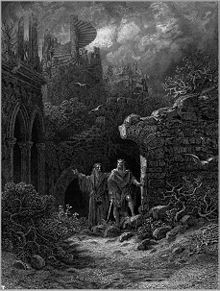
The name is derived from the Welsh male name, Myrddin (sea fortress). It is borne in Arthurian legend by a renowned wizard, who was possibly based upon an amalgamation of a few historical figures, one inspiration being Myrddin Willt, a Welsh madman and prophet who lived in the Scottish forests. Another source of inspiration may have been Roman military leader, Ambrosius Aurelianus .

It is believed that Geoffrey of Monmouth Latinized the name as Merlinus instead of Merdinus due to the latter’s close similarity to the Norman French word merde (excrement).

The name was never very common in the English-speaking world and only seems to have recently caught on. It is currently the 350th most popular male name in Germany, (2011) and the 427th most popular in France, (2009).

It is also the name of a type of bird.

Timur

Gender: Masculine
Origin: Chaghatai/Russian Тимур
Meaning: “iron.”

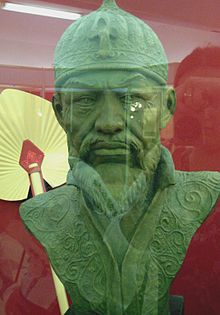
This was the original name of Tamerlane, a 14th-century conqueror of Central Asia, he was the founder of the Timurid Dynasty (1370-1405). His name is derived from a word for iron in the extinct Turkic language, Chagatai.

Tamerlane is viewed as a hero in many former Soviet Central Asian republics and as a result, is a very popular name. The name is even used among European Russians.

Currently, Timur is the 359th most popular male name in Germany, (2011).

Other forms of the name include:

  • Teymur (Azeri)
  • Tymur Тымур (Belarusian)
  • Timur Тимур  تیمور (Chechen/Chuvash/Kyrgyz/Mongolian/Persian/Russian/Tatar/Turkish/Turkmen/Ukrainian/Uzbek)
  • Temur თემურ (Georgian/Uzbek)
  • Temir Темір (Kazakh/Tajik)
  • Tîmûr (Kurdish)
  • Demir (Turkish)