Mahir

Gender: Masculine
Origin: Arabic ماهر
Meaning: “skillful.”
(MAH-HEER)

The name comes directly from the Arabic adjective, محنك (mahir) meaning, “skillful.”

As of 2010, Mahir was the 41st most popular male name in Bosnia & Herzegovina, (2010).

The name is used throughout the Islamic world.

A variant transcription is Maher.

A Bosnian feminine form is Mahira.

Mirza

Gender: Masculine
Origin: Persian میرزا
Meaning: “prince.”
(MEER-zah)

The name is derived from a Persian royal title, Amīrzāde which literally means “child of the Amir” or “child of the ruler.”

The word has survived in modern Kazakh language as myrza where it means, “gentleman.”

As of 2010, Mirza was the 34th most popular male name in Bosnia & Herzegovina. Other forms of the name include:

  • Mirza Мирза (Albanian/Azeri/Baskkir/Baloch/Bosnian/Chechen/Kazakh/Kyrgyz/Kurdish/Persian/Turkish/Turkmen)
  • Murza Мурза (Circassian/Dagestani/Ossetian)
  • Mirzaj Мирзай (Tatar)
  • Mirzija Мирзия (Tatar)
  • Mirzi Мирзи (Tatar)
  • Morza Морза (Uzbek)

Admir

Gender: Masculine
Origin: Albanian/Bosnian
(AHD-meer)

The name became popular in the Balkans, particularly in Albania and Bosnia, starting in the late 1970s. There are a couple of possible derivations for this name. One is that it is derived from the Latin verb admirari meaning “to admire”

Another possibility is that it is a Slavicized form of the Arabic male name, Amir.

As of 2010, Admir was the 77th most popular male name in Bosnia & Herzgovina, (2010).

Diminutive form is Ado.

A feminine form is Admira.


Faruq

Gender: Masculine
Origin: Arabic فاروق
Meaning: “one who knows right from wrong.”
(FAH-ROOK)

The name comes from the Arabic epithet for the Muslim leader, Umar.

It was borne by the last king of Egypt, (1920-1965).

Its Balkan form of Faruk is currently the 68th most popular male name in Bosnia & Herzegovina, (2010).

Other forms of the name include:

  • Faruk (Albanian/Bosnian/Kurdish/Turkish)
  • Farouq (Persian)

Ansar

Gender: Masculine
Origin: Arabic
Meaning: “helpers.”
(AHN-SAHR)

The name is derived from the Arabic plural and Islamic term, al-Ansar (the helpers), which refers to a group of Medinian citizens who helped the Prophet Mohammed settle into the city of Medina.

Its Balkan and Turkish form of Ensar is currently the 33rd most popular male name in Bosnia & Herzegovina, (2010).

The name is used throughout the Islamic world.

Other forms include:

  • Anshar (Achinese, Javanese)
  • Ensar (Albanian, Bosnian, Turkish)
  • Ənsar (Azeri)
  • Ansor Ансор (Tajik, Uzbek)
  • Ansaar (Urdu)
  • Anzar (Uyghur)

Bilal

Gender: Masculine
Origin: Arabic بلال
Meaning: “moistening.”
(bee-LAHL)

The name is derived from the Arabic meaning, “moistening.”

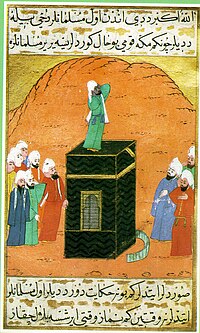
It was borne by the first Muezzin (Caller to Prayer) and a disciple of the Prophet Mohammed. He was an Ethiopian slave who had been emancipated by Mohammed.

As of 2010, Bilal was the 37th most popular male name in Bosnia & Herzegovina. His rankings in other countries are as follows:

  • # 90 (Catalonia, 2010)
  • # 147 (France, 2009)
  • # 217 (Netherlands, 2010)

The name is used throughout the Islamic world.

Another notable bearer was Bilal Xhaferri (1935–1986), an Albanian poet, novelist and political dissident against the Albanian communist regime.

Alem

Gender: Masculine
Origin: Bosnian
Meaning: “flag; sign.”
(AH-lem)

The name is derived from the Arabic word, alam, meaning “flag; sign.”

Among Shiia Muslims, an alam is a flag of spiritual significance that is taken out for procession during Ashura.

In the Arabic-speaking world, the word appears as an element in several male names, but alam itself is not used as a given name.

As of 2010, Alem was the 65th most popular male name in Bosnia & Herzegovina, (2010).

A feminine form is Alema.

Dženana

Gender: Feminine
Origin: Bosnian
Meaning: “soul.”
(jeh-NAH-nah)

The name is either derived from the Turkic element, can, meaning, “soul” or perhaps a Bosnian form of the Arabic, Jinan جنان , meaning, “paradise; garden.”

As of 2010, Dženana was the 64th most popular female name in Bosnia & Herzegovina.

Another form is Dženita which is currently the 71st most popular female name in Bosnia & Herzegovina, (2010).

A masculine form is Dženan.

Maida

Bos/Eng/Sp (MY-dah) or Eng (MAY-dah)

The name could be of a few different origins. It could be from the Arabic, سورة المائدة al-ma’idah (the table), the name name of a sura and 5th Chapter of the Qu’ran.

It could also be taken from the name of a place in Italy, which was popularized after a Battle took place there in 1807, a huge victory for Britain. Sir Walter Scott named his dog in honour of the victory.

It was also occassionally used as a short form of Magdalena or Madeleine in the 18th-century, eventually spinning off into an independent given name.

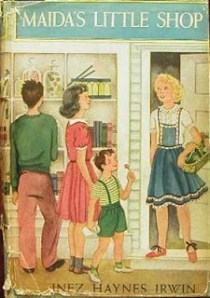
It was also the name of the eponymous heroine in the early 20th-century children series, by Inez Haynes Irwin (1873-1970), Maida.

It has also been connected with the Arabic word ma’id which means “angry; disgusted.”

As of 2010, Maida was the 72nd most popular female name in Bosnia & Herzegovina.

Another Bosnian form is Majida.

A Bosnian masculine form is Maid.