Fabian

Gender: Masculine
Origin: Latin
Meaning: “bean.”

The name is derived from the Roman cognomen, Fabius, which is from the Latin, faba, meaning, “bean.”

The name Fabius was common in the Roman Empire, and was borne by a Roman general who helped delay Hannibal’s advancement into Rome.

Fabian was borne by a 3rd-century pope, martyr and saint. His feast-day and name-day is January 20th.

Currently, Fabian is the # 288th most popular male name in the United States. In 1959, he entered the top 1000, coming in as the 608th most popular male name, that same year, a famous pop singer of the same name had a few hits.

In other countries, his rankings are as follows:

  • # 39 (Chile, 2006)
  • # 25 (Germany, 2009)
  • # 139 (the Netherlands, 2008)
  • #77 (Poland, Warsaw, 2009)
  • # 75 (Sweden, 2008)
  • # 16 (Switzerland, 2008)

His Italian off shoot of Fabio, is currently the 119th most popular male name in Germany, (2009); in 2008, Fabio was the 18th most popular male name in Switzerland.

Other forms of the name include:

  • Fabià (Catalan)
  • Fabijan (Croatian)
  • Fabian (English/German/Polish/Swedish)
  • Fabien (French)
  • Fábián (Hungarian)
  • Fabio/Fabiano (Italian)
  • Fabius/Fabianus (Latin)
  • Fabijonas (Lithuanian)
  • Fabião/Fábio (Portuguese)
  • Fabyan Фабиан (Russian/Ukrainian)
  • Fábian/Fábius (Slovakian)
  • Fabián (Spanish)

Its French feminine offshoot of Fabienne was also very popular in the German-speaking countries between the late 80s and early 90s. Currently, she is the 104th most popular female name in Germany, (2009) and is the 368th most popular in the Netherlands, (2008).

Other feminine forms include:

  • Fabiënne (Dutch)
  • Fabienne (French/German)
  • Fabia (Italian/Latin)
  • Fabiana (Italian/Latin/Portuguese/Spanish)
  • Fábia (Portuguese/Slovakian)
  • Fabiána (Slovakian)

There is also the Latin diminutive of Fabiola, which has been used as an independent given name since at least the Middle Ages. The name was borne by a 4th-century Christian martyr, and is an especially popular name in Spanish-speaking countries and was occasionally used in German-speaking countries, but is now considered dated.

The name was borne by 1950s, American teen idol, (as mentioned above), Fabian (b. 1943), née Fabiano Forte.

Nomeda

Gender: Feminine
Origin: Lithuanian
Meaning: “forest inhabitant; from the forest.”
(noh-MEH-dah)

The name is composed of the Lithuanian elements no-(nuo), meaning, “from” and med- (mede), meaning, “forest.” Hence “forest inhabitant; from the forest.”

The masculine form is Nomedas.

The designated name-day is January 20.

Rémi, Rémy

Gender: Masculine
Origin: French
Meaning: “debated”
(hray-MEE)

An old French male name that has always been common in Francophonia, the name is of debated origins and meaning, and was borne by a 5th-century bishop and saint who converted Clovis, king of the Franks, to Christianity.

Since the saint was from Reims, some sources concur that is is derived from the name of the city, which in itself, got its name from the Reims, an ancient Celtic people who inhabited the area. The word may be related to an ancient Gaulic or Celtic word meaning, “the first”, “the ancient ones” or “princes.”

Other souces believe that it is derived from the Latin name, Remigius, (since in Latin, the saint was known as St. Remigius), which is derived from remigis, meaning, “oarsman” or from the Latin, remedium meaning, “that which cures.”

According to the Medieval classic, which recounts the lives of the saints, called, The Golden Book, (written by Jacques de Voraigne), the name is related to the Greek elements, remi, meaning “grazing” and gios, meaning, “land; earth.” However, the latter meaning should be taken less seriously, as the author was trying to find a meaning of the name that would express the attributes and deeds of the saint.

In 2006, Rémi was the 81st most popular male name in France.

If we are to believe that Rémi is related to the Latin, Remigius, then cognates would include:

  • Remigio (Italian/Spanish)
  • Remigius (Latin)
  • Remigiusz (Polish)
  • Remígio (Portuguese)
  • Remigiu (Romanian)

A feminine form is Remigia.

The designated name-day is January 15.

Doubravka

Gender: Feminine
Origin: Czech
Meaning: “oak grove”
(doo-BRAHF-kah)

The name is derived from the Old Slavonic, dubrava, meaning “oak grove.”

In Ancient European culture, oak groves were considered especially sacred.

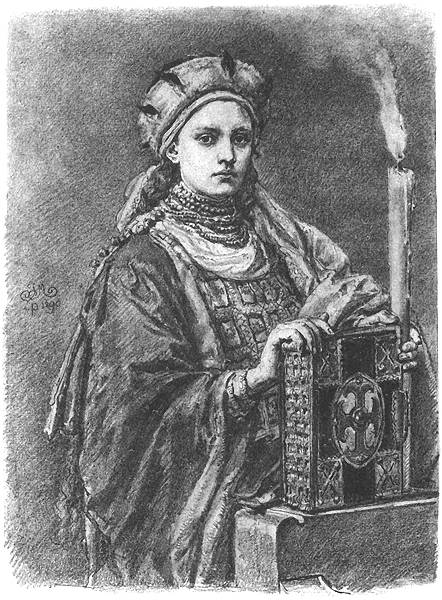
The name was borne by a medieval Bohemian princess (945-977), a member of the Přemyslid dynasty, she became Queen of Poland through her marriage with Mieszko I, and according to some sources, she was the one who goaded her husband into accepting Christianity in 966.

In Polish she is known as Dąbrówka or Dobrawa.

Other forms include:

  • Dubravka Дубравка (Croatian/Serbian)
  • Dąbrówka (Polish: dowm-BROOF-kah)
  • Dobrawa (Polish: daw-BRAH-vah)
  • Dúbravka (Slovakian)

A Serbo-Croatian masculine form is Dubravko Дубравко.

Czech diminutives are: Doubra, Doubravuše, Dora, Dobruše, Duběnka, Dorka, Doubí and Duba.

The designated name-day in the Czech Republic is January 19.

Ctirad

Gender: Masculine
Origin: Czech/Slovak
Meaning: “honour; joy.”
(STEE-rahd).

The name is composed of the Old Slavonic elements, chest meaning “honour” and rad, meaning “joy.”

The name appears in Czech folklore, as that of the name of a warrior who tried to uprise against the leaders of the Slavic warrior women, Libuše, Šárka and Vlasta.

The story appears in the 12th-century chronicle, Chronica Boëmorum, written by Cosmas of Prague.

The designated name-day is January 8th.

Ákos

Gender: Masculine
Origin: Hungarian
Meaning: “white falcon.”
(AH-koshe)

The name is a derivative of the ancient Turkish male name, Akkush, meaning “white falcon.”

Currently, it is the 24th most popular male name in Hungary, (2008).

The name was borne by an early Christian martyr of Cappadocia.

The designated name days are: January 2nd, February 27/28, March 31st and June 22nd.

Tatiana

Gender: Feminine
Origin: Latin
Meaning: unknown
Татьяна

A popular Russian female name, Tatiana is actually of ancient Latin origins. A feminine form of Tatianus, which is a variation of Tatius, it is of uncertain derivation or meaning and is believed to be of Sabine origins.

The name was borne by an early Christian martyr, a Roman woman, who was persecuted under Emperor Alexander Severus (C. 230). Her devotion became especially popular in the Eastern Orthodox Churches, hence is why the name is so common in Eastern Europe.

Her designated name-day is January 12, and in Russia, this is considered a national holiday for students, known under its religious name as Tatiana Day, and in secular circles as Russian Students Day.

In 1755, Russian Minster of Education, Ivan Shuvalov, designated his mother’s name-day as Tatiana Day, in honour of his mother. That same year, St. Tatiana was declared the patron saint of students.

The name is believed to have been further popularized through Alexander Pushkin’s 1825 novel, Eugene Onegin, in which the lady love of Onegin is named, Tatyana Larina, (affectionately known as Tanya).

The name was also borne by one of the last Russian Grand Duchesses, Tatyana Nikolaevna Romanov of Russia (1897-1918).

In the United States, Tatiana did not catch on as a first name til the 1980s, thanks in part due to a popular line of perfume that came out. Currently, Tatiana ranks in as the 328th most popular female name, (2008).

Tanya and Tanja are diminutive forms that caught on as independent given names in the rest of Europe.

In the English-speaking world, its usage caught on in the 1930s, especially in the United States, when the same decade saw a large influx of Ukrainian and Russian immigrants. She currently ranks in as the 841st most popular female name, (2008).

The highest she has ranked in U.S. naming history was in 1974, coming in as the 46th most popular female name.

The Tanja spelling became especially popular in Germany between the late 1970s and 80s, this rendition is also used in Serbia, Croatia, Finland and Slovenia.

In Brazil, there is Tânia, which in part, may have been introduced via Ukrainian and Russian immigrants during the turn of the century and again between the 1930s and 1970s.

Tania and Tatiana are also used in Spanish speaking countries.

Other forms of Tatiana include:

  • Taciana (Belorusian)
  • Tatyana Татяна (Bulgarian/Russian)
  • Tatjana Татјана (Croatian/Macedonian/Serbian/Slovene)
  • Taťána (Czech)
  • Taina (Finnish)
  • Tatienne (French)
  • Tania (Hungarian/Italian)
  • Tatjána (Hungarian)
  • Taziana (Italian)
  • Tatiana (Italian/Polish/Portuguese/Romanian/Slovak/Spanish)
  • Tacjana/Tacjanna (Polish)
  • Táňa (Slovakian)
  • Tijana (Slovene)
  • Tjaša (Slovene: originally a diminutive form, now used as an independent given name, it ranked in as the 15th most popular female name in Slovenia, (2005)
  • Tatiana Тетяна (Ukrainian)

Masculine forms are:

  • Tanio (Italian)
  • Tatiano (Italian)
  • Taziano (Italian)
  • Tazio (Italian)
  • Tatianus (Latin)
  • Tatius (Latin)
  • Tacjan (Polish)

In Russian, the name has a myriad of diminutive forms, these include: Tanchik, Tanchita, Tanchos, Tanic, Tano, Tanya, Tanyufka, Tanyurik, Tantanya, Tasha, Tasik, Tata, Tatyanida, Taya, Tosya, Toussia and Totoshka.

Nyyrikki

Gender: Masculine
Origin: Finnish
Meaning: unknown

The name is of ancient origins but its meaning seems to have been lost. In Finnish mythology, it is borne by the god of the hunt, the son of Tapio.

He appears in the Finnish national epic, the Kalevala.

The designated name-day is January 10.

The name is not very common in Finland.

William, Liam

Gender: Masculine
Origin: German
Meaning: “desire; helmet protection.”
(WIL-yem)

The name is of Norman origins and is derived from the Old Germanic elements wil meaning “desire” and helm, meaning “helmet; protection.”

In the early Middle Ages, the name was especially popular among Norman nobility and royalty. It was borne by an 8th-century saint, William of Gellone, a monk and cousin of Charlemagne.

The name was introduced into England in the 11th-century by William the Conqueror, and remained an extremely common name in England from thereon.

In the United States, William stands as the 8th most popular male name (2008), the lowest he has ever ranked in U.S. history was in 1992 and then again in 1995 when it came in as the 20th most popular male name.

At the turn of the last century, for 30 years in a row, William remained the 2nd most popular male name in the United States, (1880-1909).

His rankings in other countries is as follows:

# 2 (Australia, 2008)
# 16 (Canada, B.C., 2008)
# 10 (England/Wales, 2008)
# 83 (France, 2006)
# 44 (Ireland, 2007)
# 402 (the Netherlands, 2008)
# 5 (New Zealand, 2009)
# 19 (Norway, 2007)
# 46 (Scotland, 2008)
# 4 (Sweden, 2008)

Another popular up-and-coming form is Liam, which is an Irish contracted form of William. Currently, he stands as the 75th most popular male name in the United States (2008). His rankings in other countries are as follows:

# 17 (Australia, 2007)
# 48 (Belgium, 2006)
# 10 (Canada, B.C., 2008)
# 22 (England/Wales, 2008)
# 26 (Ireland, 2008)
# 82 (the Netherlands, 2008)
# 7 (New Zealand, 2009)
# 4 (Scotland, 2009)
# 13 (Sweden, 2007)

The name is borne by Irish actor, Liam Neeson.

Other cognates of William include:

  • Guildhelm (Afrikaans/Old Dutch)
  • Uilliam (Albanian)
  • Willelm (Anglo-Saxon)
  • Guillén (Aragonese)
  • Gwilherm (Breton)
  • Uiliam Уилиам (Bulgarian)
  • Guillem (Catalan)
  • Vilém (Czech)
  • Vilhelm (Danish)
  • Willem (Dutch)
  • Wim (Dutch)
  • William (English/Scandinavian)
  • Villem/Villu (Estonian)
  • Vilhelmi (Finnish)
  • Vilho (Finnish: contracted form)
  • Viljami (Finnish)
  • Ville (Finnish: contracted form)
  • Guillaume (French)
  • Jelle (Frisian: originally a diminutive form, used as an independent given name)
  • Pim (Frisian: originally a diminutive form, used as an independent given name)
  • Wilke/Wilko (Frisian)
  • Guillerme (Galician)
  • Wilhelm (German/Polish)
  • Gouliélmos Γουλιέλμος (Greek: Modern)
  • Vilmos (Hungarian)
  • Vilhjálmur (Icelandic)
  • Uilleag (Irish-Gaelic)
  • Uilliam (Irish-Gaelic)
  • Ulick (Irish: anglicization of Uilleag)
  • Guglielmo (Italian: most common offshoot)
  • Lemo (Italian: contracted form)
  • Velmo/Velmino (Italian: obscure)
  • Villelmo (Italian: obscure)
  • Villermo (Italian: obscure)
  • Vilio (Italian: obscure)
  • Guilielmus (Latin)
  • Viljams (Latvian)
  • Vilis (Latvian)
  • Wöllem/Wullem/Wum (Limburgish)
  • Vilhelmas (Lithuanian)
  • Vilius/Viliumas (Lithuanian)
  • Wellëm (Luxembourgish)
  • Illiam (Manx)
  • Wiremu (Maori)
  • Gllâome (Norman)
  • Guilhem (Occitanian)
  • Willahelm (Old German)
  • Vilhjálmr (Old Norse)
  • Willken/Wilm/Willm (Plattdeutsch)
  • Guilherme (Portuguese)
  • Zelmino/Zelmo (Romanesque)
  • Vilhelm (Romanian/Scandinavian)
  • Wellem (Ripoarisch)
  • Vilgelm Вильгельм (Russian/Ukrainian)
  • Vėljams (Samogaitian)
  • Uilleam (Scottish-Gaelic)
  • Gugghiermu (Sicilian)
  • Vilim Вилим (Serbian)
  • Viliam (Slovak)
  • Viljem (Slovene)
  • Guillermo (Spanish)
  • Gelmo/Gilmo (Venetian)
  • Gwil (Welsh)
  • Gwilim/Gwilym (Welsh)
  • Velvel װֶעלװֶעל (Yiddish: also the Yiddish word for wolf but commonly used as a diminutive form of Wilhelm)

Notable bearers include: Swiss national folk hero, William Tell (14th-century), Scottish national hero, William Wallace (13th-century).

It was also borne dramatist, William Shakespeare (1564-1616), poet William Blake (1757-1827), dramatist, William Butler Yeats (1865-1939), author William Faulkner (1897-1962), including the current Crown Prince of England, Prince William of Wales (b.1982), and it has also been borne by several U.S. presidents.

Common English diminutives England: Bill, Billy, Will, Willy and Wills/Wils.

Italian diminutives include: Gelmino, Ielmo, Memmo (Tuscan dialectical form), Memo and Lemmo.

Feminine offshoots include Willa, Wilhelmina, Wilma, Mina and Minnie.

Wilhelmina is a German/Dutch form that was briefly used in the United States in the early part of the 20th-century but is in rare use today, in fact, she does not appear in the U.S. top 1000. It is, however, currently the 297th most popular female name in the Netherlands (2008)

Wilhelmina was borne by several Danish princesses, and was extremely common in German and Dutch royalty.

Its contracted English form of Willa, seems like it should be an up-and-comer, but currently does not rank in the U.S. top 1000.

The name was borne by famous American author, Willa Cather (1873-1947) née Wilella, another feminine form of William which should be noted.

Minnie was quite fashionable as a stand alone name at the turn of the 20th-century. In 1880, she was the 5th most popular female name in the United States. She was out of the top 1000 by 1971.

The name is usually associated with the Disney Character and girlfriend of Mickey Mouse, Minnie Mouse, hence is probably why she fell out of usage.

Wilma is another form that has not been in the U.S. top 1000 for quite some time, introduced into the 19th-century by German and Scandinavian immigrants, Wilma is currently very trendy in both Norway and Sweden. More so in Sweden, it is currently the 9th most popular female name (2008).

An early English feminine form that might be appealing to the surname lovers was Wilmot, which appears as early as the 16th-century. It may have been an anglicization of an early French feminine name, Wilmette.

Other feminine forms are:

  • Wilma/Vilma (Czech/English/German/Portuguese/Scandinavian/Slovak/Spanish)
  • Elma (Dutch/German/Slovene: contracted form)
  • Willemina (Dutch)
  • Willemijn (Dutch)
  • Mina (English/German: contraction of Wilhelmina)
  • Minnie (English/German)
  • Velma (English/German)
  • Wilella (English)
  • Willa (English)
  • Willia (English)
  • Wilmot (English)
  • Wilhelmina (English/German/Dutch/Polish)
  • Helmi (Finnish: also means “pearl” see Helmi)
  • Miina (Finnish: contraction of Wilhelmina)
  • Minna (Finnish/German)
  • Vilhelmiina (Finnish)
  • Guillaumette/Guillaumine (French)
  • Guilette (French)
  • Minette (French)
  • Wilhelmine (French/German/Dutch)
  • Wilmette (French)
  • Jeltje/Jeltsje (Frisian: contractions of Wilhelmina)
  • Helma (German: contraction of Wilhelmina)
  • Helmine (German: contraction of Wilhelmina)
  • Vilhelma (Hungarian)
  • Vilhelmina (Hungarian/Scandinavian)
  • Azelma (Italian)
  • Gilma (Italian)
  • Guglielma/Guglielmina (Italian: diminutive forms are Mema and Memma)
  • Velma/Velmina (Italian)
  • Villelma/Vilelma/Villelmina/Villermina (Italian)
  • Vilia/Villa (Italian)
  • Zelma/Zelmina (Italian)
  • Mien (Limburgish: originally a short form of Wilhelmina, now used as an independent given name)
  • Guilhermina (Portuguese)
  • Wilja (Scandinavian)
  • Willamina (Scottish)
  • Guilla/Guillerma/Guillermina (Spanish)
  • Ilma (Spanish: contraction of Guillierma)
  • Gelma/Gelmina (Ventian)
  • Velvela (Yiddish)

A Finnish/Scandinavian diminutive is Mimmi.

A Czech and Polish diminutive is Minka and a popular English diminutive was Billie.

Designated name-days are: January 10 (France/Lithuania/Poland), April 6 (Finland/Hungary/Poland), May 26 (Finland/Lithuania/Poland/Sweden), May 28 (Germany/Latvia/Poland/Slovakia), June 8-24-25 (Hungary/Lithuania/Poland), July 5 (Poland), September 2 (Poland), September 19 (Hungary/Lithuania), October 25 (Poland).