Uziel, Uzziel

Uzziel


  • Origin: Hebrew
  • Meaning: “God is my strength; God is my power.”
  • Gender: masculine
  • (uh-ZYE-el; OOZ-ee-el)

The name is composed of the Hebrew עֹז (‘oz) meaning “strength, power” and אֵל (‘el) meaning “God.”

It is borne by a few minor characters in the Bible, including the grandson of Levi and the father of Mishael, Elzaphan, and Zithri, the uncle of Aaron, Moses & Miriam.

In the apocryphal Enoch 3, Uziel is the name of a fallen archangel, more often referred to as Uzza. The same archangel is referenced as such in some versions of the kabbalistic text, Sefer Raziel HaMalakh, Johannes Trithemius’ Steganographia; and in John Milton’s Paradise Lost.

In Talmudic Jewish tradition, it was the name of the father of Jonathan Ben Uzziel, one of the 80 tannaim who studied under Hillel the Elder.

Among Medieval Jews, the name was rare among Ashkenazi Jews but very common among Sephardis & Middle Eastern Jews.

In the English-speaking world, the name is seldom used but has recently become common in Spanish-speaking countries.

A recent notable bearer was Uziel “Uzi” Gal (born Gotthard Glas) (1923-2002), a German-born Israeli gun designer best known for his invention of the “uzi.”


Other forms include:

  • Uciel (Albanian)
  • Usiheel (Bavarian German)
  • Oziil Озиил (Bulgarian)
  • Oziel Οζιηλ (Biblical Greek)
  • Ozihel (Biblical Latin)
  • Uziel (Croatian, Czech, French, Italian, Modern Hebrew, Portuguese, Romanian, Spanish)
  • Uzziël (Dutch)
  • Usiel (Finnish, French, German)
  • Huziel, Ouzziel (French)
  • Huzziél (Hungarian)
  • Uzielis (Lithuanian)
  • Utiere (Maori)
  • Ussiel (Norwegian, Swedish)
  • Uziil Узиил (Russian)
  • Ziel (Yiddish)

Sources

Zaha, Zahaa

Zahaa


Pronounced zuh-HEAH, (the latter syllable rhymes with “yeah”), the name is Arabic ضَحَاء and means “morning.” A notable bearer was British Architect, Zaha Hadid (1950-2016). It is also sometimes transliterated as Dhahaa.

Alternately, pronounced ZAH-kha, it is from the Hebrew tzach צַח (fresh, pure, clean). Another transcription is Tzacha.


Sources

Zahava, Zehava,

Gustave Klimt

  • Origin: Hebrew זֶהָבָה
  • Meaning: “gold”
  • Gender: Female

The name is derived from the Hebrew word זָהָב zahav, meaning “gold.” The name was created in the 1940s after the creation of the State of Israel. The older Yiddish traditional female name of Golda may have been an inspiration.

Another form is Zahavit.


Sources

Jemima, Jemimah

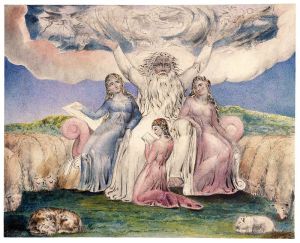
800px-Job_and_His_Daughters_Butts_set

Job & his 3 Daughters by William Blake


The name is mentioned in Job 43:14 as the name of the eldest daughter of Job after his tribulations. It derives from the Hebrew יְמִימָה‎, (Yemimah), meaning “dove.”

As a given-name, it came into popular use after the Protestant Reformation, especially in England, though it appears in occasional use by the 19th-century in Finland, Scandinavia & Protestant parts of Germany and the Netherlands.

Among Jews, this name was never used, though the Yiddish Taube and Toybe (dove) does exist. It is not certain if the latter is used in reference to Jemimah, Jonah or an earlier Medieval German female name that fell out of use among Christians but remained common among Ashkenazi Jews. It should be noted that in some German translations of the Bible, Jemimah is merely referred to as Täubchen (turtledove; also a term of endearment).

It is the same case in other languages where the passage in which the name appears is translated literally as Columba (Italian), Touterelle (French), Dies (Vulgate Latin translation) & Täuberl (Bavarian).

The name was quite common in England and Colonial America in the 18th-century. It was borne by the daughter of Daniel Boone, who is famous for being captured by Native Americans in 1776. Other early notable bearers include Jemima Yorke, 2nd Marchioness Grey and Countess of Hardwicke (1723-1797); Scottish painter, Jemima Blackburn (1823-1901); and Irish writer, Baroness Jemima von Tautphoeus (1807-1893). It was the birth name of the non-binary Quaker preacher known as the Public Universal Friend (1752-1819) https://en.wikipedia.org/wiki/Public_Universal_Friend (interesting story).

Today, in the United States the name has somewhat loaded racial connotations, due to its associations with ‘Aunt Jemima’ (see https://en.wikipedia.org/wiki/Old_Aunt_Jemima)

However, in England, the name has remained a posh favourite. It is currently borne by British actress, Jemima Kirke (b. 1985).

The name is also a common favorite in many African countries.

Currently, Jemima is 297th Most Popular Female Name in England & Wales.

Common English short forms are Mima, Mimi, Jem, Jemmy.


Other forms include:

  • Emima Емима (Bulgarian, Russian)
  • Jemima (Czech, Dutch, English, German, Scandinavian)
  • Jemimah (English)
  • Mima (English)
  • Jemina (German, Finnish, Polish, Scandinavian, Spanish)
  • Jémina (French)
  • Gemima (Italian)
  • Jémima (Hungarian, Icelandic)
  • Jamima (Lithuanian)
  • Hemaima (Maori)
  • Yemima יְמִימָה (Modern Hebrew)
  • Iemima (Romanian)
  • Jamina (Scandinavian)
  • Jemine (Scandinavian)
  • Jemi (Scandinavian)

Sources

Sephora, Zipporah

Zipporah


Zipporah is derived from the Hebrew צִפוֹרָה, Tsippōrāh, “bird.” It is the name of the wife of Moses in the Book of Exodus. The name was often transliterated from the Greek as Sephora.

Pronounced ZIP-pe-ruh in English (kind of rhymes with Deborah), it was first used by Protestant non-Jews in the English speaking world in the 16th-century. Both Zipporah but more often Sephora were occasionally used in 16th-century England and Colonial America.

Zipporah has always been a popular name in the Jewish diaspora, which has spun-off some colourful offshoots. A favorite among Ashkenazi Jews since Medieval Times, it is the inspiration of the Yiddish name, Faigel, which is from the Yiddish פֿויגל (foigl) meaning “bird.” Pre-Yiddish Knaanic Jews of Slavic lands, particularly in Poland used Sójka (blue jay) as a vernacular form. Due to its similar sound, European-Jews also used Cypriana as a form of Zipporah though the names have no etymological relation.

The name of the cosmetic store was named in reference to Moses’ wife.

Other forms include:

  • Safura, Safrawah صفورا (Arabic)
  • Səfurə (Azeri)
  • Zipora (Breton, German)
  • Sèfora (Catalan)
  • Sipóra (Czech)
  • Sippora (Dutch, Finnish, Scandinavian)
  • Séphora, Zéphora (French)
  • Zippora (German)
  • Sepphora Σεπφώρα (Biblical Greek)
  • Tziporah, Tziporrah צִפּוֹרָה (Modern Hebrew)
  • Cipora, Cippóra (Hungarian)
  • Sefora (Italian)
  • Chipora (Judeo Anglo-Norman)
  • Cipiora, Çapora (Ladino)
  • Seffora (Latin)
  • Ṣaffūrah (Malay)
  • Cippora, Cyppora, Sefora (Polish)
  • Séfora (Portuguese, Spanish)
  • Zípora (Portuguese)
  • Sepfora Сепфора επφώρα (Russian, Modern Greek)
  • Zipóra (Spanish)
  • Cypojra, Cypra (Polish-Yiddish)
  • Bayerle (Medieval Judeo-German)
  • Beverlin, Beverle, Böverle, Böverlin (Medieval Judeo-German)
  • Paye, Payerlayn, Payerl, Payerle, Payerlin (Medieval Judeo-German)
  • Pura, Pure, Purlin (Yiddish)
  • Tsipere, Tsipoyre, Tsipure, Tsipor, Tsipur (Yiddish)
  • Tsiporlin (Yiddish)

Popular diminutive forms are Zippy and Tsipi

Sources

Sapphire, Safira, Sapir,

220px-Point-19_carat_diamond_cut_blue_Yogo_sapphireCROP


From the name of the blue precious gem, many etymologists believe Sapphire is derived from the Greek σαπφειρος sappheiros meaning “sapphire” or “lapis lazuli,” which is ultimately derived from the Hebrew סַפִּיר (sappir), which is connected to an older Semitic word for “beauty.” Others believe it is derived from the Sanskrit Shanipriya (favoured by Saturn), as the sapphire is believed in Vedic astrology to be protective against the ill-affects of the planet Saturn.

As a female given-name, there is enough evidence to show that this name can trace its origins to ancient Israel. In the Bible, Shiphrah, which shares the same root with סַפִּיר (sappir), is the name of one of the midwifes who refused to kill Hebrew baby boys. Shiphrah also spawned the common Ashkanazi surnames of Shifrin & Shapiro.

Among Hellenized Jews, the form Sapphira would have been in use. It is the name of a woman in the Acts, in the New Testament, who is struck down by God for lying about money to the Holy Spirit.

The Ancient Greek Sappho has also been linked with the Sapphira, but the etymological connection to the former is highly disputed.

Safira, Zaffira and its masculine form of Zaffiro, experienced sporadic use in Medieval Northern Italy.

Sapphire, Sephare appear in use as a female name in Anglo-Norman England, albeit rare.

Sapphira experienced a minor revival among the Puritans in the 18th-century due to its Biblical connotations; the Puritans didn’t seem to care about the character of some Biblical figures when choosing a baby name.

In Portugal, Safira is currently the 100th Most Popular Female Name (2018).

Sapphire is currently the 361st Most Popular Female Name in England & Wales (2018).

Other forms include:

  • Sappheire Σαπφειρη (Biblical Greek)
  • Safir (Catalan)
  • Safira (Dutch/Polish/Portuguese/Scandinavian/Spanish)
  • Saphire (French)
  • Sephirine (French)
  • Saphira (German/Scandinavian)
  • Zafira (Hungarian/Spanish)
  • Saffira (Italian/Latin)
  • Sapfeira Σαπφείρα (Modern Greek)
  • Sapirit (Modern Hebrew, literally meaning “little saphire)
  • Zaffira (Medieval Italian)
  • Sapfíra Сапфи́ра (Russian)
  • Safina (Scandinavian)
  • Zefira (Polish)
  • Zefiryna (Polish)

Masculine forms include, Saffiro (Italian), Zaffiro (Italian) & Zafiro (Spanish).

Other associations include:

  • Saphira is the name of a species of white grapes.
  • Saphira is the name of the dragon in the series of fantasy books known as The Inheritance Cycle, by Christopher Paolini
  • Opel Zafira is the name of a make of car produced by General Motors and introduced in 2011
  • American poet Sapphire, (born Ramona Lofton in 1950)
  • Sapphire is the name of a fictional superheroine in the DC Comics Universe
  • Sapphire is the name of a character on the British web series, Corner Shop Show
  • Sapphire is the name of the main character on the British sci-fi series, Sapphire & Steele
  • Princess Sapphire is the main character in the manga series, Princess Knight
  • Sapphire, a 1959 British film recounting the murder of an eponymous mixed-race girl from the West Indies in London

The name is also borne by Dutch model, Safira de Wit (b.1989).

Sources

Aya, Ayah, Aija, Aja

download (4)


Pronounced I-yah, this name has several different origins and meanings.

Aya is a popular Japanese female name, depending on the kanji used, it has several different meanings, the most popular being 彩 (aya) meaning “colour,” or 綾 (aya) meaning “design.” In the Japanese case, it is also occasionally used on males. Other meanings and kanji characters used to represent the name include:

  • 綾, “twill”
  • 理, “truth, logic”
  • 亜矢, “Asia, arrow”
  • 亜弥, “Asia, all the more”
  • 亜夜, “Asia, night”
  • 順, “order, sequence, turn”
  • 文, “writings”
  • 紗, “gauze”
  • 技, “technique”
  • 愛, “love”
  • 恵, “blessed”
  • 朱, “vermillion”
  • 藻, “algae”
  • 娃夜, “beautiful night”

It was borne by an Ancient Egyptian queen of the Thirteenth Dynasty (between 1803 and 1649 BCE). Its meaning and etymology in this case is unknown.

Aya is also an Akan name, denoting a girl born on a Thursday. Its masculine form being Yao.

In Hebrew, Aya is an acronym for ארץ ישראל היפה (the beautiful land of Israel) and allegedly from  איה, איא meaning “bird” or “to fly swiftly.” It is borne by a minor male character in the Bible but seems to exclusively be used on females in modern Israel. There is a famous Israeli pop-singer who bears this name, Aya Korem.

Ayah آية is Arabic meaning “sign; clue” and refers to Quranic verses. It is also sometimes transliterated as Aya or Aja among Bosnians, Albanian and Central Asians. Another variation is Ayat, sometimes spelled Ayaat.

In Akkadian, the name means dawn and was borne by an ancient Sumerian goddess, the consort of Shamesh. The name is still used among Assyrian Christians who trace their heritage back to the Akkadian peoples.

In Tamil, spelled ஆயா, it means “old woman,” “grandmother,” or ” caretaker” and in the Nepalese language of Raute it means “sister-in-law.”

In Scandinavia, Aija, Aja & Aya are offshoots of Maria, they started off as diminutive forms but are now used as independent names. Aya is currently the 22nd Most Popular Female Name in Denmark (2018). However, I am unable to determine if in this case, it is used by Muslim families in reference to the Arabic form or if it is used by non-Muslim families in reference to its Scandinavian form. Aija can also be a Finnish form of Eija, which is from an exclamation eijaa!

In Latvia, Aija is most likely derived from aijāt (to rock, to lull) and was popularized as a given-name at the turn of the 20th-Century when it was used by Latvian author Jānis Jaunsudrabiņš for the title character in his eponymous novel, Aija (1911).

Aja is a Bosnian, Albanian & Central Asian form of the Arabic, Ayah.

In Mongolian, it is derived from ая (aya), meaning “melody.”

In Europe, Aya appears on several popularity charts, most likely used in reference to its Arabic origins by Muslim immigrants, its rankings in other countries are as follows:

  • #46 (France, 2018)
  • #48 (Belgium, 2018)
  • #65 (Catalonia, Spain, 2018)
  • #95 (Spain, 2018)
  • #122 (Netherlands, 2018)
  • #184 (Italy, 2018)
  • #309 (Ayah, England & Wales, 2018)
  • #317 (England & Wales 2018)
  • #749 (United States, 2018)

Sources

Dania, Danya

DanyaThis name can have several origins and meanings. Spelled Dania it is a Polish diminutive name, which could be short for Daniela or Danuta. In Italian, Dania is also used as a diminutive form of Daniela, but is often used as an independent given name. In Russian, the name is a unisex diminutive form of Danil or Danila, the equivalent of Danny in English.

Dania is also the Latin name for Denmark and has occasionally been used as a given-name in Denmark and other Scandinavian countries. Dania Beach is the name of a city in Florida, which was named in honour of its predominately Danish residents.

Dania دانية is also an Arabic female name, derived from the root d-n-a, meaning “close; near.”

Danya דַּנְיָה, sometimes transliterated as Dania, is a popular female name in Israel, used as a modern feminine form of Dan, it is probably an import from Polish and Russian immigrants from when it was in use as a diminutive form of one of the above mentioned names.

In the United States, Dania appeared in the U.S. top 1000 between 1996 and 2010 and peaked at #764 in 1996.

Regardless of origin, use, and spelling, the name is pronounced (DAHN-yah) in all of the aforementioned languages.

Below is a list of other forms and languages of use:

  • Dania (Arabic/Danish/Faroese/Hebrew/Italian/Norwegian/Swedish)
  • Danja (Danish/Swedish)
  • Danía (Icelandic)
  • Danit (Hebrew)
  • Danya (Hebrew)

Note in Poland and Russia, Dania is used as exclusively as a diminutive form of one of the above mentioned names.

Sources

Jahaziel

JahazielOrigin: Biblical Hebrew
Meaning: “beheld by God; vision of God”
Gender: Masculine
(juh-HAZE-ee-el)

The name is composed of the Hebrew elements, חזה (hzh), which can mean “to behold” or “vision” and  אל (‘el) (God). The name is borne in the Old Testament by 5 briefly mentioned characters.

The name occurred in brief use in the English-speaking world in the 18th-century among Puritans.

Another form is Chaziel.

Sources

Eder, Ederne

Eder,EderneOrigin: Basque or Biblical Hebrew
Meaning: “handsome; beautiful;” or “flock.”
Basque (ED-er); Sp/Por (EY-deer). Fem. (ed-DER-neh)

The name comes from the Basque word for “handsome; beautiful.”

Alternately, Eder can also be from the Biblical Hebrew עֵדֶר; (flock). In the Bible, this is the name of the son of Beriah and of a place where it is said Rachel was buried.

Eder is also the name of a river that flows through Germany. It was first mentioned by Tacitus as the place the Romans crossed before destroying the Chatti stronghold of Mattium. It was referred to in Latin as Adarna, Aderna and Adrina. The etymology is unknown.

In Basque, Eder is techinically unisex but is more often used on males. It has crossed over in the Spanish-Speaking and Portuguese-Speaking world where it is popular rendered as Éder. The exclusive feminine forms include: Ederne and Eider.

Sources