Modest, Modeste

Gender: Masculine
Origin: Latin
Meaning: “modesty”
Eng (MOD-est); Fre (mo-DEST)

The name is form the Latin, Modestus, which means, “modest.” It was borne by several Christian saints. In France, its designated name-day is February 24.

Other forms include:

  • Modest Модест (English/Polish/Russian)
  • Modesto (Italian/Portuguese/Spanish)
  • Modestus (Dutch/Latin)

Modya and Desya are Russian diminutive forms.

Feminine forms include the French, Modestine and the Spanish, Modesta.

Justin, Justine

Gender: Masculine
Origin: Latin
Meaning: “just.”
Eng (JUST-in); zhoo-STEN (French).

The name is derived from the Latin male name, Iustinus, which is derived from Iustus, meaning, “just.”

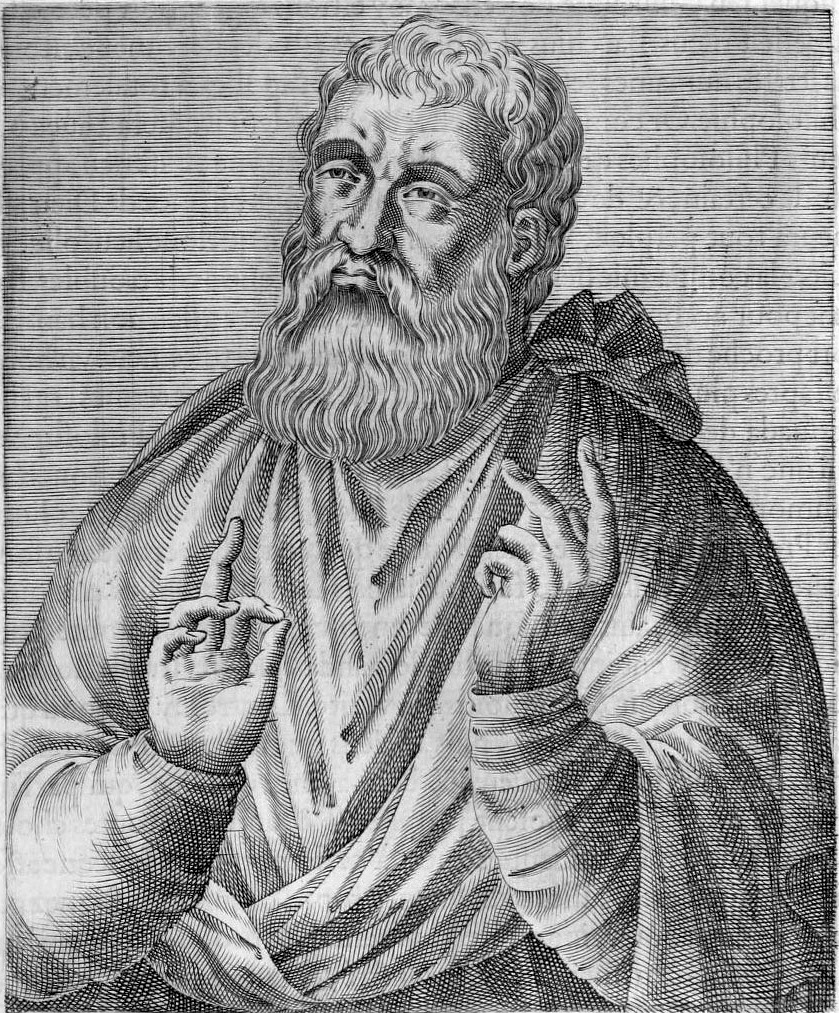
Justus and Justin were borne by several early Christian saints, including Justin Marytr, a 2nd century Christian philosopher who was beheaded for his faith. It was also borne by a 3rd century Roman historian and two Byzantine emperors.

In the English speaking world, the name was occasionally used in the Middle Ages, but did not hit big till the late 20th-century. Currently, Justin ranks in as the 45th most popular male name, (2008). His rankings in other countries are as follows:

  • # 94 (Australia, 2008)
  • # 40 (the Netherlands, 2009)
  • # 32 (Canada, B.C., 2008)

Other forms of the name include:

  • Justini (Albanian)
  • Jostin Юстин (Bulgarian)
  • Justí (Catalan)
  • Yestin (Cornish)
  • Justin Јустин (Croatian/Czech/English/Dutch/French/German/Serbian/Slovene)
  • Justinus (Danish/Dutch/English/German/Norwegian/Swedish)
  • Justinian (English)
  • Xustino (Galician)
  • Ioustinos Ιουστίνος (Greek)
  • Jusztin (Hungarian)
  • Jusztinosz (Hungarian)
  • Yustinus (Indonesian)
  • Giustiniano (Italian)
  • Giustino (Italian)
  • Iustinius/Iustinus (Latin)
  • Justinas (Lithuanian)
  • Ġustinu (Maltese)
  • Justyn (Polish)
  • Justino (Portuguese/Spanish)
  • Iustin (Romanian)
  • Yustin Иустин (Russian)
  • Giustinu (Sardinian/Sicilian)
  • Iestyn (Welsh)

Other forms of Justus include:

  • Justus (Danish/Dutch/Finnish/English/German/Norwegian/Swedish)
  • Joos/Joost (Dutch)
  • Juust (Dutch)
  • Juste (French)
  • Jusztusz (Hungarian)
  • Giusto (Italian)
  • Iustus (Latin)
  • Justas (Lithuanian)
  • Just (Polish)

Its French feminine form has received some usage in the English speaking world. In French literature, the name is borne by the protagonist of the Marquis de Sade’s novel of the same name, (1791), which was banned in France when it was first published.

In early Christian Church history, the name was borne by a saint and martyr, considered the patron saint of Padua and attributed as being a disciple of the Apostle Peter in life.

In 2006, Justine was the 37th most  popular female name in France.

Other feminine forms include:

  • Justina (Czech/English/German/Latvian/Lithuanian/Portuguese/Slovene/Spanish)
  • Justýna (Czech)
  • Justine (English/French)
  • Justiina (Finnish)
  • Jusztina (Hungarian)
  • Giusta/Giustina (Italian)
  • Iustina (Latin)
  • Justa (Polish)
  • Justyna (Polish: a common diminutive is Justynka)
  • Justína (Slovak)
  • Ustinya/Yustina Устинья (Russian)

The designated name-days are: March 12 (France), June 1 (France) and June 16 (Latvia).

The name is currently borne by pop singer, Justin Timberlake (b.1978) and American actress, Justine Bateman (b.1966).

Sources

  1. Ladó János, Bíró ÁgnesMagyar utónévkönyv. Budapest: Vince Kiadó.(2005)
  2. http://www.askoxford.com/firstnames/justin?view=uk
  3. http://www.askoxford.com/firstnames/justina?view=uk
  4. http://www.askoxford.com/firstnames/justine?view=uk
  5. http://www.behindthename.com/php/related.php?name=justine

Onesimus

Gender: Masculine
Origin: Greek
Meaning: “beneficial, profitable.”
Fre (oh-nay-SEEM)

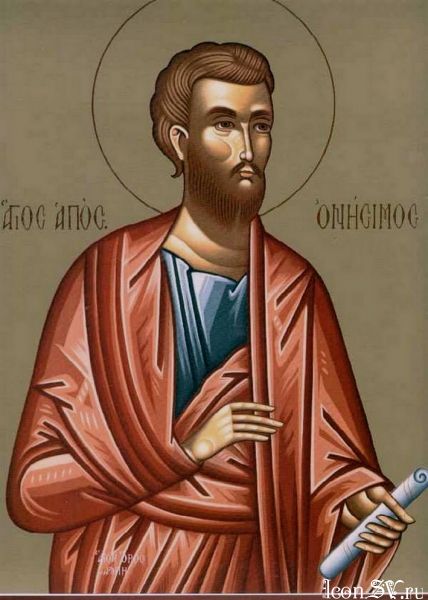
The name is derived from the Greek, Ονησιμος, (Onesimos), which means, “beneficial, profitable.”

In the New Testament, it is the name of an escaped slave of Philemon who was converted by St. Paul. He is revered as a saint in the Orthodox and Catholic Churches.

Other forms of the name include:

  • Onesimus (Dutch/English/German/Latin)
  • Onésime (French)
  • Onésimo (Galician/Portuguese/Spanish)
  • Onisime ონისიმე (Georgian)
  • Onesimos Ονησιμος (Greek)
  • Onesimo (Italian)
  • Onisimu Онисїмъ (Old Church Slavonic)
  • Onezym (Polish)
  • Anisim/Onisim Анисим (Russian)

The designated name-day in France is February 16.

Sources

  1. http://www.behindthename.com/name/onesimus
  2. http://www.catholic.org/saints/saint.php?saint_id=4908
  3. http://wordbytes.org/saints/DailyPrayers/Onesimus.htm
  4. Paul Guérin (a cura di), Vie des Saints des Petits Bollandistes, Parigi, Bloud et Barral editori, 1876, tomo II, p. 545

Aimé, Aimée, Amy

Origin: French
Meaning: “beloved.”
Fre (ey-MAY); Eng (A-mee)

Aimé is a French masculine name which is derived from the Latin Amatus, meaning, “beloved.” Its feminine counterpart is spelled Aimée and its anglicized version is Amy.

Amy was introduced into England after the Norman invasion, and was revived in the 19th-century.

In the United States, Amy is currently the 132nd most popular female name, between 1973-1976, she ranked as high as # 2.  Her rankings in other countries are as follows:

  • # 37 (Australia, 2008)
  • # 71 (Canada, 2008)
  • # 34 (England/Wales, 2008)
  • # 26 (the Netherlands, 2009)
  • # 9 (Scotland)

Other forms of the name include:

  • Amý (Icelandic)
  • Amata (Latin)
  • Amée (Medieval French)

Masculine forms are: Amato (Italian), Amatus (Latin) and Amé (Medieval French).

The name is borne by Amy Adams, Amy Grant and Amy Winehouse.

The designated name-day in France is February 20.

Sources

  1. http://www.behindthename.com/name/amy
  2. http://www.askoxford.com/firstnames/amy?view=uk
  3. http://www.askoxford.com/firstnames/aimee?view=uk

Jordan

Gender: Masculine
Origin: Hebrew
Meaning: “descending; flowing”
(JORE-den)

The name is derived from the name of the river in Israel, (Yarden) יַרְדֵן, which is derived from the Hebrew, יָרַד (yarad), meaning, “flow down, descend.”

According to the New Testament, Jesus was baptized by John the Baptist by the waters of Jordan.

The name was introduced into Europe by Crusaders,who would bring small samples of Jordan water to baptize children. Occasionally, boys who were baptized under such water were named Jordan.

In The English speaking world, the name was revived at the beginning of the 20th-century.

Currently, in the United States, Jordan is the 48th most popular male name. Its rankings in other countries are as follows:

  • # 45 (Australia, 2008)
  • # 49 (Canada, B.C., 2008)
  • # 375 (the Netherlands, 2009)

Other forms of the name include:

  • Iordan Йордан (Bulgarian/Romanian)
  • Jordà (Catalan)
  • Jordan (Czech/English/German/Polish/Slovene)
  • Jordaan (Dutch)
  • Joord (Dutch)
  • Jordan/Jourdain (French)
  • Yarden/Yardin יַרְדֵן (Hebrew: Modern)
  • Jordán (Hungarian/Slovak/Spanish)
  • Iordáin (Irish-Gaelic)
  • Giordano (Italian)
  • Jordanus (Latin)
  • Jordão (Portuguese)

Feminine forms include:

  • Yordana/Yordanka Йордана (Bulgarian)
  • Jordane/Jourdaine (French)
  • Giordana (Italian)
  • Yardena יַרְדֵנָה (Hebrew)
  • Jordana (Portuguese/English/Slovene/Spanish)
  • Iordana (Romanian)

The designated name-day is February 13.

Sources

  1. http://www.behindthename.com/name/jordan
  2. http://www.askoxford.com/firstnames/jordan?view=uk
  3. http://net.bible.org/bible.php
  4. http://www.abibleconcordance.com/41G-2400.htm

Livia, Liviana, Livy

Origin: Latin
Meaning: debated
(LIV-ee-uh); (liv-ee-AH-nah)
Eng Masc (LIVE-ee)

The name Livius is a Roman family name, which has two possible meanings. One is that it is from the Latin, liveo, meaning, “to envy” and another possibility is that it is from the Latin, lividus, meaning, “blue.”

Both the masculine and feminine forms were borne by notable personages.

It was borne by Titus Livius, known in English as Livy, a famous Roman historian.

It was also borne by Livia Drusilla (circ. 14 CE), a Roman Empress and third wife of Augustus.

Currently, Livia ranks in as the 948th most popular female name in the United States, (2008). Her rankings in other countries are as follows:

  • # 95 (Hungary, 2008)
  • # 182 (the Netherlands, 2009)
  • # 86 (Sweden, 2009)

Other forms of the feminine include:

  • Lívia (Catalan/Portuguese)
  • Livie (Czech: LEEV-yeh)
  • Livia (Czech/Dutch/English/German/Hungarian/Italian/Romanian/Scandinavian/Slovak/Spanish)
  • Livie (French: lee-VEE)
  • Liviana (Italian)
  • Livilla (Latin: used as a diminutive form in Ancient Rome)
  • Liwia (Polish)
  • Livija (Slovene)

Masculine forms include:

  • Livi (Catalan)
  • Livije (Croatian/Slovene)
  • Livy (English)
  • Live (French)
  • Líviu (Extramadurian)
  • Livio (Italian/Spanish)
  • Liviano (Italian)
  • Livianus (Latin)
  • Livius (Latin)
  • Līvijs (Latvian)
  • Livijus (Lithuanian)
  • Liviu (Romanian)
  • Liwiusz (Polish)
  • Lívio (Portuguese)

The designated name-days are February 12 (Hungary) and February 20 (Slovakia).

Sources

  1. http://www.behindthename.com
  2. www.askoxford.com
  3. www.roman-emperors.org
  4. Tacitus Annals. 1.3; 1.6. (The Works of Tacitus tr. by Alfred John Church and William Jackson Brodribb 1864-1877),

Lola

Gender: Feminine
Origin: German/Spanish
(LOH-lah)

Lola is a diminutive name that is now well established as an independent given name. Traditionally, in Spanish, it was a pet form of Dolores, and occasionally, Lourdes, and in German it was a pet form of Aloisia.

The name caught on as an independent given name in the late 19th-century, mostly, in part, due to the fame and popularity of Irish born stage actress Lola Montez (1818-1861), née Marie Dolores Gilbert.

Lola Montez was both popular and infamous in her time, she was scandalously associated as the mistress of Ludwig I of Bavaria. Later in her life, she was known for her humanitarian work with American prostitutes.  Montez may have been responsible for Lola’s sultry image.

Currently, Lola is rising in popularity in many European countries, she is the 47th most popular female name in England/Wales, (2008) and her rankings in other countries are as follows:

  • # 20 (Belgium, 2006)
  • # 7 (France, 2009)
  • # 448 (Germany, 2009)
  • # 119 (the Netherlands, 2009)
  • # 59 (Spain, 2008)
  • # 246 (the United States, 2008)

Another form, Lolita, also has a history as an independent given name and fell out of popularity in the English-speaking world due to its associations with the Vladimir Nabakov novel of the same name, (1955). Since the publication of the novel, the term lolita has been used to describe a sexually promiscuous adolescent girl.

Lola also coincides with the Uzbek and Tajik word for tulip, and is used as feminine name in both languages.

The name is borne by Uzbek pianist, Lola Astanova and Lola Karimova-Tillyaeva,an Uzbek UNESCO representive and daughter of Uzbek president, Islam Karimov.

It is also borne by Spanish actress, Lola Dueñas (b.1971); Romani-Spanish dancer, Lola Flores (1923-1995, née María Dolores) and Puerto Rican poet Lola Rodríguez de Tió, (1843-1924, née Dolores).

The name has recently been bestowed on a few celebrity children, most notably, the daughter of actors Charlie Sheen and Denise Richards, and Madonna uses Lola as a diminutive for her daughter Lourdes.

Lolita is borne by Serbian-Canadian actress, Lolita Davidovich (b. 1961)

In Latvia, the designated name-day for Lolita is May 30.

Lolita is also occasionally used in Polish, Norwegian and the former Yugloslav Republic. In Slovene, it boasts its own nicknames of Lota and Lotica.

Sources

  1. http://www.askoxford.com/firstnames/lola?view=uk
  2. http://www.behindthename.com/php/find.php?name=lola
  3. http://www.prenoms.com/chroniques/prenoms/top-des-prenoms-2010-quelles-sont-les-nouvelles-tendances-le-palmares-2009-o11811.html
  4. http://www.beliebte-vornamen.de/2009/top500-2009
  5. http://www.ine.es/en/daco/daco42/nombyapel/nombyapel_en.htm
  6. http://uzbek.firespeaker.org/
  7. http://dictionary.cambridge.org/define.asp?dict=CALD&key=46999&ph=on
  8. http://www.askoxford.com/concise_oed/lolita?view=uk
  9. http://news.bbc.co.uk/2/hi/uk_news/magazine/7242623.stm
  10. http://pl.wikipedia.org/wiki/Lolita_(imię)
  11. http://www.stat.si/imena_baza_imena.asp?ime=lolita&priimek=&spol=Z
  12. http://www.linternaute.com/femmes/prenoms/
  13. Keber, Janez, Leksikon imen

Guinevere, Jennifer

Gender: Feminine
Origin: Welsh/Cornish
Meaning: “white, smooth.”
(gwen-eh-VERE, JEN-nih-FER)

Guinevere is an Old French form of the Welsh female name, Gwenhwyfar, which is composed of the elements, gwen, meaning, “white, blessed, fair, smooth” and hywfar meaning, “smooth, soft.”

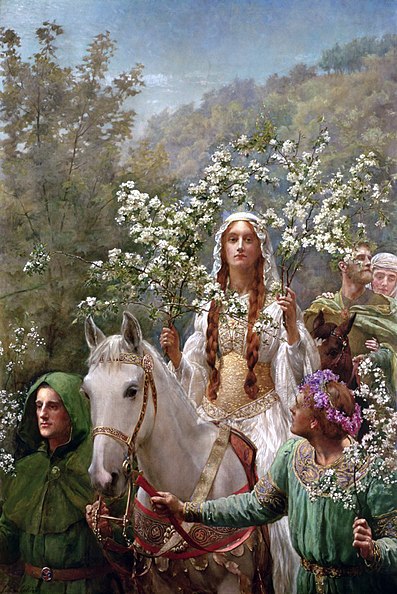
The name came to the Western World’s attention through Chrétien de Troyes’ Lancelot, the Knight of the Cart, which recounts Guinevere’s affair with Sir Lancelot. There are several different variations of the King Arthur myths, in some, Guinevere is barely mentioned and in others, she plays a signficant role, especially in that of Chrétien’s retelling.

Gwenhwyfar has been a common female name in Wales since at least the 11th-century, its Latinate cognate of Guinevere did not become common until the 19th-century, when European romanticism was in vogue.

Its Spanish and Italian cognates of Ginebra and Ginevra have always been common, but do not share the same etymology, rather, Guinevere was translated into Italian and Spanish as Ginevra due to similarity in sound, both of which are actually related to the Italian/Spanish word, ginepro, meaning, “juniper.”

Its Cornish form of Jennifer was a curiosity before the beginning of the 20th-century, it may have first caught the public’s attention in 1906 via George Bernard Shaw’s play, The Doctor’s Dilemma, in which it is the name of a lead character, however, Jennifer did not appear in the 1906 U.S. top 1000.

In fact, Jennifer first cracked the U.S. top 1000 in 1938, coming in as the 984th most popular female name. That same year, academy award winning actress, Jennifer Jones, had made it to the silver screen, but interestingly enough, she was still using her birth name, Phylis Lee Isley, she wasn’t credited as Jennifer Jones until 1943, the same year she won best actress for The Song of Bernadette.

In 1943, Jennifer had already moved up several hundred places, coming in as the 399th most popular female name. By 1956, Jennifer had hit the top 100, coming in as the 97th most popular female name.

It wasn’t until 1966 when she reached the top 10, coming in 10th place. Her popularity really sored between 1970 and 1984, coming in as the most popular female name for almost a decade and a half. It is interesting to note that in 1970, the first year when Jennifer hit # 1, Erich Segal’s romantic novel, Love Story, (in which the main female protoganist is named Jennifer, nicknamed Jenny), was a national best seller. That same year, the book was adapted into a movie.

Its sudden rise in popularity is still somewhat a mystery, as it was already in the top 10 by 1966, several years before Love Story was even written. It was already in the top 1000 by 1938, and Jennifer Jones did not go by her stage name until 1943, however, the actress may have been somewhat responsible for the name to rise several places in 1943, but the name did not become excessively popular until a good decade later.

Currently, Jennifer is the 84th most popular female name. In other countries, her rankings are as follows:

  • # 52 Dzsenifer (Hungary, 2008)
  • # 138 (the Netherlands, 2009)
  • # 95 (Scotland, 2009)

Jennifer has also been used in French speaking countries, German speaking countries and in Spanish speaking countries.

Other forms of the name include:

  • Guinevir Гуиневир (Belarusian)
  • Jenifry/Jenniver (Cornish)
  • Gaynor (English: Medieval)
  • Jenna (English)
  • Guenevere (Danish/Dutch/German/Norwegian/Swedish)
  • Guenièvre (French)
  • Xenebra (Galician)
  • Dzsenna (Hungarian)
  • Dzsenifer (Hungarian)
  • Fionnbhárr (Irish-Gaelic)
  • Ginevra (Italian)
  • Guinhumara (Latin)
  • Ginewra (Polish)
  • Genebra (Portuguese)
  • Jennel/Schenni (Ripoarisch)
  • Ginebra (Spanish)
  • Guenever (Swedish)
  • Gwenhwyfar (Welsh)

A common short form of Guinevere is usually Gwen.

Common pet forms of Jennifer are Jeffy, Jenny, Jennie and Jen.

Notable bearers of Jennifer include American actresses: Jennifer Aniston, Jennifer Connelly, Jennifer Lopez and Jennifer Love Hewitt.

Sources

  1. http://www.lib.rochester.edu/camelot/guinmenu.htm
  2. http://www.askoxford.com/firstnames/jennifer?view=uk
  3. http://www.askoxford.com/firstnames/guinevere?view=uk
  4. http://www.behindthename.com/name/guinevere
  5. http://www.behindthename.com/php/find.php?name=jennifer
  6. Erich Segal. Love Story. (Harper & Row) 1970.
  7. Ronan Coghlan (1991) Encyclopaedia of Arthurian Legends, Element Books.
  8. Noble, Peter. “The Character of Guinevere in the Arthurian Romances of Chrétien De Troyes.” The Modern Language Review 67.3 (1972): 524-535.
Isaiah

Gender: Masculine
Origin: Hebrew
Meaning: “Yahweh is salvation.”
Eng (i-ZAY-ah)

The name is derived from the Hebrew יְשַׁעְיָהוּ (Yesha’yahu), meaning, “Yahweh is Salvation.”

In the Old Testament, it was borne by a prophet, he is considered a major and extremely important prophet among Jews and Christians. Among Jews, his prophecies are mostly interpreted to describe the coming destruction of Jerusalem, while among Christians, his prophecies are believed to foretell the coming of Christ.

The name was always prevalent among Jews and Eastern Orthodox Christians, among Western Christians, the name did not catch on until after the Protestant Reformation.

Currently, Isaiah is the 42nd most popular male name in the United States, (2008) and he is the 84th most popular in Canada, B.C., (2008).

Other forms of the name include:

  • Ash’iyā’ أشعیاء(Arabic)
  • Zaia ܙܝܥܐ (Aramaic/Assyrian/Syriac)
  • Isaiah Ісайя Иса́ия (Belarusian/Russian/Serbian/Ukrainian)
  • Isaïes (Catalan)
  • Izaija (Croatian)
  • Izaiáš/Izajáš (Czech/Slovak)
  • Esajas (Danish)
  • Jesaja (Danish/Dutch/German/Finnish/Latvian/Norwegian/Swedish)
  • Esa (Finnish)
  • Isaïe/Ésaïe (French)
  • Isaie (Fruilian)
  • Esaias Ἠσαΐας (Greek: Biblical)
  • Ikaia (Hawaiian)
  • Yəšaʿyáhu יְשַׁעְיָהוּ (Hebrew: Modern)
  • Ézsaiás/Isaiás (Hungarian)
  • Yesaya (Indonesian)
  • Isaia (Italian/Romanian)
  • Yésaya (Javanese)
  • Isaya (Kiswahili)
  • Izaijas/Ješajas (Lithuanian)
  • Izajasz (Polish)
  • Isaías (Portuguese/Spanish)
  • Isay Исай (Russian)
  • Eseia (Welsh)

In the Orthodox Church, the name-day is May 9.

Sources

Isaac

Gender: Masculine
Origin: Hebrew
Meaning: “laughter.”
Eng (I-zek)

The name is derived from the Hebrew יִצְחָק (Yitzchaq) which is most likely related to the Hebrew verb for laughter, as according to Gen. xviii. 12, Sarah laughed when she heard the angel prophesied that she would bear a son at 90 years of age.

The name is borne in the Old Testament by the son of Sarah and Abraham. One of the most noted accounts between Isaac and his father was when God commanded Abraham to sacrifice Isaac, Isaac being spared at the last moment when God realized that Abraham would sacrifice his own son in order to follow God’s commands.

Isaac later married Rebecca and fathered Esau and Jacob.

Isaac is considered an important patriarch among the Jews and even among Muslims.

In Western Europe, the name did not catch on among Christians until after the Protestant Reformation, in Eastern Orthodox Europe, Isaac was commonly used among Christians since the Middle Ages.

Currently, Isaac is the 37th most popular male name in the United States, (2008), his rankings in other countries are as follows:

  • # 23 (Australia, 2008)
  • # 30 (Canada, B.C., 2008)
  • # 96 (Chile, 2006)
  • # 39 (England/Wales, 2008)
  • # 453 (the Netherlands, 2009)

Other forms of the name include:

  • Isaak (Albanian)
  • Ishaq إسحٰق, إسحاق (Arabic)
  • Sahak Սահակ (Armenian)
  • İshaq (Azeri)
  • Isak Ісак (Belarusian)
  • Ishak (Bosnian/Indonesian)
  • Isaak Исаак (Bulgarian)
  • Isaac (Catalan/English/French/Galician/Portuguese/Spanish)
  • Izak (Croatian)
  • Izák (Czech)
  • Isak (Danish/Norwegian/Swedish)
  • Isach (Danish: archaic)
  • Izaäk (Dutch)
  • Iisak (Estonian)
  • Ísakur (Faroese)
  • Iisakki (Finnish)
  • Isaaki ისააკი (Georgian)
  • Isaak (German)
  • Isaakios Ισαάκιος (Greek: Modern)
  • Yitzchak/Yitzhak/Itzhak יִצְחָק, (Hebrew)
  • Izsák (Hungarian)
  • Ísak (Icelandic)
  • Íosác (Irish-Gaelic)
  • Isacco (Italian)
  • Isaacius/Isaacus (Late Latin)
  • Aizeks/Isacs (Latvian)
  • Izaokas (Lithuanian)
  • Isaaku Ісаакъ (Old Church Slavonic)
  • Izaak/Izak (Polish)
  • Isaque (Portuguese)
  • Isac (Romanian)
  • Isaak Исаак (Russian/Ukrainian)
  • Iosag (Scottish-Gaelic)
  • Isaka (Swahili)
  • İshak/İshâk (Turkish)

A common English short form is Ike.

Finnish diminutives are Iikka and Iirro.

A Yiddish diminutive is Sekel.

In France, the designated name-day is December 20.

A notable bearer is physicist and mathematician, Isaac Newton (1643-1727).

Sources

  1. http://www.jewishencyclopedia.com/view.jsp?artid=174&letter=I
  2. http://www.askoxford.com/firstnames/isaac?view=uk
  3. http://www.behindthename.com/name/isaac
  4. Hoffman William F and George W. Helon, First Names of the Polish Commonwealth: Origins and Meanings (Polish Genealogical Society of America, 1998)