 Gender: Feminine
Origin: French
Meaning: debated
Eng (JEN-e-VEEV); Fre (zhe-nə-VYEV, zhawn-VYEV )
The name is of debated origin and meaning, some sources relate it to the Celtic Guinevere, which is composed of the Welsh elements gwyn meaning “white, fair” and hwyfar meaning “smooth.”
However, this theory has been strongly conjectured against, and it is more than likely related to a Frankish source, believed to be an early latinization of the Frankish feminine compound name Kenowefa or Kenuwefa, which is composed of the elements ken meaning “race; tribe” and wefa meaning “woman.”
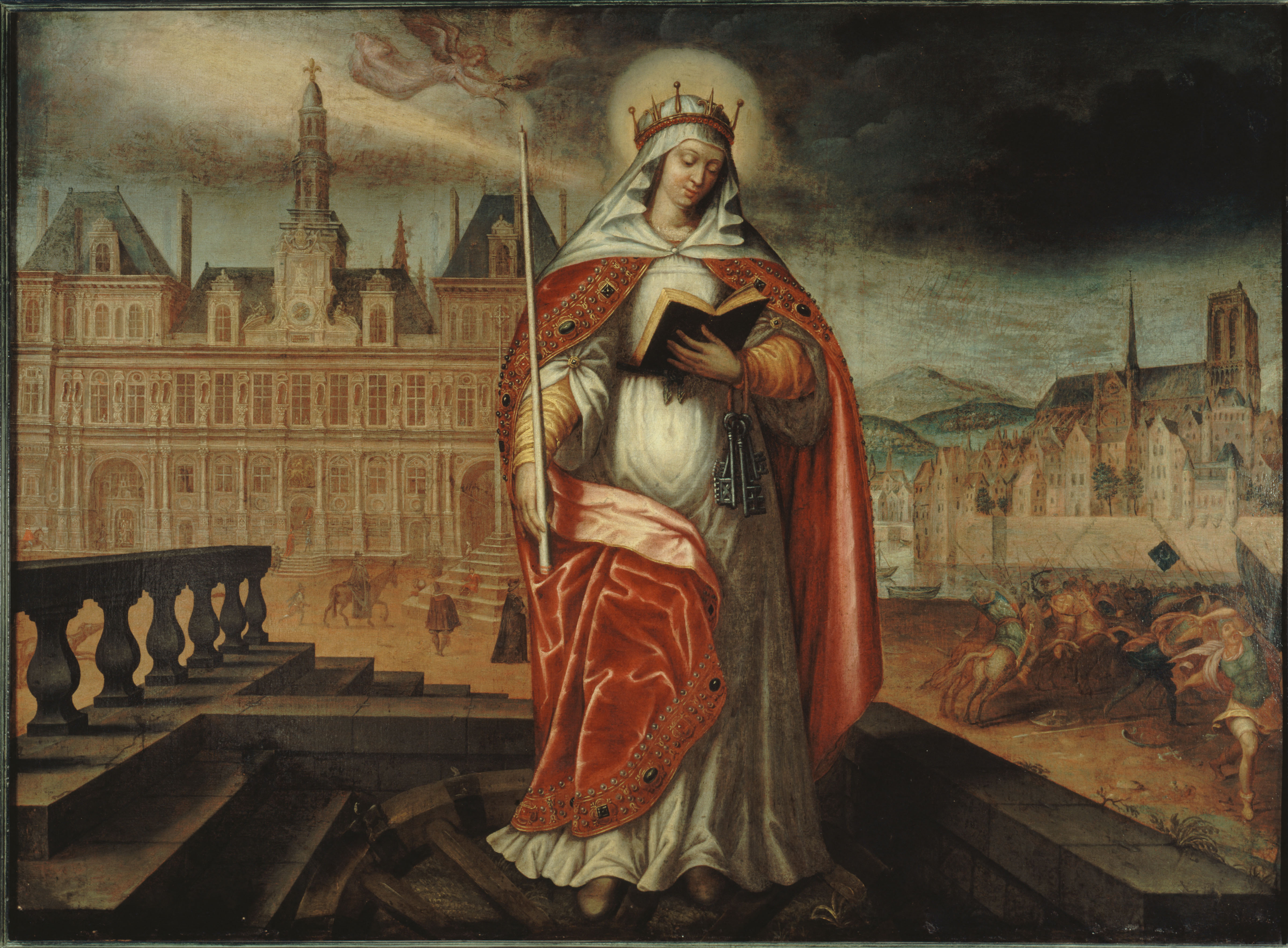
The name was popularized by an early medieval French saint who is said to have rescued Paris from the invading Huns, a pious woman in life, she is now considered the patron saint of Paris.
Her feast day, and consequently, Genevieve’s name-day, is January 3rd.
As of 2008, Genevieve ranked in as the 324 most popular female name in the United States.
Common English diminutives are Gennie and Vivi.
In French, Ginette was the most common diminutive form, breaking off as an independent given name, now considered dated in the French-speaking world.
In Spanish the nicknames are often Veva and Beba
Other forms of the name include:
- Xenoveva (Asturian)
- Genevisa/Bièva (Bearnais)
- Genoveva (Catalan/Croatian/Dutch/German/Limburgish/Portuguese/Spanish)
- Ghjenuveffa (Corsican)
- Jenovéfa/Jenůfa (Czech: the latter is a more archaic form)
- Geneviève (French: this form has also been used as a borrowing in Scandinavian countries as well as in German-speaking countries)
- Genevote (French: an archaic form seldom in usage)
- Genofeva (German)
- Genovéva (Hungarian/Slovak)
- Zsinett (Hungarian: corruption of Ginette)
- Genoveffa (Italian)
- Genoeffa (Italian: very obscure form)
- Genovaitė (Lithuanian)
- Genowefa (Polish: Gienia/Gienka are the common nicknames)
- Genevivo (Provençal)
- Genovefa (Slovene, diminutives include: Gena, Geni, Genica, Genija, Genka, Fefa and Fefi)
- Genova (Spanish)
An obscure masculine Italian form is Genoveffo.
 Gender: Feminine
 Gender: Male