Signe

Gender: Feminine
Origin: Old Norse
Meaning: “new victory.”
Dan (SEE-neh); Swe (SEEG-neh)

The name is a Danish form of the Old Norse, Signý, which is composed of the elements, sig (victory) and (new).

The name appears several times in Old Norse literature, the most notable is probably Signy who appears in the Völsunga saga, which recounts the tragic tale of Signy and Sigmund, a brother and sister who seek the revenge of their father from Siggeir, Signy’s husband and father’s murderer. Signy rescues her brother from her evil husband, takes the form of a sorceress, and sleeps with her brother for three days, in which time she becomes pregnant with Sinfjötli. She eventually kills herself by throwing herself onto Siggeir’s funeral pyre.

The second Signy appears in a Medieval Germanic romantic legend, according to the Gesta Danorum, this tale is also rather tragic. It recounts the love of Hagbard towards his brothers’ enemy’s daughter, Signy. When Hagbard is sentenced to hang by her father, she  decides to burn herself in the castle while watching her lover hang.

As of 2010, its Danish form was the 32nd most popular female name in Denmark. Her rankings in other countries are as follows:

  • # 45 (Sweden, 2010)
  • # 69 (Norway, 2010)

Other forms of the name include:

  • Signý (Icelandic/Old Norse)
  • Sivnne (Sami)
  • Signa (Scandinavian)
  • Signy (Scandinavian)
  • Signea (Swedish)


Zana

Gender: Feminine
Origin: Albanian
Meaning: “fairy.”
(ZAH-nah)

Zana comes from the name of a group of mythical female beings in Albanian and Romanian folklore.

In Romanian myth, the Zână are viewed as guardians of newborns and young children. In modern Romanian, the term zână is also used to refer to an attractive woman.

In Albanian lore, the zanas are a symbol of fertility and they are believed to be a remnant of the Roman goddess, Diana, who was worshipped as Thana by the ancient Illyrians.

The name is a common Albanian female name and has come into usage in the former Yugoslav Republic where it was most likely popularized by Albanian-Serbian singer, Zana Nimani.

The name currently appears in the Bosnian top 100, coming in as the 90th most popular female name, (2010).

Arthur

Gender: Masculine
Origin: Debated
Meaning: Debated
Eng (ARE-ther)

The name is of debated origin and meaning. Several theories have been attributed to the name’s origins, one is that it is derived from an obscure Roman cognomen, Artorius, which is believed to be of Etruscan origins of unknown meaning. Another theory is that it is derived from an ancient Brittonic name, *Arto-rīg-ios , meaning “bear-king.” An even less likely alternative is that it is connected with Welsh Artgwr (bear-man). A newer and yet unlikely suggestion is that it is related to the Greek Arcturus,  that is, the name of the brightest star in the Constellation Boötes, meaning “bear guardian.”

The name was borne by a mythical British king who is the topic of several medieval romances. His existence has never been proven, yet his legacy has left an indelible mark in Western Europe, especially in England and France. The name’s usage among the general populous can be traced all the way Medieval England. It surged in popularity in the 19th-century when English Romanticism had become popular.

As of 2008, Arthur was the 6th most popular male name in Belgium. His rankings in other countries are as follows:

  • # 4 (Brazil, 2010)
  • # 10 (Arturs, Latvia, 2010)
  • # 15 (France, 2009)
  • # 23 (Arttu, Finland, 2010)
  • # 82 (England/Wales, 2010)
  • # 99 (Arturo, Spain, 2010)
  • # 288 (Netherlands, 2010)
  • # 389 (United States, 2010)
  • # 420 (Arturo, United States, 2010)

Other forms of the name include:

  • Artur Артур Արթուր (Albanian/Armenian/Basque/Belarusian/Bosnian/Bulgarian/Catalan/Croatian/Czech/Estonian/Galician/German/Kazakh/Picard/Polish/Portuguese/Romanian/Romansch/Russian/Serbian/Slovak/Slovene/Ukrainian)
  • Dury (Alsatian)
  • Arturu (Asturian/Maltese)
  • Artús (Asturian/Catalan)
  • Artza (Basque)
  • Arzhur (Breton)
  • Artuš (Czech/Slovak)
  • Arthur (Dutch/English/Flemish/French/German/Scandinavian/Welsh)
  • Arto (Finnish)
  • Arttu (Finnish)
  • Artturi (Finnish)
  • Atte (Frisian)
  • Arturo (Galician/Italian/Spanish)
  • Arthoúros Αρθούρος (Greek)
  • Artúr (Hungarian/Icelandic/Irish)
  • Artù (Italian)
  • Arturi ართური (Georgian)
  • Arturs (Latvian)
  • Artūras (Lithuanian)
  • Turu (Maltese)
  • Èrthu (Norman)
  • Artús (Occitanian)
  • Artair (Scottish)
Diminutives include:
  • Arturek (Czech/Polish)
  • Tuur (Dutch)
  • Art (English)
  • Artie (English)

Feminine forms include the Italian: Artura and Arturina

Luana

The name is of a few different meanings and origins.

It could come directly from the Albanian meaning, “lioness.”

The name is found in several Romanian folktales as a name of a princess/heroine. In this case, the origins of the name are not clear.

It could be an Italian contraction of Luisa and Anna.

In Hawaiian, it comes directly from the word meaning “to be at leisure; to relax.”

Currently, in German-speaking Switzerland, it is the 21st most popular female name, (2010). Its popularity in Switzerland may be due to a popular Swiss rapper known simply as Luana.


Mara

The name could be of several different origins and meanings depending on the bearer of the name. Generally, the name is mostly used in reference to its Biblical origins, when Naomi takes the name of Mara(h) (Ruth 1:20), (which in Hebrew means “bitter”) as a way to express her grief over losing her husband and sons. The same name also appears in the Exodus as the name of one of the locations which the Torah identifies as having been travelled through by the Israelites.

It could also be from Latvian mythology, spelled Māra, being the name of the supreme goddess who was associated with all feminine aspects of life. She is sometimes believed to be one and the same as Laima.
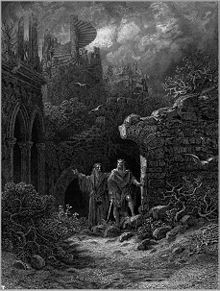
The name also appears in Slavic mythology as another name of the goddess Marzanna, the goddess of death and winter. Interestingly, it is also the name of the goddess of death in Hinduism. The two deities may have a distant connection.

In German the name is ultimately derived from a proto-Indo European source meaning “to harm” or “to rub away.” In folklore, mara were wraiths who pressed on the chests of sleeping victims, this is where the word nightmare is believed to have derived.

It is interesting to note that the name appears in the top 100 most popular female names in Germany, where it is currently the 55th most popular female name, (2011). It is doubtful, however, that the name is used in reference to its Germanic folklore origins, but is more likely used in reference to its Biblical connections.

The name could also be from the Syriac and modern Maltese meaning, “woman.”

In Hungarian and Croatian, it is used as a form of Marija.

Her rankings in other countries are as follows:

  • #79 (Croatia, 2010)
  • # 93 (Spain, 2010)
  • # 128 (Netherlands, 2010)
  • # 869 (United States, 2010)


Merlin

Gender: Masculine
Origin: English/Welsh
Meaning: “sea-fortress.”
Eng (MER-lin)

The name is derived from the Welsh male name, Myrddin (sea fortress). It is borne in Arthurian legend by a renowned wizard, who was possibly based upon an amalgamation of a few historical figures, one inspiration being Myrddin Willt, a Welsh madman and prophet who lived in the Scottish forests. Another source of inspiration may have been Roman military leader, Ambrosius Aurelianus .

It is believed that Geoffrey of Monmouth Latinized the name as Merlinus instead of Merdinus due to the latter’s close similarity to the Norman French word merde (excrement).

The name was never very common in the English-speaking world and only seems to have recently caught on. It is currently the 350th most popular male name in Germany, (2011) and the 427th most popular in France, (2009).

It is also the name of a type of bird.

Hagen

Gender: Masculine
Origin: German
Meaning: debated
Eng (HAY-gen); Germ (HAH-gen)

The name could be of three possible etymologies, it could be a borrowing from the Danish form of Håkon. Other sources have suggested that it comes directly from the Old High German meaning, “grove; enclosure.” In the case of the German city, this is the most likely etymology. Another possibility is that it is the German form of the Old Norse Högni (protection).

In the Medieval German epic, The Song of the Nibelungs, it is the name of Hagen of Tronje, the slayer of Siegfried and the thief of Nibelungs’ treasure. According to legend, he is half elf and has one eye. He appears in several other German folktales in which he is sometimes portrayed as the hero or the antagonist.

Currently, Hagen is the 430th most popular male name in Germany, (2011).

Another form of the name is Hagano.


Lavinia

Gender: Feminine
Origin: Latin
Meaning: uncertain
Eng (lah-VIN-nee-uh)

The name is possibly of Etruscan origins but its meaning has been lost to history. It is borne in the in Roman legend by the wife of Aeneas and the ancestor of the Roman people. Her story has been retoled throughout the centuries and was lately the subject of the 2008 eponymous novel by Ursula K. Le Guin. According to legend, the city of Lavinium was named by Aeneas in honour of his wife.

The name has been borne by a few other famous literary characters such as Shakespeares tragic heroine in Titus Andronicus (1588) and a character in Frances Hodgson Burnett’s 1905 novel, A Little Princess.

It is also the name of a genus of fish and butterfly and it is the name of a suburb of São Paolo Brazil.

Lavinia seems to have been a very popular name in the 18th and 19th-century in both England and the United States. It was often shortened to Vinny or Lovie. Both of which appear as occasional independent given names around the same time.

Its Portuguese form of Lavínia is currently the 45th most popular female name in Brazil, (2011).

Other forms of the name include:

  • Lavynyya Лавиния (Bulgarian)
  • Lavínia (Catalan/Hungarian/Portuguese)
  • Lavinia (Dutch/English/French/German/Italian/Latin/Romanian/Spanish)
  • Lavina (English/Italian)
  • Lauinia (Latin)
  • Lawinia (Polish)
  • Lavinija Лавиния (Russian)
  • Lavíniya Лаві́нія (Ukrainian)
An obscure Polish masculine form is Lawiniusz.

Iara

Gender: Feminine
Origin: Tupi
Meaning: “lady of the water.”
(YAH-rah)

The name is found in Tupi legend as the name of a type of mermaid creature. The Iara are believed to live in bodies of freshwater. When they know a man is near they sing in order to trap them. Once in her power, there is nothing that can stop a man from falling in love with the her. Usually they marry her and go live with the Iara in her underwater kingdom, until they die, and since the Iara is immortal, she goes back to the world to find another man to take as her husband.

According to one Tupi legend, Iara was a warrior woman and was considered the best warrior in her tribe. Her brothers became jealous of her and plotted to kill her in her sleep, but Iara learned of their plans before they could kill her so she ended up killing them. As punishment, her father sent her off to a lake where she was transformed into a mermaid, now known as a Iara, and became immortal.

Iara has become a fairly common female name in both Brazil and Argentina. She is currently the 36th most popular female name in Argentina, (2009).

Lionel

Gender: Masculine
Origin: French
Meaning: “lion”
Eng (LIE-e-NEL); Fre (LEE-oh-NEL)

Perhaps originally an old French diminutive form of Léon, the name is found in Arthurian legend as the name of one of the Knights of the Round Table.  Lionel is the son of King Bors and the brother of Evaine. When king Claudas kills Bors, Lionel and his brother are rescued by the Lady of the Lake and raised in her underwater kingdom.

Currently, Lionel is the 899th most popular male name in the United States, (2010).

Another form of the name is the Croatian and Spanish, Leonel. As of 2009 Leonel was the 55th most popular male name in Argentina.

The name is borne by Lionel Richie (b.1949)