Gender: Masculine
Origin: Finnish
The name is taken from the Kalevala and is either a reference to a young man or may come directly from the Finnish word osma meaning “wolverine.”
The designated name-day is May 11.
Sources
Gender: Masculine
Origin: Finnish
The name is taken from the Kalevala and is either a reference to a young man or may come directly from the Finnish word osma meaning “wolverine.”
The designated name-day is May 11.
Sources
Gender: Feminine
Origin: Finnish
Meaning: “dewdrop.”
The name comes directly from the Finnish meaning, “dewdrop.”
The designated name-day is May 7.
Sources
 Gender: Feminine
Origin: Finnish
Meaning: “anemone.”
The name comes directly from the Finnish word for anemone.
Its designated name-day is May 2.
Other forms include:
Pet forms are: Voke, Vokko, and Vouksa.
Sources
 Gender: Masculine
Origin: Greek
Meaning: “lover of horses.”
ENG (FIL-ip)
The name is derived from the Greek Philippos (Φίλιππος), which is composed of the Greek elements φιλος (philos) meaning “friend; lover” and ‘ιππος (hippos) meaning “horse.”
The name was borne by several illustrious characters throughout history, including Philip of Macedon (the father of Alexander the Great), an apostle of Jesus, several early saints and several French monarchs.
The name has been popular in England since the Middle Ages and never really went out of fashion, even after the Reformation. Though in the United States, he ranks rather low, coming in as the # 378th most popular male name, his rankings in other countries are as follows:
Other forms of the name include:
Dutch diminutives are Flip and Flupke
English short forms are Pip and Phil
French diminutives include: Flit, Flitou, Phil, Philou and Pip
German short forms are Phil and Lips
Italian short forms are: Filo, Firpo, Lippo and Pippo
Polish diminutive is Filipek
Feminine versions include:
Filippa is the 51st most popular female name in Sweden, (2009)
The name is currently borne by British Monarch, Prince Philip, Duke of Edinburgh (b.1921).
The designated name-day is May 3rd.
Sources
 Gender: Masculine
Origin: Hebrew
Meaning: “gift of yahweh.”
Eng (muh-THIGH-us); Germ/Scand (mah-TEE-ahs)
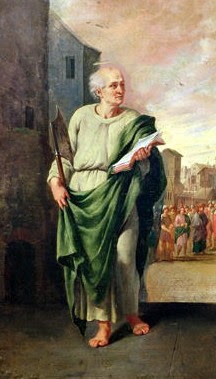
Matthias is a form of Matthew, but has been treated as a different name for centuries. He has been a staple in Central and Northern Europe, especially in Germany, the Netherlands and Scandinavia.
In the New Testament, the name was borne by the replacement of Judas Iscariot. Matthias was considered an apostle and according to legend, he went on to convert the Georgians where he died a martyr by crucifixion.
He is currently one of the most popular male names in all of Europe, his rankings are as follows:
Other forms of the name include:
An obscure Feminine form is the Polish: Macieja
In France, the designated name-day is May 14.
The name has been borne by several Hungarian kings.
Sources
 Gender: Feminine
Origin: Hebrew
Meaning: “lily; rose.”
Susannah is the anglicized form of the Biblical Greek Sousanna (Σουσαννα) which in turn, is a translation of the Biblical Hebrew שׁוֹשַׁנָּה (Shoshannah). Shoshannah is derived from the Hebrew word ששון (shoshan) which means “lily” in ancient Hebrew, but in modern Hebrew has evolved to mean “rose.”
The Hebrew word of shoshan has been traced to the ancient Egyptian element, sšn meaning “lotus” and is also believed to be linked with the Hebrew word ששון (sasson) meaning, “joy”.
It is also interesting to note that in modern Farsi, the word for lily is sausan compare to shoshan.
The ancient place name of Susa is also believed to be related to the Semitic botanical word, due to the so-called abundance of lilies that used to thrive in the area.
In the Old Testament (or Apocrypha) the name is borne by a woman falsely accused of adultery. She is rescued by the prophet Daniel who tricks her accusers and reverses the accusations against them.
It is also borne in the New Testament by a companion of Mary and a disciple of Christ. She is revered as a saint in the Catholic and Eastern Orthodox Churches.
Susan is a Middle English knock off, most likely influenced by the French Suzanne, which might have been introduced by the Norman conquerors in the 11th-century.
Currently, Susannah does not appear in the U.S. top 1000, (2008), but she has become especially trendy in many Central and Eastern European countries (in her various vernacular forms of course).
Her rankings in other countries are as follows:
In the English-speaking world, Susan was especially popular after World War II. In the United States, it is often considered dated and is usually associated with someone in their early 60s to late 50s. In fact, she remained a staple among the Baby-Boom Generation all the way to the early beginnings of the Generation Xers. She remained strong in the top 10 for over 20 years. The highest she peaked was between 1957 and 1960, coming in as the second most popular female name. Currently, she stands at a meagre #711.
Other forms of the name include:
Bulgarian diminutives include: Susa, Suzanka and Susak
Czech/Slovak short for is Zuza
English short forms are: Sue, Suzie and occasionally, Sukie/Sookie.
French affectionate forms include: Suzelle/Suzel, Suzette, Suzie and Suzon
Hungarian short forms are: Zsazsa, Zsuzsa and Zsuzsi.
Lithuanian diminutives are: Zune and Zuze
Polish diminutives include: Zanna, Żanna, Zanka, Zańka, Zuchna, Zula, Zuzia and Zużka
Spanish diminutives are: Susanita & Susi
The designated name-day is August 11 in (Estonia, Finland and Sweden).
Sources
 Gender: Masculine
Origin: Old Norse
Meaning: “ever ruler; always ruler.”
Eng (AIR-ic)
The name is derived from the Old Norse elements, ei meaning, “ever, always, one, only” and rikr meaning “ruler.”
The last element of rikr shares a root that can be traced back to Indo-European. Compare the Celtic rix (king), the Latin rex (King) and the Sanskrit raja (King).
The oldest record of the name can be traced to a rune stone in Sweden, dated from around the 1st century C.E. It reads: “Erik and suir and Tonna erected this stone for their father, Gudmund.”
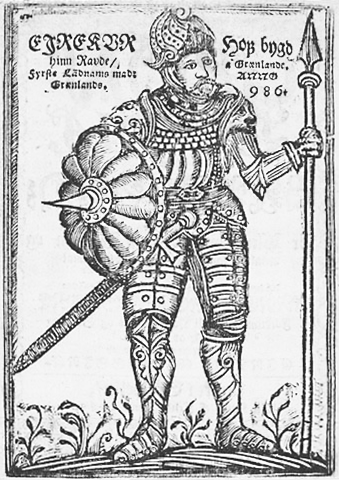
In Scandinavia, Erik has been used among nobility and royalty since Viking times. It was borne by several Danish, Norwegian and Swedish kings and rulers. It was also the appellation of Eric the Red, (Eiríkr inn Rauda), a 10th-century Norse explorer who is credited for his discovery of Greenland.
The name was introduced into the English speaking world by Danish settlers during pre-Norman times, however, the name was never common in Medieval England. It was revived in 19th-century Britain, thanks in part to the novel Eric, Little by Little (1858) by Frederic William Farrar.
In the United States, its early popularity is more likely due to the sudden influx of Scandinavian immigrants during the late 19th-century. Ever a classic in Scandinavia and among the Scandinavian diaspora, Eric was continually given to the descendants of the first bearers who settled the North American shores.
In 1880, Eric appears as the 600th most popular male name, by 1896, when Swedish immigration was at its peak, he had jumped several hundred spaces, coming in as the 388th most popular male name in the United States.
The highest Eric has ever peaked in U.S. naming history was between 1973 and 1976 coming in as the 13th most popular male.
Currently, he stands as the 86th most popular male name, (2008).
In other countries, his rankings are as follows:
Other forms of the name include:
Finnish diminutives are: Eera, Eeri, Eiro, Eppo, Eppu, Era and Ero.
Its feminine form of Erica has also left an impression on the English-speaking world. The fact that it also coincides with the the Latin name for heather, may have also boosted the name’s popularity.
Currently, Erica ranked in as the 293rd most popular female name in the United States, (2008). The highest she ranked was between 1986-1988, coming in as the 31st most popular female name.
Other variations include:
A feminine Finnish pet form is Eekku.
The designated name-day is May 18.
Sources
 Gender: Masculine
Origin: German
Meaning: “brave power.”
Eng (RICH-erd)
The name was first introduced into the English speaking world by the Norman Conquerors, and the name has been a long standing classic since.
It was most notably borne by Richard I the Lionhearted of England, who has remained a sort of national folk hero in Britain.
Richard has been declining somewhat in the U.S. popularity charts, coming in as the 107th most popular male name (2008), in 2007, he was the 100th most popular male name.
The name is composed of the Germanic elements ric meaning “power; rule” and hard meaning “brave; hardy.”
His rankings in other countries are as follows:
Other forms of the name include:
Diminutives include the Medieval English Hudde (HUD) the inspiration of such surnames as Hudson. Others include Dick, Dicky, Rich, Richie, Rick and Ricky.
Czech diminutive: Ríša
Finnish diminutive: Riku
Polish: Rysiek, Rysio, Rysiu and Rychu
Slovak diminutives: Rišo, Riško
Spanish: Caíto, Cayo (Guatemala), Ricardito, Rico, Ricky, Riqui
Feminine forms are include:
The designated name-days are: April 3 (Czech Republic, France, Hungary and Slovakia), February 7 (Estonia).
Sources
Gender: Masculine
Origin: Finnish
Meaning: “acre; field.”
(PELL-air-vo)
The name is derived from the Finnish, pelto, meaning, “acre; field.”
In the Kalevala, it appears as the by-name for Sampsa Pellervoinen who was a field hand.
The designated name-day is April 2.
Sources
 Gender: Masculine
Origin: Hebrew, Biblical
Meaning: “Yahweh exhalts.”
Eng (JARE-e-MEE); (JARE-e-MY-ah)
The name is derived from the Hebrew Yirmĭyahu (יִרְמְיָה) meaning, “yahweh exhalts.”
In the Old Testament, Jeremiah was a prophet and author of the Book of Jeremiah and the Book of Lamentations. He warned the Israelites of God’s impending destruction upon them and lived to see the Babylonian Exile.
Jeremy has been attested to have been used as early as the 13th-century but the name Jeremiah did not catch on in the English-speaking world until well after the Protestant Reformation.
In the English lexicon, jeremiah is used to describe somebody who is chronically complaining and lamenting, in reference to the Biblical prophet.
Currently, Jeremiah is the 69th most popular male name in the United States, (2008).
Other forms of the name include:
A common English short form is Jerry.
A German and Finnish pet form is Jere.
Sources