Fadi

Gender: Masculine
Origin: Arabic فادي
Meaning: “saviour.”
(FUH-DEE)

The name comes directly from the Arabic word for saviour and is a very popular name among Middle Eastern Christians. Al-Fadi (the saviour) is an appellation used for Jesus.

Currently, Fadi is the 470th most popular male name in Quebec, Canada (2010).

The feminine form is Fadia فادية.

Sources

  1. http://www.behindthename.com/name/fadi
  2. http://www.babynamer.com/fadi
  3. http://www.babynamespedia.com/meaning/Fadi


Mirko

Gender: Masculine
Origin: Slavic Мирко
Meaning: “peace.”
(MEER-koh)

The name is derived from the Slavic element mir meaning “peace.” It has historically been used as a Croatian form of the Germanic name Emmerich, although unrelated etymologically.

It is currently the 491st most popular male name in Quebec, Canada (2010).

The name was borne by Prince Mirko of Montenegro (1879-1918)

The feminine form is Mirka.

Source

  1. http://sl.wikipedia.org/wiki/Miro
  2. http://www.rrq.gouv.qc.ca/Interactif/PR2I121_Prenoms/PR2I121_Prenoms/PR2SPrenoms_01.aspx

Hope

Gender: Feminine
Origin: English

The name comes directly from the English word and has been in usage since the Middle Ages due to the popularity of a cult of sister saints, Hope, Faith and Charity.

Its popularity was in enhanced in the 17th-century due to its usage among the Puritans.

Currently, Hope is 245th most popular female name in the United States, (2010). Its Spanish cognate of Esperanza is currently the 75th most popular female name in Chile and the 948th most popular in the United States, (2010).

Other forms of the name include:

  • Nadzieja Надзе́я (Belarusian/Polish. nod-JAY-yah)
  • Nada (Bosnian/Croatian/Serbian/Slovene)
  • Esperañs (Breton)
  • Esperança (Catalan/Portuguese)
  • Naděžda (Czech)
  • Spes (German/Latin)
  • Elpida Ελπίδα (Greek)
  • Elpis (Greek/Coptic)
  • Hopeful (English: a popular female name among Puritans)
  • Hopestill (English: a popular female name among Puritans)
  • Hopewell (English: a popular female name among Puritans)
  • Espérance (French)
  • Speranza (Italian)
  • Speranță (Romanian)
  • Nadezhda наде́жд (Russian)
  • Spiranza (Sicilian)
  • Esperanza (Spanish)
Source

Theodore

Gender: Masculine
Origin: Greek
Meaning: “god’s gift.”

The name is derived from the Greek Theodoros (Θεοδωρος) which is composed of the elements θεος (theos) meaning “god” and δωρον (doron) “gift.” The name was borne by several early saints, two popes and three tsars of Russia.

In recent American history the name was borne by President Theodore Roosevelt (1858-1919) of whom the Teddy Bear was named for.

It is currently the 263rd most popular male name in the United States, (2010).

An interesting fact: Dorothy is derived from the same Greek roots but in reverse order.

Other forms of the name include:

  • Tewodros ተውዶሮስ (Amharic)
  • Tadros تادرس (Arabic: used among Arab Christians)
  • Todos ܛܘܕܘܫ (Aramaic: used among Assyrian and Chaldean Christians)
  • Hvejdar Хведар (Belarusian)
  • Teodor Теодор (Bulgarian/Catalan/Croatian/Czech/Danish/Estonian/Finnish/Hungarian/Polish/Romanian/Scandinavian/Slovakian/Slovene/Ukrainian)
  • Todor (Bulgarian/Serbiab/Northern Greek)
  • Theirn (Cajun)
  • Theodoor (Dutch)
  • Theodorus (Dutch/Latin)
  • Theodore თევდორე (English/Georgian)
  • Tuudor (Estonian)
  • Teuvo (Finnish)
  • Théodore (French)
  • Theodor (German)
  • Theodoros Θεόδωρος (Greek)
  • Thodoros Θόδωρος (Greek)
  • Fedor (Hungarian)
  • Tivadar (Hungarian)
  • Tódor (Hungarian)
  • Téodóir (Irish)
  • Teodoro (Italian/Portuguese/Spanish)
  • Todaro (Italian)
  • Teodors (Latvian)
  • Thei (Limburgish)
  • Teodoras (Lithuanian)
  • Toše Тоше (Macedonian)
  • Tiodore (Occitanian)
  • Toader (Romanian)
  • Tudor (Romanian/Welsh)
  • Fedor Федор (Russian/Slovene)
  • Fjodor Фёдор (Russian)
  • Teodoru (Sicilian)
  • Fedja (Slovene)
  • Todor (Slovene)
  • Fedir Федір (Ukrainian)
  • Tewdwr/Tudur (Welsh)
Common diminutives include:
  • Tosho Тошо (Bulgarian)
  • Toshko Тошко(Bulgarian)
  • Ted/Teddy (English)
  • Tedo თედო (Georgian)
  • Fedja Федя (Russian)

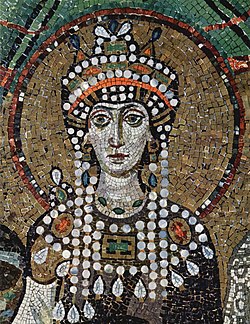
Its feminine form of Theodora was very popular in Byzantium, it was borne by at least five Byzantine Empresses including Empress Theodora who is also revered as a saint.

Other feminine forms include:

  • Teodora Теодора თეოდორა (Bulgarian/Catalan/Crotian/Georgian/Italian/Macedonian/Polish/Portuguese/Romanian/Serbian/Slovene/Spanish/Swedish)
  • Todorka Тодорка (Bulgarian/Macedonian)
  • Theodora Θεοδώρα (Czech/English/German/Greek)
  • Theda (English/German)
  • Théodora (French)
  • Teodóra (Hungarian)
  • Fedora Федора (Russian/Slovene)
  • Feodora Феодора (Russian)

Evangeline

Gender: Feminine
Origin: Greek
Meaning: “good news.”
Eng (ee-VAN-je-LEEN)

The name is derived from the Greek ευ (good) and αγγελμα (news; message). Evangelos (masculine) and Evangelina (feminine) have always been popular names in Greece. Evangeline seems to be particularly common among French-Canadians and the Acadians of Louisiana since the 16th-century. The name was used for the title character in Henry Longfellow’s 1847 poem Evangeline, which recounts the trials and tribulations of the Acadians after their expulsion from Canada.

A parish in Louisiana was named in the character’s honour.

Currently, Evangeline is 333rd most popular female name in the United States, (2010).

Other forms of the name include:

  • Evangeliya Евангелия (Bulgarian)
  • Evangeline/Evangéline (Cajun/Franco-English)
  • Evangelina (Croatian/Hungarian/Italian/Portuguese/Romanian/Serbian/Spanish)
  • Évangéline (French)
  • Evangelia Ευαγγελία (Greek)
  • Vangelia Βαγγελιώ (Greek)
  • Evangelija Евангелија (Macedonian)
  • Vangelija Вангелија (Macedonian)
  • Evangelica (Romanian)

Masculine forms include:

  • Evangelis Ευαγγέλης (Greek)
  • Evangelos Ευάγγελος (Greek)
  • Vangelis Βαγγέλης (Greek)
  • Evangelo (Italian)

Source

  1. http://www.behindthename.com/name/evangeline

Salvador

Gender: Masculine
Origin: Spanish
Meaning: “savior.”

The name is derived from the Spanish word for Savior and is used in honour of Christ. It is currently the 457th most popular male name in the United States, (2010). Its Italian cognate of Salvatore is the 895th most popular male name in the United States, (2010).

Other forms of the name include:

  • Sotir (Albanian)
  • Gaizka (Basque)
  • Salbatore (Basque)
  • Xalbador/Xalba (Basque)
  • Salvador (Catalan/Spanish)
  • Saveur (French: archaic)
  • Salvatore (Italian)
  • Salvator (German/Latin)
  • Sotirios  Σωτήριος (Greek)
  • Sauvaire (Occitanian)
  • Salwator (Polish)
  • Sarbadore (Sardinian)
  • Sarbaturi (Sicilian)
Common diminutives used especially among Italian-Americans are: Sal and Tory.

Feminine forms include:

  • Salvatrice (Italian)
  • Salvatorica (Italian)
  • Salvatorina (Italian)
  • Torella (Italian)
  • Torina (Italian)
  • Salvatrix (Latin)
  • Salvadora (Spanish)
Source


Estrella

Gender: Feminine
Origin: Spanish
Meaning: “star.” (Sp. ey-STREY-yah)

The name comes directly from the Spanish word for star and has been in use since the early Middle Ages. It was used by Spanish Jews as a form of Esther and among Christians, it was used in reference to an epithet of the Virgin Mary, Star of the Sea.

Currently, Estrella is the 420th most popular female name in the United States, (2010).

Izar is the Basque cognate.

Source

  1. http://www.behindthename.com/name/estrella

Gloria

Gender: Feminine
Origin: Latin
Meaning: “glory.”
Eng (GLAWR-ee-ə)

The name comes directly from the Latin word for glory and its usage as a given name is relatively recent in naming history. Its first appearance seems to be the name of the protagonist of E.D.E.N. Southworth’s 1891 novel, Gloria: A Novel.

Born Emma Dorothy Eliza Nevitte, Southworth was a popular novelist of her time, and seems to have had a habit of bestowing interesting names on her female characters, particularly names which come directly from Latin words. Her most famous example being her tomboyish character, Capitola Black in her most famous work, The Hidden Hand (1889).

Gloria was used again by George Bernard Shaw for a character in his 1898 play You Never Can Tell.

Due to its seemingly religious connotations, the name skyrocketed among Catholic families during the Depression Era. In this case, the name may have been used in reference to the Great Doxolgy or hymn sung during Catholic masses Gloria in Excelsis Deo. 

Currently, Gloria is the 503rd most popular female name in the United States, (2010).

Other forms of the name include:

  • Glorietta (Italian)
  • Glorinda (Italian)

An obscure Italian diminutive is Gloriuccia.

There is also a very obscure masculine Italian form: Glorio.

Famous bearers include:

  • Gloria Swanson (actress, 1899-1983)
  • Gloria Steinem (feminist, b.1934)
  • Gloria Gaynor (singer, b.1948)
  • Gloria (Bulgarian pop-singer, b.1973)
  • Gloria Princess of Thurn & Taxis (b.1960)
  • Gloria Estefan (singer, b.1957)
In Poland, the designated name-day is May 13.

Source

  1. http://www.behindthename.com/name/gloria


Holiday Season Names

Originally this post was entitled Christmas names, but I decided to change the topic to Holiday season names in general. Whether you are celebrating Christmas, Devali, Hanukkah, Yuletide, Kwanzaa or even Yalda, below are a list of names that have a seasonal feel. Enjoy!

Have a Happy Holiday and a Merry Christmas!

Female

  • Adoración (from the Spanish meaning, “adoration”, the name is usually given in reference to the Adoration of the Magi on January 6th. Adora is another variation)
  • Atiya (an Arabic name, it is a feminine form of Ata, meaning, “gift.”)
  • Amjalina (from the Belarusian word for “mistletoe”, it is also the name of a village in Brest. ahm-yah-LEE-nah)
  • Aoi (from the Japanese  ” meaning “holly.”)
  • Božica (from the Serbian and Croatian word for Christmas and often used on girls born during the Christmas season. boh-ZHEET-sah)
  • Chipo (the name is from the Shona word for “gift”, perhaps a good option for a little girl born during Kwanzaa).
  • Cinnamon
  • Epiphany (January 6th marks the epiphany and traditionally the official end of the Christmas season)
  • Eudora (this option is never listed on the Christmas themed list I see on the baby name blogs. From the Greek, meaning “good gift”, this would make a beautiful and unique choice for a little girl born during the Holiday season).
  • Eve (For a Christmas Eve baby)
  • Ginger
  • Godiva (Godiva Chocolates are occassionally given as a gift during the Holiday season, plus it is from the Anglo-Saxon meaning, “god’s gift.”)
  • Hadiyya (another easily pronounceable Arabic choice meaning “gift.”)
  • Hestia (from the Greek meaning “hearth; fireside.”)
  • Inbal (from the Hebrew meaning “tongue of a bell.” Also would make a great Hanukkah names)
  • Ling (from the Chinese meaning “bell chime”)
  • Metrodora (from the Greek meaning, “mother’s gift”)
  • Mjata (from the Belarusian nature name meaning “mint.” MYAH-tah)
  • Nadzieja (from the Polish and Belarusian word meaning “hope.” nod-JAY-yah)
  • Nina (although often viewed as a form of Anne, this is also a Quecha name meaning, “fire.”)
  • Rei (from the Japanese meaning “bell.”)
  • Saffron (traditionally used in Scandinavia, especially in Sweden, as a holiday spice, especially to flavor the famous lussekatte (St. Lucy buns)
  • Sterre (from the Dutch word for star and currently a very trendy female name in the Netherlands. STER-reh)
  • Suzu (another Japanese name meaning “bell.”)
  • Tisa (from the name of the Slovene river which also coincides with the word for the yew tree. TEE-sah)
  • Tuyet (from the Vietnamese meaning “snow.”)
  • Wigilia (pronounced vee-GEEL-yah, this is the Polish word for Christmas Eve although rare, it is occassionally used as a given name)
  • Yalda (name of the Persian holiday which celebrates the Winter Solstice, it is also a very common female name in Iran).
  • Zavjeja (from the Belarusian nature name meaning “blizzard” zah-VYAY-yah)
  • Zhuravina (from the Belarusian nature name meaning “cranberry.” zhoo-rah-VEE-nah)
Male
  • Aputsiag (from the Greenlandic meaning, “snowflake.”)
  • Ata (from the Arabic, meaning, “gift.”)
  • Bor (from the South Slavic word for “pine tree.”)
  • Bożydar (from the Polish literally meaning “god’s gift.”)
  • Csaba (bonus: it is a Hungarian name that can meaning either shepherd or gift. It is pronounced CHAH-baw and it is currently a very trendy name for Hungarian baby boys).
  • Celyn (from the Welsh meaning “holly” KEL-in)
  • Darko (a South Slavic name literally meaning “little gift.”)
  • Doron (from the Hebrew meaning “gift” this name would also make a great Hanukkah choice.)
  • Edur (from the Basque meaning, “snow.”)
  • Hurik (from the Armenian meaning, “small fire.”)
  • Iker (from the Basque meaning “adoration”, used in reference to the Adoration of the Magi which occurs on January 6th).
  • Ivor (from the Old Norse meaning, “yew tree.”)
  • Joash (from the Biblical Hebrew meaning, “fire of Yahweh”).
  • Kirabo (from the Lagunda meaning, “gift”, the name is also reminiscent of the animal name, Caribou. This may make an interesting choice for a Kwanzaa baby).
  • Mattan (from the Old Hebrew name meaning simply, “gift,” a cool and more unusual alternative to Matthew).
  • Milad (from the Arabic meaning, “Christmas”, the name is sometimes used among Coptic and Arabic Christians as a male given name).
  • Neo (another cool African name meaning “gift” in Tswana, bonus, it also means “new” in Greek, it would also make a great name for a New Years baby.)
  • Oren (from the modern Hebrew meaning, “pine tree.“)
  • Plamen (from the Bulgarian meaning, “flame; fire.“)
  • Pyry (from the Finnish meaning “snowstorm; blizzard.”)
  • Shai (from the Hebrew meaning, “gift”, pronounced as SHY)
  • Yule