Julian

Gender: Masculine
Origin: Latin

The name is an anglicized form of the French male name, Julien, which is derived from the Latin Julianus (See Julius).

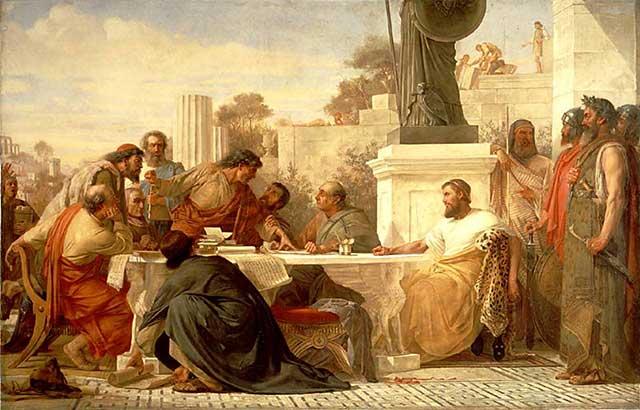
In history, the name was borne by the last non-Christian Roman emperor, Julian the Apostate (4th-century CE). It was also borne by a very popular French saint, Julien the Hospitaller.

In Medieval Englian, Julian was a female name and the traditional masculine cognate was Jolyon. Both names went out of usage by the Renaissance and neither were revived until the 19th-century.

Currently, Julian is the 12th most popular male name in Austria, (2010). His rankings in other countries are as follows:

  • # 15 (Germany, 2011)
  • # 17 (the Netherlands, 2010)
  • # 32 (Norway, 2010)
  • # 53 (United States, 2010)
  • # 59 (France, Julien, 2009)
  • # 66 (Belgium, Julien, 2009)
  • # 98 (Sweden, 2010)
  • # 147 (France, Julian, 2009)
  • # 561 (United States, Julien, 2010)

Other forms of the name include:

  • Juljan (Albanian)
  • Julen (Basque)
  • Juluan (Breton)
  • Yulian Юлиан (Bulgarian/Russian/Ukrainian)
  • Julià (Catalan)
  • Julijan (Croatian/Macedonian/Serbian/Slovene)
  • Julian (Dutch/English/German/Occitanian/Polish/Scandinavian)
  • Jolyon (English)
  • Julien (French)
  • Xulián (Galician)
  • Ioulianos Ιουλιανός (Greek)
  • Giuliano (Italian)
  • Iulianus (Latin)
  • Julijonas (Lithuanian)
  • Juliano (Portuguese/Spanish)
  • Julião (Portuguese)
  • Iulian (Romanian)
  • Julián (Spanish)
  • Turiano (Tahitian)

For feminine forms (see Juliana)

Clement

Gender: Masculine
Origin: Latin
Meaning: “merciful, mild.”

The name is an anglicized form of the Late Latin, Clemens, which is derived from Clementius, meaning, “merciful; gentle.”

The name was extremely popular throughout Medieval Europe as it was borne by several saints and Popes, most notably St. Clement I, the third Pope and St. Clement of Alexandria, an Eastern Christian theologian who reconciled Christian and Platonic philosophies.

In England, the name fell out of usage after the Protestant Reformation, but was revived in the 19th-century.

Currently, Clement is the 20th most popular male name in Belgium, (2009) and the 40th most popular in France, (2009).

Its Latin form of Clemens is the 45th most popular male name in Austria, (2010).

Other forms of the name include:

  • Kelmen (Basque)
  • Klemañs (Breton)
  • Kliment Климентკლემენტ Κλήμης (Bulgarian/Czech/Georgian/Greek/Macedonian/Russian/Serbian/Slovak)
  • Climent (Catalan)
  • Klement (Croatian/Czech/German/Slovak)
  • Clement (English/Romanian)
  • Klemens (Finnish/German/Polish/Scandinavian)
  • Clément (French)
  • Clemens (German)
  • Klemenz (German)
  • Kelemen (Hungarian)
  • Kelen (Hungarian)
  • Clemente (Italian/Spanish)
  • Clementino (Italian)
  • Clemenzio (Italian)
  • Clementius (Late Latin)
  • Klements (Latvian)
  • Klemensas (Lithuanian)
  • Clementi (Sardinian)
  • Klemen (Slovene)
  • Klimant (Sorbian)

Feminine forms include:

  • Clementine (English)
  • Clemence (English)
  • Clemency (English)
  • Clémence (French)
  • Clémentine (French)
  • Klemencia (Hungarian)
  • Clementa (Italian)
  • Clementina (Italian/Portuguese/Spanish)
  • Clemenza (Italian)
  • Clemenzia (Italian)
  • Mentina (Italian)
  • Clementia (Latin)
  • Klimentina Климентина (Macedonian)
  • Klemencja (Polish)
  • Klementyna (Polish)
  • Klementina (Slovene)


Constantine

Gender: Masculine
Origin: Latin

The name was originally a diminutive form of the Latin male name Constans, but due to the fame and notoriety of Constantine the Great, the name exclusively became an independent given name in the beginning of the Middle Ages.

Currently, its German form of Konstantin is the 39th most popular male name in Austria, (2010) and the 60th most popular in Germany, (2011).

Other forms of the name include:

  • Kosta (Albanian)
  • Kostandin (Albanian/Basque)
  • Kostandini (Albanian)
  • Kostandianos Կոստանդիանոս (Armenian)
  • Kustentin (Breton)
  • Konstantin Константин (Bulgarian/Croatian/Czech/Finnish/German/Hungarian/Macedonian/Plattdeutsch/Russian/Scandinavian/Serbian/Slovene)
  • Constantí (Catalan)
  • Constantijn (Dutch)
  • Stijn (Dutch)
  • Constantine (English)
  • Kuestantinos (Ethiopian)
  • Konsta (Finnish)
  • Constantin (French/German/Romanian)
  • Konstantine კონსტანტინე (Georgian)
  • Constantinos Κωνσταντινος (Greek)
  • Costas Κώστας (Greek)
  • Dinos Ντίνος (Greek)
  • Konstantínus (Icelandic)
  • Costantino (Italian)
  • Costanzo (Italian)
  • Konstantīns (Latvian)
  • Konstantinas (Lithuanian)
  • Konstantyn (Polish)
  • Konstanty (Polish)
  • Constantim (Portuguese)
  • Constantino (Portuguese/Spanish)
  • Costel (Romanian)
  • Costin (Romanian)
  • Dinu (Romanian)
  • Kuonstantėns (Saimogaitian)
  • Antine (Sardinian)
  • Costantìnu (Sardinian)
  • Custantino (Sicilian)
  • Konštantín (Slovakian)
  • Kostyantyn остянтин (Ukrainian)
  • Cystennin (Welsh)
Common Russian diminutives are Kosta and Kostya.

Feminine forms include:

  • Konstandina (Albanian/Greek/Slovene)
  • Konstantina Константина Κωνσταντίνα (Bulgarian/Croatian/Czech/Greek/Macedonian/Hungarian/Russian/Serbian/Slovene)
  • Dina (Greek)
  • Konstantyna (Polish)
  • Costantina (Italian)
  • Constantina (Latin/Portuguese/Romanian/Spanish)
  • Costela (Romanian)

Brennus, Breno

Gender: Masculine
Origin: Gaulic
(BREN-nus); (BREH-no)

Brennus is a latinized form of a Gaulic name of uncertain meaning. It is believed to possibly be related to a Celtic title for someone of high standing or perhaps related to the Celtic root bren (raven).

The name was borne by two Gaulic chieftans, one who sacked Rome in the 4th-century and another who invaded Northern Greece during the 2nd-century. The former being the most famous of the two.

Currently, its Portuguese form of Breno is the 47th most popular male name in Brazil, (2010).

Other forms (though obsolete) include:

  • Brenn Бренн (Breton/French/Russian)
  • Bren Брен (Bulgarian/Macedonian/Serbian)
  • Brenno (Italian)
  • Brennus (Latin)
  • Brenus (Latvian)
  • Breno (Portuguese/Spanish)

Breno is also the name of a commune in Lombardy, Italy, which got its name from the Gaulic chief.

Alphonse, Alonso

Gender: Masculine
Origin: German
Meaning: “noble and ready.”

The name is believed to be derived from a Visigothic male name Adalfuns which is composed of the elements adal (noble) and funs (ready). It has also been associated with another Visigothic name Hildefuns meaning (battle ready). The name has always been popular in its various forms throughout Southern Europe, especially in the Iberian Peninsula where it was borne by several kings.

In its French form of Alphonse, it is the name the title character in Alexander Dumas’ 1873 book Monsieur Alphonse, which recounts the exploits of a pimp. Due to this literary association the name has come to mean “pimp” in several languages, most notably in Danish and in Polish.

Its Spanish form of Alonso, however, remains a very common name throughout the Spanish-speaking world. It is currently the 16th most popular male name in Chile (2010). It is also the 84th most popular in Spain (2010) and the 637th most popular in the United States (2010).

The more archaic Italian and Spanish form of Alfonso appears in the U.S. top 1000, coming in as the 742nd most popular male name (2010).

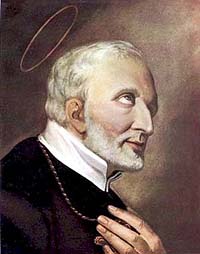
The name was most famously borne by St. Alphonsus Liguori, an Italian saint who founded the order of the Redemptorists and is considered a Doctor of the Church by the Catholic Church.

Other forms of the name include:

  • Adalfuns (German: archaic)
  • Alifonso (Aragonese)
  • Alfonsu (Asturian/Sardinian/Sicilian)
  • Fonsu (Cantabrian)
  • Alfontso (Basque)
  • Alfoñs (Breton)
  • Alfons (Catalan/Czech/Dutch/Finnish/German/Maltese/Polish/Romanian/Scandinavian: also the word for pimp in Polish and Danish)
  • Fons (Dutch)
  • Funs (Dutch)
  • Alfo (Finnish)
  • Alhvo (Finnish)
  • Altto (Finnish)
  • Alphonse (French)
  • Afonso (Galician/Portuguese)
  • Alphons (German)
  • Alfonz (Hungarian)
  • Alfonzino (Italian)
  • Alfonso (Italian/Portuguese/Spanish)
  • Alfonzo (Italian)
  • Alonzo (Italian)
  • Alphonsus (Late Latin)
  • Alfonss (Latvian)
  • Funske (Limbergish)
  • Alfonsas (Lithuanian)
  • Alonso (Portuguese/Spanish)
  • Affonzu (Sicilian)
  • Arfansu/Arfanzu (Sicilian)
  • Alfonz (Slovak/Slovene)

Feminine forms include:

  • Alphonsine (French)
  • Alfonza (Hungarian)
  • Alfonzin (Hungarian) 
  • Alfonzina (Hungarian)
  • Alfonsa (Italian/Portuguese/Spanish)
  • Alfonsina (Italian/Portuguese/Spanish)
  • Alfonza (Italian)
  • Alfonzina (Italian)

Joachim, Joaquin

Gender: Masculine
Origin: Hebrew
Meaning: “Yahweh has established.”
Eng (JOKE-im); Sp (wah-KEEN)

The name is possibly derived from the Biblical Hebrew male name, Jehoiachin, which is found in the Old Testament as the name of king of Judah imprisoned during the Babylonian exile.

Joachim appears in the apocryphal Gospel of James as the name of the husband of St. Anne and the father of the Virgin Mary. In the Qu’ran the father of Mary is named Imran, though Joachim and Imran are not etymological related. The Catholic Church, Eastern Orthodox Churches and the Anglican Church has traditionally revered this legendary character as a saint and as a result, the name became extremely popular across Europe, especially in Catholic countries.

The name was never very common in the English-speaking world but was occasionally used by Irish-Catholics and American-Catholics.

Currently Joachim is the 319th most popular male name in France, (2009) and the 496th most popular in the Netherlands (2010). Its Spanish form of Joaquin, however, ranks even higher in a couple of countries. His rankings are as follows:

  • # 5 (Chile, 2010)
  • # 99 (Spain, 2010)
  • # 306 (United States, 2010).

Other forms of the name include:

  • Iyakem (Amharic/Ethiopian)
  • Chuaquín (Aragonese)
  • Xuaco/Xuacu (Aragonese)
  • Jokin (Basque)
  • Chaosum (Breton)
  • Joasim (Breton)
  • Jechim (Breton)
  • Joasin (Breton)
  • Jaouas (Breton)
  • Yoakim Йоаким (Bulgarian)
  • Yakim Яким (Bulgarian)
  • Yokim Йоким (Bulgarian)
  • Joaquim (Catalan/Portuguese)
  • Quim (Catalan/Portuguese)
  • Ximo (Catalan/Valencian)
  • Youakim (Coptic/Syrian)
  • Jáchym (Czech)
  • Jokum (Danish)
  • Jochem (Dutch/German)
  • Aki (Finnish)
  • Jaakkima (Finnish)
  • Joachim (English/French/German/Hungarian/Polish)
  • Kim (Finnish/Scandinavian)
  • Kimi (Finnish)
  • Xaquín (Galician)
  • Xoaquin (Galician)
  • Xocas (Galician)
  • Ioa’kime იოაკიმე (Georgian)
  • Achim (German)
  • Jochen (German)
  • Jochim (German)
  • Jóakim (Icelandic)
  • Gioacchino/Gioachino (Italian)
  • Giovacchino (Italian)
  • Yoakima (Lingala)
  • Joakim Јоаким (Macedonian/Serbian/Scandinavian) 
  • Akimka (Maldovan)
  • Iacin (Murcian)
  • Juaqui (Murcian)
  • Quino (Murcian)
  • Ioachim (Romanian)
  • Giuachin (Romansch)
  • Akim АкимЯким (Russian)
  • Yakim (Russian)
  • Joaquín (Spanish)
  • Joakym Йоаким (Ukrainian)

Feminine forms include:

  • Gioacchina (Italian)
  • Gioachina (Italian)
  • Giovacchina (Italian)
  • Joachima (Polish)


Clovis

Gender: Masculine
Origin: Frankish
Meaning: “praised fighter.”

The name is derived from the old Frankish name Chlodevich which is composed of the elements, chlod (praise) and vech (fighter).

It is believed that Clovis is the proto-name of Louis.

The name was borne by Clovis I (466-511), the first king to unite all the Frankish tribes under one ruler. Three other Frankish kings bore the name after him.

Currently, Clovis is the 157th most popular male name in Quebec, Canada (2010) and the 223rd most popular in France, (2009).

Other forms of the name include:

  • Clodeveu (Aragonese/Catalan)
  • Klovis (Basque/Frisian)
  • C’hlodwig (Breton)
  • Hlodwig (Breton)
  • Klodvig (Croatian/Hungarian)
  • Chlodvík (Czech)
  • Clovis (Dutch/English/French)
  • Klodvig (Finnish/Norwegian)
  • Chlodwig (German/Polish)
  • Clodoveo (Italian/Spanish)
  • Chlodovechus (Latin)
  • Chlodvigas (Lithuanian)
  • Clodovèu (Occitanian)
  • Clóvis (Portuguese)
  • Klodevig (Scandinavian)
  • Cluduveu (Sicilian)
Sources

Gaël

Gender: Masculine
Origin: Breton
Meaning: uncertain
Fre/Sp (guy-EL)

The name can either be a diminutive form of the Breton male name Judicaël or taken from the name of the group of ancient Celts who settled in Ireland and Scotland. In the latter case, it would be derived from the Celtic element geal meaning “white.” It has also been suggested to be comprised of the Breton elements gwen (white) and maël (prince).

The name is currently the 90th most popular male name in Mexico, (2010). Its sudden popularity in Mexico may be due to the fame of Mexican actor Gael García Bernal (b.1978). In France, it is the 159th most popular male name (2009) and in the United States it is the 407th most popular name, (2010).

Its feminine form is Gaëlle which is the 381st most popular female name in France, (2009).

Other feminine forms include the Breton GaelaGaele and Gaelig.

Sources

  1. http://www.behindthename.com/name/gae12l
  2. http://fr.wikipedia.org/wiki/Ga%C3%ABl_(pr%C3%A9nom)
  3. http://www.babycenter.com.mx/pregnancy/nombres/nombres_populares_2010/


Brendan

Gender: Masculine
Origin: Irish
Meaning: “prince.”
(BREN-den)

The name is derived from the Latin Brendanus which is a late Latinzation of the Gaelic male name Bréanainn which is inturn derived from an Old Welsh word breenhín meaning “prince.”

The name was borne by a St. Brendan the Voyager who is considered one of the Twelve Apostles of Ireland and is known for his legendary explorations of exotic lands one of the being the St. Brendan’s Island popularly speculated to be North America.

Currently, Brendan is the 229th most popular male name in the United States, (2010).

Other forms of the name include:

  • Brendan Брендан (Breton/English/German/Faroese/French/Icelandic/Polish/Russian/Scandinavian/Slovene/Ukrainian)
  • Brévalaire (Breton)
  • Brandà (Catalan)
  • Brandan (Catalan/Spanish)
  • Brandaan (Dutch)
  • Brennan (English)
  • Breandán (Gaelic)
  • Bréanainn (Gaelic. BREN-nen)
  • Brendano (Italian)
  • Brendanus (Late Latin)
  • Brendanas (Lithuanian)
  • Brandão (Portuguese)
  • Brendanu (Sicilian)
Source

Hope

Gender: Feminine
Origin: English

The name comes directly from the English word and has been in usage since the Middle Ages due to the popularity of a cult of sister saints, Hope, Faith and Charity.

Its popularity was in enhanced in the 17th-century due to its usage among the Puritans.

Currently, Hope is 245th most popular female name in the United States, (2010). Its Spanish cognate of Esperanza is currently the 75th most popular female name in Chile and the 948th most popular in the United States, (2010).

Other forms of the name include:

  • Nadzieja Надзе́я (Belarusian/Polish. nod-JAY-yah)
  • Nada (Bosnian/Croatian/Serbian/Slovene)
  • Esperañs (Breton)
  • Esperança (Catalan/Portuguese)
  • Naděžda (Czech)
  • Spes (German/Latin)
  • Elpida Ελπίδα (Greek)
  • Elpis (Greek/Coptic)
  • Hopeful (English: a popular female name among Puritans)
  • Hopestill (English: a popular female name among Puritans)
  • Hopewell (English: a popular female name among Puritans)
  • Espérance (French)
  • Speranza (Italian)
  • Speranță (Romanian)
  • Nadezhda наде́жд (Russian)
  • Spiranza (Sicilian)
  • Esperanza (Spanish)
Source