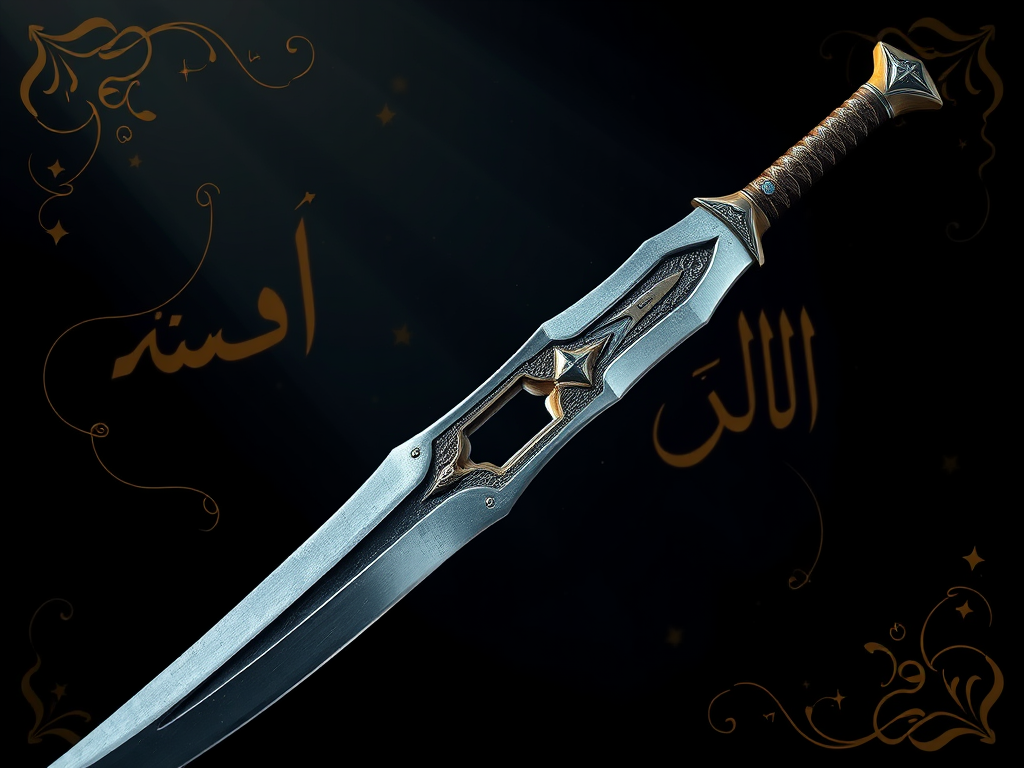
- Origin: Arabic ذو الفقار
- Meaning: debated
- Gender: Male
- Pron: ZOOL-fee-KAR
In Islamic tradition it specifically refers to a sword with a split or notched blade—the legendary weapon given by the Prophet Muhammad to his cousin and son-in-law ʿAlī ibn Abī Ṭālib.
It possibly comes from classical Arabic compound dhū / dhu (ذو) (possessor of; one who has), and fiqār / fiqar (فقار) (spine; vertebrae). Other sources suggest the second element may relate to the stars of Orion’s belt.
The phrase literally means “the one with the notches” or “owner of the notched spine.”
International Variations
- Zylfikari, Zilfikari (Albanian)
- Zupulkar Зулпукъар (Avar)
- Zülfüqar (Azeri)
- Zulfikar (Bosnian, Indonesian)
- Zulfakar Зульфакъар (Chechen)
- Zülpykar Зұлпықар (Kazakh)
- Zilfiqar (Kurdish)
- Zulfaqar (Malay)
- Zolfeghar ذوالفقار (Persian)
- Zulfikor (Tajik/Uzbek)
- Zülfikar (Turkish)
Sources