 Gender: Feminine
Origin: Finnish
Meaning: “snow.”
(LOO-mee)
The name comes directly from the Finnish word for “snow.”
Its designated name-day is February 2nd.
Another form is Lumikki, which is also the Finnish name for “Snow White.”
Gender: Feminine
Origin: Finnish
Meaning: “snow.”
(LOO-mee)
The name comes directly from the Finnish word for “snow.”
Its designated name-day is February 2nd.
Another form is Lumikki, which is also the Finnish name for “Snow White.”
 Gender: Feminine
Origin: Finnish
Meaning: “morning.”
(AH-moo)
The name comes directly from the Finnish word for “morning.”
It first entered the Finnish Calendar in 1929. Apparently, it has occasionally been used on males, but is considered feminine. Earliest recorded use of this name in Finland is 1899.
An obscure variation is Aamukoi (morning dawn).
Its designated name-day in Finland is February 2nd.
Possible translations
Calques (the below are feminine)
Masculine
Gender: Masculine
Origin: Polish
Meaning: “burn”
(zheh-GOH-tah)
The name is derived from the Old Slavonic, zec, meaning “to burn.”
In modern day Poland, the name is extremely rare, but appeared in records as early as 1212, it is believed to have occasionally been used as a vernacular cognate of the name Ignatius, (which some sources connect to the Latin meaning, “fire”), even though its usage in Poland pre-dates Ignatius by 100 years.
In modern Polish history, it was used as a codename for the Polish Council to Aid Jews, which was an underground resistance movement in German-occupied Poland (1942-1945).
Its designated name-day is February 1.
Gender: Feminine
Origin: Latvian
Meaning: unknown
The name is of unknown meaning, but appears in the Latvian national epic, Lāčplēsis. Spīdola is a witch who is enslaved by the devil but is eventually freed by the co-hero of the story, Koknesis, who she marries.
The designated name-day is February 2nd, and another form is Spīdala. The masculine form is Spidols.
 Gender: Feminine
Origin: Celtic
Meaning: debated
(BRID-jet)
Bridget is an anglicization of the Irish Gaelic Brighid, which is of somewhat debated meaning. One theory is that it is derived from the Gaelic brígh, meaning, “power, strength, vigor, virtue.”
Another theory put out by Gods and Fighting Men (1904), translated by Lady Augusta Gregory, is that it is from the Gaelic breo-saighit meaning, “fiery arrow.”
Other sources have suggested it to mean “exalted one.”
In Celtic mythology, this was the name of an extremely important and powerful goddess.
According to the medieval Irish anthology, Lebor Gabála Érenn, Bridget was a goddess of poetry and was the daughter of Dagda. She was also associated with fire, wisdom and anything with an elevated status, whether it be a high mountain top, or someone of high social status.
The name was also borne by an early Irish saint, whose story and legend often melds with that of the ancient goddess. St. Bridget of Kildare was believed to have been a nun and one of the first converts under St. Patrick.
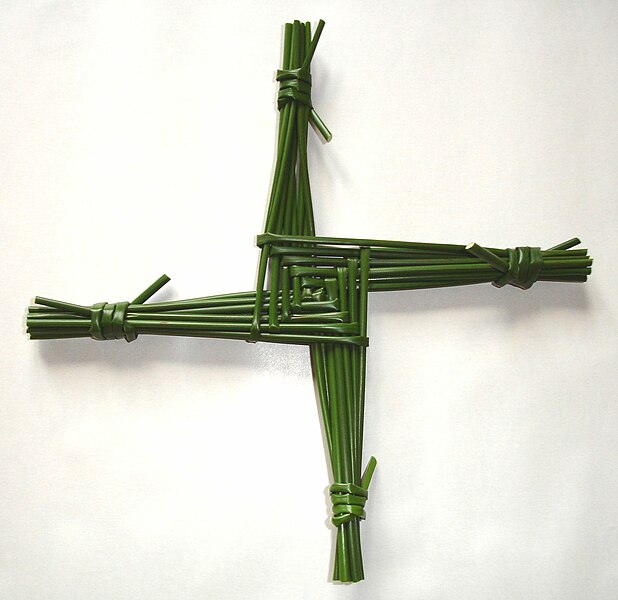 The St. Bridget’s Cross is often attributed to her, according to legend, she came upon a dying non- Christian man, in an effort to convert him to the new religion, she made a cross from the reeds that were beside him. That is all that is known of the origins of the St. Bridget’s Cross, but traditionally, a new one is made each year, on the feast of St. Bridget, (Feb. 1) while the old one is burned.
The feast of St. Bridget, which in some calenders falls on the 1st or 2nd of February,was originally one of the major festivals of the Celtic calender, known as Imbolc, it marked the first days of spring.
The name Bridget spread outside the Celtic world to the Germanic countries, it was popularized in Scandinavia by St. Bridget of Sweden, a Swedish noblewoman, mystic and founder of the Bridgettine order of nuns. She was also the mother of St. Katherine of Vadstena.
Between the 18th and 19th-centuries, when Irish immigrants first settled in the United States, the name was so common among the Irish, that Bridget or its diminutive form of Biddy became a slang term for any Irish woman.
Currently, Bridget 394th most popular female name in the United States, 2008. Its cognate of Brigitta is currently the 88th most popular female name in Hungary, (2008).
Other forms of the name include:
A Swiss German diminutive form is Brigittli. German short forms are: Biggi, Briggi, Gitte, Gitti and Gittl.
Irish and English diminutives are: Biddy, Bride, Bree, Brie, Bridie and Bridge.
 Gender: Feminine
Origin: debated
Meaning: debated
Eng (AL-is)
The name is of debated origin and meaning, and is usually narrowed down to two possible origins and meanings, one, the most popular theory, is that it is a French Norman form of Alaïs, which is an old French form of the Germanic, Adalheid, meaning, “noble; high.” Other sources like to link the name with a Greek source, meaning, “truth”, however, though this is a popular etymology, I was never able to confirm it.
Alice was quite popular in Medieval Europe, as were her offshoots: Alicia, Alix and Alison.
In 1880, Alice was the 8th most popular female name in the United States, today, Alice stands at a meagre # 326, being replaced by her more modern sounding counterparts: Alicia and Allison.
Allison is the 32nd most popular female name in the United States, (2008).
Contrary to popular belief, Allison/Alison is a very old feminine given name, which can be traced all the way back to the Normans. Its was originally a diminutive form of Aalis, (the Norman form of Alice), and was introduced into England during the 11th-century. Allison/Alison disappeared at the end of the Middle Ages, and was revived in the 20th-century. She first appeared in the U.S. top 1000 in 1946, coming in as the 903rd most popular female name.
Another very current version is Alicia, which is actually fading in popularity. As of 2008, she was the # 178th most popular female name in the United States, but back in 1983, she was the 41st most popular female name.
The Alice is form is not just relegated to English-speaking countries. Her usage is found in France, pronounced, (ah-LEES), in Italy as (ah-LEE-che), in the Czech Republic as (ah-LEET-seh). She is also used in German-speaking countries, Portuguese-speaking countries and in Scandinavia. Her current rankings are as follows:
Her Latinate counterpart of Alicia is also very transcultural, her rankings are as follows:
Other forms of the name include:
An obscure Italian masculine form is Alicio.
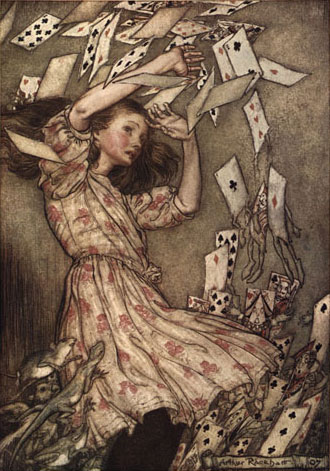
In popular fiction, it is borne by the protagonist of Lewis Carroll’s Alice’s Adventures in Wonderland (1865).
Designated name-days are Janury 15 (Czech Republic), June 23rd (Sweden), September 16 (Estonia) and December 16 (France).
 Origin: Latin
Meaning: “victory.”
Both names are derived from the Latin, meaning, “victory.”
Victoria is the feminine form of Victorius, but it was also the name of the Roman goddess of Victory, the counterpart of the Greek goddess, Nike.
The name was borne by an early North African Christian martyr, its masculine counterpart, was also borne by several early saints, including three popes.
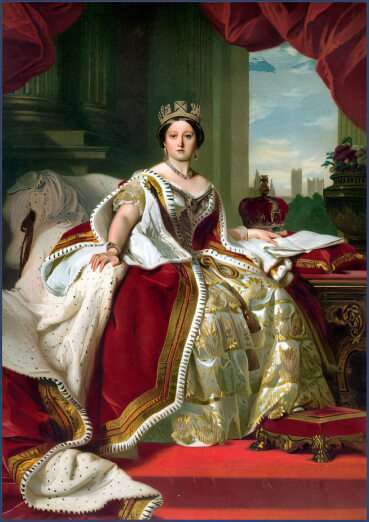 Victoria did not come into use in the English-speaking world till the 19th-century, when Victoria became queen of the British Empire. This period in history, the Victorian Era, was named in her honour, as were several geographic locations throughout the former British Empire.
Currently, in the United States, Victoria is the 27th most popular female name. Her rankings in other countries are as follows:
As for its masculine counterpart, Victor, was never a popular choice in the English speaking world, but has always been quite common in Latin American countries and on continental Europe. His rankings are as follows:
Other forms of Victoria include:
Common English diminutives include: Vicky/Vicki or Tori. A Romanian short form is Vica. Vicki/Vikki is also used as a short form in the German speaking countries as well as in Scandinavia.
Wiktorka and Wisia are the Polish short forms.
Male variations include:
The name was borne by famous French author, Victor Hugo.

Photo by Karolina Grabowska on Pexels.com
Gender: Feminine
Origin: Latvian, Lithuanian
Meaning: “wave.”
(BAHN-gah); (bahn-GWOH-lay)
Banga comes directly from the Latvian and Lithuanian word meaning, “wave; billow.” Banguolė is another Lithuanian form that would roughly translate as “little wave.”
In the Master and Margarita (1967) by Mikhail Bulgakov, Banga is the name of Pontius Pilate’s dog. It is uncertain what the etymology of the name was in this case.
Masculine forms are Bangis, Bangius, Bangys and Banguolis.
In the Shona language, Banga is a masculine name which comes directly from the word for sword or knife.
The designated name-day for Banguolė and Banguolis is January 30th. In Latvia, Banga’s designated name is November 16.
Calques include:
 Gender: Feminine
Origin: Latvian
Meaning: “flake”
The name comes directly from the Latvian word parsla meaning “flake” as in a snow flake.
The designated name-day in Latvia is January 30.
As of 2008, approximately 534 women in Latvia bore this name.
Gender: Feminine
Origin: Lithuanian
Meaning: “violet.”
(zhih-BOO-tay)
The name comes directly from the Lithuanian meaning, “violet.”
Its designated name-day is January 29.