Gender: Feminine
Origin: Latvian
Meaning: “profound; profundity.”
(dZEL-me)
The name comes directly from the Latvian meaning “profound; deep.” Its designated name-day is March 21.
Sources
Gender: Feminine
Origin: Latvian
Meaning: “profound; profundity.”
(dZEL-me)
The name comes directly from the Latvian meaning “profound; deep.” Its designated name-day is March 21.
Sources
Gender: Masculine
Origin: Estonian
Meaning: “sower; to sow.”
The name is possibly derived from the Estonian word külvik meaning “sower” or from külvama meaning “to sow.”
The designated name-day is March 21.
Gender: Masculine
Origin: Estonian
Meaning: “abundance.”
The name may possibly be derived from the Estonian word, küllus, meaning “abundance.”
The designated name-day is March 21.
Sources
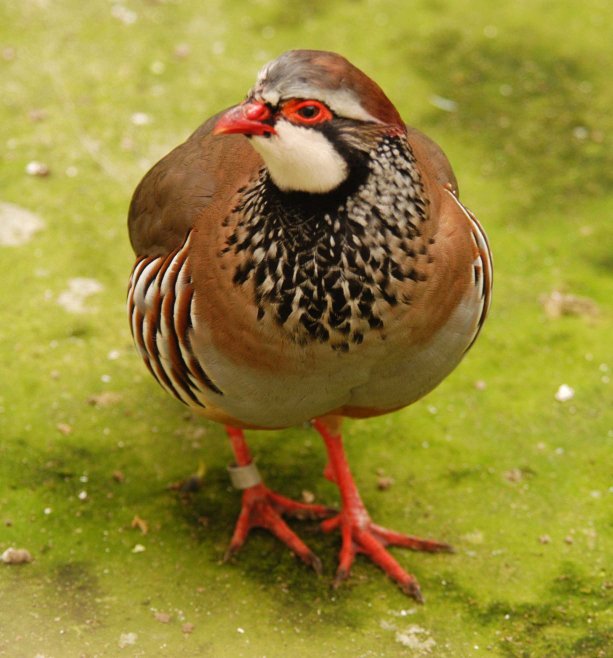 Gender: Feminine
Origin: Latvian
Meaning: “partridge.”
(EER-be)
The name comes directly from the Latvian word for partridge. Its designated name-day is March 20.
Sources
Gender: Masculine
Origin: Hungarian
Meaning: “sultan.”
The name is derived from a Turkic element meaning, “sultan.”
The name was borne by a 10th-century Hungarian king.
Currently, Zoltán is the 19th most popular male name in Hungary (2008).
Another form of the name, also borne in history by an illustrious king, is Zsolt (ZHOLT), which is currently the 33rd most popular male name in Hungary (2008).
An even rarer form is Solt (SHOLT)
An obscure feminine form is Zoltána.
The designated name-days in Hungary are: March 8 and June 23. In Slovakia, it is April 7.
Sources
Origin: Greek
Meaning: “golden flower”
Χρυσανθος
The name is composed of the Greek elements, chrysos (χρυσος) meaning, “golden” and anthos (ανθος) meaning, “flower.”
The name was borne by a 3rd-century Greek Christian martyr and saint and in Greece, its designated name-day is March 19.
Other forms of the name include:
Its feminine form is Chrysanthe (Χρυσανθη).
Sources
 Gender: Feminine
Origin: Greek
Meaning: “good bloom; good flower.”
Ευθαλια
Eng (yoo-TAH-lee-ah); Greek (ef-TAHL-yah)
The name is from the Greek, meaning, ” good bloom; good flower.”
Other forms include the modern Greek Evthalia and Efthalia.
It is also the name of a genus of butterfly known in the vernacular as the brush-footed butterfly.
The name was borne by an early Greek Christian martyr.
In Greece, the designated name-day is March 2.
Gender: Masculine
Origin: German
Meaning: “spear.”
(GEH-ro)
The name is derived from the Germanic element, ger meaning “spear.” It is also used as a short form for names beginning with such an element.
In Germany, its designated name-days are March 19 and June 29.
Sources
 Gender: Masculine
Origin: German
Meaning: uncertain
The name is of uncertain origin or meaning, but is most likely of Germanic roots. Some sources have even suggested it to be a diminutive form of Friedrich.
The name was borne by an early German saint who is attributed to founding a monastery on the isle of Säckingen in the Upper Rhine. He is considered the apostle of the Alemanns (modern Bavarians and Swiss-Germans). He is often depicted with a rotten corpse as one legend pertains that Fridolin miraculously summoned a dead man from the dead so the saint could prove his inheritance.
In Germany, the designated name-day is March 6.
The name is considered old fashioned in German speaking countries.
Other obscure forms include the Dutch Fridolinus and the Polish, Frydolin.
Other German forms include: Fridulin, Friedolin, Friedel and Frido.
 Origin: Latin
Meaning: “patrician.”
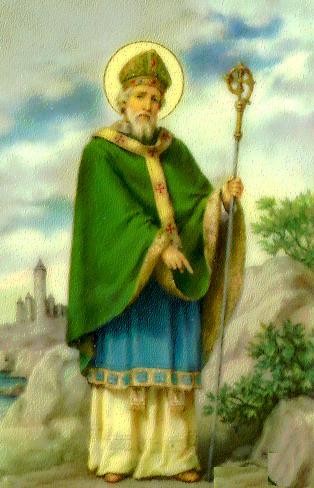
Patrick is derived from the Latin designation, patricius, meaning “patrician” or “nobleman.” Its usage as a given name started after the fame and cult of St. Patrick of Ireland.
St. Patrick was believed to have been a Romanized Briton who was captured by Irish raiders and enslaved. After six years of slavery, he was able to return to his homeland, but felt a call to return to Ireland to bring Christianity. He was able to establish a bishopric in Armagh. He is considered a national folk hero for the Irish and is also considered the patron saint and apostle of Ireland. Many legendary miracles were attributed to him during his life.
It is also believed that Patrick (or Patricius) was a nickname or title given to him by the Druid chieftans and that his real name was Succat.
St. Patrick’s Day which falls on March 17 is a national holiday in Ireland and also a popular festival in the United States and other English-speaking countries with large Irish immigrant populations.
Patrick is still a very common name in Ireland. As of 2008, he ranked in as the 19th most popular male name. His rankings in other countries are as follows:
Other forms of the name include:
Common male French diminutives include: Pat, Patoche, Patou and Patounet.
Common English diminutives are Pat, Paddy (Irish) and occasionally Rick.
Patricia is its Latin feminine equivalent and is used in Danish, English, French, German, Hungarian, Norwegian, Portuguese, Spanish and Swedish. At one time, Patricia was one of the most popular female names in the United States, peaking at # 3 between 1937 and 1952. Currently, she ranks in at a measly # 498 (2008). In other countries, her rankings are as follows:
Other feminine forms include:
Common English diminutive are: Pat, Patsy, Patty, Tricia and Trish. In the English-speaking world, Tricia is occasionally used as an independent given name.
German short forms are Patti and Patze. A common Spanish short form is Patti.
The Polish diminutive is usually Tysia.
The designated name-day is March 17.
Sources