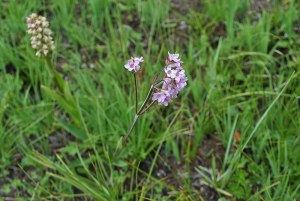
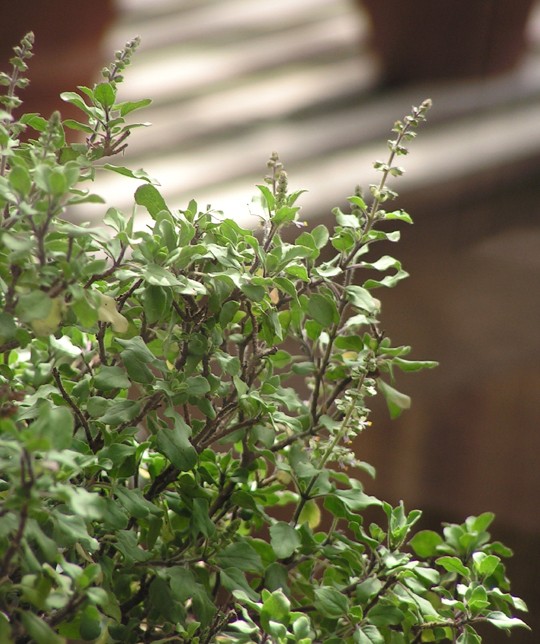
The name is derived from the Sanskrit तुलसी (holy basil). It is the name of a type of perennial plant in the family Lamicae and is endemic to the Indian subcontinent.
Tulsi is considered sacred plant in Hinduism, it is worshipped as an avatar for the goddess Lakshmi and the plant is traditionally planted in the center of courtyards to Hindu houses or next to Hanuman temples.
It is worshipped in Vaishnavism and holds an importance in Ayuverda traditions.
A notable bearer is American politician Tulsi Gabbard (b. 1981).