- Origin: Chinese
- Meaning: “magnolia.”
- Gender: Female
The name Mulan (simplified 木兰 / traditional 木蘭) is Chinese, literally meaning “magnolia.”
It is composed of 木 (mù) — “wood; tree,”蘭 / 兰 (lán) — “orchid,” which in full, translates to magnolia.
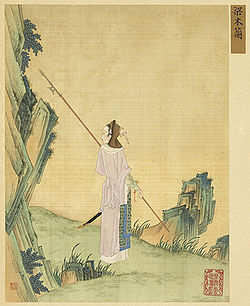
The name is best known from the Ballad of Mulan (木蘭辭 / 木兰辞), a Northern Wei-era folk poem likely composed between the 5th and 6th centuries CE. It tells the story of a young woman, Hua Mulan (花木蘭), who disguises herself as a man to take her ailing father’s place in the imperial army.
While the Ballad of Mulan is not strictly historical, the story became deeply embedded in Chinese cultural consciousness—an emblem of filial piety (孝, xiào), bravery, and loyalty.
In later retellings, especially during the Tang and Ming dynasties, Hua Mulan was elevated to near-mythic status, blending Confucian and patriotic ideals.
In China, Mulan continues to be used as a poetic and feminine name, admired for its historical depth and symbolism of courage and integrity rather than for commercial associations.
Disney adapted the tale into an animated movie, making the name familiar to Western ears.
Sources