Panu

  • Origin: Finnish
  • Meaning: “fire; flame;” also a diminutive form of Urban
  • Gender: Male
  • Usage: Finnish
  • Pron: (PAH-noo)

The name began as a Finnish diminutive form of the Latin name Urban. The name took on new significance in the 19th century, when Finnish national romanticism reinterpreted Panu through its resemblance to the native word panu, meaning “fire” or “flame.”

In Finnish folklore and epic poetry, Panu appears as the spirit or personification of fire, particularly in the mythological corpus connected to the Kalevala.

The name’s modern popularity was reinforced by Juhani Aho’s 1897 historical novel Panu, which centers on the clash between Christianity and ancient Finnish paganism. In Aho’s novel, the protagonist Panu is the last pagan priest defending the old faith. The book was highly influential in the Finnish national revival movement and helped cement Panu as a culturally resonant personal name.

The designated name-day in Finland is November 11.

Sources
Ilma, Ilmatar, Ilmi

Gender: Feminine
Origin: Finnish
Meaning: “air; sky.”
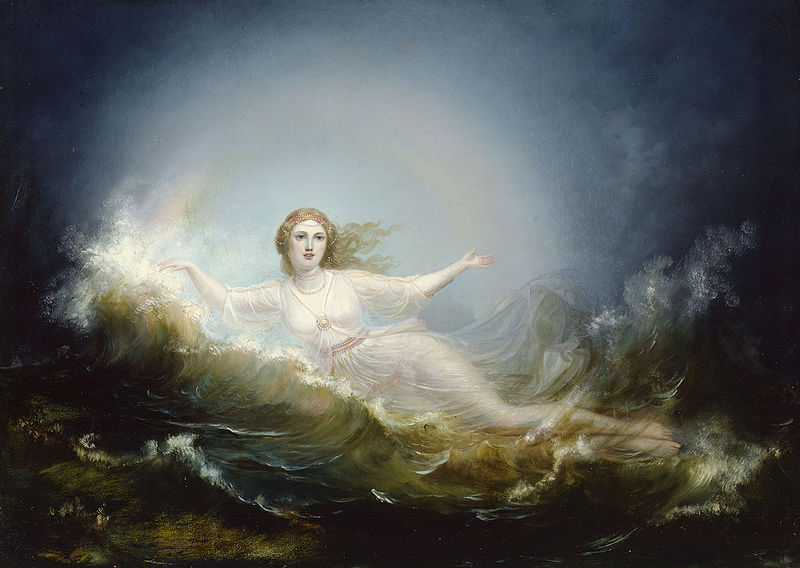
Ilma comes directly from the Finnish word for air or sky. In Finnish mythology, Ilmatar was the name of a female air spirit who mothered Väinämöinen. She was said to have both male and female attributes but she was most often portrayed as a female. In Finnish, the suffix of -tar denotes a feminine spirit. She was also known as Luonotar (female nature spirit). Ilmatar was often the subject of the Finnish National Epic, Kalevala, which chronicles Finnish myths and legends.
As of 2010, Ilma was the 27th most popular female name in Bosnia & Herzegovina. In this case it may be a borrowing from the Italian form of Hilma..
A Finnish masculine form is Ilmari.

Kullervo

335px-Gallen_Kallela_Kullervos_CurseGender: Masculine
Origin: Finnish
Meaning: “gold”
(KOO-lare-vo)

The name is derived from the Finnish kulta meaning “gold.” In Finnish Mythology, the name is borne by the son of Kalervo, a tragic character whose story is illustrated in the Finnish epic the Kalevala. According to the story, Kallervo was a magician who turns out badly due to an abusive child abuse, his death poem of Kullervo has inspired many literary works, the most significant being J.R.R Tolkien’s the Silmarillon. The Tale of Túrin Turambar is said to have been directly inspired by Kullervo’s discourse between his sword. Some Finnish scholars have claimed that Kullervo’s struggle is a bitter metaphor for Finland’s struggle for independence in the last century. The story has inspired the 1892 choral symphony of the same name written by Jean Sibelius. Its designated name-day is September 25. To hear how the name is pronounced, go here: http://www.forvo.com/word/kullervo/