Tamílọ́rẹ

  • Origin: Yoruba
  • Meaning: “give me a gift.”
  • Gender: feminine
  • Pronunciatioh: TAH-mee-LOH-reh

This lyrical gem looks like a cross between Tammy & Lora, but is actually a Yoruba feminine name. It comes from the Yoruba phrase, ta mí lọ́rẹ, literally, “give me a gift.” It would make a lovely and unique option for a child born around the holidays.

Possible nicknames include, Tami, Tammie, Tammy, Lore or Lori.

Source

Eivind

Gender: Masculine
Origin: Old Norse
Meaning: “happy victor; gift victor.”
Nor (I-vind)

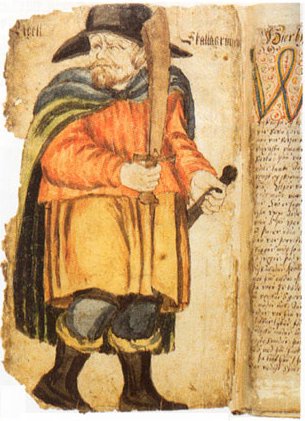
A few weeks ago I was browsing through some Norwegian birth announcements and noted several unusual names that appeared over and over again. Eivind was one of them. Apparently, Eivind is the Norwegian form of the proto Norse auja “happy, lucky or gift” and windur meaning “victor, winner.” In Norwegian and Scandinavian history, the name was borne by a 9th-century viking by the name of Eyvind Lambi, he figures in the famous Egil’s Saga. Another popular form in Norway is Øyvind and in Sweden it appears as Ejvind.

Currently, the name is the seventy fouth most popular male name in Norway, while its slashed counterpart (see above) comes in much higher at # 27. The name is not as popular in Sweden as it is in Norway.

Its designated name-day was exactly one week ago, August 26th.

Update: Eivind and Øyvind no longer appear in the Norwegian top 100, but as of 2010, its Faroese form of Eivindur was the 8th most popular male name in the Faroe Islands.

Other forms of the name include:

  • Eivin (Danish/Norwegian)
  • Ejvin/Eyvin (Danish)
  • Ejvind (Danish/Faroese/Swedish)
  • Even (Danish/Faroese/Swedish)
  • Oyvind (Danish)
  • Øivind/Øjvind (Danish/Norwegian)
  • Evind (Faroese/Scandinavian)
  • Eivindur (Faroese)
  • Oyvindur (Faroese)
  • Öjvind (Faroese/Swedish)
  • Eyvindur (Icelandic)
  • Eivinn (Norwegian)
  • Ovind (Norwegian)
  • Øivin(n) (Norwegian)
  • Øven (Norwegian)
  • Eyvindr (Old Norse)
  • Eiven (Sami)
  • Eivind/Eyvind (Scandinavian)
  • Evin (Scandinavian)
  • Önder (Swedish)
  • Önnert (Swedish)
  • Öyvind (Swedish)
Feminine forms include:
  • Evena (Norwegian)
  • Evina/Evine (Norwegian)
  • Evinda (Norwegian)
  • Øivine/Øyvine (Norwegian)

Doron

Gender: Masculine
Origin: Hebrew/Greek
Meaning: “gift.
(doh-RONE)
דּוֹרוֹן

The name can either be from the Hebrew, meaning “gift” or “present,” or it can trace its roots back to the Greek. Doron and Dorio was a city mentioned by Pliny, which was said to have been located in Cilicia Tracheia.

Lahja

Gender: Feminine
Origin: Finnish
Meaning: “gift.”
(LAH-yah)

The name comes directly from the Finnish word for gift, either figuratively referring a gift as in a talent, or literally meaning a gift as in a present. The pronunciation is rather hard to transliterate, but the H is slightly pronounced. To actually hear what the name sounds like, you can listen to it here http://www.forvo.com/search/Lahja/. August 7 is Lahja’s designated name day.

Bogudar, Božidar, Božidara

  • Origin: Slavic
  • Meaning: “divine gift.”
  • Serbian: Божидар
  • (BOH-zhee-DAH-rah).

The name is composed of the old Slavonic elements, bozy, meaning, god and dar, meaning, “gift.” In the Eastern Orthodox Churches, the name was designated as a cognate with the Greek, Theodore.

An obscure Polish variation is Bogudar, name-day is celebrated on November 9th.

Other forms include:

  • Bojidar, Bozhidar Божидар (Bulgarian)
  • Božidar, Boško, Božo (Croatian, Czech, Slovak, Slovene)
  • Bozsidár (Hungarian)
  • Božidar (Macedonian)
  • Bożydar/Bożdar (Polish)
  • Bozhidar Божидар (Serbian)
  • Božo (Slovene)
  • Božidar (Sorbian)

Czech, Slovakian and Serbo-Croatian feminine formi s Božidara; Serbian feminine form is
Božidarka; the Polish feminine form is Bożydara (obscure); and the Bulgarian feminine form is Bozhidara/Bojidara Божидара.

Name-days include: March 8th (Bulgaria), May 9th (Poland), June 19th (Croatia), September 21st (Poland), November 2nd (Poland), December 25th (Croatia); and November 9th (Bogudar, Poland).

Updated November 9th, 2025.

Sources