Penelope

Gender: Feminine
Origin: Greek
Eng (pen-NEL-uh-PEE)

The name is of uncertain origins, many scholars believe that the name is pre-Hellenistic and is related to an ancient word, penelops (πηνελοψ), which means “duck,” others argue that the name is Greek compound name composed of the elements, pene (πηνη) meaning “threads.”  Many scholars feel that the latter is the most appropriate since it was the name of Odysseus wife who kept her suitors at bay by pretending to weave.

The name appears in Greek mythology as the name of a wood nymph who was speculated to be the mother of the god Pan.

The name is occasionally used in German, Italian,

Other forms of the name include:

  • Penèlope (Catalan)
  • Penelopa (Croatian/Polish/Romanian/Serbian: Pela, Pelka and Pelcia are the Polish diminutives)
  • Pénélope (French)
  • Penelópē Πηνελόπεια/Πηνελόπη (Greek)
  • Pénelopé (Hungarian)
  • Penelopė (Lithuanian)
  • Penelopeia (Norwegian/Danish/Swedish)
  • Penélope (Spanish/Portuguese)

The name is currenly borne by Spanish actress Penelope Cruz.

Possible English nickname options, include, Penny, Poppy, Lola, and Nell.

Galatea

Gender: Feminine
Origin: Greek
Meaning: “milky white.”
Pronunciation (gah-lah-TAY-ah)

The name is found in Greek mythology. It borne by a wood nymph who lived on the Isle of Sicily; she was pursued by the giant, Polyphemos, but rejected his advances and fell in love with a local mortal by the name of Acis. In his jealousy, Polyphemos bashed Acis’ skull with a rock. Grief-stricken, Galatea transformed Acis into a stream.

Another Galatea was the object of Pygmalion’s affection. He carved a beautiful statue and fell in love with it, after praying to Aphrodite, the statue came to life and was named Galatea, due to the milky white texture of her skin.

Possible nickname options include Gala & Tea.

The name is used in Spanish and Italian.

Other forms include:

  • Galateja (Bosnian/Croatian/Serbian)
  • Galateia (Czech/Portuguese/Slovak)
  • Galatée (French)
  • Galatėja (Lithuanian)

Minver

Gender: Feminine
Origin: Cornish
(MIN-ver)

Minver is an anglicization of the Cornish, Menvra, which is of uncertain meaning, but may possibly be a Cornish form of the Germanic, Menefreda, which is composed of the Germanic elements, magan meaning “strength” and frid meaning, “peace.”

The name was borne by a legendary Cornish saint, one of the 24 children of Saint Brychan. St. Minver was said to have been attacked by the devil while combing her hair. He ran away with a dent in his head after she had thrown her comb at him.

There is a town in Cornwall named for the parish of St. Minver.

Other forms of the name include: Menefrew, Menwreda and Mynfreda.

Possible nicknames are the obvious Minnie.

Georgiana

Gender: Feminine
Origin: English
Meaning: feminine form of George, meaning “farmer.”
Pronunciations (jore-JANE-uh); (Jorejee-AH-nah)

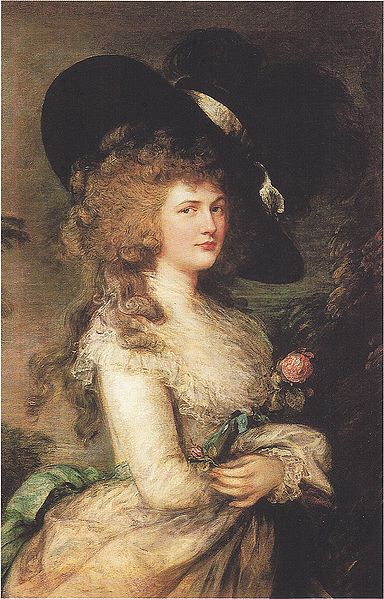
In the Anglo-phone world, the name first came into usage around the 18th-century and was a popular name among British aristocracy, the most famous bearer being Lady Georgiana Spencer Cavendish (1757-1806), Duchess of Devonshire, a popular socialite and a political muse.

The name also appears in Jane Austen literary work Pride & Prejudice.

In Romania, she currently ranks in as the 10th most popular female name (2008).

Possible nicknames include G, Gigi, Gia, Giana, Georgie and Jane.

Satu

Gender: Feminine
Origin: Finnish
Meaning “fairytale; fable.”
Pronunciation: (SAH-too)

The name is probably a translation of the popular Swedish name, Saga. The name comes directly from the Finnish word for a story or fairytale.

In Finland, the name has been in usage since the early 1900s.

The designated name-day is October 18.

Éponine

Gender: Female
Origin: French
Meaning “great mare.”
Pronunciation French (AY-po-NEEN); English (EP-eh-NEEN)

The name is derived from the name of the Ancient Gaulic goddess, Epona.

A goddess associated with fertility, Epona was known as the patroness of horses, donkeys, and mules. She was the only Celtic diety whose worship became popular among Romans, who delegated her as protectress and controller of calvary and chariots. Remnants of her devotion are found all throughout central Europe. One famous artifact is an inscription written by a Syrian, which goes as follows

Eponina ‘dear little Epona’: she is Atanta, horse-goddess Potia ‘powerful Mistress’, Dibonia, Catona ‘of battle’, noble and good Vovesia.” (1st-Century BC). Rom, Dieux-Sievres, France.

Along with the inscription were found remnants of a cauldron and a sacrificed horse.

Though a popular minor divinity among the Romans, it is now believed that the Celts revered her as a powerful, central figure to their religion. Her story as told by the Celts, is lost to history, but Plutach came up with an interesting allegory regarding the goddess’ beginnings:

reports out of Agesilaus, his third book of Italian matters, that Fulvius Stella loathing the company of a woman, coupled himself with a mare, of whom he begot a very beautiful maiden-child, and she was called by a fit name, Epona…

The name Epona is derived from the Gaulic elements of ekwos, meaning “horse.” Equus is thought to be derived from this, and the term pony is said to be derived from the goddess’ name.

Eponina was an endearing latinized form used to invoke the goddess by devotees.

The horse was a central figure to ancient Celtic religions. There are carvings and paintings of horses found throughout France and the British Isles, thought to have been made by the Celts.

The famed chalk horse of Uffington, England has been associated with an Epona-like diety by scholars and archeologists. It is believed that Epona is related to the Welsh horse goddess, Rhiannon.

In more recent history, Éponine was used by Victor Hugo for his 1862 novel Les Miserables.

Variations of this name include the more pure and ancient form of Epona, the more latinate form of Eponina, and the sweetly feminine and romantic French form of Éponine.

The most popular French nickname for this is Ponette which also happens to be a French term used for a young, female pony.

Ponette was the name of the title character of the 1996 French film by Jacques Doillon.

Other nicknames include, Eppie, Pony, Poe, Nina, & Ninette.

Melior, Meliora, Melora

Gender: Feminine
Origin: Latin/Breton
Meaning “better”or “honey-maker.”
Pronunciation (mel-YORE); (mel-YORE-uh); (meh-LORE-uh).

The name is somewhat debated, it may come directly from the Latin adjective melior meaning “better” or its possibly a medieval French corruption of the Breton, Meler, which means “honey-maker.”

The name has evolved to the more modern form of Melora.

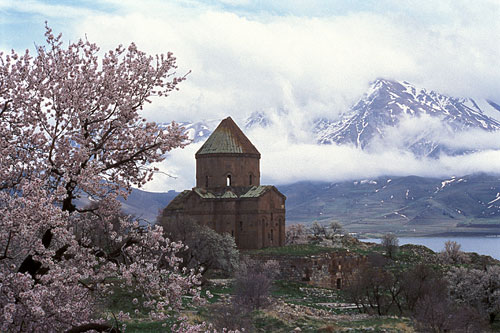
Melior is found in French folklore, it was the name of the sister of Mélusine and Palatyne. She was cursed to keep a sparrow hawk in a palace in Armenia until she was rescued.

Possible nickname options include Mel, Liora, Lior, Ora, Lora or Lori.

Palatine, Palatyne, Palestine, Kestenn

Gender: Female
Origin: French/Celtic
Meaning: debated
Pronunciation French (pah-lah-TEEN); English (pal-uh-TINE)

The name is found in French folklore as the name of the daughter of Pressyne and Elynas, and the sister of Mélusine.

Palatine was cursed by her mother to be locked in the Aragonese mountains with her father’s treasures, accompanied by a bear and serpent. Only a knight could free her and save her, on the condition that he be of the same bloodline as her father’s.

Throughout the years, many knights did just that, but had failed. However, a knight of King Arthur’s court, and the relative of Tristan, decided to climb the mountain and free the princess. He had to scale a mountain covered in venemous snakes, and then face the bear that guarded the entrance to the cave, all of which he killed. Finally he was able to enter the cave, but within the first chamber was a large serpent with one eye. The snake swallowed him up, and the knight was defeated in his quest, because, as it turned out, he was not of the right lineage.

Years later, Geoffrey-with-the-great-tooth, the nephew of Palatyne, had spent his life saving time, money and energy to rescue his aunt. However, he grew old, and died before he was able to commence his quest, and it is said that till this day, Palatyne still awaits within her mountain top for the right knight of the right lineage to free her. http://www.encylopediamythica.com

This is also the name of one of the 7 hills of Rome, a location which has its own legends.

In Ancient Roman folklore, the Palatine is where the Lupercal cave is to be found, the cave where Romulus and Remus were rescued and milked by a wolf. Another legend holds that Hercules defeated the monster Cacus, on the same hill.

The etymology of the name is debated, whether the fairy Palatyne and the name of the hill are related is not proven, but very possible. The fact that both legends contain a mountain top or hill top as their focal point makes it plausible.

According to the Roman historian Livy (59 BC-Ad 17), the hill got its name from the Arcadian settlement of pallatium, which is derived from the Latin palatum meaning “palate.” According to another ancient source, Ennius, the name is derived from an Etruscan word meaning “sky” or “heavens.” The term palace gets its name from the Palatine hill.

Other sources point its etymology to a Breton source, it is suggested that Palatine, (or Palestine in some instances), is a medieval French corruption of the Breton Bac’h C’hesten, bac’h means “cell; unit” and c’hesten means “hive; beehive.” Hence “hive pupa.” This is supported by the fact that in the legend, Palatine is an enclosed in a cell in the mountains like a bee in a beehive.

The name was borne by an early Christian martyr, Saint Palatino, and its masculine form is still in usage in Italy today. There is also a more obscure feminine version of Palatina.

Another French form is Palestine (pah-le-STEEN), and a possible Breton form is Kestenn.

Pressyne, Pressine, Persina

Gender: Female
Origin: Breton/French
Meaning: uncertain
Pronunciation: (pres-SEEN)

The name figures in Breton folklore as that of the mother of the serpent-woman Mélusine.

Pressyne was a fairy, and the local King Elynas had fallen in love and married her after meeting her by a fountain.

The fairy soon became pregnant and made one condition with Elynas: that he would not see her while in labor. The King did not keep his promise, and during his excitement he rushed into the chamber of Pressyne while she was giving birth.

The fairy had triplets, Mélusine, Melior and Palatyne, but since the king had not kept his promise, Pressyne and her daughters had to run away to the Isle of Avalon.

The king never saw his wife again, however, on their fifteenth birthday, Mélusine, along with her two sisters, decided to seek revenge on their father.

Mélusine captured her father and locked him up, along with his riches, in a mountain.

Pressyne became very angry after she found out what her daughters had done and punished each of them for their disrespect.

Mélusine was punished by taking the form of a serpent from the waist down each Saturday. If she found a husband who would agree never to see her on Saturday, she would remain a human woman, but if her husband ever saw her on a Saturday, she was doomed to become a serpent every Saturday until Judgement day. Melior was punished by keeping a sparrow hawk in a castle in Armenia until she was rescued, and Palatyne was imprisoned with her father’s treasure in a mountain of Aragon, Spain. (http://www.encyclopediamythica.com)

Sometimes written as Pressine and sometimes rendered as Persina, the name is of uncertain origins and meaning, but due to its appearance in Celtic folklore, the name is most likely Celtic in origins. Some sources suggest that it may be related to the Breton words berz or berziñ which means “forbidden.”

Pressyne is sweet, subdued and yet at the same time, flighty. With the rising popularity of the masculine and unfeminine surname of Presley on girls, this would make a far lovelier and even more unique option, and besides, what little girl would not want to share a name with a fairy.

Possible nicknames include Prez and Press, or Pressie


Mélusine

17836713_MelyuzinaGender: Female
Origin: French
Meaning: uncertain
Pronunciation: French (may-luy-ZEEN); Eng (MEL-yoo-SEEN)

The name appears throughout European folklore as the name of a water sprite who turns into a serpent from the waist down each Saturday. She appears in several different folktales from the Middle Ages, one of the most famous legends being that of her marriage to Raymond of Poitou.

The Duke met the beautiful sprite in a forest. She married the duke on the condition that he never enter her bedroom on Saturdays.

Mélusine was known for her magical powers, especially her rapid building of structures, it is said that whole towns and churches were built in a night, the tower in Vouvant being one of them. It was here where she spent her Saturdays.

Raymond was suspicious, and went to go spy on her at the tower. While looking through a peephole in the walls, he observed that his wife had transformed into a half serpent half human being. Melusine caught his indiscretion, but forgave him.

12924977The duke and the fairy had 10 children, each child bearing a strange physical characteristic. One of whom was Gregory Longtooth, who had massacred a monastary. Out of anger of his son’s actions, Raymond accused his wife of being a demon, and that she had infected his whole royal line with demon spawn. In outrage, Mélusine transformed herself into a dragon, drove through the castle’s walls, never to be seen again. However, she would continue to visit her ancestors right before someone would die, to warn them of their deaths. It is said that several royal lines throughout Europe are descended from her.

In German legends, she was known as Melusina, and the famed Christian Reformer, Martin Luther, often referred to her existence, believing that she was possibly a succubus. She even appears in the writings of Goethe. Some folktales insisted that Melusine was the fairy responsible for changelings.

The name was borne by Ehrengard Melusine von der Schulenburg, Duchess of Kendal and Munster, Mistress of George I of Great Britain, she went by and was known by her middle name circa (1667); and had one daughter by the name of Melusina (1693–1778).

The name Mélusine has made it into the Czech lexicon as meluzina, referring to a wailing wind that makes itself known in chimneys.

In popular culture, she is the famous mermaid of Starbucks.

210px-Melusine_von_der_SchulenburgIn the Middle Ages, Melusine had many associations, some good and some bad. The great Queen Eleanor of Aquitaine was associated with the fairy as she came from the same line as Raymond of Poitou.

The name is of uncertain meaning, but in her book, Women of the Celts, Jean Markale, suggests that the name may be a derivative of the Latin Mal Lucina, meaning “evil Lucina,” arguing that Melusine was a personification of the goddess Juno/Lucina’s darker side. Some historians insist that Melusine was an ancient divinity who survived in folklore as a fairy.

Another theory is that Melusine is a derivative of the French term Mère Lusigne meaning “mother of the Lusignans.” Lusignan was the line of Raymond of Poitou.

Other sources suggest that it is of Breton origins, either meaning “marvellous” or “sea-fog.”

Possible nickname options include Melsie, Melzy, Mel, Lucy, Luce, Lucine and Sina