30 Ava Alternatives

138px-Ava_Gardner_and_Howard_Duff_by_Don_Ornitz,_1948


#3 on the list is Ava, a Medieval German name, this name took the world by storm in the early 2000s, entering the U.S. Top 100 and becoming popular in other Anglophone countries. Ava Gardner is a well-known bearer, but parents during the millennium were more likely inspired by Reese Whitherspoon & Heather Locklear when both chose this name for their daughters.

  • Afra: a name that has always been sporadically used in Bavaria, this is the name of an early Christian saint who was misplaced from Africa and said to have been martyred in what is now Germany
  • Aveza: this Medieval German name is possibly linked with the Latin Avis
  • Avila: both a place-name and a Medieval German female name, the latter’s etymology is linked with Ava
  • Delta: from the name of the Greek letter, this was not an unknown name in the American South in the early 1900s
  • Docia: pronunced DOH-shah, this is a short form of Eudocia. Docia appeared as an independent given-name in the U.S. Top 1000 in the 1880s, also found were Dosha & Doshia.
  • Doda: a Medieval short form of any name beginning in the Do- element.
  • Druda: Medieval German name possibly meaning “strength.”
  • Elzada: possibly an elaborate form of Elsa, the name appeared in the U.S. Top 1000 in the 1880s, however, it is also a Kyrgyz name meaning “child of the nation”
  • Exa: this is the modern form of the Biblical Female Name Achsah, Exie also exists.
  • Golda: German & Yiddish meaning, “gold.”
  • Hadda: from the German, hadu (battle).
  • Lovisa: Scandinavian form of Louisa
  • Luda: Czech name, derived from the Slavic element lud (people; folk).
  • Lurline: English form of Lorelei
  • Neva: short form ofGeneva
  • Odessa: place-name popularized in the 19th-century by the Crimean War
  • Paralee: unknown, the name first appeared in the American South in the 1800s, possibly a linguistic variation Pearlie
  • Rixa: German form of Richenza
  • Roswitha: Medieval German name borne by a 10th-century poetess
  • Sidra: this name has various meanings, it has been linked with Hebrew, Arabic, German & Latin.
  • Thora: feminine form of Thor
  • Treva: feminine form of Trevor
  • Trixie: a diminutive form of Beatrix, often used as an independent name
  • Vesta: name of a Roman goddess
  • Vella: uncertain meaning, appeared in the U.S. top 1000 in the 1880s
  • Vina: short form of any name ending in -vina.
  • Wina: German name meaning, “friend.”
  • Zetta: short form of any name ending in the –zetta element
  • Zillah: Biblical female name meaning “shade.”
  • Zona: a shortened version of Arizona or from the Greek meaning, “girdle; belt.”

30 Olivia Alternatives


350px-R_Staines_Malvolio_Shakespeare_Twelfth_Night


Olivia is number #2 on the list, supposedly a faux-Latin literary invention by Shakespeare, the name appears much earlier and is borne by a few saints.She has been in the Top 100 since 1990 and the Top 10 since 2001. If you like the feel of Olivia but don’t like that it might date your child to the 2000s, you might want to consider these. Or perhaps you want an unpopular yet similar style name for an Olivia sister.

None of these appear in the U.S. Top 100

  • Accorsa: Medieval Italian name meaning, “help; aide.”
  • Adorata: a German invention, from the Latin meaning “adored.”
  • Alinda: a German and Dutch contracted form of Adelinde.
  • Althea: meaning “healing” in Greek, this name was more common at the end of the 19th-century. It is certainly due for a revival.
  • Arista: from the name of a star, it derives from Latin meaning “ear of corn.”
  • Basilia: a feminine form of Basil
  • Carissima: from the Italian meaning “darling,” this is the name of a Medieval saint
  • Corinthia: from the name of the place and also occasionally used as a female given-name in the German-speaking parts of Switzerland
  • Cressida: an English form of Chryseis, this name was also used by Shakespeare & occasionally used by British aristrocracy
  • Chrysantha: Greek name meaning “gold flower.”
  • Concordia: from the Latin, meaning “harmony.”
  • Cordia: a feminine form of the Latin, Cordius, it is often associated with Latin “heart.”
  • Davina: a Scottish feminine form of David
  • Electa: an 18th-century Calvinist invention, meaning, “elected.”
  • Elenda: invented in Appallachia in the 18th-century, it is possibly an elaborate form of Eleanor
  • Eligia: a feminine form of Eligius and pronounced, eh-LEE-jee-uh in English or perhaps just Ligia will do.
  • Jessamine: another faux Latinate name, created in the 19th-century, this is a form of Jasmine
  • Junia: a feminine form of Junius, it appears in the New Testament
  • Juvia: name of the Brazil nut tree, it is possibly related to the Spanish, lluvia (rain).
  • Lavinia: a Roman name of unknown origin
  • Liviana: Livia has already been discovered as a less popular alternative, but what about Liviana?
  • Nerissa: Marissa was quite common in the 80s & 90s but Nerissa never gained any ground.
  • Nydia: it’s like Lydia with an N and rhymes with Olivia, this is another faux-Latin literary creation, perhaps linked with the latin Nidus “nest.”
  • Olivine: a gemstone and a colour, this elaborate sounding form of Olivia appeared in the U.S. Top 1000 between just 1 time in 1884, coming in at #851.
  • Ovidia: an occasional choice in Norway, it rhymes with Olivia and is a feminine form of Ovid
  • Orinthia: a faux-Greek literary name invented by George Bernard Shaw in 1929, it is probably inspired by the Greek orino (to excite, to agitate).
  • Poncia: feminine form of Pontius.
  • Savia: feminine form of Savius, meaning “intelligent.”
  • Savilla: of uncertain origin or meaning, it has appeared sporadically since Medieval Times and made a solo debut in the U.S. Top 1000 in 1884.
  • Tranquilla: a feminine form the Latin Tranquilla, meaning “tranquil.”

What do you think?

Would you use any of these?

Have any of these name inspired you? Please share

Aya, Ayah, Aija, Aja

download (4)


Pronounced I-yah, this name has several different origins and meanings.

Aya is a popular Japanese female name, depending on the kanji used, it has several different meanings, the most popular being 彩 (aya) meaning “colour,” or 綾 (aya) meaning “design.” In the Japanese case, it is also occasionally used on males. Other meanings and kanji characters used to represent the name include:

  • 綾, “twill”
  • 理, “truth, logic”
  • 亜矢, “Asia, arrow”
  • 亜弥, “Asia, all the more”
  • 亜夜, “Asia, night”
  • 順, “order, sequence, turn”
  • 文, “writings”
  • 紗, “gauze”
  • 技, “technique”
  • 愛, “love”
  • 恵, “blessed”
  • 朱, “vermillion”
  • 藻, “algae”
  • 娃夜, “beautiful night”

It was borne by an Ancient Egyptian queen of the Thirteenth Dynasty (between 1803 and 1649 BCE). Its meaning and etymology in this case is unknown.

Aya is also an Akan name, denoting a girl born on a Thursday. Its masculine form being Yao.

In Hebrew, Aya is an acronym for ארץ ישראל היפה (the beautiful land of Israel) and allegedly from  איה, איא meaning “bird” or “to fly swiftly.” It is borne by a minor male character in the Bible but seems to exclusively be used on females in modern Israel. There is a famous Israeli pop-singer who bears this name, Aya Korem.

Ayah آية is Arabic meaning “sign; clue” and refers to Quranic verses. It is also sometimes transliterated as Aya or Aja among Bosnians, Albanian and Central Asians. Another variation is Ayat, sometimes spelled Ayaat.

In Akkadian, the name means dawn and was borne by an ancient Sumerian goddess, the consort of Shamesh. The name is still used among Assyrian Christians who trace their heritage back to the Akkadian peoples.

In Tamil, spelled ஆயா, it means “old woman,” “grandmother,” or ” caretaker” and in the Nepalese language of Raute it means “sister-in-law.”

In Scandinavia, Aija, Aja & Aya are offshoots of Maria, they started off as diminutive forms but are now used as independent names. Aya is currently the 22nd Most Popular Female Name in Denmark (2018). However, I am unable to determine if in this case, it is used by Muslim families in reference to the Arabic form or if it is used by non-Muslim families in reference to its Scandinavian form. Aija can also be a Finnish form of Eija, which is from an exclamation eijaa!

In Latvia, Aija is most likely derived from aijāt (to rock, to lull) and was popularized as a given-name at the turn of the 20th-Century when it was used by Latvian author Jānis Jaunsudrabiņš for the title character in his eponymous novel, Aija (1911).

Aja is a Bosnian, Albanian & Central Asian form of the Arabic, Ayah.

In Mongolian, it is derived from ая (aya), meaning “melody.”

In Europe, Aya appears on several popularity charts, most likely used in reference to its Arabic origins by Muslim immigrants, its rankings in other countries are as follows:

  • #46 (France, 2018)
  • #48 (Belgium, 2018)
  • #65 (Catalonia, Spain, 2018)
  • #95 (Spain, 2018)
  • #122 (Netherlands, 2018)
  • #184 (Italy, 2018)
  • #309 (Ayah, England & Wales, 2018)
  • #317 (England & Wales 2018)
  • #749 (United States, 2018)

Sources

Magnus

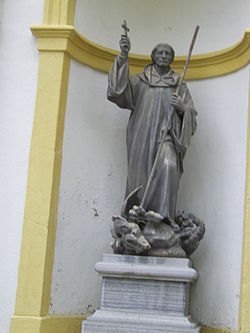
250px-Saint_Magnus_of_Füssen


The name is from the Latin cognomen meaning “great,” and by the 11th-century, was imported to Scandinavia as a synchronized name, likely being used as a latinized form of the Old Norse Magni (power; strength).

The name was especially common among Norwegian and Swedish royalty. King Magnus I is the first bearer of the name in the Norwegian line, who was said to be named for King Charlemagne (Carolus Magnus).

It was also borne by several saints, including St. Magnus of Füssen, a 6th-century saint who is credited for converting the Germanic tribes to Christianity in what is now Bavaria.

It has remained a staple in Scandinavia, it currently ranks in as the 15th Most Popular Male Name in Denmark (2018) & the 9th Most Popular Male Name in Norway (2018). His rankings in other countries are as follows:

  • #414 (England & Wales, 2018)
  • #781 (United States, 2018)

Other forms of the name include:

  • Mang (Alemmanish)
  • Mogens (Danish)
  • Magnuz (Danish, Swedish)
  • Mack (English)
  • Manu (Finnish)
  • Mauno/Maunu (Finnish)
  • Magne (French, Norwegian)
  • Mânuse (Greenlandic)
  • Mághnus, Manus (Irish-Gaelic)
  • Magnús (Icelandic)
  • Magno (Italian)
  • Magnuss (Latvian)
  • Magnar (Norwegian)
  • Maghons (Old Swedish)
  • Mávdnos (Sami)
  • Mankan (Swedish)
  • Måns (Swedish)

Magna is a feminine form and Magnúsína is an Icelandic feminine form.

Sources

Viggo, Vigga

Viggo is a popular Scandinavian male name with a long history of use. It may be a diminutive offshoot of Victor, or be related to an Old Norse element, vígr (to fight). Another theory links it to the Icelandic Vöggur, which is derived from the Old Norse element vöggr, “one who lies in a cradle.” It has also been linked with the Swedish word vigg “lightning.”

A notable bearer is Danish-American actor, Viggo Mortensen (b. 1958).

Viggo is currently the 24th Most Popular Male Name in Denmark (2018), the 48th Most Popular Male Name in Sweden (2018); and the 352nd Most Popular Male Name in the Netherlands.

Other forms include:

  • Vigge (Danish, Swedish)
  • Wigand, Wiegand (German)
  • Wiggo (German, Swedish)
  • Viggó (Icelandic)
  • Vygantas (Lithuanian)
  • Vígi (Old Norse)
  • Viggu (Sami)
  • Vigg/Wigg (Swedish)
  • Wigge (Swedish)

Its feminine form of Vigga has also made its appearance in the Nordic charts, which is currently the 48th Most Popular Female Name in Denmark (2018).

An obscure Danish feminine form is Viggoline.

Sources

Hidaya(h)

  • Origin: Arabic
  • Meaning: “guidance.”
  • Gender: Female

The name is derived from the Arabic هداية  word for “guidance.” The name is used as a euphemism for the guidance found in the Qu’ran.

Hidaya is curretly the 395th Most Popular Female Name in France.

Sources

Lage, Lauge

Both are derived from the Old Norse byname, Félagi meaning “fellow; partner; companion.”

Lauge is the Danish form while, Lage is the Swedish and Norwegian form.

Currently, Lauge is the 32nd Most Popular Male Name in Denmark (2018).

Other forms include:

  • Lagho (Old Danish, Old Swedish)
  • Lago (Danish, Swedish)
  • Laugi (Icelandic)
  • Lau/Laue (Norwegian)

Sources

Nohr, Nor

The name is derived from the Old Norse male name, Nórr (north).

It’s recent popularity may have been inspired by other 1 syllable Norse names such as Tor & Bror.

Nohr is currently the 30th Most Popular Male Name in Denmark.

Nor can also be a Limburgish form of Norbert.

Sources

Gry

1024px-Dawn._Buryatia,_Russia


Pronounced GREE, this name comes directly from the Norwegian word for dawn. It first came into use in Norway in the 19th-century.

Between 1958 and 1978, this was among the Top 100 Female Names in Norway; it peaked at #31 in 1969.

It is currently the 49th Most Popular Female Name in Denmark (2018).

The name is also used in Sweden.
Sources

Israa, Isra

  • Origin: Arabic
  • Meaning: “night journey”
  • Gender: Female
  • Pronunciation: is-RAH

The name is derived from the Arabic سرى (sara) meaning “to travel at night.” In Islam, it is the the name of the 17th Chapter of the Quran, which outlines the journey the Prophet Muhammad took between Mecca and Jerusalem.

Isra is currently the 181st Most Popular Female name in the Netherlands & the 351st Most Popular in France, while its other transliterated form of Israa is the 433rd Most Popular Female Name in France (2018).

Isra is used throughout the Islamic world, while Israa is usually used in mainly, Arabic-speaking Muslim countries. Another transliteration is Isra’

Other forms include:

  • Isrá (Bashkir)
  • Îsra (Kurdish)
  • İsra (Turkish)

Sources