Deianeira

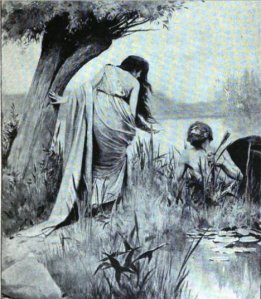
Deianeira_and_the_dying_centaur_Nessus_1888


  • Origin: Greek Δηιανειρα, Δῃανειρα
  • Meaning: “slayer of man; husband slayer.”
  • Gender: Female
  • (DAY-a-NEER-ah; DIE-yah-NEER-ah)

The name is composed of the Greek elements δηιοω (deioo) & ανηρ (aner) meaning “man.”

The name is most notably borne in Greek mythology by the wife of Hercules who was tricked by the Centaur of Nessus into believing his poisoned blood would cure Hercules of infidelity but ended up being fatal to the man-god. It is also borne by an Amazon who was killed by Hercules during his quest to obtain the golden girdle of Hippolyta.

In recent years, its Spanish form of Deyanira has been popular in Latin American countries. A common Spanish short form is Deya (DIE-ah).

Other forms include:

  • Dejanira Деянира Дэяніра Деянира (Belarusian, Bulgarian, Croatian, Macedonian, Polish, Portuguese, Serbian, Slovene, Ukrainian, Russian)
  • Deianira (Catalan, Dutch, Finnish, Italian, Latin, Romanian, Scandinavian)
  • Déianeira (Czech, Hungarian)
  • Déjanire (French)
  • Deïaneira (German, Greek)
  • Deyanira (Spanish)

Sources

Zaha, Zahaa

Zahaa


Pronounced zuh-HEAH, (the latter syllable rhymes with “yeah”), the name is Arabic ضَحَاء and means “morning.” A notable bearer was British Architect, Zaha Hadid (1950-2016). It is also sometimes transliterated as Dhahaa.

Alternately, pronounced ZAH-kha, it is from the Hebrew tzach צַח (fresh, pure, clean). Another transcription is Tzacha.


Sources

Zbigniew

220px-Zbigniew

Zbigniew of Poland


  • Origin: Polish
  • Meaning: “to dispel anger.”
  • Gender: masculine
  • (ZBEEK-nyef)

The name is composed of the Polish elements, zbyć, zbyć się, pozbyć się (to dispel) and gniew (anger).

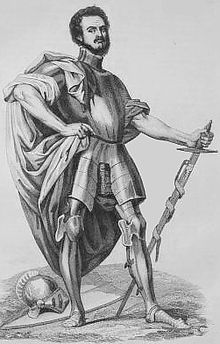
This has been a common Polish male name since Medieval Times, it was borne by Zbigniew, High Duke of Poland (1102-1107); Polish poet, Zbigniew Herbert (1924-1998); and a notable American bearer was American political strategist, Zbigniew Brzeziński (1927-2017).

Common Polish diminutive forms are Zbyszek and Zbyś.

Its designated name-days are February 17, March 17, April 1, June 16 or October 10.

Other forms include:

  • Zbignjew Збігнеў (Belorusian)
  • Zbygněv, Zbyhněv, Zbyněk (Czech)
  • Sbigné (French)
  • Sbinco, Zbinco (German, Latin)
  • Sbigneus (German, Latin)
  • Sbigneo (Italian, Portuguese, Spanish)
  • Zbigņevs (Latvian)
  • Zbygniew (Polish)
  • Zbignev Збигнев (Russian, Ukrainian)

A Czech and Polish Medieval feminine form is Zbincza (ZBEEN-chah).


Sources

Thisbe

Thisbe_-_John_William_Waterhouse

Thisbe by John William Waterhouse


  • Origin: Greek, Semitic
  • Meaning: unknown
  • Gender: feminine
  • (THIZ-bee)

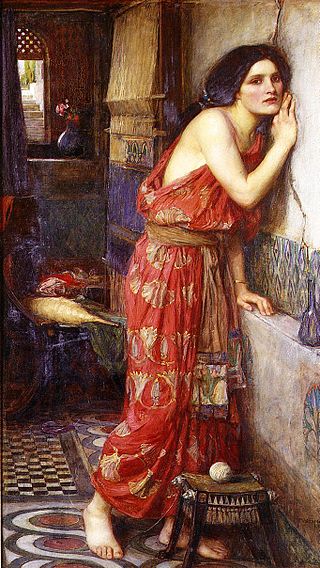
The name is of uncertain origin and meaning but possibly has a Semitic origin. Thisbe is the name of the lover of Pyramus in Ancient Classical literature, their story is recounted in Ovid’s Metamorphosis. Basically, they are 2 start-crossed Babylonian lovers who end up dying in a similar vein as Romeo & Juliet.

It is also the name of a city mentioned in the Bible, the birth place of the prophet Elijah and it is sometimes transliterated as Tishbe.

Thisbe is also the name of a nymph in Greek mythology who gave her the name to the town in Boeotia of the same name, it’s contemporary Greek form being Thisvi.

As for its usage, I found a record for a Thisby Gilbank born in 1604 in Suffolk, England, but became extremely widespread in England and the American colonies by the 18th-century. It may have been used in reference to both the Greek character and the place in the Bible.

Other forms include:

  • Tisbe (Catalan, Galician, Italian, Portuguese, Spanish)
  • Thisbe (Dutch, English, German, Scandinavian)
  • Thisbé (French)
  • Thiszbé (Hungarian)
  • Tisbèa (Occitanian)
  • Tysbe (Polish)
  • Fisba Фисба (Russian)
  • Tisba Тісба (Slovenian, Ukrainian)

Sources

Tooba, Tuba, Tuğba

320px-Tuba_Tree_-_Carpet_Board_-_Mashhad_Museum


  • Origin: Arabic طُوْبَى
  • Meaning: “bliss; blessedness.”
  • Gender: feminine
  • (TOO-bah)

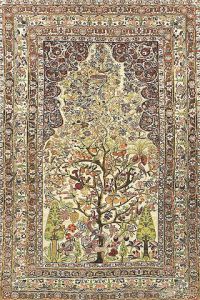
The name is derived from the Arabic root T-Y-B meaning “bliss; blessedness.” According to an Islamic hadith, this is a tree that grows in paradise.

Another form is Toba.

The city of Touba in Senegal gets its name from the legendary tree.

Other forms include:

  • Touba (Maghrebi-Arabic)
  • Tuğba (Turkish)
  • Tooba (Urdu)

Sources

Tinashe

Tinashe


  • Origin: Shona
  • Meaning: “we are with God, the Lord” or “we are alongside God, the Lord.”
  • Gender: unisex
  • (tih-NAH-sheh)

A common unisex name among the Shona people of Zimbabwe, it is composed of the Shona words ti (we) na (alongside; with) and ishe (God, the Lord).

A notable bearer is American singer & actress, Tinashe (b. 1993).

Sources

Frank

Dagobert III, King of the Franks


  • Origin: German
  • Meaning: “Frankish, free”
  • Gender: Masculine

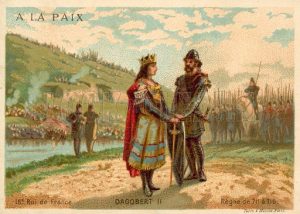
From the name of an ancient Germanic people who ultimately settled in what is now France and the Netherlands, the origin of the name itself is somewhat disputed. A popular etymology is that it comes from the Old German frank (free). Others contend that it comes from a Germanic word for “javelin” or its linked with an Old Germanic root word meaning “bold, fierce; insolent.”

As a given-name, it has been in use since the 8th-century, preceding the use of the name of Francis, of which Frank later became a popular diminutive. The name of the country of France and its old currency of francs, gets its name from the Franks.

Frank was a very popular name in the U.S. at the turn of the 20th-century. Its appeared in the U.S. Top 10 between 1881-1922, peaking at #6 between 1880-1892. As of 2018, it was the 392nd most popular male name. His rankings in other countries are as follows:

  • #32 (Sweden, 2018)
  • #155 (England & Wales, 2018)

Frank is also used in Estonia, Finland, French-speaking countries, Dutch-speaking countries, German-speaking countries and Scandinavia.


Other forms include:

  • Franker (Danish)
  • Franck (French)
  • Frang (Gaelic, Scandinavian)
  • Franko (German)
  • Franco (Italian, Portuguese, Spanish)
  • Francen (Dutch, archaic)
  • Vranck (Dutch, archaic)
  • Frake (Finnish)
  • Frankku, Prankku (Finnish)
  • Fränk (Letzbergerisch)
  • Vranken (Middle Dutch)

Feminine forms include:

  • Franka (Czech, German, Dutch)
  • France (French)
  • Franca (Italian, Portuguese, Spanish)

Sources

Ummaya, Omayya

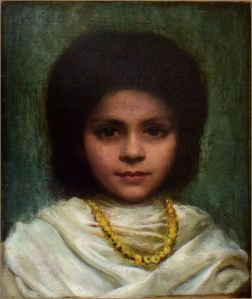
Portrait of a Bedouin Child attributed to Eugène Giradet 1853 - 1907


  • Origin: Arabic أُمَيَّة
  • Meaning: “servant girl, slave girl, bondmaid.”
  • Gender: feminine
  • (uh-MYE-yah)

The name is derived from the Arabic root ا م (u-h-m) meaning “slave girl, servant, bond maid.” It a euphemism for a woman who is subservient to God.

Other forms include: Umayyah, Omayyah, Umaia, Umaiah & Umayah.

Sources

Wilfred

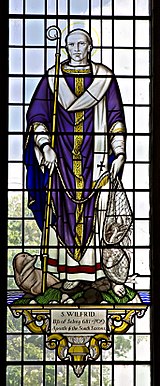
160px-Chichester_Cathedral_Wilfrid_window


  • Origin: Anglo-Saxon
  • Meaning: “desiring peace.”
  • Gender: masculine

The name is composed of the Anglo-Saxon elements, wil (will, desire) and frið (peace). It was borne by 2 English bishops of Worcester, one of whom is a Catholic saint and a 9th-century Catalan count, known as Wilfred the Hairy (b. 878-897). Wilfred was of Gothic origins and he is known to have established a hereditary dukedom in Catalonia. It’s Spanish form of Wilfredo traces its origins back to the Visigoths in Spain and has remained a fairly common male name in many Hispanic countries.

Many name books and dictionaries claim this name fell out of use by the Norman Conquest, but records contradict this claim as Wilfred was still recorded by the 16th-century. More accurately, the name became extremely popular at the turn of the 20th-century in both England & the United States

Wilfred appeared in the U.S. Top 1000 between 1880-1984 & peaked at #164 in 1917. In England & Wales, he is currently the 143rd most popular male name (2018).

Other forms include:

  • Wilfrið (Anglo-Saxon)
  • Guifré (Catalan)
  • Vildfred, Wildfred (Danish)
  • Wilfried (Dutch, German)
  • Wifred (English)
  • Wilfrid (English)
  • Wilfrith (English
  • Vilfrid (Finnish, Swedish)
  • Wilfryd (Frisian, Polish)
  • Vilfredo (Italian)
  • Wilfredus, Vilfredus (Late Latin)
  • Willifred (Old German)
  • Wilfredo (Portuguese, Spanish)
  • Vilfred, Willfred (Scandinavian)
  • Wifredo (Spanish)

In the English-speaking world, common short forms include Will, Wilf, Wilfy & Fred. A feminine form that is used in German-speaking countries, the Netherlands, Spanish-speaking countries, Portuguese speaking countries is Wilfreda, while Vilfrida is a Scandinavian feminine form.


Sources

Amabel, Amabilis, Mabel

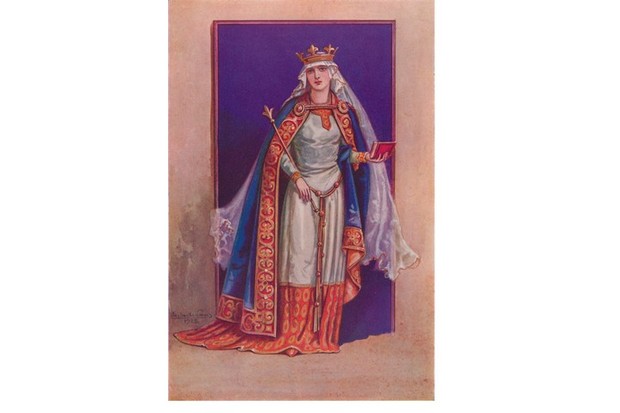
Matilda-0b307f0-7912d7a


Amabilis is a Late Latin unisex name derived from the Latin word for “lovable.” It was used throughout Medieval Western Europe on both males and females, and was borne by a St. Amabilis of Riom (a 5th-century male French saint known in his native language as Amable) and St. Amabilis of Rouen, a 7th-century female French saint.

Amable, Amabel, Mabel have been used exclusively on females in England since Medieval times and was introduced by the Anglo-Normans in the 11th-century. They have gone in and out of popularity since the 11th-century, especially Mabel.

Between 1880-1922, Mabel was among the top 100 most popular female names, peaking at #15 in 1891 and is currently the 435th most popular female name (2018).

In England & Wales, Mabel is currently the 104th most popular female name (2018).

in Ireland, it was often used as an anglicized form of Maeve and it is often speculated that Annabel is an offshoot.

Mabel is the name of a character in C.M. Yonge’s 1854 novel, The Heir of Radclyffe.

Mabel is also used in Dutch, Czech & Slovak, Galician, German & Spanish.

It was borne by several early Anglo-Norman countesses and other notable bearers include: 13th-century English embroiderer, Mable of Bury St. Edmund; Princess Mabel of Orange-Nassau (b. 1968); and British pop-singer Mabel (b. 1996).

Other forms include:

  • Amabel, Amabil, Amiable (Anglo-Norman, English)
  • Mabinka, Mejbl (Czech, Slovak)
  • Mabella, Mabelle, Mable, Maybelline (English)
  • Amabilie, Mabile, Mabilie (French, archaic)
  • Mábel (Hungarian)
  • Amabilia (Italian, Late Latin, Swedish)
  • Mabilia (Italian, Late Latin, English)

Amable & Aimable are male names in France, while Amabile is an Italian unisex form. Caradec or Karadeg are Breton masculine forms that is directly translated from the Latin.


Sources