Temitope

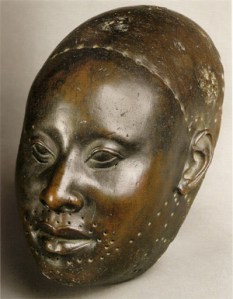
Yoruba-bronze-head


  • Origin: Yoruba
  • Meaning: “mine is worthy of gratitude.”
  • Gender: unisex
  • (TEM-ih-TOH-peh)

The name is a traditional Yoruban unisex meaning “mine is worthy of gratitude.” The name is usually given to children by Yoruban parents when they feel gratitude, especially to God, regarding the birth of the child or any other reason.

Common short forms are Temi & Tope.


Sources

Magdiel

800px-Hod_Hasjaron-a011

Magdiel Garden Hod Hasharon, Israel


  • Origin: Hebrew
  • Meaning: uncertain
  • Gender: Masculine
  • Eng (MAG-dee-el); SP (MAHG-dee-EL)

The name is mentioned 2 times in the Old Testament as the name of one of the Dukes of Edom in Genesis 36:43 and the name of a descendant of Esau in Chronicles 1:54.

According to Hitchcock’s Name Dictionary it means “declaring God; chosen fruit of God,” in Hebrew. It may also derive from the Hebrew Meged El (oil of God).

In modern Jewish history, it is the name of one of the four original communities, established by Holocaust survivors in the 1940s that formed the city of Hod Hasharon.

In recent years, the name has come into common use in Latin American countries.


Other forms include:

  • Mägdiheel (Bavarian)
  • Magadiil Магедиил (Bulgarian)
  • Magdiél (Hungarian)
  • Magdielis (Lithuanian)
  • Makatiere (Maori)
  • Magdiil Магдиил (Russian)

Sources

Sondos, Sundus

Persian_Silk_Brocade_-_IRI_logo_with_Selvage_-_Pictorial_Brocade,_Picture_Brocade,_Brocade_Tableau_-_Seyyed_Hossein_Mozhgani_-_1981


  • Origin: Arabic سُنْدُس
  • Meaning: “fine silk; fine brocade.”
  • Gender: feminine
  • (SOON-doos; SOHN-dohs)

The name comes directly from the Arabic word for fine silk or a fine brocade.

Others transliterations include Sundes & Sundos.

A Turkish form is Sündüs.


Sources

Yasir, Yasira, Yashira

800px-Jetta_(Bedouin_child)._(Taken_during_the_1904_World's_Fair)


Yasir is a male Arabic name which is derived from the Arabic root y-s-r meaning “ease” or “right-handed.” The name was borne by Yasir ibn Amir (d. 615 C. E.), who is said to be the second martyr in Islam according to Islamic tradition.

Other transliterations include: Yassir & Yasser (Persian) & Yaser (Turkish).

It’s feminine form is Yasira and the Spanish off-shoot of Yashira has been popular in the Caribbean & Latin America since the 1980s. It is unknown how the name evolved and became popular in the Spanish-speaking world.

Other feminine transliterations include: Yacerah, Yacirah, Yacireh, Yaseira & Yassira.


Sources

Coral, Coralia

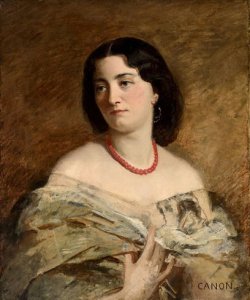
Portrait_of_a_Woman_with_Coral_Beads_by_Hans_Canon


Coral comes directly from the word for the marine invertebrates whose detached exoskeletons have been used for centuries by various cultures to create jewelry. The word itself is derived from the Greek κοραλλιον (korallion).

It is also the name of an orangish-pink colour.

As a given-name, it has been in use for centuries as its Greek form of Koralia (Coralia in Late Latin) was borne by a 4th-century Christian saint and martyr.

There are records for Corilia in 16th-century England, Corelia in 17th-century England Coreyle in 16th-century Württemberg & Corille in 17th-century France.

Coral appeared in the U.S. Top 1000 between 1881 & 1992, peaking at #486 in 1888.


Other forms of the name include:

  • Koraljka (Croatian)
  • Coral (English, Spanish)
  • Coralia (English, Late Latin)
  • Corilia (English)
  • Corail (French)
  • Corille (French, archaic)
  • Coreyle (German, archaic)
  • Koralia Κοραλια (Greek)
  • Korália (Hungarian)
  • Coralla, Corallo (Italian)
  • Koral קורל (Modern Hebrew)

Sources

Zadoc, Zadok

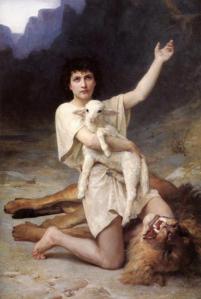
Cornelis_de_Vos_-_The_Anointing_of_Solomon

  • Origin: Hebrew צָדוֹק
  • Meaning: “righteous; just.”
  • Gender: masculine
  • Eng (ZAD-uk)

The name is from the Hebrew meaning “just; righteous.” It is borne by 5 characters in the Old Testament, most notably Zadok the High Priest during the reign of King David & King Solomon.

The name has always been used among Jews but came into use among Protestant Christians mainly in the 18th-century.

Zadok the Priest is a hymn written by Handel which was first played at King George II’s coronation and has been played at every coronation in the British monarchy since.


Other forms include:

  • Zädock (Bavarian German)
  • Sadok Садок (Bulgarian, Croatian, Polish, Russian, Scandinavian)
  • Sádoch, Sádok (Czech)
  • Zadok (Dutch, Finnish, German, English, Scandinavian)
  • Sadoq (French)
  • Sádók (Hungarian)
  • Sadoc (Italian, Latin, Spanish)
  • Haroko (Maori)
  • Tzadok (Modern Hebrew)
  • Zadoque (Portuguese)
  • Ţadoc (Romanian)
  • Cadok Цадок (Ukrainian)

Sources

Ayaan

An_Indian_baby


The name can either be a Hindi male name or a Somali female name. In Hindi, the name is derived from the Sanskrit आयन (ayana) meaning “arrival, approaching, progress, precession, course, path or the Sanskrit अयान (ayana) meaning “halting; stopping; not moving.”

Currently, Ayaan is the 127th most popular male name in England & Wales & 530th most popular in England & Wales (2018).

Another form is the Bengali, Ayan.


Alternately, in Somali it is a female name and means “good luck; fortune.” A notable bearer is Somali feminist & human right activist, Ayaan Hirsi Ali.


Sources

Thandiwe

220px-Thandie_Newton_by_Gage_Skidmore_2


  • Origin: Ndebele, Zulu, Xhosa or Swati.
  • Meaning: “loved.”
  • Gender: feminine
  • (tan-DEE-weh)

The name is used in several closely related South African languages, from a word meaning “loved.” A notable bearer is British actress, Thandie Newton (nee Melanie Thandiwe Newton b. 1972)


Jomar, Jómarr

https___cdn.cnn.com_cnnnext_dam_assets_151127104048-icelandic-horses-7


  • Origin: Old Norse
  • Meaning: “famous horse.”
  • Gender: masculine
  • YOH-mar

The name is composed of the Old Norse elements, jór (horse) and marr (famous).

The name has recently become common in Puerto Rico and the Dominican Republic.

Other forms include:

  • Jómar (Icelandic)
  • Jomar (Norwegian, Spanish, Swedish)

Sources

Uziel, Uzziel

Uzziel


  • Origin: Hebrew
  • Meaning: “God is my strength; God is my power.”
  • Gender: masculine
  • (uh-ZYE-el; OOZ-ee-el)

The name is composed of the Hebrew עֹז (‘oz) meaning “strength, power” and אֵל (‘el) meaning “God.”

It is borne by a few minor characters in the Bible, including the grandson of Levi and the father of Mishael, Elzaphan, and Zithri, the uncle of Aaron, Moses & Miriam.

In the apocryphal Enoch 3, Uziel is the name of a fallen archangel, more often referred to as Uzza. The same archangel is referenced as such in some versions of the kabbalistic text, Sefer Raziel HaMalakh, Johannes Trithemius’ Steganographia; and in John Milton’s Paradise Lost.

In Talmudic Jewish tradition, it was the name of the father of Jonathan Ben Uzziel, one of the 80 tannaim who studied under Hillel the Elder.

Among Medieval Jews, the name was rare among Ashkenazi Jews but very common among Sephardis & Middle Eastern Jews.

In the English-speaking world, the name is seldom used but has recently become common in Spanish-speaking countries.

A recent notable bearer was Uziel “Uzi” Gal (born Gotthard Glas) (1923-2002), a German-born Israeli gun designer best known for his invention of the “uzi.”


Other forms include:

  • Uciel (Albanian)
  • Usiheel (Bavarian German)
  • Oziil Озиил (Bulgarian)
  • Oziel Οζιηλ (Biblical Greek)
  • Ozihel (Biblical Latin)
  • Uziel (Croatian, Czech, French, Italian, Modern Hebrew, Portuguese, Romanian, Spanish)
  • Uzziël (Dutch)
  • Usiel (Finnish, French, German)
  • Huziel, Ouzziel (French)
  • Huzziél (Hungarian)
  • Uzielis (Lithuanian)
  • Utiere (Maori)
  • Ussiel (Norwegian, Swedish)
  • Uziil Узиил (Russian)
  • Ziel (Yiddish)

Sources