
- Origin: Arabic مصباح
- Meaning: “lantern; light; lamp.”
- Gender: unisex
The name comes directly from the Arabic word for lantern or light and appears in Surat an-Noor (chapter 24 of the Quran).
Sources
The name comes directly from the Arabic word for lantern or light and appears in Surat an-Noor (chapter 24 of the Quran).
Sources

Nir is a masculine Hebrew name נְיָר meaning (meadow; grazing area). Alternately, it can be an acronym of the Hebrew phrase noled yeled rishon (meaning “first born son”).
Its feminine form is Nira.
Nira appeared in the U.S. top 1000 most popular female names one time in 1933, ranking in at #463.
Sources

The name is the English form of the Late Latin Prosperus (fortunate, successful). It was borne by a 5th-century French saint who was a follower of St. Augustine of Hippo as well as a 5th-century Italian saint.
The name was also sporadically used among the Puritans.
Other forms include:
It was also borne by French poet, Prosper Jolyot de Crébillon (1674–1762) & French novelist, Prosper Mérimée (1803–1870).
Prospero is the name of one of the protagonists in Shakespeare’s Tempest.
Sources
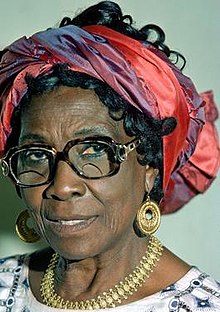
Oyinkansola Abayomi
The name is composed of the Yoruba elements oyin (honey), kán (drop) sí (into) & ọlá (wealth).
A common short form is Oyinkan.
A notable bearer was Nigerian feminist, Oyinkansola Abayomi (1897-1990).
Sources

The name derives from the Sanskrit नक्षत्र (naksatra) meaning “star, constellation.” In Hindu astrology, this is a term for a lunar mansion.
Sources
The name is derived from the Arabic ثاقب (sharp-witted; keen; insightful). The word appears in the Quran in verses 37:10 and 86:3.
Other transliterations include: Saaqib, Saqeb, Saqeeb, Thaaqib, Thaqib & Thaqeb.
A feminine form is Saqibah.
Sources

Kool Savas, German rapper
The name comes directly from the Turkish word for war.
In 1991, this was the 67th most popular male name in Turkey.
The name is borne by German rapper, Kool Savas (nee Savaş Yurderi).
Sources

The name comes directly from the Hindi word पहल meaning “respect; initiative.”
Source

The name comes from the Arabic meaning “mind; wisdom” or “the ability to think.” It appears in pre-Islamic North Arabia as the name of a goddess associated with the sun, her South Arabic counterpart being Shams. It has been suggested by some scholars that her name is linked with the Semitic root N-H-Y meaning “the ultimate.”
In Islam, the word appears in a few verses of the Quran, verse 20:54 and verse 20:128.
Other transliterations include: Noha, Nohaa, Nouha & Nuhaa.
Sources

The name can be Igbo and mean “father’s jewel,” being composed of the Igbo words ọla (jewel; precious thing) and nna (father). It appears as the name of one of the main characters in the Chimamanda Ngozi Adichie novel, Half of a Yellow Sun (2006).
It is also a Scandinavian feminine form of Ole. Other Scandinavian offshoots are Olanne & Oleanna.
Sources