Rigmor

Gender: Feminine
Origin: Danish
Meaning: “ruling girl; ruling mother.”
(REE-mor)

The name is derived from the Old High German, Ricmot, which is composed of the Germanic elements, rik, meaning “rule; ruler” and either már meaning “virgin; girl” or mor, meaning, “mother.”

Other forms of the name include the Swedish Rigmo and Rigmore.

The name is borne by famed Swedish Jazz songstress, Rigmor Gustafsson (b.1966).

The designated name-days are: February 7 (Norway); February 8 (Swedo-Finnish calendar); September 27 (Sweden).

Sources

  1. http://sv.wikipedia.org/wiki/Rigmor
  2. http://www.nordicnames.de/wiki/Rigmor

Ariel

Gender: Masculine
Origin: Biblical Hebrew
Meaning: “lion of God.”
אֲרִיאֵל
Eng (Air-ee-el): Mod Heb (AHR-ee-EL)

The name is from the Biblical Hebrew, meaning “lion of God” and is found in the Old Testament as another name for the city of Jerusalem.

In Jewish and Christian apocrypha, it is also the name of an archangel, believed to be the angel who has authority over the Earth and its elements.

As a given name, it has been used by Jews, exclusively as a masculine name for centuries. It has only been in recent years, most notably, following the release of Walt Disney’s, the Little Mermaid (1989), that is has been given to females.

As a male name, it was the 556th most popular male name in the United States (2009), while for females it was the 206th most popular (2009).

In 2006, Ariel was the 78th most popular male name in Chile.

Shakespeare used this name for one of his characters in his play, The Tempest (1611).

Other forms of the name include:

Ariel (Catalan/English/French/German/Hebrew/Hungarian/Polish/Spanish)
Ariël (Dutch)

Feminine forms include:

Ariëlle (Dutch)
Arielle (French)
Ariela (German/Modern Hebrew/Polish/Spanish)
Ariella (Italian)

Hebrew short forms for the masculine version include: Ari and Arik.

A Polish diminutive form is Arielka.

Other notable bearers include: Ariel Sharon, former Israeli Prime Minister (b.1928); Polish soccer player, Ariel Jakubowski (b.1977); Polish Soccer Player, Ariel Borysiuk (b.1991); Argentine writer, Ariel Dorfman (b.1948); Mexican soap actor, Ariel López Padilla (b.1962); Argentine soccer player, Ariel Ortega (b.1974).

The designated name-day is October 1 (France).

Source

  1. http://www.behindthename.com/name/ariel

Xanthippe

Gender: Feminine
Origin: Greek
Meaning: “blonde horse; yellow horse.”
Eng (ZAN-thip-PEE)

The name is composed of the Greek elements, ξανθος (xanthos), meaning, “blonde; yellow” and ‘ιππος (hippos), “horse.”

The name was most notably borne by the wife of Socrates, of whom, Socrates wrote both quite fondly and also rather harshly about.

Other forms of the name include:

Xantippa (Czech/Swedish)
Xantippe (Danish/Norwegian)
Xanthippe (Dutch/English/French/German/Greek)
Santippe (Italian)
Ksantypa (Polish)
Xântipe (Portuguese)
Xantipa (Romanian)
Ksantippa Ксантиппа (Russian)
Jantipa (Spanish)

Note, the above forms are rare outside of Greece and mostly appear in an historical context.

A masculine form is Xanthippos Ξανθιππος.

The designated name-day in Greece is September 23.

Source

  1. http://www.behindthename.com/name/xanthippe

Mireille

Gender: Feminine
Origin: Provençal
Meaning: “admire.”
(mee-HRAY)

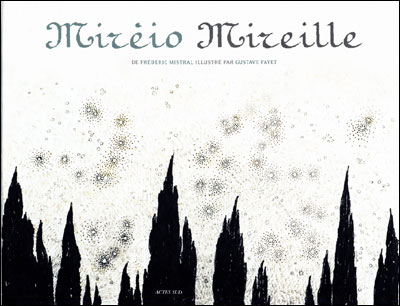
Mireille is believed to be a franconized version of the Provençal female name, Mirèio, which is believed to be derived from the Provençal word mirar “to admire.”

The name was first brought to the Francophone world’s attention in 1859, when French poet, Frédéric Mistral, wrote a poem in Occitanian about a girl named Mireille (Mirèio in the Provence version). The poem retells the star-struck love of Mireille, the daughter of a nobleman, and Vincent, a poor basketmaker, who fall in love and are unable to marry due to their different social classes. In the poem, Mireille dies while imploring the patron saints of Provence to change the hearts and minds of her parents.

The poem was translated into several other languages, and the name appears in other forms, including:

Mireia (Catalan/Spaniah)
Mirèio (Catalan/Provenςal/Occitanian)
Mirela (Croatian/Polish/Romanian)
Mireille (French)
Mirella (Hungarian/Italian)
Mirèlha (Provenςal)

Source

  1. http://www.behindthename.com/name/mireille

Łękomir

Gender: Masculine
Origin: Polish
Meaning: “one who establishes peace through his cunning.”
(WENK-o-MEER)

An obscure Polish male name composed of the elements, Łęko, meaning, “guile; cunning” and mir, meaning, “peace.”

Hence the above meaning.

The feminine form is Łękomira.

The designated name-day is September 25.

Source

  1. http://pl.wikipedia.org/wiki/%C5%81%C4%99komir

Faustina

Gender: Feminine
Origin: Latin
Meaning: “lucky.”
Eng (faw-STEE-nah)

The name is a feminine form of the ancient Roman cognomen, Faustinus, which in itself is derived from Faustus, meaning, “lucky.”

The name was a common one among the Nerva-Antonine dynasty, being borne by several women in that family, most notably, Anna Galeria Faustina the Elder (100-140) and her daughter of the same name (125-175).

Other forms of the name include:

Fausta (Italian)
Faustina (Croatian/German/Italian/Lithuanian/Spanish)
Faustyna (Czech/Polish)
Faustine (French)
Fausztina (Hungarian)

Male versions include:

Faust (German)
Faustino (Italian/Portuguese/Spanish)
Fausto (Italian/Portuguese/Spanish)
Faustus (Latin)
Faustinus (Latin)

The male version of, Faust is the subject of a German folklore, in which a man by the name of Dr. Faust makes a deal with the devil. This story was later adapted into literature by Christopher Marlowe and Goethe, and was even adapted into a famous opera.

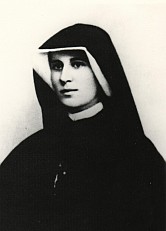
Other notable personages include: Roman noblewoman, Rupilia Faustina (87-138); Faustina, wife of Constantius II (340-366); Faustina Constantia, daughter of Faustina and Constantius II; St. Faustina of Como, a 6th-century Italian saint; Italian Mezzo-Soprano, Faustina Bordoni (1697-1781); Saint Faustina Kowalska, a 20th-century Polish nun and saint (1905-1938).

The designated name-days are: February 15 (Poland); September 23 (France) and October 5 (Poland).

Source

  1. http://www.behindthename.com/php/find.php?name=faustine

Zita

Gender: Feminine
Origin: Italian
Meaning: “little girl; maiden; virgin.”
(ZEE-ta)

The name is derived from the Tuscan medieval dialectical term referring either to a little girl or unmarried woman. Over time, the term has taken on various meanings depending on the region of Italy. In some instances, it was used as a term of endearment for a young girl, in others, it was used to refer to a “spinster.” In modern Sicilian, zita literally means “girlfriend” while zito is boyfriend.

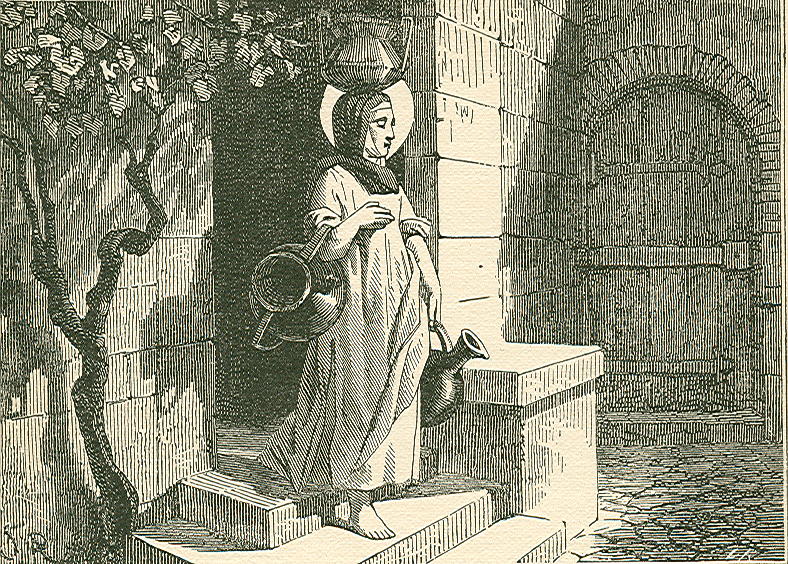
The name was borne by a famous medieval Italian saint, Zita of Lucca (1218-1227). Since she was a poor servant of unknown background, Zita may have actually been an affectionate nickname given by her devout followers, her true name being lost to history.

St. Zita was known for her piety and selfless acts. She was known for taking her megre earnings and food to the poor. She is also known for many miracles. She is considered the patron saint of servants and lost keys. Due to her cult, the name became popular outside of Italy and in other Catholic countries.

In German, the name could also be considered a contracted form of Felizitas.

As of 2009, Zita was the 65th most popular female name in Hungary and the 65th most popular female name in Belgium (2006)

Other forms of the name include:

Zita (Czech/French/German/Hungarian/Italian/Latvian/Lithuanian/Portuguese/Slovak/Slovene)
Zite (French)
Zitella (French)
Zéra (French)
Zérane (French)
Cita (Italian)
Zyta (Polish)

Nicknames include the Czech, Zitka, Zituška, Zitunka, Zituš, Zituna, Zitule and Zitulka. The Polish Zytka.

Italian masculine forms include: Zito, Zitolo, Cito and Citolo

The designated name day is April 2 (Slovakia); April 24 (Italy; Poland) April 27 (Lithuanian); August 11 (Latvia); September 19 (Czech Republic)

Sources

  1. http://it.wikipedia.org/wiki/Zita
  2. http://www.behindthename.com/php/find.php?name=zita

Boguchwała

Gender: Feminine
Origin: Polish
Meaning: “glory to god.”
(bo-goo-KFOW-wah)

The name is composed of the Old Polish elements, bog, (god) and chwała (glory).

Another form is Bogufała.

Masculine forms include Boguchwał, Boguchał, Bogufał, Bogofał, Bogchwał, Bochwał and Bofał.

Other non-Polish masculine forms include:

Bohuchval (Czech)
Gottdank (German)
Bogohval (Slovene)
Boguchval (Russian)

The designated name-days are: March 18 and September 23.

Source

  1. http://pl.wikipedia.org/wiki/Boguchwa%C5%82a_(imi%C4%99)