Laïs

Gender: Feminine
Origin: Greek/Celtic
Meaning: debated
(lah-YEES)

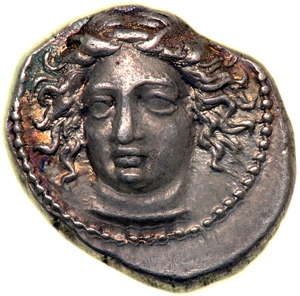
The name could be of a few derivatives depending on the bearer of the name. It could be a Greek name, of uncertain meaning. It was borne by two very famous hetaeras of the ancient world. Laïs of Corinth was alive during the Peloponnesian War and was said to be the most beautiful woman of her time, another courtesan of the same name is often confused with the former, Laïs of Hyccara, was a rival of Phryne and was said to be stoned to death by the jealous women of Thessaly.

Laïs could also be a plural form of lai, a type of Provençal or Breton lyrical narrative poem written in octosyllabic verse which often deals with tales of romance and adventure. In this case, it is argued that the source of the word may be from the Celtic meaning “song” or from the Old High German word, leich, meaning “song; melody.”

It could also be the name of the botanical genus of hippaestrum, erroneously referred to as  amaryllis, they are endemic to Central and South America.

Lais is also the name of a castle in Estonia.

Currently, the Portuguese rendition of Laís is the 56th most popular female name in Brazil, (2011).

Other forms of the name include:

  • Laïs (French/Greek)
  • Laïda Λαΐδα (Modern Greek)
  • Laís (Portuguese)

Juliet

Gender: Feminine
Origin: English
(JOO-lee-et, JOOL-yət)

The name is probably an anglicized form of the Italian, Giulietta, which was originally a diminutive form of Giulia.

In the English-speaking world, the name is first found in Shakespeare’s Romeo & Juliet (1596) which he based on Luigi Porto’s Giulietta e Romeo (1530)

Currently, Juliet is the 285th most popular female name in the United States, but its Spanish form of Julieta is currently the 6th most popular female name in Argentina, (2009). Her rankings in other countries are as follows:

  • # 21 (Belgium, Juliette, 2009)
  • # 22 (France, Juliette, 2009)
  • # 139 (the Netherlands, Juliette, 2010)
  • # 371 (United States, Juliette, 2010)

Other forms of the name include:

  • Cülyetta (Azeri)
  • Juliette (French)
  • Xulieta (Galician)
  • Juliet’a ჯულიეტა (Georgian)
  • Giulietta (Italian)
  • Džuljeta (Latvian/Lithuanian)
  • Julietta (Polish)
  • Julieta (Portuguese/Romanian/Spanish)
  • Dzhul’etta Джульетта (Russian)


Lavinia

Gender: Feminine
Origin: Latin
Meaning: uncertain
Eng (lah-VIN-nee-uh)

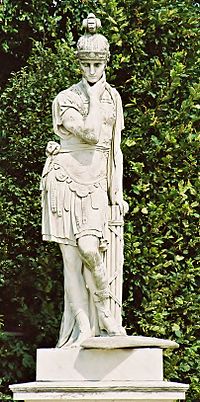
The name is possibly of Etruscan origins but its meaning has been lost to history. It is borne in the in Roman legend by the wife of Aeneas and the ancestor of the Roman people. Her story has been retoled throughout the centuries and was lately the subject of the 2008 eponymous novel by Ursula K. Le Guin. According to legend, the city of Lavinium was named by Aeneas in honour of his wife.

The name has been borne by a few other famous literary characters such as Shakespeares tragic heroine in Titus Andronicus (1588) and a character in Frances Hodgson Burnett’s 1905 novel, A Little Princess.

It is also the name of a genus of fish and butterfly and it is the name of a suburb of São Paolo Brazil.

Lavinia seems to have been a very popular name in the 18th and 19th-century in both England and the United States. It was often shortened to Vinny or Lovie. Both of which appear as occasional independent given names around the same time.

Its Portuguese form of Lavínia is currently the 45th most popular female name in Brazil, (2011).

Other forms of the name include:

  • Lavynyya Лавиния (Bulgarian)
  • Lavínia (Catalan/Hungarian/Portuguese)
  • Lavinia (Dutch/English/French/German/Italian/Latin/Romanian/Spanish)
  • Lavina (English/Italian)
  • Lauinia (Latin)
  • Lawinia (Polish)
  • Lavinija Лавиния (Russian)
  • Lavíniya Лаві́нія (Ukrainian)
An obscure Polish masculine form is Lawiniusz.

Larissa

Gender: Feminine
Origin: Greek Λαρισα
Meaning: “citadel.”
Eng (lah-RIS-suh)

The name is borne in Greek mythology by a nymph of Thessaly and daughter of Pelasgus. It is also the name of the capitol city of Thessaly, Greece, which is believed to have gotten its name from the nymph, who was considered a sort of patron of the city in pre-Christian times.

The name has always been popular throughout Eastern Europe due to the veneration of an Eastern Orthodox saint of the same name.

It was introduced into the English-speaking world via Boris Pasternak’s 1957 novel, Doctor Zhivago, in which the heroine is named Larissa nicknamed Lara.

Currently, Larissa is the 33rd most popular female name in Brazil, (2011). Her rankings in other countries are as follows:

  • # 41 (Switzerland, German-Speaking, 2010)
  • # 44 (Austria, 2010)
  • # 48 (Slovenia, Larisa, 2010)
  • # 55 (Bosnia & Herzegovina, Larisa, 2010)
  • # 95 (Germany, 2011)
  • # 259 (the Netherlands, 2010)
  • # 760 (United States, 2010)

Other forms of the name include:

  • Larisa Лариса (Bosnian/Bulgarian/Croatian/Greek/Latvian/Lithuanian/Romanian/Russian/Serbian/Slovene)
  • Làrissa (Catalan)
  • Larissa (Dutch/English/German/Italian/Portuguese)
  • Larysa Лариса (Polish/Ukrainian)
A common Russian short form is Lara.

Candela

Gender: Feminine
Origin: Spanish
Meaning: “candle.”
kahn-DE-lah

The name literally means “candle” in Spanish, but as a given name is contracted from the name Candelaria which is Spanish for Candlemas. Candlemas is a holiday that occurs on February 2nd and commemorates the day Christ was prensented in the Temple and the Virgin Mary’s purification. Originally, the name was usually given to girls born on the holiday.

Currently, Candela is the 7th most popular female name in Argentina, (2009). Her rankings in other countries are as follows:

  • # 37 (Spain, 2010)
  • # 80 (Catalonia, 2009)
In Chemistry, candela is an SI base unit used to measure luminous intensity.

Bettina

Gender: Feminine
Origin: Italian

The name is from a Medieval Italian diminutive form of either Elisabetta or Benedetta. One of its earliest attestations is that of Bettina d’Andrea (d.1335) a famous Italian legal scholar of Medieval Italy.

The name was later introduced to Germany via Elisabeth Catharina Ludovica Magdalena Brentano (1785-1859), a German countess of Italian descent who was a prolific writer, novelist and one of the pioneers of German romanticism, her pen name was Bettina von Arnim.

The name has also been used in Hungary, the English-speaking world, the Netherlands and Scandinavia. Currently, Betina is the 98th most popular female name in Brazil. Another German form is Bettine.

Nico

The name could either be a contraction of Nicholas or Nicodemus or come directly from the Greek νικη (nike) meaning, “victory.”
The name is currently very popular in German-Speaking countries. It is the 23rd most popular male name in Austria, (2010) and the 28th most popular in Germany, (2011). His rankings in other countries are as follows:

  • # 23 (Croatia, Niko, 2010)
  • # 82 (Slovenia, Niko, 2010)
  • #591 (United States, Nico, 2010)
  • # 788 (United States, Niko, 2010)

Vinicius

Gender: Masculine
Origin: Latin
Meaning: “wine.”

The name comes from a Roman family name which shares a root with the Latin word vinum meaning, “wine.”

The name was borne by the confidante of Augustus and renowned Roman general Marcus Vinicius (4th-century, BCE). It was also borne by his grandson of the same name who became a famous Roman consul.

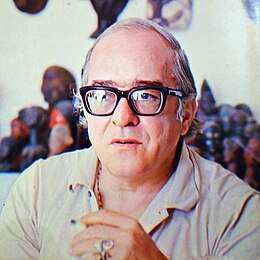
Its original Latin form is currently very popular in Brazil, according to babycenterbrasil, it ranks in as the 23rd most popular male name among registered users, (2010). Its popularity in Brazil may be due to the famous poet, playwright and diplomat, Vinicius de Moraes (1913-1980).

Other forms of the name include:

  • Vinicio (Italian/Spanish)
  • Vinícius (Brazilian Portuguese)


Fabio

Gender: Masculine
Origin: Italian

The name is the Italian and Spanish form of Fabius which is derived from the Latin faba (bean). The name comes from a Roman gens, which was believed to be one of the most influential in ancient Rome. As a result, it was borne by several famous Romans.

In modern times, the name is associated with the Italian male model known simply as Fabio.

Fabius is the name of a river in Missouri.

Fabio is currently the 50th most popular male name in Austria, (2010) and the 135th most popular in Germany, (2011).

Other forms of the name include:

  • Fabià (Catalan)
  • Fábió (Hungarian)
  • Fabó (Hungarian)
  • Fábiusz (Hungarian)
  • Fabiusz (Polish)
  • Fábio (Portuguese)
Feminine forms include:
  • Fabia (Latin/Italian/Spanish)
  • Fabiola (Latin/German/Italian/Spanish)
  • Fábio (Portuguese)

Julian

Gender: Masculine
Origin: Latin

The name is an anglicized form of the French male name, Julien, which is derived from the Latin Julianus (See Julius).

In history, the name was borne by the last non-Christian Roman emperor, Julian the Apostate (4th-century CE). It was also borne by a very popular French saint, Julien the Hospitaller.

In Medieval Englian, Julian was a female name and the traditional masculine cognate was Jolyon. Both names went out of usage by the Renaissance and neither were revived until the 19th-century.

Currently, Julian is the 12th most popular male name in Austria, (2010). His rankings in other countries are as follows:

  • # 15 (Germany, 2011)
  • # 17 (the Netherlands, 2010)
  • # 32 (Norway, 2010)
  • # 53 (United States, 2010)
  • # 59 (France, Julien, 2009)
  • # 66 (Belgium, Julien, 2009)
  • # 98 (Sweden, 2010)
  • # 147 (France, Julian, 2009)
  • # 561 (United States, Julien, 2010)

Other forms of the name include:

  • Juljan (Albanian)
  • Julen (Basque)
  • Juluan (Breton)
  • Yulian Юлиан (Bulgarian/Russian/Ukrainian)
  • Julià (Catalan)
  • Julijan (Croatian/Macedonian/Serbian/Slovene)
  • Julian (Dutch/English/German/Occitanian/Polish/Scandinavian)
  • Jolyon (English)
  • Julien (French)
  • Xulián (Galician)
  • Ioulianos Ιουλιανός (Greek)
  • Giuliano (Italian)
  • Iulianus (Latin)
  • Julijonas (Lithuanian)
  • Juliano (Portuguese/Spanish)
  • Julião (Portuguese)
  • Iulian (Romanian)
  • Julián (Spanish)
  • Turiano (Tahitian)

For feminine forms (see Juliana)