Gina

Gender: Feminine
Origin: Italian
Eng/It (JEE-nah); Germ (GHEE-nah); Grk (YEE-nah)

The name was originally a short form of Regina, Georgina or Luigina, but has been used as an independent given name in Italy, Greece, the English and German-speaking world.

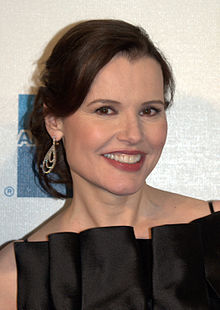
It has been borne by several actresses, including Gina Lollobrigida (b.1927) and Geena Davis (b.1956).

Currently, Gina is the 327th most popular female name in Germany, (2011).

A masculine form is Gino.

Malina

The name could be of several different sources and etymologies depending on the bearer of the name.

It could be from the name of a Greenlandic solar diety and according to legend, she is constantly fleeing from her brother Annigan (the moon god) due to an old disagreement. The reason behind their fight varies from legend to legend.

It could also be Scottish, a feminine form of Malcolm.

In Polish, it is from the word for raspberry and is occasionally used as a given name. It received a negative opinion from the Polish Language Council, but this has not banned the name from usage. It was the pseudonym of a few famous Polish women, one being Malina Michalska (b.1916 née Maria Michalska) a famous dancer and Polish-German actress, Malina Ebert (b.1976) née Monika. It is the word for raspberry in several other Slavic languages, such as Czech, Slovak and Bulgarian.

Mălina is Romanian name derived from the Romanian word mălin meaning bird cherry tree. The name was borne by Romanian singer, Mălina Olinescu (1974-2011).

In addition, the name could also be Scandinavian, an elaborated form of Malin.

Currently, Malina is the 272nd most popular female name in Germany, (2011).

Inga

Gender: Feminine
Origin: Old Norse/Germanic
(IN-ga)

The name is a feminine form of Inge or Ing, which is an Old Germanic name of uncertain meaning. It was the name of an ancient Germanic god of which very little is known.

In addition to Scandinavia, Inga has experienced prevalent usage in other countries, such as Germany, the Netherlands and Russia.

Currently, Inga is the 341st most popular female name in Germany, (2011).

Other forms of the name include:

  • Inga Инга (Belarusian/Bosnian/Croatian/Dutch/Estonian/Faroese/Georgian/German/Icelandic/Latvian/Lithuanian/Polish/Russian/Scandinavian/Serbian/Slovene)
  • Inge (Danish/Dutch)
  • Inia (Danish)
  • Inka (Finnish)
  • Inken (Frisian)
  • Iηgá (Sami)
  • Ingara (Norwegian: archaic)

Inge is rarely ever used as a masculine form and is occasionally used as a female form in Scandinavia, pronounced (IN-ge).

Common male forms are Ingi and Ingo.

In Sweden, Inga’s designated name-day is October 25. In Norway it is December 17 and in the Swedo-Finnish calendar it is June 20.

Inga is also the name of a genus of tropical trees and shrubs.

The name was and is borne by Swedish stage actress and opera singer, Inga Åberg (1773-1837); Swedish actress Inga Tidblad (1901-1975); Swedish actress Inga Landgré (b.1927); American actress Inga Swenson (b. 1932); American femininist author Inga Muscio (b.1966); Russian Olympic Speed-Skater Inga Artamonova (1936-1966); Bosnian-Australian politician Inga  nee Dosen Peulich (b.1964); Australian anthropologist, author and historian Inga Clendinnen (b.1934) and Danish Opera Soprano Singer Inga Nielsen (1946-2008)
Delia

Gender: Feminine
Origin: Greek
Meaning: “from Delos.”
Eng (DEE-lee-ah)

The name comes from an epithet for the goddess Artemis as she was believed to have been born on the island of Delos.

It has also been used as a contracted form of Cordelia.

In the English-speaking world, the name came into usage during the 18th-century.

Currently, it is the 276th most popular female name in Germany, (2011).

Other forms of the name include:

  • Delia (Czech/English/German/Greek/Italian/Romanian/Slovak/Spanish)
  • Délia (French/Hungarian/Portuguese)
  • Délie (French)
It is also the name of a womens’ apparel store.

Nike

Gender: Feminine
Origin: Greek Νικη
Meaning: “victory.”
Eng (NYE-kee); Grk (NEE-kay); Germ (NEE-keh)

The name comes directly from the Greek word for victory.

It was borne in Greek mythology by the goddess and personification of Victory, her Roman counterpart being Victoria. She was the daughter of Pallas and Styx and the sister of Cratos (Strength), Bia (Force) and Zelus (Zeal). She was believed to fly around battlefields on a chariot awarding glory and fame to victors.

Coincidentally, Nike can also be a Nigerian name meaning, “cherished.”

The name has experienced usage in modern Greece, Russia, Israel and Germany. In Germany, her popularity may be due to Nike Wagner (b.1945) the great-granddaughter of Richard Wagner.

It is currently the 323rd most popular female name in Germany, (2011).

The Russian and Belarusian form is Nika Ника.

It is also the name of the shoe company which was named for the Greek goddess.

Salim

Gender: Masculine
Origin: Arabic سليم
Meaning: “safe.”

The name is derived from the Arabic word, salima (to be safe). Its Turkish form of Selîm was a very popular choice among the Ottomanian Sultans, being borne by at least three.

The name also seems to have been occasionally used in 18th and 19th-century Britain and America. It was borne by Selim E. Woodworth (1815-1871) a commander of the United States Navy, and British born American pioneer Selim Franklin (1814-1884). It was also borne by Finnish composer Selim Gustav Adolf Palmgren (1878-1951) and one of the most famous Kurdish poets, known simply as Salîm (1800-1866).

Currently, Selîm is the 373rd most popular male name in Germany, (2011) while Salim stands as the 495th most popular male name in France, (2010).

Other forms of the name include:

  • Selim (Egyptian/Sudanese/Tunisian)
  • Saleem (Indian/Urdu/Pakistani)
  • Salîm (Kurdish)
  • Selîm (Turkish)
Feminine forms include Salima, Salma and Selima.

Gianluca

Gender: Masculine
Origin: Italian
(jahn-LOO-kah)

The name is a compound of the Italian male names, Gianni and Luca.

It is currently the 391st most popular male name in Germany, (2011). The name became common in Germany after the second half of the 20th-century. The German, albeit rare, equivalent is Janlukas.

Hussein

Gender: Masculine
Origin: Arabic حسين
(hoos-SANE)

The name was initially a diminutive form of Hasan حسن, which is derived from the Arabic, hasuna حسن (beautiful; good). The name has been used as an independent given name for centuries, usually used in honour of Hussein ibn Ali (626-680 CE), the son of the caliph Ali and the grandson of the prophet Mohammed.

He is considered a martyr among Shi’ia Muslims.

In recent years the name was borne by the King of Jordan (1935-1999) and it is the middle name of current President of the United States, Barack Obama.

Its Turkish form of Hüseyin is currently the 400th most popular male name in Germany, (2011).

Other forms of the name include:

  • Huseyn (Azeri)
  • Husein (Bosnian)
  • Husain (Indonesian)
  • Hossain حسّین (Persian)
  • hysejin Һүсейiн (Kazakh)
  • Hüseyin (Turkish) 
  • Usên (Zazaki)