Enna

Gender: Feminine
Origin: Frisian

The name could either be a feminine form of Enno, which can either be derived from the Germanic element, arn (eagle) or agin (sword).

Enna could also be a Frisian form of Anna

It is currently the 227th most popular female name in Germany, (2011). Other forms include Enne and Enni.


Mirja

Gender: Feminine
Origin: Finnish
(MEER-yah)

The name is a Finnish form of Miriam, and has had some usage in Sweden and Germany. It has been used in Germany since at least the 1960s, most likely introduced via Mirja Larsson, a Swedish supermodel who married Gunter Sachs.

Currently, Mirja is the 252nd most popular female name in Germany, (2011).

Levke

Gender: Masculine
Origin: Frisian
Meaning: “darling.”
(LEF-keh)

The name is derived from the Frisian word leavje (love) with the diminutive suffix -ke added on, the name would take up the meaning of “darling” or “little love.”

Currently, Levke is the 267th most popular female name in Germany, (2011).

Rike

Gender: Feminine
Origin: Frisian
Meaning: “rich.”
(REE-keh)

The most popular etymology is that the name is from the Frisian word for “rich”, however, it has also been used as a short form of Henrike or Frederieke.

Currently, both Rieke and Rike are the 204th most popular female names in Germany, (2011).

Other forms of the name include:

  • Rikke (Danish)
  • Rika (Dutch/Swedish)
  • Riikka (Finnish)
  • Rieke (German)

Aras

Gender: Masculine
Origin: Lithuanian
Meaning: “eagle.”
(AH-rahs)

The name comes directly from the Lithuanian meaning, “eagle.”

The name is borne by Survivor winner and actor, Aras Baskaukas (b.1981).

Though of a different etymological root, the name is also found in Greek mythology as the name of an autocthon. He is believed to have founded the town of Arantea, and was worshipped as a minor god.

Currently, Aras is the 329th most popular male name in Germany, (2011).

Merlin

Gender: Masculine
Origin: English/Welsh
Meaning: “sea-fortress.”
Eng (MER-lin)

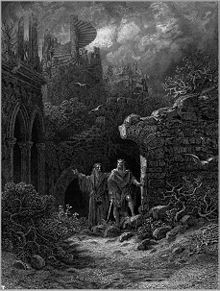
The name is derived from the Welsh male name, Myrddin (sea fortress). It is borne in Arthurian legend by a renowned wizard, who was possibly based upon an amalgamation of a few historical figures, one inspiration being Myrddin Willt, a Welsh madman and prophet who lived in the Scottish forests. Another source of inspiration may have been Roman military leader, Ambrosius Aurelianus .

It is believed that Geoffrey of Monmouth Latinized the name as Merlinus instead of Merdinus due to the latter’s close similarity to the Norman French word merde (excrement).

The name was never very common in the English-speaking world and only seems to have recently caught on. It is currently the 350th most popular male name in Germany, (2011) and the 427th most popular in France, (2009).

It is also the name of a type of bird.
Timur

Gender: Masculine
Origin: Chaghatai/Russian Тимур
Meaning: “iron.”

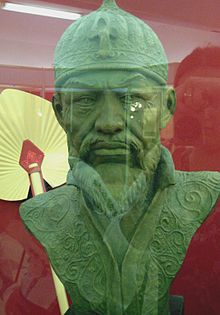
This was the original name of Tamerlane, a 14th-century conqueror of Central Asia, he was the founder of the Timurid Dynasty (1370-1405). His name is derived from a word for iron in the extinct Turkic language, Chagatai.

Tamerlane is viewed as a hero in many former Soviet Central Asian republics and as a result, is a very popular name. The name is even used among European Russians.

Currently, Timur is the 359th most popular male name in Germany, (2011).

Other forms of the name include:

  • Teymur (Azeri)
  • Tymur Тымур (Belarusian)
  • Timur Тимур  تیمور (Chechen/Chuvash/Kyrgyz/Mongolian/Persian/Russian/Tatar/Turkish/Turkmen/Ukrainian/Uzbek)
  • Temur თემურ (Georgian/Uzbek)
  • Temir Темір (Kazakh/Tajik)
  • Tîmûr (Kurdish)
  • Demir (Turkish)