Hrani

Gender: Masculine
Origin: Old Norse
Meaning: “brutal; rough.”
(RAH-nee)

The name comes directly from the Old Norse word for “brutal; rough.” The name was originally a byname and was one of the many epithets for the god, Odin.

As of 2010, its Faroese form of Rani was the 6th most popular male name in the Faroe Islands.

Other forms of the name include:

  • Rani (Danish/Faroese)
  • Hrani (Norwegian/Old Norse)
  • Rane (Swedish)

Huginn

Gender: Masculine
Origin: Old Norse
Meaning: “thought.”
(HOO-gin)

The name comes directly from the Old Norse word for “thought.” The name shares the same etymological root with Hugh and Hugo.

In Norse mythology, this was name of one of the two companion ravens of Odin, the other being Muninn (memory; mind). They were believed to fly across the earth bringing Odin information. The two ravens are believed by many archeologists to be a carry-over from earlier Shamanic practices due to the fact that the ravens, which represent the god’s mind and thoughts, transmit and carry information, perhaps representing shamanic telepathy.

As of 2010, Huginn was the 6th most popular male name in the Faroe Islands.

Other forms of the name include:

  • Hugin (English/German/Modern Scandinavian)
  • Huginn (Faroese/Icelandic/Old Norse)

Brandur

Gender: Masculine
Origin: Old Norse
Meaning: “fire; swordblade.”

The name is a Faroese and Icelandic modern form of the Old Norse male name, Brandr, which comes directly from the word for, “fire” or “swordblade.”

As of 2010, Brandur was the 5th most popular male name in the Faroe Islands.

Other forms of the name include:

  • Brand (Danish/German/Swedish)
  • Brande (Danish/Swedish)
  • Brandar (Faroese)
  • Brandur (Faroese/Icelandic)
  • Brandr (Old Norse)

Boaz

Gender: Masculine
Origin: Biblical Hebrew  בֹּעַז
Meaning: “strength; swiftness.”
Eng (BO-az)

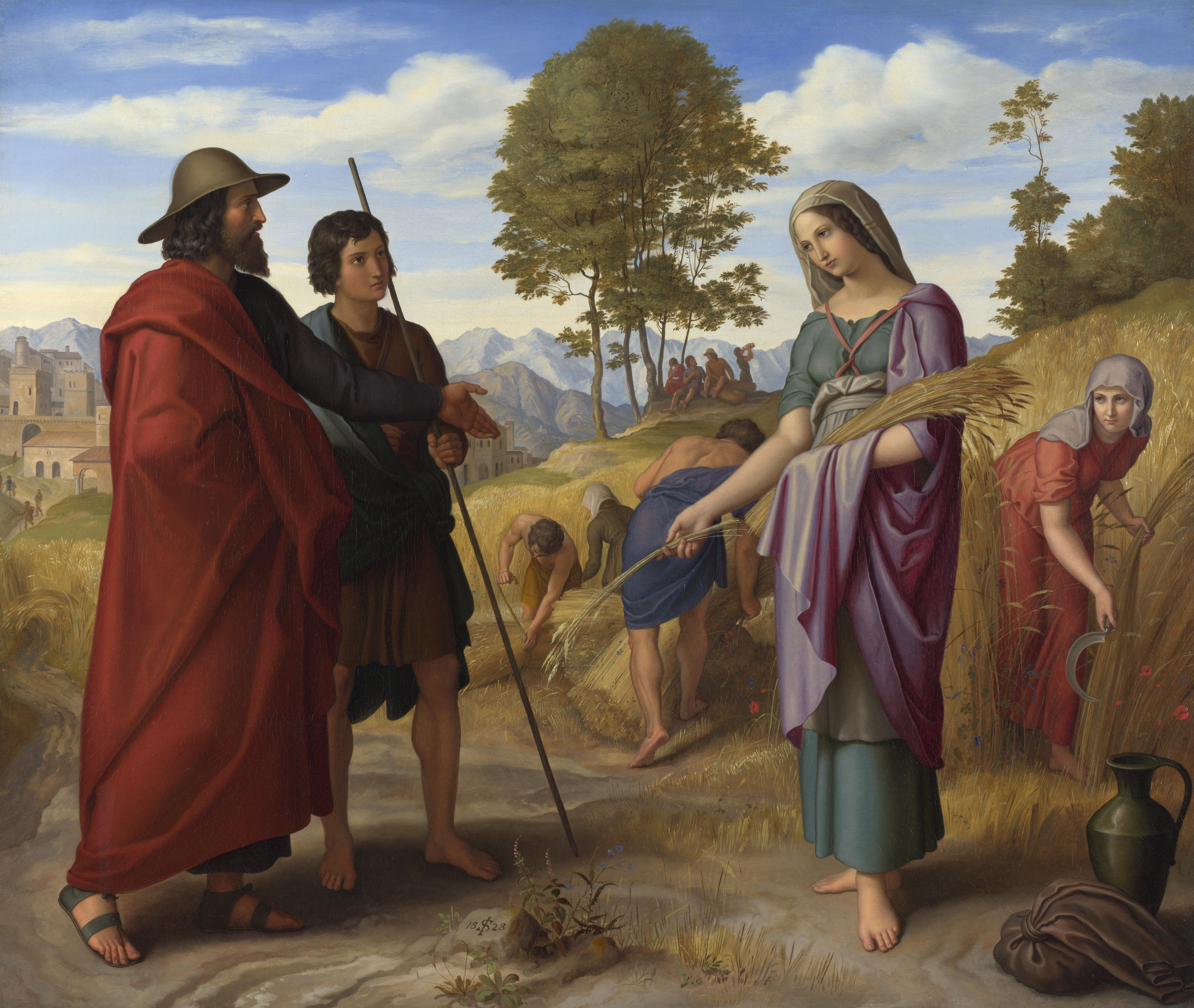
The name appears several times throughout the Bible, in the Old Testament it is the name of the husband of Ruth, traditionally believed by Christians to be a direct ancestor of Jesus. It is also the name of one of the columns in Solomon’s Temple.

The name also appears in the Book of Mormon as the name of a city in which the Nephites  won a battle against the Lamanites.

As of 2010, its Scandinavian form of Boas was the 5th most popular male name in the Faroe Islands, while its specifically Faroese relative of Bóas was the 9th most popular.

In the Netherlands, Boaz was the 78th most popular male name, (2010).

Other forms of the name include:

  • Booz (Basque/Catalan/Indonesian/Latin: Biblical/Polish/Spanish)
  • Boaz Бо́аз (Dutch/English/French/Polish/Portuguese/Ukrainian)
  • Bóas (Faroese/Icelandic)
  • Boas (German/Scandinavian)
  • Boós Βοόζ Вооз (Greek/Russian)

Hlín, Lín

Gender: Feminine
Origin: Old Norse
Meaning: “protection.”
(LEEN)

The name comes directly from the Old Norse word for, “protection.”

In the Poetic Edda, it appears as a byname of the goddess Frigg, the wife of Odin.

As of 2010, Lín was the 7th most popular female name in the Faroe Islands.

Other forms of the name include:

  • Hlin (Danish)
  • Lín (Faroese)
  • Hlín (Icelandic/Old Norse)
  • Lin (Norwegian)

Hjørdis

Gender: Feminine
Origin: Old Norse
Meaning: “sword goddess.”
(HYEUR-dees)

The name is composed of the Old Norse elements, hjørr (sword) and dis (goddess; supernatural female being).

The name is borne in Norse Mythology by the wife of Sigmund and the mother of Sigurd. She is mentioned both in the Prose Edda and the Poetic Edda.

As of 2010, Hjørdis was the 7th most popular female name in the Faroe Islands.

Other forms of the name include:

  • Jørdis (Danish/Norwegian)
  • Hjørdis (Faroese/Norwegian)
  • Hjördis (Finnish/German/Swedish)
  • Jösse (Finnish)
  • Jördis (German/Swedish)
  • Hjördís (Icelandic)
  • Jordis (Norwegian
  • Gördis (Swedish)

Guðrið

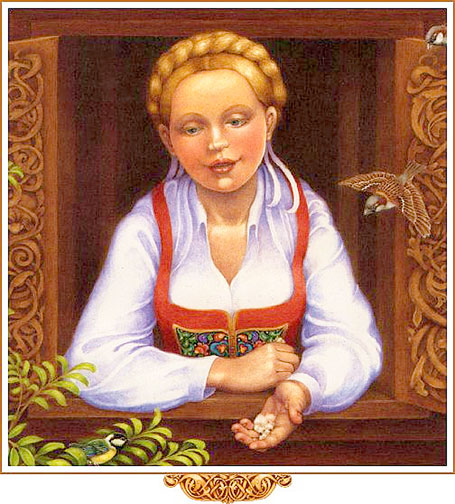
Master Maid a Tale of Norway illustration by Pauline Ellison

Gender: Feminine
Origin: Faroese
Meaning: “good and fair.”
(GOOTH-reeth)

The name is a Faroese form of the Old Norse female name, Guðfriðr, which is composed of the Old Norse elements, guð (good) and friðr (fair; beautiful; beloved).

As of 2010, Guðrið was the 7th most popular female name in the Faroe Islands.

Other forms of the name include:

  • Gudrid (Danish/Norwegian/Swedish)
  • Gurid (Danish/Norwegian/Swedish)
  • Guri (Danish/Norwegian/Swedish)
  • Guðfríður (Icelandic)
  • Guðríður (Icelandic)
  • Gyðríður (Icelandic)
  • Gudfrid (Norwegian)
  • Guria (Norwegian)
  • Guðfriðr (Old Norse)
  • Guðriðr (Old Norse)

Fia

Gender: Feminine
Origin: Italian/Scandinavian
(FEE-ah)

The name is a Scandinavian contracted form of Sofia or an Italian short form of Fiammetta.

As of 2010, its Faroese and Icelandic form of Fía was the 7th most popular female name in the Faroe Islands.

Other forms of the name include:

  • Fie (Dutch/Scandinavian)
  • Fía (Faroese/Icelandic)
  • Fii(j)a (Finnish)
  • Fiiju (Finnish)
  • Fia (Italian/Scandinavian)
  • Phia (Swedish)

Femja

Gender: Feminine
Origin: Faroese/Danish
(FEM-yah)

The name is a Faroese and Danish contracted form of the Greek, Euphemia.

As of 2010, Femja was the 7th most popular female name in the Faroe Islands.

Other forms of the name include:

  • Femie/Phemie (English)
  • Feemi (Finnish)
  • Femi (Finnish)
  • Feemja (Finnish)
  • Veemia (Finnish)
  • Veemi (Finnish)
  • Vemi (Finnish)
  • Femma (Norwegian)