Soma

Gender: Masculine
Origin: Hungarian
Meaning: “dogwood.”
(SHUH-maw)

The name is derived from the Hungarian plant word, som, which means “dogwood.”

In earlier times, it was used as a vernacular form of Cornelius as the Latin name for the dogwood is cornus.

The designated name-day in Hungary is July 3.

Sources

  1. http://www.behindthename.com/namedays/lists/7.php
  2. http://en.wikipedia.org/wiki/Cornus_(genus)
  3. http://hu.wikipedia.org/wiki/Soma

Doubravka

Gender: Feminine
Origin: Czech
Meaning: “oak grove”
(doo-BRAHF-kah)

The name is derived from the Old Slavonic, dubrava, meaning “oak grove.”

In Ancient European culture, oak groves were considered especially sacred.

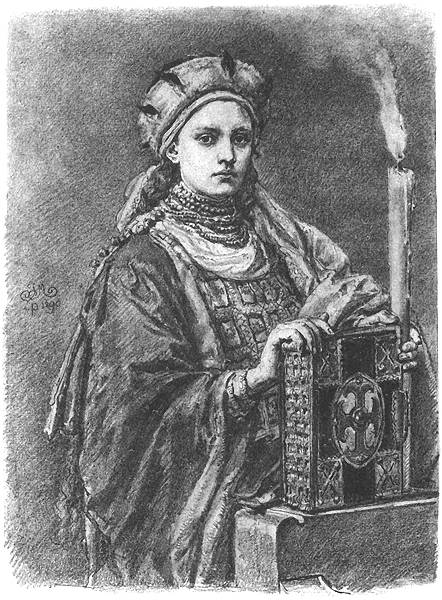
The name was borne by a medieval Bohemian princess (945-977), a member of the Přemyslid dynasty, she became Queen of Poland through her marriage with Mieszko I, and according to some sources, she was the one who goaded her husband into accepting Christianity in 966.

In Polish she is known as Dąbrówka or Dobrawa.

Other forms include:

  • Dubravka Дубравка (Croatian/Serbian)
  • Dąbrówka (Polish: dowm-BROOF-kah)
  • Dobrawa (Polish: daw-BRAH-vah)
  • Dúbravka (Slovakian)

A Serbo-Croatian masculine form is Dubravko Дубравко.

Czech diminutives are: Doubra, Doubravuše, Dora, Dobruše, Duběnka, Dorka, Doubí and Duba.

The designated name-day in the Czech Republic is January 19.

Fura

Gender: Feminine
Origin: Icelandic
Meaning: “pine tree.”
(FEU-rah) the u is somewhat akin to the French eu sound.

The name comes from the Icelandic word for pine tree, according to the Icelandic Registry, only 3 women bore the name as of 2007.

Eik

Gender: Feminine
Origin: Icelandic/Faroese
Meaning: “oak”
Ice (AKE)

The name is an Icelandic and Faroese female name and comes from the Old Norse word for “oak”. It remains the word for oak in Dutch, Norwegian, Icelandic and Faroese. However, its usage as a female given name is exclusive to both Iceland and the Faroe Islands. The Danish word for oak (eg), the Swedish word for oak (ek) and the German word for oak (eiche) share the same etymological root.

According to the Icelandic Registry, 18 women bore Eik as a first name and 110 bore it as a middle name.

Virpi

Gender: feminine
Origin: Finnish
Meaning: “bush, branch” (poetic)
Pronunciation can be heard here: http://www.forvo.com/search/Virpi/

The name is used in a poetic sense to describe a bush, branch or young tree. Its designated name-day is November 12, and the name is fairly common in Finland.

Bor

Matej BorGender: Masculine
Origin: Slovenian
Meaning: “pine tree.”
(BOR) rolled R

The name currently ranks in as the 45th most popular male name in Slovenia, it comes from the Slovenian word for pine tree but may have been popularized by Slovene national author, poet, playwright, translator and partisan, Matej Bor, (borne Vladimir Pavšič), the former being a pen name (1913-1993).

It is also the name of several places names throughout Eastern Europe, there are a few villages in Poland that bear the name, as well as in the Czech Republic, Russia and it is the name of a city in Serbia.

There is a feminine form Borjana, also the name of a place in Slovenia.

Kalina

Gender: Feminine

Origin: Polish/Ukrainian/Bulgarian
Meaning “guelder rose.”
(kah-LEE-nah)
The name first became popular in Poland after Henryk Sienkiewicz used this name for a heroine in his novel Quo Vodis. Since the setting was Ancient Rome, he latinized the name to Calina. The name is also used in the Ukraine and is the title of a popular folk song Kalinka. In Bulgarian its the name of the Rowan tree. Its designated name day is July 11.