Teitur

Gender: Masculine
Origin: Old Norse
Meaning: “merry; cheerful.”

The name is derived from the Old Norse, teitr, meaning, “cheerful; merry.”

As of 2010, Teitur was the 8th most popular male name in the Faroe Islands.

Other forms of the name include:

  • Teitur (Faroese/Icelandic)
  • Teiti (Old Norse)
  • Teitr (Old Norse)

Annfrid

Gender: Feminine
Origin: Old Norse
Meaning: “beautiful eagle.”
Nor/Swe (AHN-freed); Far/Ice (ARN-freeth)

The name is a modern Norwegian and Swedish form of the Old Norse female name, Arnfríðr, which is composed of the Nordic elements, arn (eagle) and fríðr (beautiful; fair; beloved).

As of 2010, its Faroese form of Arnfríð was the 8th most popular name in the Faroe Islands.

Other forms of the name include:

  • Arnfríð (Faroese)
  • Arnfríður (Icelandic)
  • An(n)frid (Norwegian)
  • Arnfrid (Norwegian)
  • Årfrid (Norwegian)
  • Årfryd (Norwegian)
  • Arnfríðr (Old Norse)
  • Emfre (Swedish)
  • Emfred (Swedish)
  • Emfrid (Swedish)
  • Emfrö (Swedish)
  • Ärnfrid (Swedish)
A common Norwegian short form is Andi.
A famous bearer is Anni-Frid Lyngstad (b.1945), Norwegian-born Swedish pop singer of ABBA fame.

Aura

The name could be of a few different etymologies.

In Greek, it is derived from the word for “breeze”, and is borne by several characters in Greek myth. One was a Titan goddess who was the personification of the fresh breezes and the cool air that accompanies early mornings.

According to one legend, Aura was so proud of her virginity that she mocked the virgin goddess Artemis, claiming that Artemis was not as pure as she, since Artemis was too “womanly.” In revenge, Artemis had Dionysus rape Aura. As a result, the Titaness went mad, becoming a slayer of men. When her twin sons were born, Aura ate one twin, while Artemis rescued the other. Zeus eventually transformed her into a breeze. Other legends state that she was transformed into a stream.

The aurai (the breezes) were a type of nymph, fathered by the sea god Oceanus.

Aura appears in the English lexicon describing a glow or metaphysical halo that is given off by a person’s or object’s energy.

The name has also experienced usage in Scandinavia. Its earliest attestation is in Sweden in 1818. In this case, the name may be a borrowing from the Greek, or it could be a contracted form of Aurora or AureliaHowever, it has been popularly attributed as being derived from a Norse element, aurr, meaning, “clay.”

In Finland, the name is a somewhat of a patriotic name as this was given as a name to the Maiden of Finland, the personification of Finland. In this case, her name is taken from the name of a river. The river name is believed to be related to an archaic Swedish word, aathra, meaning, (waterway), but in Finnish could be translated as meaning, “plow.”

As of 2010, Aura was the 8th most popular female name in the Faroe Islands.

Other forms of the name include:

  • Aura (English/Faroese/Finnish/Latin/Portuguese/Scandinavian/Spanish)
  • Ára (Faroese)
  • Aure (French)
  • Avra (Greek)
  • Aula (Italian)
  • Ávrá (Sami)

Björk, Bjørk

Gender: feminine
Origin: Icelandic/Faroese
Meaning: “birch, birch tree.”
(BYERK) Pronunciation can be heard here: http://www.forvo.com/word/björk/

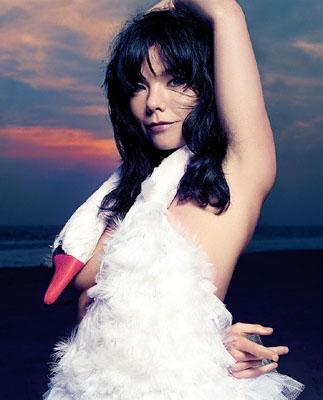
Indie rock star, Björk Guðmundsdóttir (b.1965), made this one a household name, though it is now a recognized name outside of Iceland, it will probably always be associated with the singer to non-Icelanders.

Björk is the Icelandic word for birch tree, when spelled Bjørk, it has the same meaning in both Faroese and Norwegian. It is interesting to note that björk is the modern Swedish word for birch tree, though neither nouns are used as a given names in Swedish or Norwegian. However, it is a very common and ordinary female name in both Iceland and the Faroe Islands.

As of 2010, Bjørk was the 8th most popular female name in the Faroe Islands.

Thora

Gender: Feminine
Origin: Old Norse
Eng (THORE-ah); Fare/Ice (THOH-rah); Nor/Swe (TOH-rah)

The name is derived from the Old Norse, Þóra, a feminine form of Þórr, meaning, “thunder.”

In Norse legend the name is born by Thora Town-Heart, known in Norse as Þóra Borgarhjörtr, the daughter of Herrauðr, the Earl of Götland. According to the legend, Thora was held captive in her room by a serpant. Her father promised that any man who was able to kill the serpent could marry his daughter. Ragnar Loðbrók took up the challenge and was successful in killing the serpent and married Thora.

Its Faroese form of Tóra is currently the 7th most popular female name in the Faroe Islands.

Other forms of the name include:

  • Thora (English/German/Scandinavian)
  • Tóra (Faroese/Old Norse)
  • Þóra (Icelandic/Old Norse)
  • Tore (Norwegian)
  • Torø (Norwegian)
  • Tora (Scandinavian)

The name is also borne by American actress, Thora Birch (b.1981) and the late British actress, Dame Thora Hird (1911-2003).

Sunniva

Gender: Feminine
Origin: Anglo-Saxon
Meaning: “sun gift”
Sunniva: (sun-NEE-vah); (SUN-nih-vuh); Synnove (sewn-NEW-veh) the Y is like a French U and the umlauted O is like the French eu.

The name is derived from the Anglo-Saxon name, Sungifu, which is composed of the elements sun meaning, “sun” and gifu meaning, “gift.”

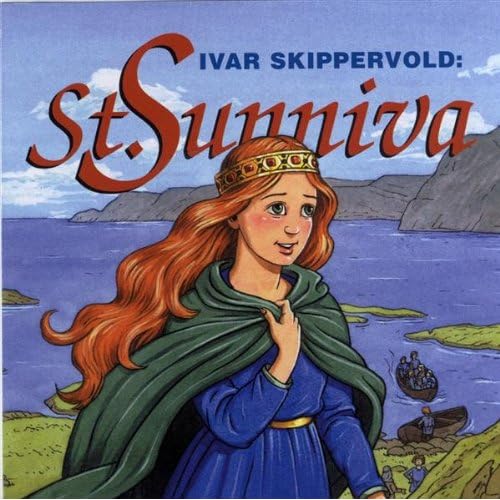
The name was attributed to an Irish princess and saint in the 1170 Norwegian work, (written in Latin), Acta sanctorum in Selio.

The book recounts the legend of St. Sunniva, who fled her native homeland in order to escape the advances of an unwanted suitor. She and her entourage ended up landing in what is now Selje Norway, where they took refuge in a cave. When the local inhabitants accused them of stealing sheep, it is said that rocks fell and miraculously closed off the cave to the angry inhabitants.

In 996, King Olaf Tryggvason excavated the cave where he found the body of the saint, (who had been dead hundreds of years), miraculously intact.

King Olaf designated her as the patron saint of the municipality of Selje. An abbey was built over the site of the cave.

Another legend attributed to her says that when fires ravashed the area of Bergen, between 1170-1 to 1198, the remains of the saint were taken from her reliquary and sat up in a sitting position, which miraculously stopped the spread of the fire.

As of 2010, its Faroese form of Sunneva was the 7th most popular female name in the Faroe Islands, while Sunniva was the 44th most popular female name in Norway, (2010).

Other forms of the name include:

  • Sungifu (Anglo-Saxon)
  • Synne (Norwegian/Danish: originally a diminutive, now used as an independent given name)
  • Sunneva (Faroese/Icelandic)
  • Sunnefa (Icelandic)
  • Sunníva (Icelandic)
  • Sunnifa (Middle Scandinavian)
  • Sunni (Norwegian)
  • Sunniva (Norwegian)
  • Synnev(a) (Norwegian)
  • Synøve/Synnøve (Norwegian)
  • Sönne (Swedish)
  • Synnöve (Swedish)

Possible nickname options include Sunny, Sunna, Sun or Neve or Niva.

In 2007, Sunniva was the 47th most popular female name.

The designated name-day is July 8th.

Rói

Gender: Masculine
Origin: Old Norse
Meaning: “fame.”
(ROH-ee)

The name is derived from the Old Norse element, hróð, meaning, “fame.”

As of 2010, Rói was the 7th most popular male name in the Faroe Islands.

Other forms of the name include:

  • Roi (Danish)
  • Rói (Faroese/Old Norse)
  • Hrói (Icelandic/Old Norse)
  • Roe (Norwegian)

Hjalti

Gender: Masculine
Origin: Old Norse
Meaning: “hilt” or; “from Hjaltland.”
(YAHL-tee)

The name could either be derived from the Old Norse, hjalti, meaning “from Hjaltland” or it could be from, hjalt, meaning, “hilt.”

As of 2010, Hjalti was the 7th most popular male name in the Faroe Islands.

Other forms of the name include:

  • Hjalte (Danish/Swedish)
  • Helte (English)
  • Hjalti (Faroese/Icelandic/Old Norse)

An Icelandic feminine form is Hjalta.

Fróði, Frodo

Gender: Masculine
Origin: Old Norse
Meaning: “clever; wise.”
Old Nor (FROH-thee); Eng (FRO-do); Scan (FROH-deh)

He is the progenitor of the Tolkien name, Frodo, and is derived from the Old Norse, fróðr, meaning, “clever; wise.”

Its Tolkien version of Frodo, was inspired by the same Norse elements, and is found in The Lord of the Rings (1959) as the name of the hobbit hero, Frodo Baggins, the bearer of the One Ring and the one who must destroy it.

As of 2010, Fróði was the 7th most popular male name in the Faroe Islands.

Other forms of the name include:

  • Frodo (English)
  • Fróðar (Faroese)
  • Fróði (Faroese/Icelandic/Old Norse)
  • Froder (Norwegian)
  • Frode (Scandinavian)

An Icelandic feminine form is Fróða.

Bragi

Gender: Masculine
Origin: Old Norse
Meaning: “poetry.”
(BRAH-gee)

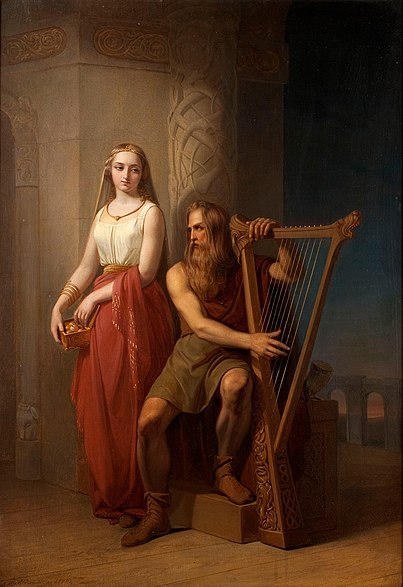
The name is derived from the Old Norse, bragr, meaning, “poetry”. In Norse Mythology, Bragi was the god of poetry and the husband of Idunn.

He is believed to greet the noble dead into the halls of Valhalla.

The name was also borne by several Norse skalds, whether Bragi was their true given name or a title given to them due to their talents in poetry is unknown.

It is believed that the modern English verb “to brag” is possibly related to bragr as this was also the term used for toasting in Nordic culture. Most of these toasts encompassed long tomes for the person being toasted about, hence, bragging.

As of 2010, Bragi was the 7th most popular male name in the Faroe Islands, while its modern Scandinavian version of Brage is currently the 59th most popular male name in Norway, (2010).

Other forms of the name include:

  • Bragi (Faroese/Icelandic/Old Norse)
  • Brage (Scandinavian)