Léger

Gender: Masculine
Origin: German/Frankish
Meaning: “people of the spear; spear people.”
Fre (leh-ZHAY)

The name is derived from the Old German name, Leudgari, which is composed of the Germanic elements, leud (people) and gar (spear).

The name was borne by an early saint, St. Léger of Autun, a 5th-century bishop and martyr. He was tortured by the Duke of Champagne, by having his eyes gouged out and cauterized and was not murdered until years later.

Other forms of the name include:

Leodogari (Catalan)
Leodegarius (Dutch/Late Latin)
Leodegar (English/Polish)
Leodogar (German)
Leodogario (Italian)

The designated name-day is October 2 (France and Poland).

Source

  1. http://en.wikipedia.org/wiki/Leodegar
  2. http://www.behindthename.com/namedays/lists/10.php

Rayner, Rainer, Rainier

Gender: Masculine
Origin: German
Meaning: “army advice.”

The name is the English form of the Old Germanic, Raganhar, which is composed of the elements, ragin, meaning “advice” and har, meaning “army.”

The name was introduced into England via the Normans and subsequently fell out of usage by the High Middle Ages.

Other forms of the name include:

Ragnar (Danish/Estonian/Icelandic/Norwegian/Swedish)
Regner (Danish)
Reinier (Dutch)
Rain (Estonian)
Raino (Estonian/Finnish)
Rauno (Estonian/Finnish)
Raknar/Raknari/Raknu (Finnish)
Rainier (French)
Rainer/Reiner (German/Estonian)
Nero (Italian)
Raniero (Italian)
Riniero (Italian)
Neer (Limburgish)
Reneer (Limburgish)
Ragnarr (Old Norse)
Rajner (Polish)
Rávdnár (Sami)
Rainerio (Spanish)

Nicknames include:

Rein (Dutch)
Raik and Reik (German)
Ranuccio, Nero (Italian)
Ragge (Swedish)

Feminine forms are:

Raina (German/Estonian)
Raniera/Rainera (Italian)

The name is a common one in the Grimaldi house of Monaco, it was borne by Prince Rainier I Grimaldi (1267-1314); Rainier II Grimaldi (1350-1407) and the late Prince of Monaco, Prince Rainier III (1923-2005)

The designated name-day is October 1 (Estonia/Finland/Sweden).

Source

  1. http://www.behindthename.com/php/find.php?name=ragnar

Łękomir

Gender: Masculine
Origin: Polish
Meaning: “one who establishes peace through his cunning.”
(WENK-o-MEER)

An obscure Polish male name composed of the elements, Łęko, meaning, “guile; cunning” and mir, meaning, “peace.”

Hence the above meaning.

The feminine form is Łękomira.

The designated name-day is September 25.

Source

  1. http://pl.wikipedia.org/wiki/%C5%81%C4%99komir

Boguchwała

Gender: Feminine
Origin: Polish
Meaning: “glory to god.”
(bo-goo-KFOW-wah)

The name is composed of the Old Polish elements, bog, (god) and chwała (glory).

Another form is Bogufała.

Masculine forms include Boguchwał, Boguchał, Bogufał, Bogofał, Bogchwał, Bochwał and Bofał.

Other non-Polish masculine forms include:

Bohuchval (Czech)
Gottdank (German)
Bogohval (Slovene)
Boguchval (Russian)

The designated name-days are: March 18 and September 23.

Source

  1. http://pl.wikipedia.org/wiki/Boguchwa%C5%82a_(imi%C4%99)

Bertha

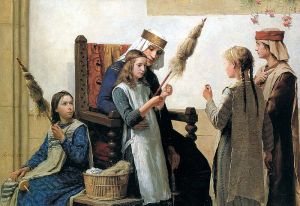
Bertha of Swabia, by Albert Anker 1888

Gender: Feminine
Origin: German
Meaning: “bright.”
Eng (BER-thuh); Germ (BEHR-tah)

The name is derived from the Old Germanic element, beraht, meaning “bright.”

It was borne by an early Germanic goddess of childbearing and weaving, also known as Perchta or Berchta in Southern Germanic dialects.

According to Jacob Grimm and Lotte Motz, Perchta was the Alpine version of Holda (see http://legitimatebabynames.com/2010/09/15/hulda/)

As a given name, it was quite common among the Franks, as is demonstrated with Charlemagne’s mother, whose name was Bertha.

As is to be expected, the name does not appear in the U.S. Top 1000. In the latter half of the 20th-century, Bertha has taken on a bad reputation as being the worst name one can give to a daughter. In 1883, however, Bertha was the 7th most popular female name in the United States.

Other forms of the name include:

Behrte (Anglo-Saxon)
Berta (Czech/Estonian/Faroese/Hungarian/Icelandic/Italian/Norwegian/Polish/Slovak/Slovene/Spanish/Swedish)
Berthe (French)
Bertille (French)
Bertilla (Italian)
Bertina (Italian/Hungarian)
Behrta/Perchta (Old German)

    Obscure Italian male forms include, Berto, Bertinello, Bertillo, Bertino, Bertolo and Bertonello.

    Other notable bearers include: St. Bertha of Kent (593-612) known for her Christianization of Anglo-Saxon England; St. Berthe Val d’Or (d.c 690); St. Berthe of Artois (c.725); St. Bertha of Bingen (c. 757); Berthe of Burgundy, Queen of France (c. late 10th-century); Bertha of Swabia, Queen of France (907-966); Berthe of Holland, Queen of France ( 1055-1093); Bertha of Sulzbach, renamed Irene, was a Byzantine Empress and first wife of Manual I Comnenus (1110-1159); Blessed Berta de Bardi (d. 1163); Austrian novelist and pacifist, Bertha von Suttner (1843-1914); First woman Puisne Justice of the Canadian Supreme Court, Bertha Wilson (1923-2007).

    The designated name-days are: February 8 (Sweden); May 1 (Germany); May 15 (Poland); July 2 (Slovakia); August 6 (Hungary); August 24 (Estonia); September 23 (Czech Republic)

    Source

    1. http://www.behindthename.com/name/bertha

    Herman

    Gender: Masculine
    Origin: German
    Meaning: “army man.”
    (HER-men)

    The name is composed of the Germanic elements, hari meaning “army” and man, meaning “man.”

    The name was introduced into England in the 11th-century via the Norman invasion. It subsequently died out by the late Middle Ages and was revived in the 19th-century.

    As of 2009, Herman did not rank in the U.S. top 1000, the highest he ranked in U.S. naming history was in 1904, when he was the 47th most popular male name.

    In 2009, Herman was the 56th most popular male name in Norway.

    Other forms of the name include:

    Heřman (Czech)
    Herman (Danish/Dutch/English/Estonian/Finnish/German/Hungarian/Polish/Russian/Scandinavian)
    Harm (Dutch)
    Hermanus (Dutch/Late Latin)
    Mannes (Dutch)
    Hermanni (Finnish)
    Armand (French)
    Armin (German)
    Hariman (German: archaic)
    Hermann (German)
    Armando (Italian/Portuguese/Spanish)
    Armano (Italian)
    Arminio (Italian)
    Ermanno (Italian)
    Arminius (Late Latin)
    Maan (Limburgish)
    German/Gierman Герман (Russian)

    Feminine forms include:

    Armande (French)
    Hermine (French/German)
    Armanda (Italian/Portuguese/Spanish)
    Arminia (Italian)
    Ermanna (Italian)

    Notable bearers include: Herman III the Long of Brandenburg (1275-1308) and St. Herman of Alaska, a Russian Orthodox saint known for his evanglization of Alaska.

    The designated name-days are: July 12 (Estonia); September 25 (France)

    Source

    1. http://www.behindthename.com/name/hermann

    Lambert

    Gender: Masculine
    Origin: German
    Meaning: “bright land.”

    The name is derived from the Germanic elements, land meaning “land” and beraht meaning “bright.”

    The name was borne by several medieval saints and personages.

    Other forms of the name include:

    Lambert (Dutch/French/English/German/Polish)
    Lambrecht (Dutch/German)
    Lammert (Dutch/German)
    Lamberto (Italian)
    Lambaer (Limburgish)

    A feminine form is Lamberta.

    The designated name-days are April 16 (Poland) and September 17 (France).

    Source

    1. http://www.behindthename.com

      Edith

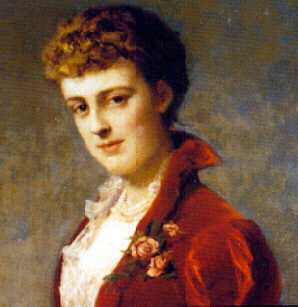
      Edith Wharton

      Gender: Feminine
      Origin: Anglo-Saxon
      Meaning: “blessed war; rich war.”
      Eng: (EE-dith); Ger (EH-dit); Fre (AY-deet)

      The name is derived from the popular Anglo-Saxon female name, Eadgyð, being composed of the elements, ead, meaning, “riches; blessed” and gyð, meaning, “war.”

      The name was quite common among Anglo-Saxon royalty, being borne by Saint Edith of Wilton (b.961), the daughter of King Edgar the Peaceful. Other notable Anglo-Saxon ladies included: Ealdgyth (circ. 1015) wife of Edmund the Ironside; Edith of Wessex (c.1029) the wife of King Edward the Confessor; Edith “Matilda” of Scotland, the wife of Henry I (1080-1118).

      The name was very popular in Medieval England, but fell out of usage after the 15th-century and was suddenly revived in the 19th-century.

      Currently, Edith is the 846th most popular female name in the United States (2009). The highest she has ranked in U.S. naming history was in 1894, when she was the 26th most popular female name.

      Other forms of the name include:

      Eadgyð/Ealdgyð (Anglo-Saxon)
      Edita Едита (Croatian/Czech/Lithuanian/Serbian/Slovak/Slovene: eh-DEE-tah)
      Ditte (Danish/Hungarian: DEET-te)
      Ditta (Hungarian/Italian)
      Edith (Dutch/English/Estonian/German/Scandinavian)
      Édith (French)
      Editha (German/Late Latin)
      Éda (Hungarian)
      Edina (Hungarian)
      Edit (Hungarian/Swedish)
      Editta (Italian)
      Ediva (Late Latin)
      Edyta (Polish: eh-DIH-tah)
      Edite (Portuguese)

        A common English short form is Edie.

        The name has also been borne by: French songstress, Édith Piaf (1915-1963); First-Lady, Edith Roosevelt (1861-1948); British poet and critic, Dame Edith Sitwell (1887-1964); actress, Edith “Edie” Sedgwick (1943-1971); Jewish-born German philosopher, theologian, Catholic nun, and Holocaust victim, Edith Stein (1891-1942).

        The designated name-days are: January 13 (Czech Republic); May 9 (Lithuania); May 14 (Estonia); September 16 (France, Hungary, Lithuanian, Poland); September 26 (Slovakia).

        Sources

        1. http://www.behindthename.com/name/edith
        2. http://www.etymonline.com/index.php?term=Edith

        Sture

        Gender: Masculine
        Origin: Old Norse
        Meaning: “downhearted; crestfallen; obstinate.”

        The name is derived from the Old Norse element, stúra, which could either mean, “downhearted; crestfallen” or “obstinate.”

        The name was borne by 3 Swedish viceroys.

        Designated name-days are: February 5 (Finno-Swedish Calendar); September 13 (Sweden); October 27 ( Norway)

        Sources

        1. http://www.nordicnames.de/wiki/Sture
        2. http://www.behindthename.com/name/sture