Lina

The name is of several different origins and meanings. It could be a German and Swedish short form of any name ending in –lina.

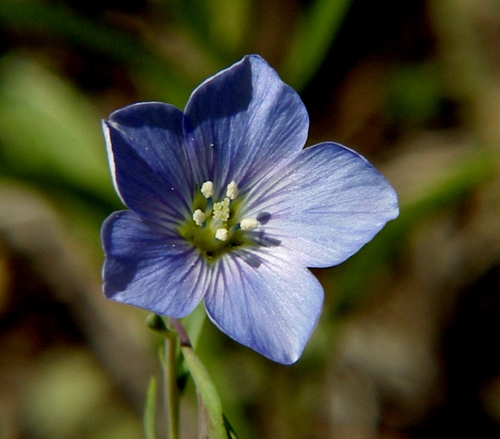
In Lithuanian, it is the feminine form of Linas, meaning, “flax.” It is also the Estonian and Finnish word for flax, and is used as a given name in both countries.

It could also be from the Arabic لينا meaning “palm tree” or “tender.”

In Sanskrit लीना it means “absorbed; united.”

The name is also used in Chinese, being a composition of the words 丽 (Li) meaning “pretty” and 娜 (Na), meaning “elegant.”

Currently, Lina is the 7th most popular female name in Germany, (2011). Her rankings in other countries are as follows:

  • # 15 (German-speaking, Switzerland, 2010)
  • # 19 (France, 2009)
  • # 20 (Slovenia, 2010)
  • # 25 (Belgium, 2009)
  • # 36 (Austria, 2010)
  • # 61 (Netherlands, 2010)
  • # 84 (Norway, 2010)
  • # 91 (Sweden, 2010)
  • # 848 (United States, 2010)

Mia

The name could be of several different meanings and origins, but its most popular usage is from the Northern Germanic diminutive form of Maria.

In the English-speaking world, the name was introduced via actress, Mia Farrow (b.1945) whose full name is Maria de Lourdes. The name did not even appear in the U.S. top 1000 the year Mia Farrow was born, but started to rise in popularity in the late 1990s. Currently, Mia is the 10th most popular female name in the United States, (2010) and her rankings in other countries are as follows:

  • # 1 (Germany, 2011)
  • # 2 (German-speaking, Switzerland, 2010)
  • # 2 (Romansch-speaking, Switzerland, 2010)
  • # 3 (Faroe Islands, 2010)
  • # 4 (Isle of Man, 2009)
  • # 4 (Liechtenstein, 2010)
  • # 5 (Luxembourg, 2010)
  • # 6 (Australia, 2010)
  • # 7 (Croatia, 2010)
  • # 13 (England/Wales, 2010)
  • # 15 (Northern Ireland, 2010)
  • # 15 (Norway, 2010)
  • # 16 (New Zealand, 2010)
  • # 17 (Austria, 2010)
  • # 18 (Scotland, 2010)
  • # 20 (Ireland, 2010)
  • # 25 (Slovenia, 2010)
  • # 27 (Canada, B.C., 2010)
  • # 37 (Chile, 2010)
  • # 38 (Bosnia & Herzegovina, 2010)
  • # 49 (Denmark, 2010)
  • # 40 (French-speaking, Switzerland, 2010)
  • # 40 (Italian-speaking, Switzerland, 2010)
  • # 206 (France, 2009)
  • # 221 (Netherlands, 2010)

In the case of its usage in Southern Slavic countries, it is most likely derived from a diminutive form of any Slavic name containing the mio element, meaning “dear.”

In English-speaking countries, it was often used as a diminutive form of Amelia, Emilia and Hermione.

In Romansch, it was originally used as a diminutive form of Anna Maria.

Coincidentally, mia is also the feminine Italian and Spanish pronoun meaning “mine”, but the name was originally never used in reference to the pronoun.


Benedict, Benedikt

Gender: Masculine
Origin: Latin
Meaning: “blessed.”

The name comes directly from the Late Latin name Benedictus meaning “blessed.” The name was borne by a 6th-centuy Italian monk and saint who credited for being the founder of the Order of the Benedictines.

The name was very common throughout Medieval Europe, being borne by 16 popes, it was fairly popular in England, in the form of Bennett.

The name was also commonly used among German-Jews, being used as a cognate of the Hebrew male name Baruch בָּרוּךְ (blessed).

In the United States, the name became taboo to use due to its associations with Benedict Arnold (1741-1801) a famous American deserter and traitor to the British.

The name recently skyrocketed in Germany after the succession of the German born Pope Benedict XVI. It is currently the 93rd most popular male name in Germany, (2011). It is especially popular in Bavaria.

His rankings in other countries are as follows:

  • # 1 (Bence, Hungary, 2010)
  • # 32 (Benedek, Hungary, 2010)
  • # 294 (Benoît, France, 2009)

Other forms of the name include:

  • Benedikti (Albanian)
  • Benedet (Aragonese)
  • Benedictu (Asturian)
  • Benedita (Basque)
  • Beñat (Basque)
  • Benead (Breton)
  • Benet (Catalan)
  • Benedettu (Corsican/Maltese/Sardinian)
  • Benedikt Венедикт (Croatian/Czech/German/Icelandic/Norwegian/Russian/Serbian/Scandinavian/Ukrainian)
  • Ben(d)t (Danish/Norwegian)
  • Benedictus (Dutch/Late Latin)
  • Benedict (English/German/Romanian/Scandinavian)
  • Bennett (English)
  • Pentti (Finnish)
  • Bénédict (French)
  • Benoît (French)
  • Beinidict (Gaelic)
  • Bieito (Galician)
  • Benedikhti ბენედიქტე (Georgian)
  • Bendix (German/Norwegian)
  • Bennet (German)
  • Benz (German)
  • Venediktos Βενέδικτος (Greek)
  • Bence (Hungarian)
  • Benedek (Hungarian)
  • Benett (Hungarian)
  • Benedetto (Italian)
  • Benito (Italian/Spanish)
  • Bettino (Italian)
  • Bendiks (Latvian)
  • Benediktas (Lithuanian)
  • Bendik (Norwegian)
  • Benedix (Plattdeutsch)
  • Benedykt (Polish)
  • Benedito (Portuguese)
  • Bento (Portuguese)
  • Benezet (Provençal)
  • Banadet (Romansch)
  • Banadegt (Romansch)
  • Bandet (Romansch)
  • Benedegt (Romansch)
  • Binidittu (Sicilian)
  • Beňadik (Slovak)
  • Bengt (Swedish)
  • Bened (Welsh)
  • Benesh (Yiddish)

Feminine forms include:

  • Benedetta (Corsican/Maltese/Italian/Sardinian)
  • Benedikta (Czech/German)
  • Benedikte (Danish/Norwegian)
  • Bénédicte (French)
  • Benoîte (French)
  • Benita (Italian/Spanish)
  • Bettina (Italian)
  • Benedicta (Latin/Romansch)
  • Benedykta (Polish)
  • Benedita (Portuguese)
  • Bengta (Swedish)

Alina

The name could be of several different origins and meaning depending on the bearer of the name.

In Romanian, it is derived from the verb meaning “to sooth”. It even boasts its own masculine version: Alin.

It could also be a German and Dutch contraction of Adelina.

Other sources have popularly attributed it to be a form of the Arabic, Alia (lofty; sublime). In this case, the name appears in One Thousand and One Nights as the name of a beautiful princess.

In Belarusian, it is a name of pre-Christian origins, being derived from the old Slavic word алы (aly) meaning “scarlet.” In Russian, it has been linked with the names Albina, Aleksandra and Akulina, considered contracted forms. While in Bulgarian, it is considered a contracted form of Angelina.

In Italy, it is viewed as a contracted form of Rosalina or Pasqualina, the name can be typically found in Northern and Central Italy.

In Polish and Lithuanian, it has been suggested that the name may be derived from Alna, the Lithuanian name of a river which runs through northern Poland and Kaliningrad, (known in Polish as Łyna). Alna is from a medieval Baltic word meaning, “doe; female deer”, (compare modern Lithuanian elnias). Famed Polish playwright, Juliusz Słowacki seems to have popularized the name via his 1839 play, Balladyna.  Alina is murdered by her jealous sister Balladyna as they are picking raspberries.

It has also been suggested to be related to Halina, a Polish form of Galina.

Currently, Alina is the 4th most popular female name in German-speaking Switzerland, (2010). Her rankings in other countries are as follows:

  • # 4 (Liechtenstein, 2010)
  • # 17 (Russia, 2011)
  • # 28 (Germany, 2011)
  • # 30 (Austria, 2010)
  • # 38 (Slovenia, 2010)
  • # 39 (Romania, 2009)
  • # 78 (Bosnia & Herzegovina, 2010)
  • # 264 (United States, 2010)
  • # 323 (Netherlands, 2010)

Other forms of the name include:

  • Alina Аліна الينا (Arabic/Belarusian/Bosnian/Bulgarian/Czech/Dutch/Finnish/German/Hungarian/Italian/Latvian/Lithuanian/Polish/Romanian/Russian/Scandinavian/Serbian/Slovak/Slovene/Ukrainian)
  • Aliina (Finnish)
  • Aline (French)

Theresa

Gender: Feminine
Origin: Uncertain
Eng (teh-REE-sah; teh-REESE); Spanish (teh-REY-sah); German/Polish (teh-REH-zah); French (teh-HREZ).

The name was first recorded in the 4th century as Therasia. It was borne by the wife of the ex-Roman senator turned Christian Bishop, St. Paulinus of Nola. Therasia had hailed from the Northern Region of Spain, and the name took off as Teresa in both Spain and Portugal.

Its origins are most popularly attributed to the Greek, therizo, meaning, “to harvest” or “to reap.” However, some sources believe that it might be from the Greek word theros meaning “summer” or that it is derived from the name of one of the Santorini islands. It could also very well be an old Iberian name of uncertain etymology. What is certain is that the name’s usage was confined to the Iberian Peninsula up until the 16th-century when it was made famous throughout Europe by St. Teresa of Avila, a Roman Catholic nun and mystic. She is revered as a Doctor of the Church.

In the German-speaking world, it was popularized by Habsburg, Maria Theresa (1717-1780), Empress of the Austro-Hungarian Empire.

It is also borne by a 19th-century French nun, St. Thérèse de Lisieux. She is also revered as a great theologian and Doctor of the Church.

Currently, Teresa/Theresa is the 31st most popular female name in Austria, (2010), the 65th most popular in Germany (2011) and the 100th most popular in Spain, (2010). While in the United States, she comes in at a lowly # 936 (2010).

Popular English nicknames include:  Trace, Tracy, Terry, Tess, Tessa, Tressie (also used as a nickname in Malta), Tress & Reese.
Other forms of the name:
  • Teresa تيريزا (Albanian/Arabic/Catalan/Finnish/German/Italian/Latvian/Polish/Portuguese/Spanish)
  • Terese (Basque/Norwegian/Swedish)
  • Terezija (Croatian/Slovenian)
  • Rezika (Croatian/Slovenian)
  • Resa (Bavarian)
  • Reserl (Bavarian)
  • Resi (Bavarian)
  • Tessa (Bavarian/English/German/Italian)
  • Tereza (Bulgarian/Czech/Maltese/Portuguese-Brazilian/Romanian/Slovak)
  • Teresia (Corsican/Swedish)
  • Terezie (Czech)
  • Thera (Dutch)
  • Theresa (Dutch/German/English)
  • Theresia (Dutch/German/Swedish: common Dutch nicknames are Thera and Trees)
  • Tereesa/Tereese (Estonian)
  • Thérèse (French)
  • Tereixa (Galician)
  • Terisa (German)
  • Therese (German/Scandinavian)
  • Theres (German/Scandinavian)
  • Terézia (Hungarian/Czech/Slovak. Hungarian diminutive form is Teca)
  • Teréz (Hungarian)
  • Teresía (Icelandic)
  • Toiréasa (Irish)
  • Treasa (Irish)
  • Teresiana (Italian)
  • Teresina (Italian)
  • Terina (Italian)
  • Teresija (Latvian)
  • Terēze (Latvian)
  • Tèrìz (Lebanese)
  • Teresė (Lithuanian:Teresijus)
  • Threissya (Malayalam)
  • Trezza (Maltese)
  • Teresita (Spanish)
  • Tessan (Swedish: traditionally a diminutive form, occasionally bestowed as an independent given name)
The designated name-day is often October 15.

Jerome

Gender: Masculine
Origin: Greek ‘Ιερωνυμος
Meaning: “sacred name.”
Eng (jə-ROM), Fre (zheh-HROME)

The name is derived from the Greek male name, Hieronymus (‘Ιερωνυμος).

It was borne by a 5th-century saint who is responsible for creating the Vulgate Bible. He is revered as a Doctor of the Church.

The name was common in England during the 12th-century, but fell out of usage after the Protestant Reformation, only to be reintroduced again in 19th-century America via Catholic immigrants from Germany, Ireland and Italy.

Currently, Jerome is the 208th most popular male name in Germany, (2011).

Other forms of the name include:

  • Jeronimi (Albanian)
  • Hieronimos Հիերոնիմոս (Armenian)
  • Jerolin (Basque)
  • Gerasim Герасім (Belarusian)
  • Jeronim Йероним (Bulgarian)
  • Jeroni (Catalan)
  • Jeronim Јероним (Croatian/Serbian)
  • Jeroným (Czech)
  • Hero (Dutch)
  • Hiëronymus (Dutch)
  • Jeroen (Dutch)
  • Jero(o)m (Dutch)
  • Jerome (English/German)
  • Jérôme (French)
  • Iaróm (Gaelic)
  • Ieróim (Gaelic)
  • Xerome (Galician)
  • Jeromos (Hungarian)
  • Geronimo (Italian)
  • Girolamo (Italian)
  • Jeronimas (Lithuanian)
  • Ġlormu (Maltese)
  • Jiròni (Occitanian)
  • Hieronim (Polish/Slovene)
  • Jerônimo (Portuguese: Brazilian)
  • Jerónimo (Portuguese/Spanish)
  • Ieronim Иерони́м Ієронім (Romanian/Russian/Ukrainian)
  • Jaronas (Romansch)
  • Jerun (Romansch)
  • Giron(n)as (Romansch)
  • Jerone (Sardinian)
  • Zirominu (Sardinian)
  • Giròlamu (Sicilian)
  • Hieronym (Slovak)
  • Jarolím (Slovak)
  • Hierónimo (Spanish)
  • Sierôm (Welsh)


Titus

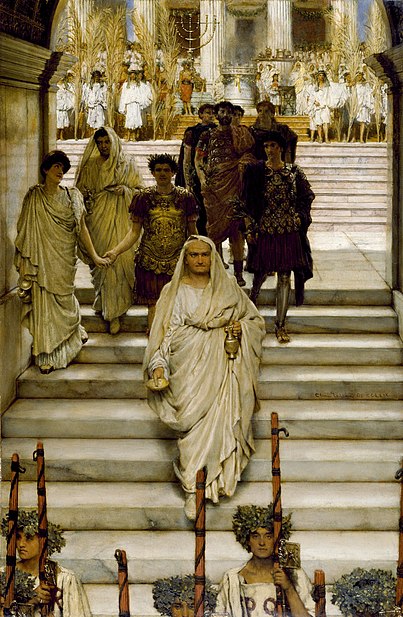
Titus (Roman Emperor)Gender: Masculine
Origin: Latin
Meaning: “title of honour.”
Eng (TY-tus)

The name comes from the Roman praenomen which is derived from the Latin, titulus, meaning “title of honour.”

In Ancient History, the name is borne by Titus Flavius Vespasianus, the tenth Roman emperor in the Roman Empire and the second of the Flavian Dynasty.

In the New Testament, the name is borne by a companion of St. Paul who later became the first bishop of Crete and was a recipient of one of Paul’s epistles.

The name was also used by Shakespeare for his tragedy Titus Andronicus (1593).

Currently, Titus is the 253rd most popular male name in Germany, (2011) and the 397th most popular in the United States, (2010).

Other forms of the name include:

  • Tito (Aragonese/Basque/Galician/Italian/Portuguese/Spanish)
  • Titus (Czech/Danish/Dutch/English/French/German/Latin/Norwegian/Swedish)
  • Tiitus (Finnish)
  • Tite (French)
  • Titos Τιτος (Greek Biblical)
  • Titou τιτου (Greek Modern)
  • Titusz (Hungarian)
  • Títus (Icelandic/Slovak)
  • Titas (Lithuanian)
  • Titu Тітъ (Old Church Slavonic)
  • Tytus (Polish)
  • Tit Тит (Romanian/Russian/Croatian/Slovene)

An Italian, Portuguese and Spanish feminine form is Tita.

The designated name-day is January 4th.

Leonidas

Gender: Masculine
Origin: Greek Λεωνιδας
Meaning: “lion.”
Eng (lee-o-NYE-dus)

The name is derived from the Greek λεων (leon) meaning “lion.”

The name was borne by several famous leaders in Classical Greek history, one being King Leonidas I of Sparta, known for his heroic defense of the Thermopylae Pass from the Persians in the 5th-century B.C.E. His life has been the inspiration of Frank Miller’s 1988 comic 300, later adapted into a movie of the same name. He came to be deified in Sparta as a hero god. A Belgian Chocolate company is also named in his honour and he is the inspiration for their logo.

The name was also borne a teacher of Alexander the Great and by the father of Origen, St. Leonidas (3rd-century CE).

Leonidas seems to have enjoyed some popularity in 18th and 19th-century America and England. This may have been due to the epic eponymous poem based on the Spartan hero, written by Richard Glover (1737).

In more recent history, it was borne by Confederate general, Leonidas Polk (1806-1864) and the first modern Greek Olympic gold medalist, Leonidas Pyrgos (*1871).

Currently, Leonidas is the 282nd most popular male name in Germany, (2011) and the 922nd most popular in the United States, (2010).

Other forms of the name include:

  • Leonit (Albanian)
  • Ljeanid Леанід (Belarusian)
  • Leònides (Catalan)
  • Leonida (Croatian/Italian/Serbian)
  • Leónidás (Czech)
  • Leonidas Λεωνιδας (English/German/Greek/Lithuanian/Romanian)
  • Léonide (French)
  • Leonidasi ლეონიდასი (Georgian)
  • Leoneidas (German)
  • Leonides (German)
  • Leónidasz (Hungarian)
  • Leonīds (Latvian)
  • Leonid Леонид (Macedonian/Polish/Russian/Ukrainian)
  • Leónidas (Portuguese-European)
  • Leônidas (Portuguese-Brazilian)
  • Leónidas (Spanish)
A feminine form is Leonida, occassionally used in Spanish-speaking countries, Greece and Poland.

Aras

Gender: Masculine
Origin: Lithuanian
Meaning: “eagle.”
(AH-rahs)

The name comes directly from the Lithuanian meaning, “eagle.”

The name is borne by Survivor winner and actor, Aras Baskaukas (b.1981).

Though of a different etymological root, the name is also found in Greek mythology as the name of an autocthon. He is believed to have founded the town of Arantea, and was worshipped as a minor god.

Currently, Aras is the 329th most popular male name in Germany, (2011).

Inga

Gender: Feminine
Origin: Old Norse/Germanic
(IN-ga)

The name is a feminine form of Inge or Ing, which is an Old Germanic name of uncertain meaning. It was the name of an ancient Germanic god of which very little is known.

In addition to Scandinavia, Inga has experienced prevalent usage in other countries, such as Germany, the Netherlands and Russia.

Currently, Inga is the 341st most popular female name in Germany, (2011).

Other forms of the name include:

  • Inga Инга (Belarusian/Bosnian/Croatian/Dutch/Estonian/Faroese/Georgian/German/Icelandic/Latvian/Lithuanian/Polish/Russian/Scandinavian/Serbian/Slovene)
  • Inge (Danish/Dutch)
  • Inia (Danish)
  • Inka (Finnish)
  • Inken (Frisian)
  • Iηgá (Sami)
  • Ingara (Norwegian: archaic)

Inge is rarely ever used as a masculine form and is occasionally used as a female form in Scandinavia, pronounced (IN-ge).

Common male forms are Ingi and Ingo.

In Sweden, Inga’s designated name-day is October 25. In Norway it is December 17 and in the Swedo-Finnish calendar it is June 20.

Inga is also the name of a genus of tropical trees and shrubs.

The name was and is borne by Swedish stage actress and opera singer, Inga Åberg (1773-1837); Swedish actress Inga Tidblad (1901-1975); Swedish actress Inga Landgré (b.1927); American actress Inga Swenson (b. 1932); American femininist author Inga Muscio (b.1966); Russian Olympic Speed-Skater Inga Artamonova (1936-1966); Bosnian-Australian politician Inga  nee Dosen Peulich (b.1964); Australian anthropologist, author and historian Inga Clendinnen (b.1934) and Danish Opera Soprano Singer Inga Nielsen (1946-2008)